15 Best Airbnb Automation Tools to Save Hosts Hours Each Week


15 Airbnb Tools
Automate pricing, messaging, booking
Managing multiple Airbnb properties means drowning in guest messages, cleaning schedules, and booking confirmations that consume entire days. Short-term rental hosts now face the same communication challenges that once plagued larger establishments, making AI communications for hotels equally relevant for vacation rental operators. The best automation tools can reclaim those lost hours each week, allowing hosts to focus on growing their business instead of answering WiFi password questions at midnight. Smart solutions handle repetitive tasks without sacrificing the personal touch that earns five-star ratings.
Effective automation doesn't require technical expertise or massive budgets. The right platform works quietly in the background, responding to common inquiries instantly while flagging complex requests that need human attention. Hosts can automate check-in instructions, manage review responses, and streamline guest messaging without losing the personal connection guests expect. Property managers ready to transform their operations can explore comprehensive solutions through AI for hospitality.
Summary
- Guest communication creates the largest operational bottleneck in short-term rental management because it doesn't scale linearly with portfolio size. One property might generate 15 guest conversations per booking, but ten properties generate 150 separate message threads requiring individual attention. According to Facebook Groups for professional hosts, operators maintaining a 70% monthly booking rate face dozens of nearly identical conversations each week, each demanding a response despite being repetitive. The multiplication effect turns manageable communication into a full-time workload, preventing hosts from focusing on actual hospitality.
- Self-managing Airbnb hosts spend 20 to 30 hours per week on operational tasks, according to Stay Coastal FL, with most of that time dedicated to answering the same questions from different guests. The hidden cost isn't just time. It's the constant availability requirement that Airbnb's algorithm creates, where response speed directly influences search placement and booking potential. Hosts can't schedule communication hours because guest inquiries arrive during dinner, weekends, and vacations, creating an obligation that compounds with every additional property without adding proportional value.
- Automation tools can reclaim up to 20 hours per week, according to Mashvisor, but only when they eliminate genuinely repetitive work rather than adding new operational overhead. The most effective automation targets predictable communication patterns, such as booking confirmations, check-in instructions, Wi-Fi details, and checkout procedures that recur across every reservation. Successful hosts don't automate hospitality itself. They automate the administrative repetition that prevents them from delivering personalized experiences where those interactions actually matter.
- Technology fragmentation creates more operational friction than it solves when disconnected tools require hosts to duplicate work across multiple platforms. Hostaway's 2024 industry survey found that 45% of operators identified technology integration as their biggest operational challenge, not a lack of software features. A single reservation can require updating the property management system, adjusting pricing tools, sending messages through communication platforms, coordinating cleaning schedules, and generating access codes across five separate systems, thereby multiplying administrative work rather than reducing it.
- The most efficient short-term rental operators run integrated technology stacks rather than expansive ones, in which each tool serves a specific function without creating additional coordination overhead. According to Fearless Business research, 80% of host time is spent on repetitive tasks that could be automated, leaving only a fraction of the day for activities that genuinely improve guest experiences or property operations. The operational bottleneck almost always centers on guest communication because every other workflow eventually flows through it, from booking confirmations to maintenance requests to review follow-ups.
- AI for hospitality consolidates fragmented guest communication into unified workflows that handle routine inquiries automatically while escalating complex situations to human attention with full context.
Why Most Airbnb Hosts Don't Have a Hosting Problem
The problem isn't that hosts can't handle guests. Most hosts are good at managing guest experiences, but they spend many hours each week answering the same questions, organizing the same processes, and handling repetitive operational tasks that don't require their special skills.
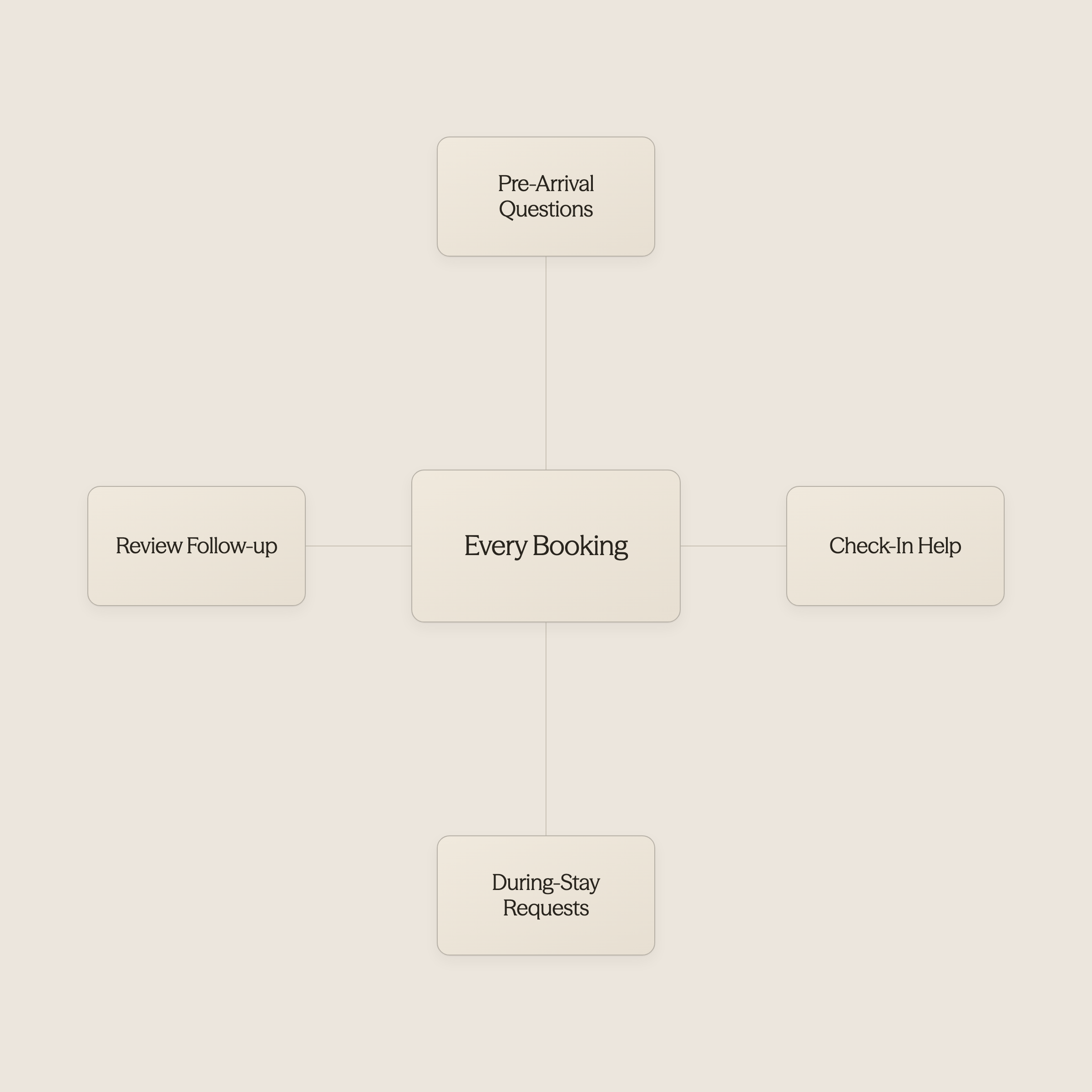
🎯 Key Point: The real challenge isn't guest management skills – it's the endless cycle of repetitive tasks that consume your valuable time without adding meaningful value to the guest experience.
"70% of guest messages are repetitive inquiries that don't require human intervention to resolve effectively." — Conduit AI Research
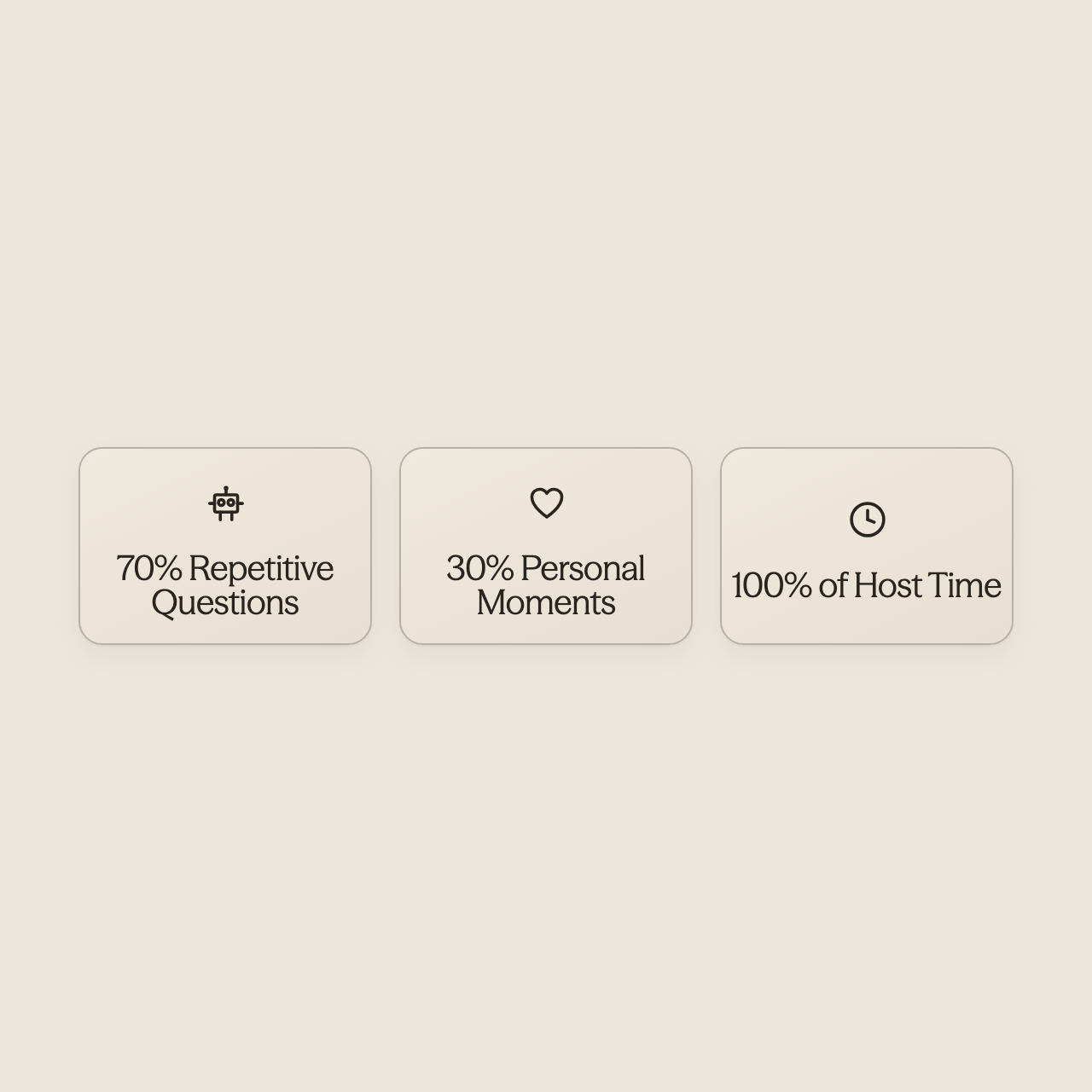
⚠️ Warning: When you spend hours on routine communications and basic processes, you're not leveraging your true hosting strengths – personal touch, problem-solving, and creating memorable experiences.
How do routine tasks multiply as your property portfolio grows?
Guest messaging starts simple with one or two properties: a question about parking here, a check-in time inquiry there. But as bookings increase, the math changes quickly. Ten reservations mean ten separate conversations about Wi-Fi passwords, check-in instructions, and checkout reminders. According to Facebook Groups - Professional Hosts, hosts who maintain a 70% monthly booking rate face dozens of these identical conversations each week.
What other operational areas face the same repetitive challenges?
The same pattern shows up in every area of work: organizing cleaning becomes a scheduling puzzle, changing bookings requires manual updates across multiple platforms, and review follow-ups pile up after each checkout. These tasks are repetitive, time-consuming, and constant.
Where the misdiagnosis happens
Most hosts respond by working faster or longer: waking earlier to answer messages, staying up late to coordinate cleanings, and batching tasks. But this addresses the symptom, not the cause.
The problem isn't time management. It's that manual processes don't scale as bookings increase. A host managing five properties manually can handle it. That same host managing fifteen properties with the same manual processes will struggle with administrative tasks, no matter how efficient they are. There's exponentially more work.
How do automation tools solve the scaling problem?
Platforms like Conduit handle repetitive conversations automatically, responding to common guest questions instantly while routing complex requests to hosts. This eliminates repetitive work while keeping hosts involved where it matters most. Hosts maintaining over 100 5-star reviews often attribute their consistency to systems that manage routine communication without sacrificing response quality.
Hosts who scale successfully distinguish tasks requiring human judgment from repetitive ones. This recognition reshapes operations, as the cumulative cost of manual processes runs deeper than most hosts realize.
The Hidden Cost of Managing Airbnb Operations Manually
The time commitment rarely appears in profitability calculations until it becomes unmanageable. Stay Coastal FL reports that self-managing hosts spend 20 to 30 hours per week on operational tasks, mostly answering identical questions from different guests—equivalent to a part-time job of repetitive communication.
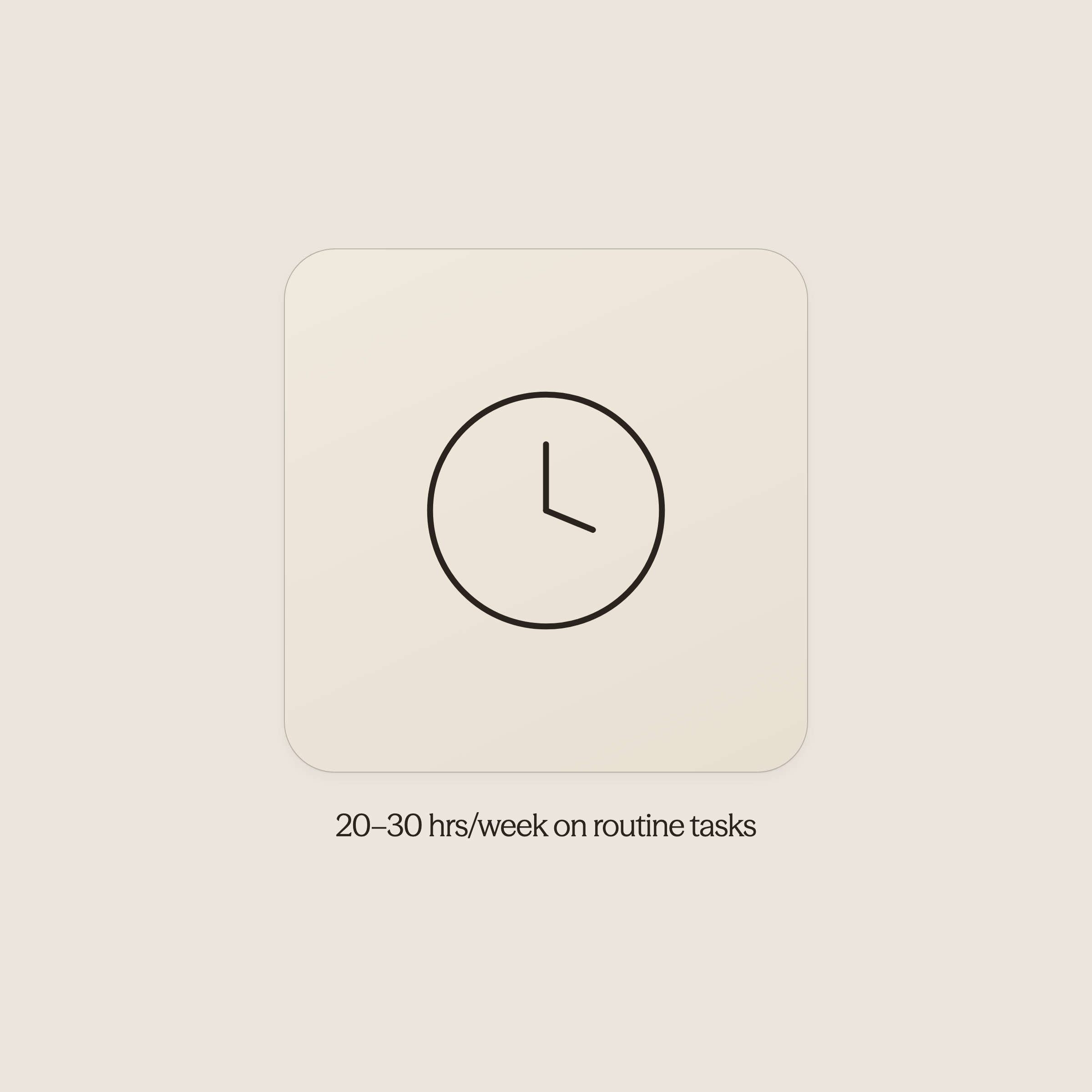
⚠️ Warning: Many hosts underestimate the hidden labor costs of manual management. When you factor in your hourly value, those 20-30 hours weekly could represent thousands in opportunity cost each month.
"Self-managing hosts spend 20 to 30 hours per week on operational tasks, mostly answering the same questions from different guests." — Stay Coastal FL
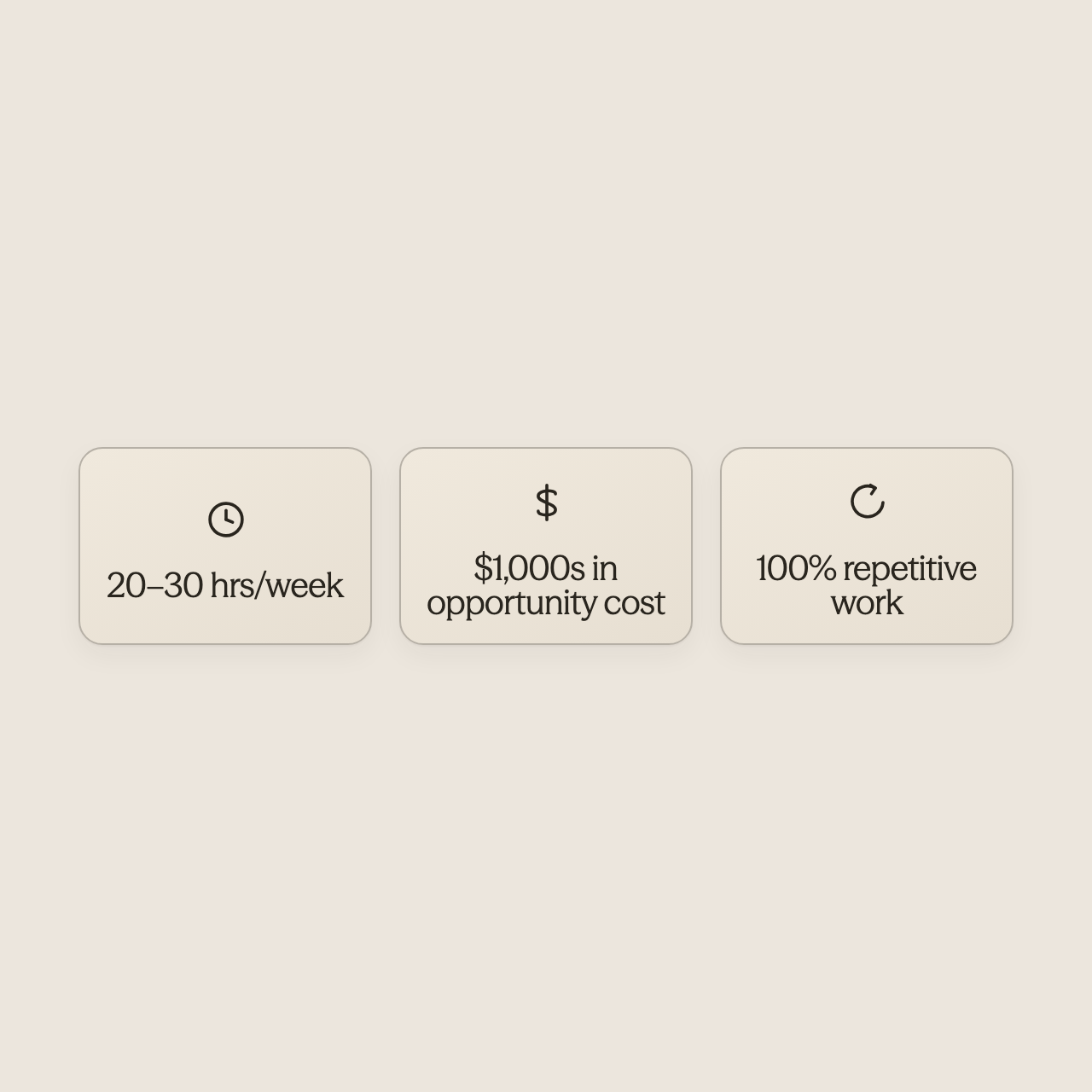
🔑 Takeaway: The true cost of manual Airbnb management isn't just the time invested—it's the revenue opportunities you're missing while trapped in repetitive guest communication cycles.
The Response Time Trap
Quick replies give you a competitive advantage. Airbnb's algorithm rewards hosts who respond quickly with better search placement, so slow responders risk losing bookings to faster competitors. Response speed directly affects your earnings.
This creates constant operational pressure. Unlike maintenance work, hosts cannot set "communication hours." Guest questions arrive during dinner, on weekends, in the early mornings, and during vacations. The expectation of constant availability becomes a hidden cost that compounds with each booking.
When Hiring Doesn't Solve the Problem
Virtual assistants reduce workload but don't eliminate underlying inefficiency. Someone still needs to answer check-in questions, coordinate cleaning schedules, and send pre-arrival instructions. The cost shifts from the host's time to payroll expenses, though the repetitive work remains. Awning found that property management fees typically range from 10% to 40% of revenue, significantly reducing profit margins without necessarily improving operational efficiency.
How can automation improve communication efficiency?
Platforms like Conduit handle repetitive guest conversations automatically, escalating only critical moments to human team members. Our platform automates routine communication while maintaining response quality and speed across all inquiries, eliminating the need to hire staff for repetitive questions.
The Compounding Effect of Multiple Properties
One property creates manageable communication. Three properties create overlapping conversations requiring constant context switching. Five properties turn guest messaging into a full-time operational challenge, where missing a single inquiry can mean lost revenue or negative reviews.
If each property generates 15 guest conversations weekly (inquiries, bookings, check-ins, support requests, reviews), five properties create 75 separate message threads requiring attention. Most follow identical patterns, yet each requires an individual response because guests expect personalized communication.
The critical question: which parts of your operation can run without automation, and which still require human judgment?
Related Reading
- AI Communications For Hotels
- AI For Vacation Rentals
- AI For Airbnb Hosts
- AI Use Cases In Hospitality
- Best Hotel Chatbot
- AI Chatbot For Hotels
What Airbnb Automation Tools Actually Automate
Successful short-term rentals depend on hospitality, guest satisfaction, and operational oversight. Automation tools eliminate repetitive work that consumes time without adding value: the goal is less manual administration, not less hospitality.
🎯 Key Point: Automation should handle the administrative tasks while you focus on guest experience and property management.
"The most successful Airbnb hosts use automation to handle routine tasks while maintaining personal guest connections." — Vacation Rental Industry Report, 2024
💡 Tip: Think of automation tools as your virtual assistant—they handle the scheduling, messaging, and data tracking so you can focus on what truly matters: creating memorable experiences for your guests.
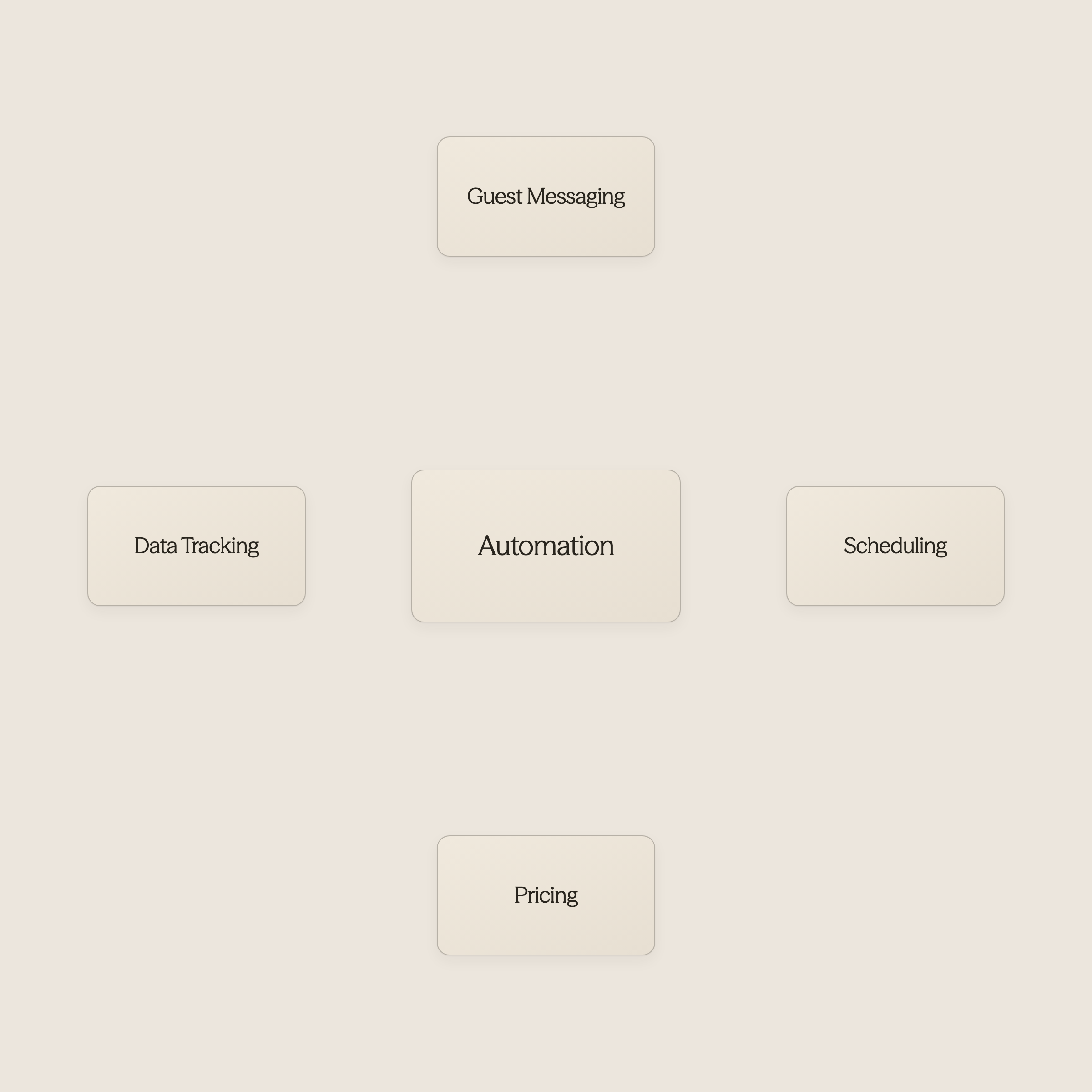
What Gets Automated
What Stays Personal
Booking confirmations
Guest welcome calls
Check-in instructions
Property tours
Cleaning schedules
Special occasion surprises
Price adjustments
Personalized recommendations
Guest Communication
Guest messaging is often the first workflow hosts automate. Prospective renters ask about availability and amenities, while booked guests request check-in information, Wi-Fi details, parking instructions, and local recommendations.
Automation tools send responses based on booking status, timing, or common questions. Booking confirmations, pre-arrival instructions, check-in reminders, Wi-Fi information, check-out procedures, and FAQs can all be scheduled without manual intervention. According to Mashvisor, these tools save hosts up to 20 hours per week, freeing time for personalized conversations.
Check-In Coordination
Check-in is repetitive in short-term rentals. Automation tools can schedule and send access codes, arrival instructions, parking details, house manuals, and reminders, reducing manual work while ensuring guests receive information at the right time.
Cleaning Operations
Cleaning coordination becomes more complex as occupancy increases. Automation tools schedule cleaning tasks, send notifications to teams after guest departures, track turnaround time, coordinate maintenance requests, and monitor property readiness, reducing communication delays and operational errors between reservations.
Pricing Optimization
Pricing automation tools analyze market data and automatically adjust rates based on demand, seasonality, local events, and market conditions, eliminating the need for constant manual monitoring. AirDNA reports an average occupancy rate of 55.1% across markets, but dynamic pricing helps hosts capture higher rates during peak demand periods.
Review Management
Guest reviews significantly impact your listing's performance, but manually following up with every guest is time-consuming. Automation tools can send review requests, thank-you messages, follow-up messages after guests leave, and collect feedback without requiring manual tracking.
How does automation balance efficiency with personalized hospitality?
The most effective hosts automate repetition, not hospitality. Guests value personalized service, quick support, local expertise, and thoughtful experiences. Automation removes repetitive operational work, freeing hosts to deliver these consistently.
Platforms like AI for hospitality handle routine guest conversations automatically while routing critical moments to human hosts. By reducing time spent on recurring messages, scheduling, coordination, and administrative tasks, automation frees hosts to focus on creating memorable stays.
What should you consider when choosing automation tools?
But knowing what automation handles doesn't tell you which specific tools deliver on these promises or how to choose between them.
Related Reading
- AI Tools For Hotels
- AI Agents For Hotels
- Hotel Automation Tools
- Guest Communication Tools
- Property Management AI Tools
- Airbnb Automated Messages
15 Best Airbnb Automation Tools by Use Case
The most effective Airbnb automation strategy combines specialized tools that each solve a specific operational bottleneck, then connects them to reduce manual handoffs between systems. The highest-return tools eliminate tasks consuming the most time or create the most friction, not those with the longest feature lists.
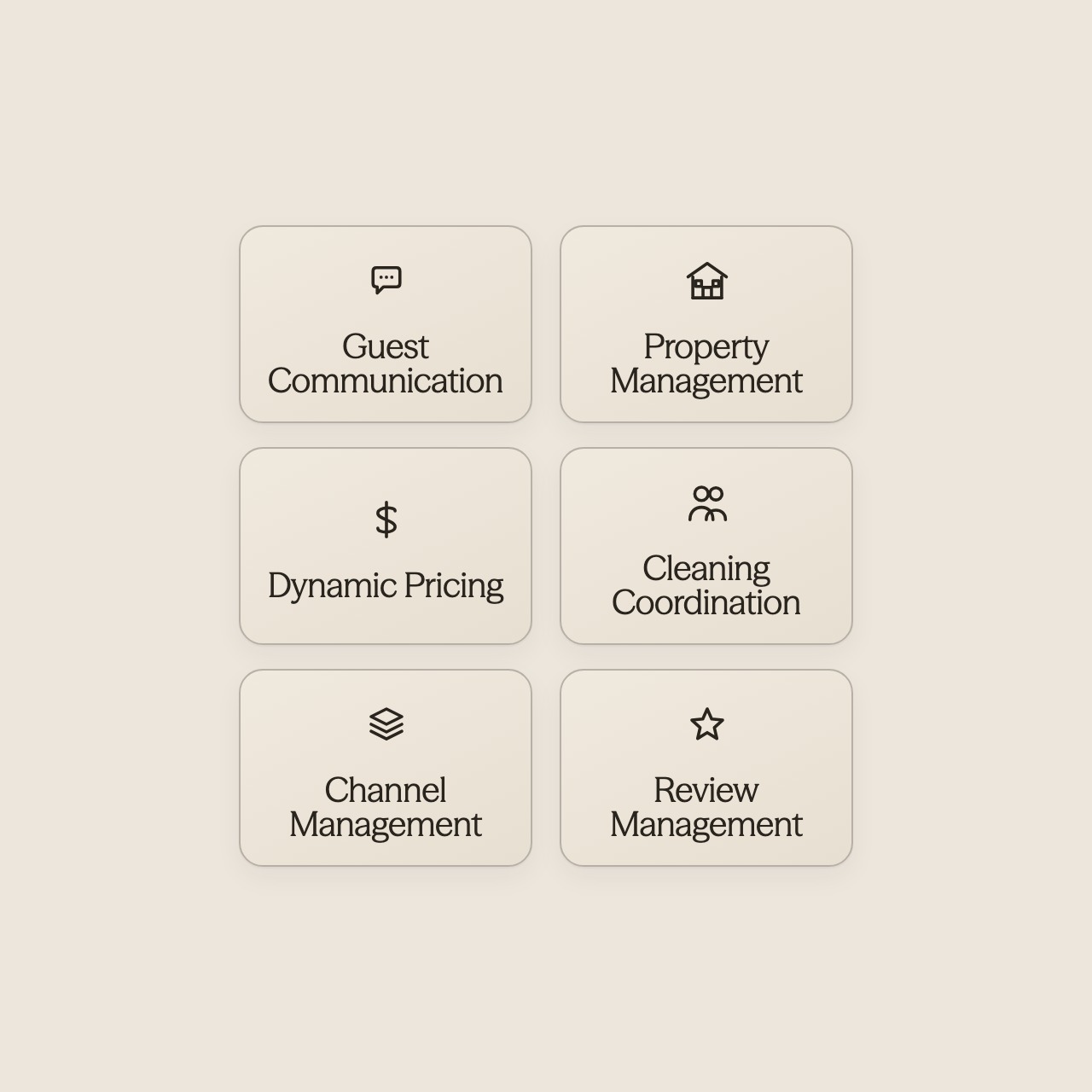
🎯 Key Point: Focus on time-consuming bottlenecks rather than feature-rich platforms that don't address your specific operational pain points.
"The most successful hosts automate their biggest time drains first, not their easiest tasks." — Airbnb Host Operations Study, 2024
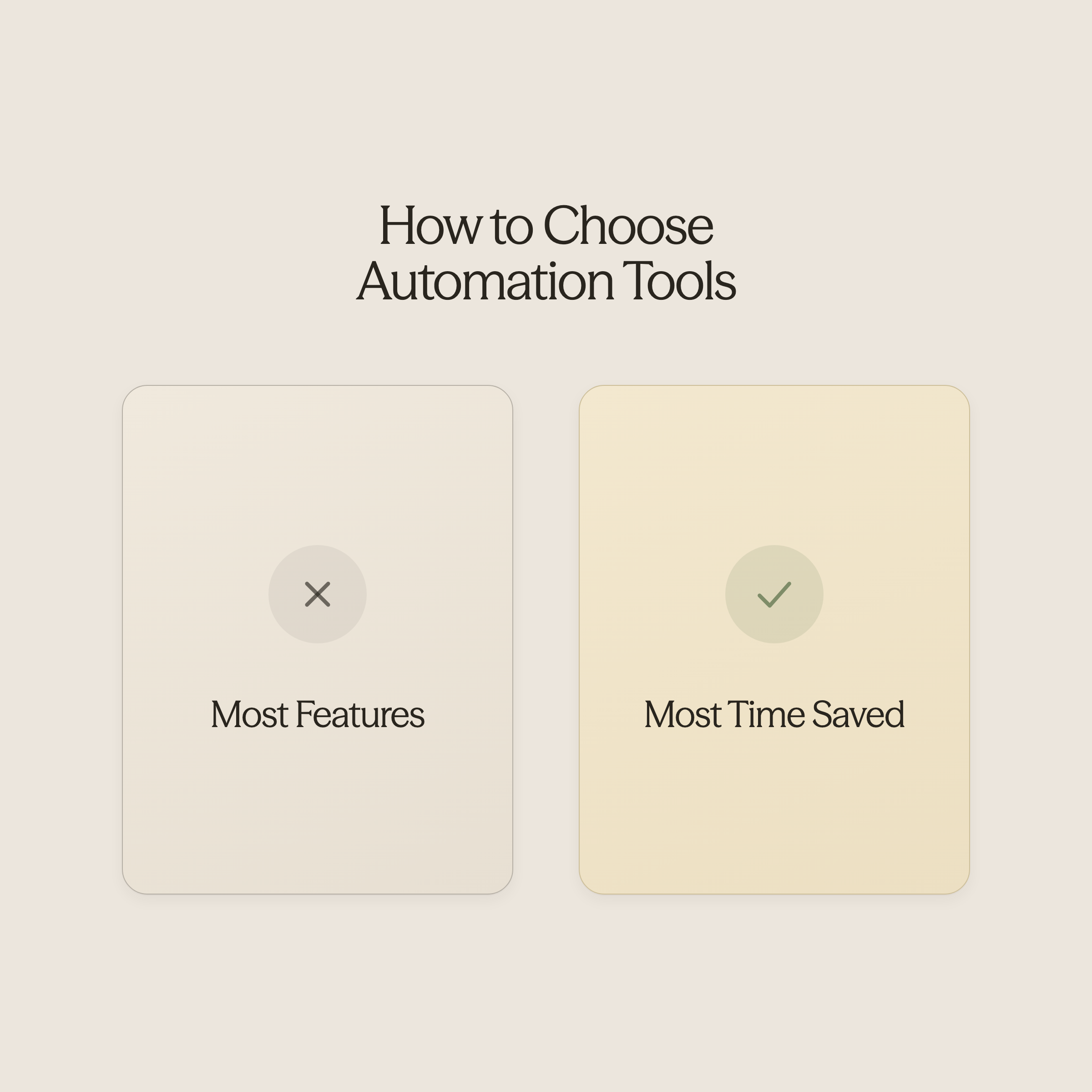
⚠️ Warning: Avoid the common mistake of choosing tools based on feature count instead of actual time savings and operational impact for your property management workflow.
Best for Guest Communication Automation
1. Conduit
Conduit handles guest communication differently from template-based messaging platforms because its AI pulls real reservation context into every response rather than sending generic scripted replies. When a guest asks about early check-in availability or local restaurant recommendations, the system generates answers that reflect the property's actual details, current booking status, and house rules without requiring the host to monitor conversations or set up templates for every possible question. Its escalation workflows surface situations requiring human judgment to the host with full context, so guests receive either an immediate, accurate answer or a thoughtful response from someone who understands the specific situation. For hosts managing 15 or more properties, Conduit provides the automation depth that simpler scheduled messaging tools cannot match.
2. Hospitable
Hospitable consolidates guest messages from Airbnb, Vrbo, and direct booking channels into one inbox and automates common messages triggered by booking events: new reservations, check-in reminders, and checkout follow-ups. Its AI layer addresses guest questions outside standard templates using responses based on property information that hosts configure. This reduces manual message writing. For individual hosts and small portfolio operators, Hospitable provides straightforward communication automation for common guest scenarios without the complexity of enterprise platforms.
3. Smartbnb (now Hospitality)
Hospitable (formerly Smartbnb) was among the earliest automated messaging systems for short-term rentals. Its core features—personalizing messages and automating responses after bookings—remain central to the platform, alongside its support for multiple platforms and proven dependability, making it one of the most tested communication automation tools for Airbnb hosts.
Best for Property Management
4. Guesty
Guesty provides one central platform to manage reservations, communicate with guests, coordinate your team, track finances, and handle daily tasks across multiple properties and booking channels simultaneously. It scales with you, whether you manage a few properties or run a large property management company. Guesty connects to Airbnb, Vrbo, Booking.com, and direct booking channels, updating reservation information instantly across all of them. For multi-property managers, Guesty offers organizational tools that simpler programs cannot provide.
5. Lodgify
Lodgify brings together channel management, a direct booking website builder, reservation management, and guest communication tools for independent hosts and small property management companies. Its direct-booking website feature lets hosts build a branded booking presence independent of OTA platforms, reducing dependence on commissions while keeping availability synchronized across all connected channels.
6. Hostfully
Hostfully prioritizes guest satisfaction alongside operational efficiency. It offers digital guidebooks, automated messaging, reservation management, and operations coordination. Its digital guidebook feature reduces repetitive guest questions by providing comprehensive property information, local recommendations, and check-in instructions in an accessible format that guests can reference throughout their stay. For hosts managing multiple properties, Hostfully balances guest experience and operational efficiency more deliberately than most property management platforms.
Best for Dynamic Pricing
7. PriceLabs
PriceLabs analyses market demand, competitor pricing, local events, seasonal patterns, and booking pace in real time to adjust rates automatically and maximize revenue per available night. Hosts can set minimum prices, define booking window rules, apply length-of-stay restrictions, and configure market-specific adjustments that reflect local dynamics rather than relying on one-size-fits-all logic. For hosts seeking data-driven, dynamic pricing beyond flat nightly rates, PriceLabs is the most proven platform available.
8. Wheelhouse
Wheelhouse combines automated rate optimization with portfolio performance analytics and market intelligence reporting. Its pricing engine balances revenue maximization with occupancy goals based on host-defined parameters, while market reports provide competitive context showing how properties compare to similar listings in their area. For hosts seeking dynamic pricing and analytical visibility into market position and portfolio performance, Wheelhouse integrates both capabilities into a single platform.
Best for Cleaning Coordination
9. Turno
Turno schedules cleaners automatically based on reservation data, communicates job details and property-specific instructions, tracks cleaning completion in real time, and manages cleaner payments within a single system. Its integration with major property management platforms means new reservations automatically trigger cleaning job scheduling without manual intervention, eliminating operational gaps that lead to guest complaints about property readiness. For hosts managing 30 or more properties, Turno addresses the coordination overhead of turnover management at scale more effectively than general property management platforms.
10. Properly
Properly uses visual task management and photo-based inspection checklists to help hosts maintain consistent property standards across multiple turnovers. Its visual checklist system allows hosts to create photo-illustrated cleaning and setup guides that cleaners can follow precisely, regardless of familiarity with the property, reducing quality inconsistencies as portfolios grow. For hosts experiencing inconsistent cleaning quality, Properly provides the visual clarity and accountability that text-based instructions cannot deliver.
Best for Channel Management
11. Hostaway
Hostaway syncs availability, rates, and reservation data across Airbnb, Vrbo, Booking.com, Expedia, and dozens of other booking channels from a single unified dashboard in real time. Beyond calendar syncing, it handles listing content management, rate rule distribution, and booking policy setup across all connected platforms, reducing manual work and preventing double bookings and rate inconsistencies. For hosts and property managers operating across multiple channels, Hostaway provides the infrastructure needed for professional multi-channel distribution.
12. iGMS
iGMS provides multi-channel listing management, automated guest messaging, team task management, and financial reporting for small to mid-sized Airbnb hosts. Its unified inbox consolidates messages from all connected booking platforms, while automated messaging sequences handle standard guest communication without manual intervention. For hosts outgrowing basic Airbnb-only tools and seeking multi-channel management with operational automation, iGMS offers a practical middle-ground solution between basic platforms and enterprise property management systems.
Best for Reviews and Reputation Management
13. Rankbreeze
Rankbreeze helps hosts understand how their listings perform in Airbnb search results and what factors influence their visibility compared to competitors. Its ranking tracking, market analysis, and optimization recommendations provide the data needed to improve pricing, availability, listing content, and response rates: factors that collectively determine search placement. For hosts seeking to improve visibility and understand the algorithmic factors driving their Airbnb performance, Rankbreeze addresses a specific, commercially significant aspect that general property management platforms do not prioritize.
14. Hostbooks
Hostbooks and similar short-term rental accounting platforms provide financial reports, expense tracking, and tax preparation support that hosts need to manage their rental business professionally. Automated revenue matching across multiple booking channels, expense categorization, owner statement creation, and tax reporting tools reduce accounting work as portfolios grow. For hosts running multiple properties, dedicated accounting tools offer capabilities that general property management platforms typically handle only at a basic level.
15. Boostly
Boostly helps short-term rental hosts reduce dependence on Airbnb commissions by building a branded direct-booking presence through its website builder, booking engine, and marketing tools. The platform enables hosts to capture repeat guests and referral bookings through owned channels rather than paying platform fees on every reservation. For hosts with satisfied guest bases, Boostly provides the infrastructure to develop direct-booking strategies that complement ongoing Airbnb operations.
Why do successful hosts use multiple tools instead of one platform?
The most successful Airbnb hosts use a suite of integrated tools rather than relying on a single platform. A property management system handles reservations and synchronizes your listing across multiple websites. Dynamic pricing optimizes rental income. A cleaning coordination platform manages turnover between guests. Guest communication tools foster positive reviews and repeat bookings. Direct booking platforms reduce dependence on Airbnb's commission fees.
How should you introduce new automation tools?
Introduce tools slowly as your work grows more complex. Start with the tool that causes the most problems, then add complementary tools as each part stabilizes.
The real challenge isn't finding the right tools. It's knowing when adding another tool fixes a problem instead of creating one.
Why More Software Doesn't Always Mean Better Operations
Adding another tool rarely solves the problem it was installed to fix. Instead, it introduces operational overhead that compounds the workload it was meant to reduce. The issue isn't a lack of software—it's that disconnected systems create more friction than they eliminate.
🎯 Key Point: The solution to operational inefficiency isn't always adding new software—it's often about integrating existing systems more effectively.
"Disconnected systems create more friction than they eliminate, turning solutions into new problems."
⚠️ Warning: Before implementing new tools, evaluate whether your current software stack is properly connected and optimized for your workflow needs.
What causes the fragmentation problem?
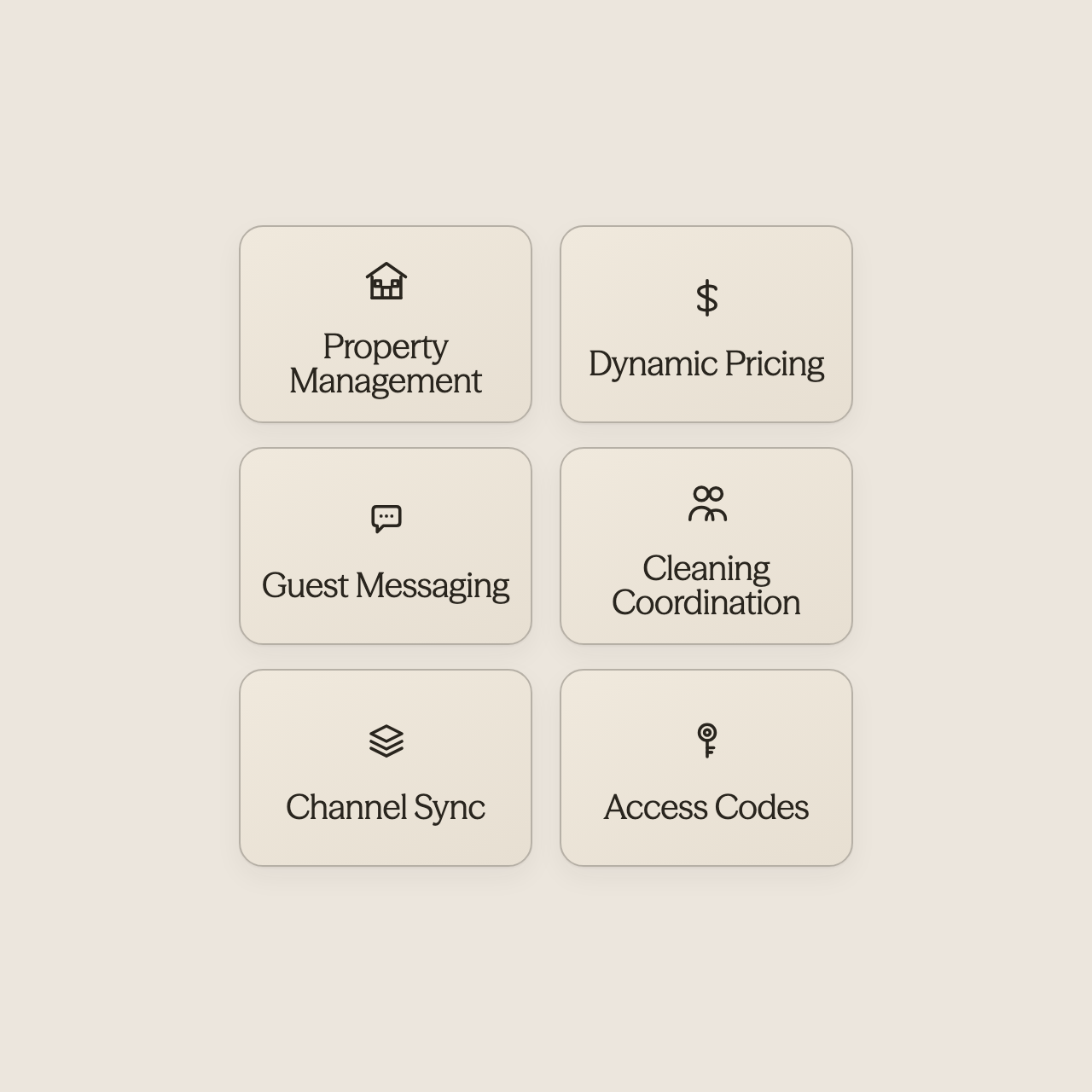
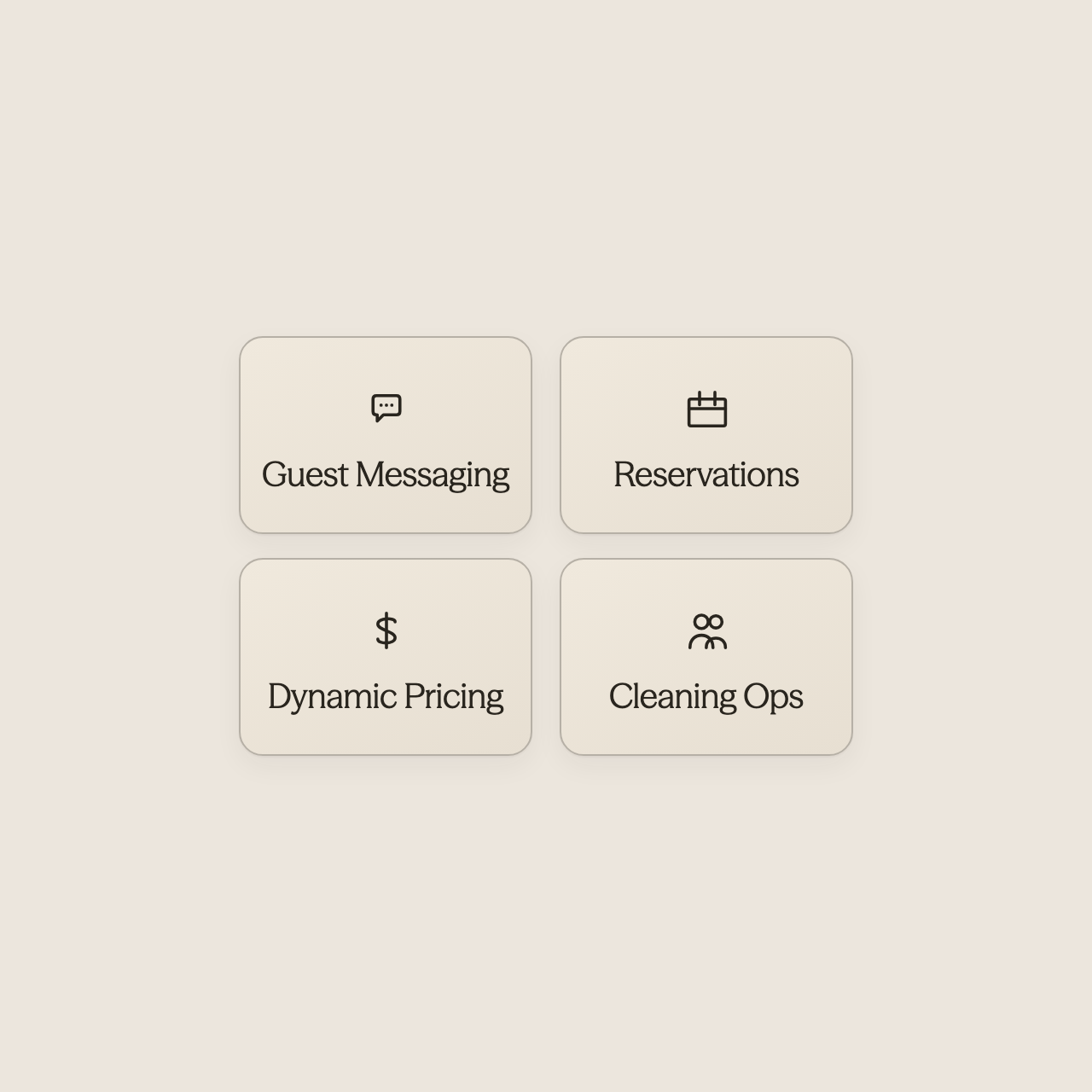
When each tool works in isolation, hosts repeat work across platforms. A single reservation requires updating the property management system, adjusting dynamic pricing, sending confirmations, coordinating cleaning schedules, and generating smart lock codes in separate systems.
According to Stack Overflow's 2023 developer survey, 70% of developers report spending more time managing technical debt than building new features. Hosts face the same problem, spending more time maintaining their technology stack than hosting.
How does fragmentation affect guest communication?
Guest messages are spread across Airbnb, direct booking channels, SMS, email, and property management inboxes. Checking five different places for inquiries slows response times and creates inconsistent experiences, even though hosts use these tools to improve communication efficiency.
What happens when technology integration fails?
Hostaway's 2024 industry survey found that 45% of operators identified technology integration as their biggest operational challenge. Most hosts don't need more software—they need existing tools to work together without constant manual intervention. Managing one listing with fragmented tools is annoying; managing ten becomes unsustainable.
The operational bottleneck centers on guest communication, as every workflow flows through it. Booking confirmations, check-in coordination, maintenance requests, housekeeping updates, and review follow-ups all require timely, accurate responses. When communication scatters across disconnected platforms, adding automation tools for pricing or cleaning doesn't reduce workload; it creates more places where critical interactions might get missed.
How do unified communication systems solve integration problems?
Platforms like AI for hospitality consolidate fragmented communication workflows into one system that handles routine questions automatically while routing complex situations to staff. Instead of checking multiple inboxes and manually coordinating responses, hosts maintain a unified communication layer that integrates with existing tools, eliminating duplicate work.
The most efficient operators run integrated technology stacks where each tool serves a specific function without creating coordination overhead. Reducing operational friction matters more than adding features.
How Conduit Helps Hosts Automate the Most Repetitive Part of Hosting
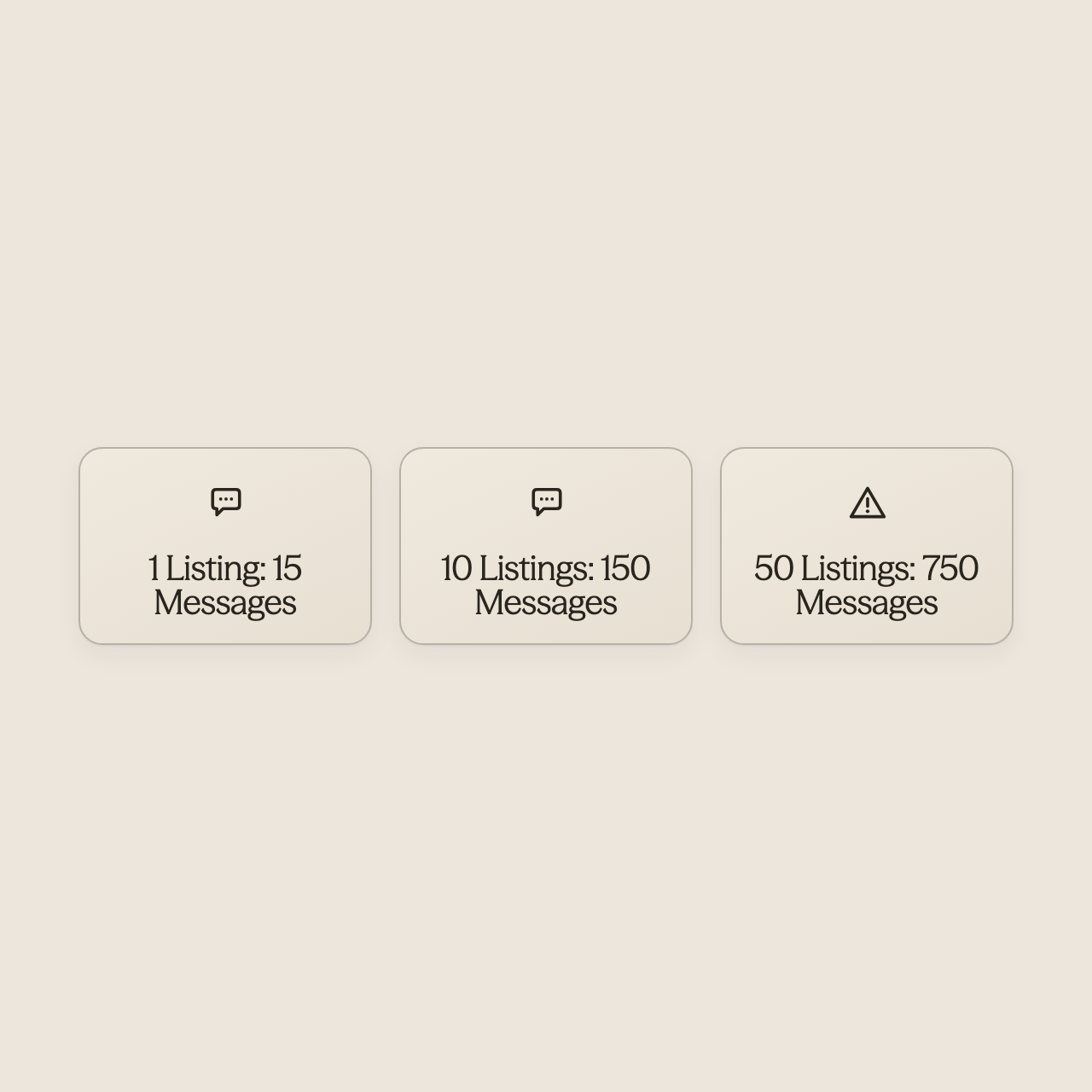
Talking with guests takes up the most time in short-term rental businesses because the work doesn't scale with your listings. One listing generates about 15 guest messages per booking. Ten listings generate 150. Fifty listings generate 750. The same questions repeat across conversations, consuming hours daily to answer.
🎯 Key Point: Guest communication volume scales exponentially with your portfolio size, creating an unsustainable workload for growing hosts.
"One listing gets about 15 guest messages per booking. Ten listings get 150. Fifty listings get 750." — The exponential communication challenge every host faces
Conduit solves this problem by using AI agents to answer the same guest questions while sending only the hard problems to real people. This eliminates the manual work that prevents hosts from focusing on their guests.
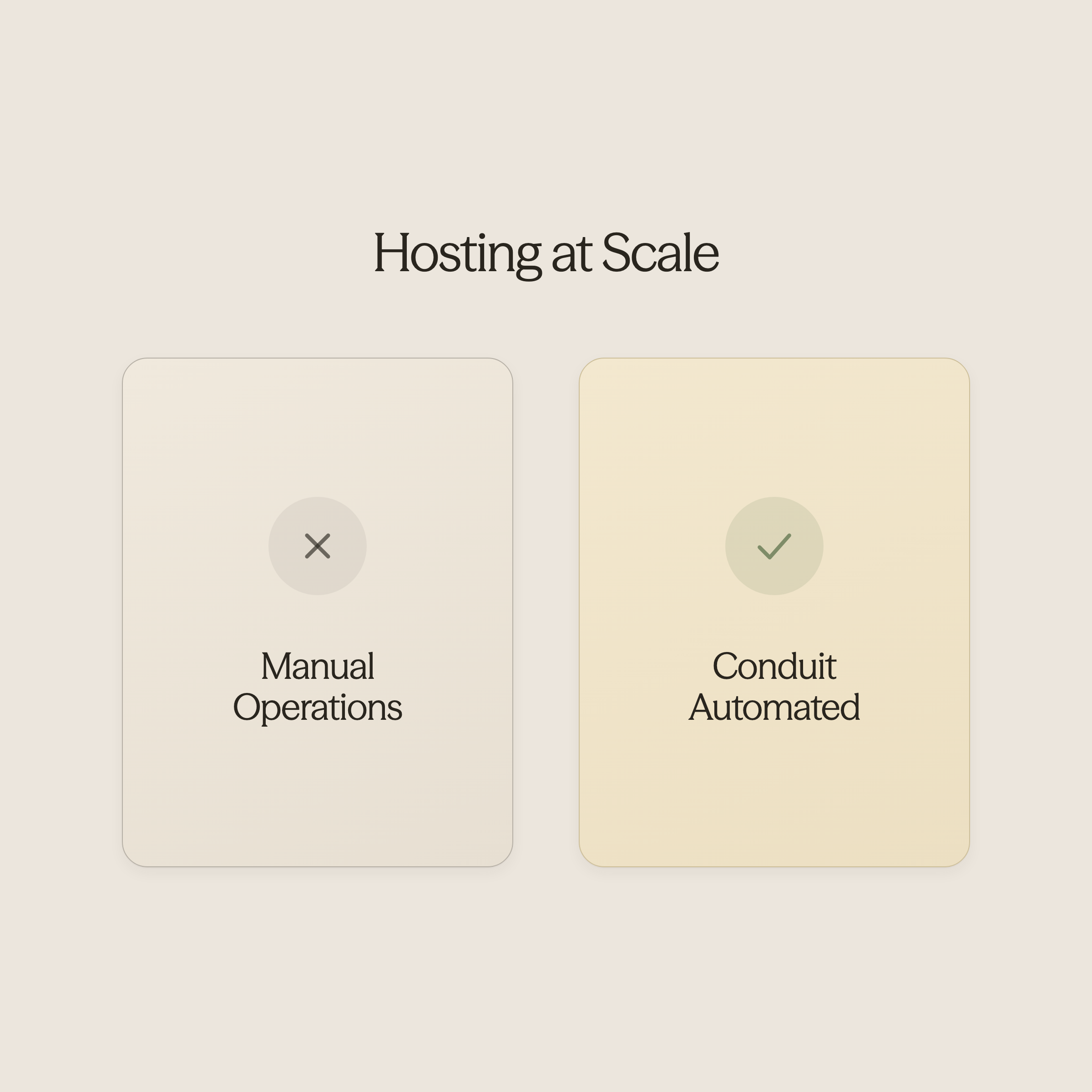
💡 Tip: By automating repetitive guest inquiries, hosts can redirect their energy toward high-value activities that truly enhance the guest experience.
Faster Response Times Without Constant Monitoring
Guests expect quick answers about check-in procedures, parking, or Wi-Fi passwords. Delayed responses damage reviews, yet constant message monitoring creates unwanted interruption.
Conduit's AI-powered workflows deliver immediate responses to common inquiries without requiring hosts to monitor their phones. The system recognizes question patterns and provides accurate information instantly, maintaining responsiveness during busy periods, late-night arrivals, or when managing multiple properties. According to research from Fearless Business, providing 24/7 support becomes operationally feasible when automation handles routine inquiries, freeing human attention for complex guest needs.
Automated Communication Workflows That Preserve Context
Most guest interactions follow predictable patterns: pre-arrival instructions (48 hours before check-in), house manuals (upon arrival), and checkout reminders (the morning of departure). Yet most hosts send each message manually.
Conduit automates these repeating sequences while keeping context: the system knows each guest's arrival date, property, and previous messages. This prevents the generic feel of typical automated messaging, ensuring guests receive the right information at the right time without hosts having to track what's been sent.
Reduced Repetitive Messaging Through Intelligent Escalation
The same questions come up dozens of times every week: Where is parking? What's the door code? Can we check in early? How does the thermostat work? These questions don't require personal attention, yet answering them individually consumes considerable time.
How does intelligent escalation reduce messaging workload?
According to analysis from CheckHub, hosts spend 80% of their time on repetitive tasks that could be automated. Conduit's AI agents handle these common questions automatically, learning from each interaction to improve accuracy.
When a question requires human judgment or falls outside established patterns, the system escalates to the host with full conversation context, eliminating hours of routine messaging while ensuring nothing important gets missed.
Centralized Visibility Across Communication Channels
Messages come through Airbnb, direct booking websites, email, and SMS. Managing these separate channels creates operational complexity as hosts grow their portfolios, with important guest requests buried in platform-specific inboxes and response times suffering from constant context-switching.
Conduit centralizes guest communication workflows, providing unified visibility into interactions across booking platforms and channels. Hosts see the full conversation history with each guest regardless of message origin, reducing mental overhead and the risk of missed messages as reservation volume grows.
But seeing how automation works in practice reveals something most descriptions miss.
Related Reading
- Best AI for Hotels
- Hijiffy Pricing
- Airbnb Automated Messages
- Duve Pricing
- Hotel Automation Software
- Enso Connect Pricing
- AI Software For Hotels with the Best Reviews
- Property Management AI Tools
Book a Demo to See Conduit's AI for Hospitality Customer Service in Action
You can understand the theory of smart escalation, unified inboxes, and response-time optimization, but seeing how AI agents handle a guest inquiry about early check-in while you focus on a property issue demonstrates the practical value. Conduit offers live demonstrations showing how AI-powered communication workflows manage repetitive interactions without your involvement. Book a demo to see how the system handles common guest questions, when it escalates to you, and how much time you reclaim in your first 30 days.
🎯 Key Point: Live demonstrations reveal the true impact of AI automation on your daily hosting workload better than any theoretical explanation.
Most hosts discover during their first session that the communication burden they've normalized isn't inevitable. When you see an AI agent respond to a Wi-Fi question at 2 AM while you sleep or handle three simultaneous check-in inquiries across different properties, the multiplication effect becomes clear. The demo walks through your actual guest communication patterns, showing which conversations the system automates immediately and which require your judgment. Schedule a demo at Conduit to explore how automation can expand your hosting capacity without expanding your workday.
"When you see an AI agent respond to a Wi-Fi question at 2 AM while you sleep, or handle three simultaneous check-in inquiries across different properties, the multiplication effect becomes visible."
💡 Tip: The most effective way to understand AI automation's impact is seeing it handle your specific guest communication scenarios in real-time.
Stay in the loop
Get the latest on AI automation, product updates, and customer stories.

