7 AI Use Cases in Hospitality That Improve Guest Experience


7 AI Use Cases
Real ways hotels use AI
A guest checks in at 2 AM after a delayed flight, exhausted and frustrated. They need extra towels, a restaurant recommendation, and help with the room temperature, but the front desk is swamped. This scenario plays out thousands of times daily across hotels worldwide, highlighting why AI communications for hotels has become essential rather than optional. Practical AI use cases in hospitality directly improve the guest experience, from chatbots handling routine requests to predictive systems anticipating needs before guests even ask.
Hotels don't need massive budgets or technical expertise to start transforming guest interactions. Intelligent automation handles guest messaging, personalizes recommendations, and frees staff to focus on moments that truly require human connection. Whether reducing response times, increasing direct bookings, or delivering the seamless experience today's travelers expect, the right tools help hotels achieve these goals without overwhelming operations through AI for hospitality.
Table of Contents
- Why Hospitality Teams Are Turning to AI Faster Than Expected
- 7 AI Use Cases in Hospitality that Improve Guest Experience
- Why Generic AI Tools Often Fail Hospitality Businesses
- What Effective Hospitality AI Actually Looks Like
- How Conduit Helps Hospitality Teams Turn AI Into Operational Results
- Book a Demo to See Conduit's AI for Hospitality Customer Service in Action
Summary
- Hospitality operators face mounting pressure from multiple directions simultaneously. Guests expect faster responses and personalized experiences across an expanding array of communication channels, while 76% of hotels report ongoing staffing shortages according to the American Hotel & Lodging Association's 2024 workforce survey. This creates an impossible balance in which teams must deliver more with fewer resources, and manual processes simply cannot keep pace with communication volume that scales faster than headcount.
- AI chatbots now handle up to 80% of routine guest inquiries according to O'Rourke Hospitality research, but the real operational value extends beyond speed. Multilingual support becomes accessible without requiring every team member to speak five languages, response consistency improves because information stays accurate across every channel, and staff shift from repetitive question-answering to meaningful guest interactions that require human judgment and empathy.
- Personalization drives willingness to spend: 61% of consumers are willing to pay more for personalized experiences, according to Medallia's 2024 study, yet 73% of travelers expect hotels to understand their unique needs. The challenge lies in delivering relevant recommendations at useful moments without manually tracking every guest preference. AI analyzes reservation data, booking behavior, and stay history to surface contextually appropriate offers, such as spa promotions for guests who previously booked treatments or late-checkout options near the end of a stay rather than at arrival.
- Generic AI tools fail in hospitality because they lack operational awareness. Without access to reservation systems, housekeeping schedules, room inventory, and property policies, chatbots make promises they cannot keep. According to hospitality. today, 70% of hotels report that generic AI fails to understand hospitality-specific terminology. A guest receives confirmation of early check-in from an AI that has no way to verify whether the room is actually clean or available, creating service recovery situations that would not otherwise exist.
- Effective hospitality AI functions as operational infrastructure rather than a conversational interface. Success depends entirely on whether the system can access property management systems, coordinate workflows across departments, and intelligently escalate when human judgment is necessary. The strongest implementations feel invisible because guests notice faster responses and smoother arrivals rather than the technology itself, which only happens when AI coordinates housekeeping, maintenance, front desk teams, and operations managers without increasing administrative overhead.
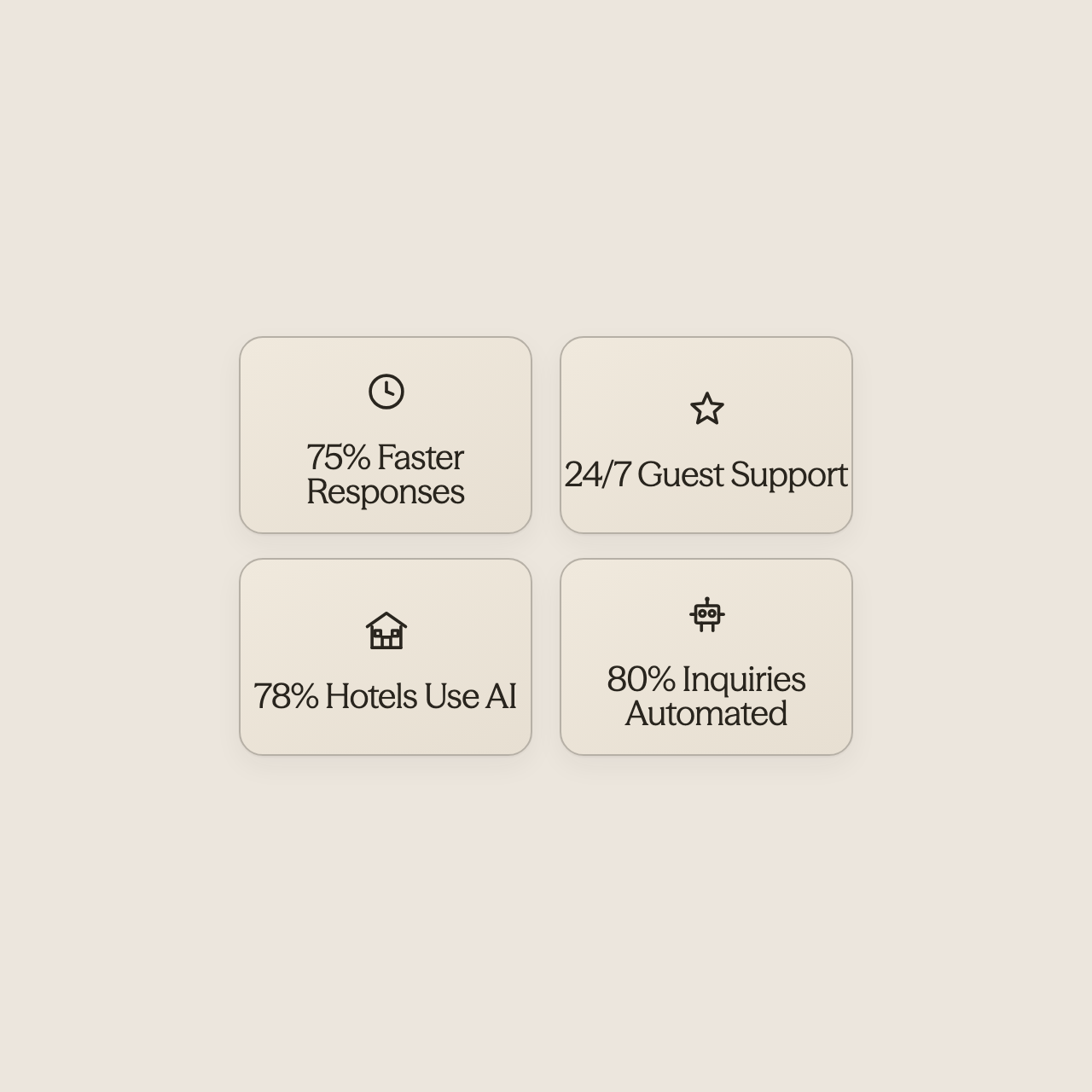
- Research from H2C's 2025 global study shows that 78% of hotel chains already deploy AI systems, but what separates effective implementations from disappointing ones is operational integration. AI for hospitality addresses this by connecting directly to property management systems and internal workflows, allowing automated responses to reflect actual room inventory constraints and maintenance schedules while routing exceptions with full context attached.
Why Hospitality Teams Are Turning to AI Faster Than Expected
Hospitality operators are using AI because guest expectations, staffing pressure, and operational complexity have become unmanageable. Guests demand faster responses, personalized experiences, seamless communication across channels, and 24/7 support, while teams struggle with critical staffing challenges, growing communication volumes, and pressure to maintain service quality while operating efficiently.
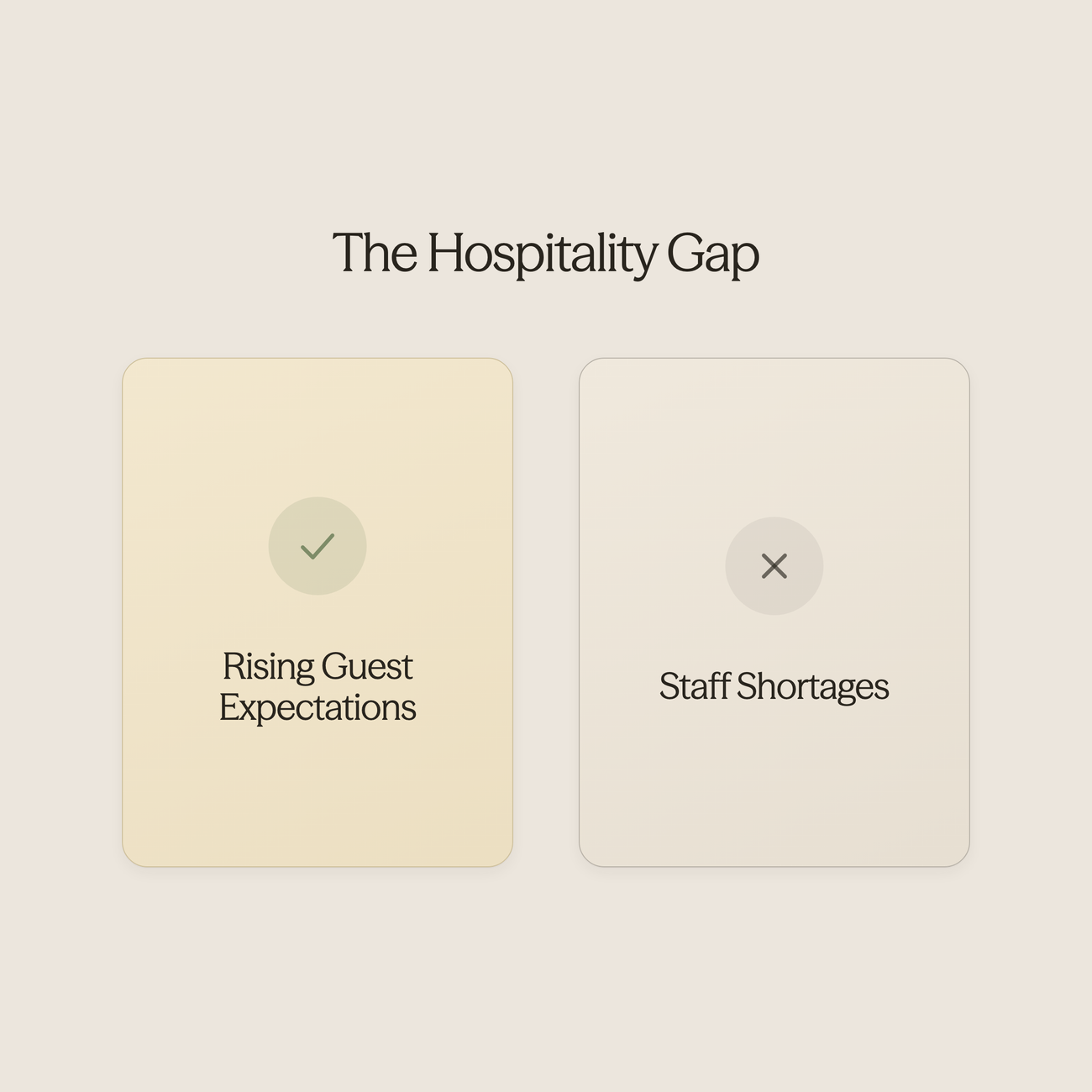
🎯 Key Point: The convergence of rising guest expectations and shrinking staff resources is creating an operational gap that only AI automation can bridge effectively.
"Hotels are experiencing unprecedented pressure to deliver personalized service while managing operational efficiency and staffing constraints simultaneously." — Hospitality Industry Report, 2024
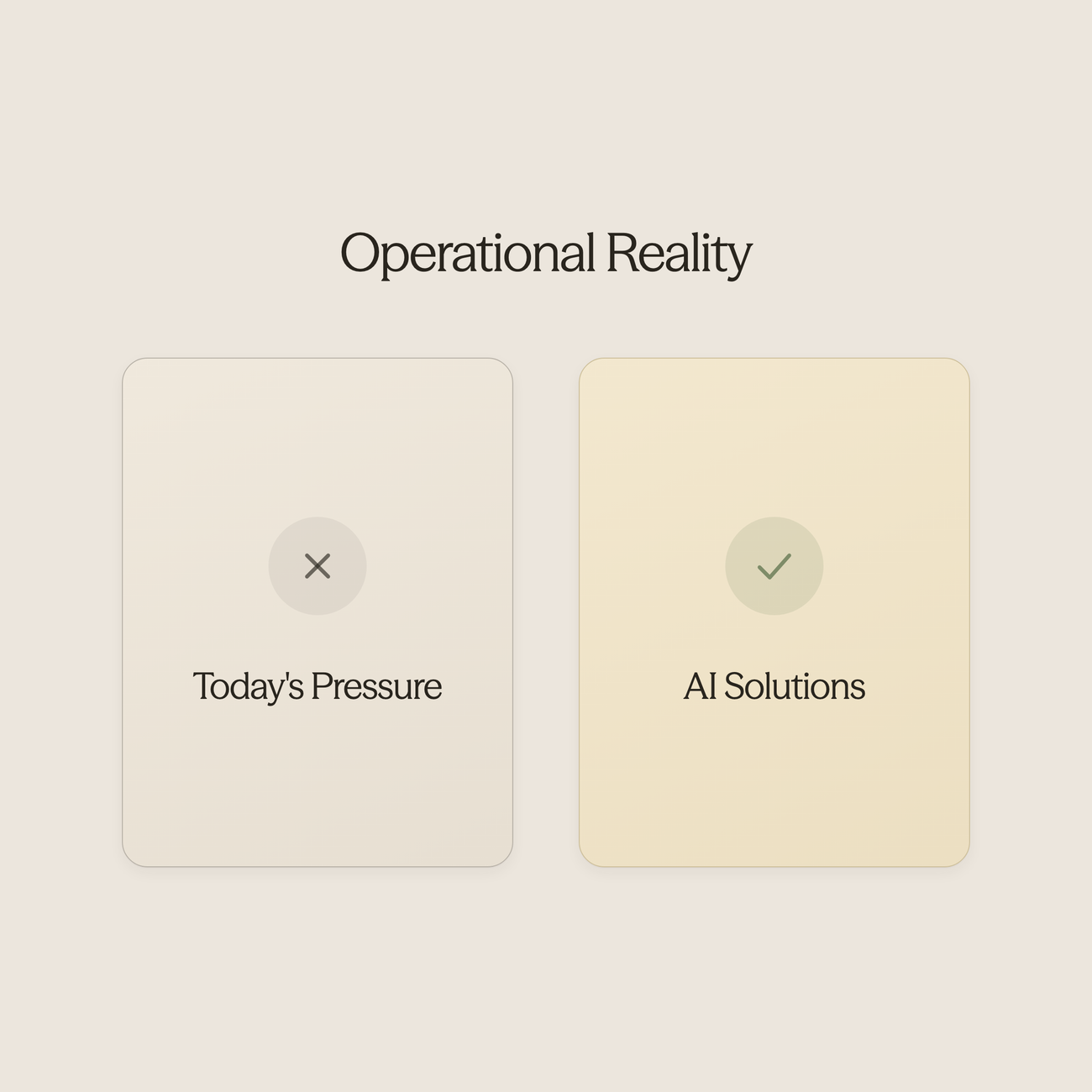
💡 Best Practice: Smart hospitality teams are implementing AI solutions before they reach a breaking point, allowing them to maintain service excellence while building operational resilience for future growth.
The Staffing Reality Driving Automation
The American Hotel & Lodging Association's 2024 workforce survey found that 76% of hotels reported staffing shortages across guest services, housekeeping, and operations. With strong travel demand but smaller teams, hospitality businesses must operate more efficiently. When front desk staff juggles check-ins, phone calls, text messages, and emails simultaneously, response time and service quality decline. Automation addresses this challenge while preserving human connection.
Why does communication volume outpace hotel staffing growth?
Today's guests communicate through SMS, email, booking platforms, mobile apps, website chat, voice support, and messaging platforms. Each booking creates multiple interactions before arrival, during the stay, and after departure. As occupancy increases, these touchpoints multiply, creating operational bottlenecks that are difficult to manage manually.
A single property might handle hundreds of guest messages daily across seven different channels, and coordinating conversations without automation requires either hiring additional staff or accepting longer wait times.
How can hotels manage multi-channel guest communications efficiently?
Most teams handle this by assigning staff to watch multiple inboxes throughout the day. As message volume grows and guests expect responses within minutes, team members spend more time switching between systems and less time on meaningful interactions.
Platforms like Conduit consolidate guest communications across channels, using AI agents that handle routine inquiries, route complex requests to the appropriate team members, and maintain context throughout the guest journey. This reduces response times from hours to seconds while freeing staff to focus on requests requiring human judgment.
Personalization Expectations Are Rising
A 2024 study conducted by Medallia found that 61% of consumers are willing to spend more for personalized experiences. This pressure is on hospitality operators to deliver relevant recommendations, timely communication, and tailored experiences at scale. Guests expect dining suggestions tailored to their preferences, activity recommendations that match their interests, and messages about services they're likely to want before asking.
AI Adoption Accelerates Because Manual Coordination Breaks Down
Lighthouse Blog's research on AI in hospitality reports that 73% of hoteliers say AI tools have reduced manual workload, particularly around repetitive communication tasks and workflow coordination. As guest expectations and operational demands increase, manual coordination becomes unsustainable. AI automates repetitive work, improves responsiveness, coordinates workflows more effectively, and personalizes experiences without requiring proportional growth in staff.
The goal is more consistent hospitality delivered at scale. That shift is creating practical applications across nearly every part of hospitality operations.
7 AI Use Cases in Hospitality that Improve Guest Experience
AI is transforming hospitality in seven main ways: guest messaging automation, personalized experiences and upsells, proactive engagement, operational coordination, revenue management, forecasting and resource planning, and multilingual communication. Each addresses critical operational challenges while improving guest satisfaction and loyalty.
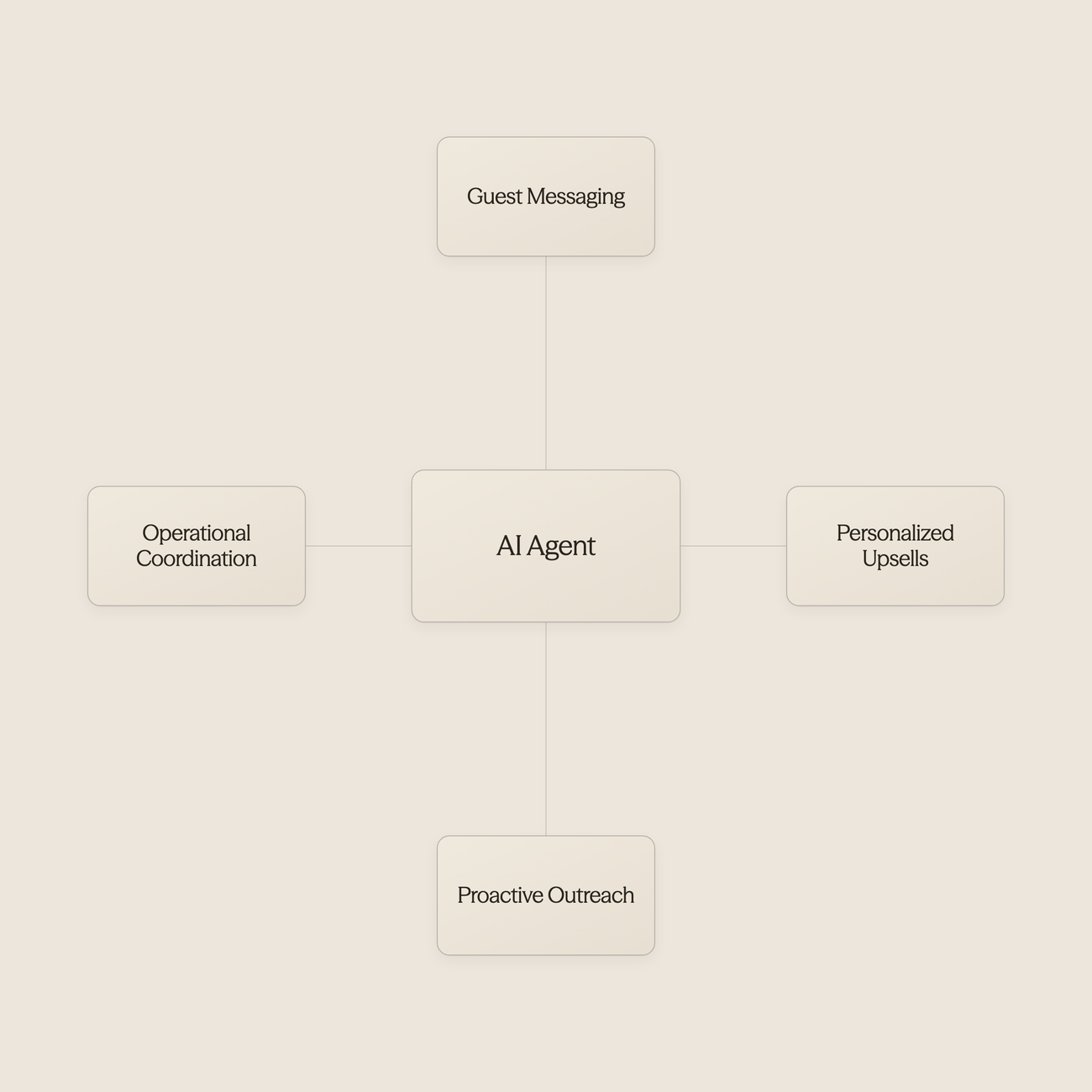
🎯 Key Point: These seven AI applications work together to create a seamless guest experience while reducing operational costs and improving staff efficiency.
AI-powered hospitality solutions can increase guest satisfaction by 25% while reducing operational costs by 30% through automated processes and personalized service delivery.
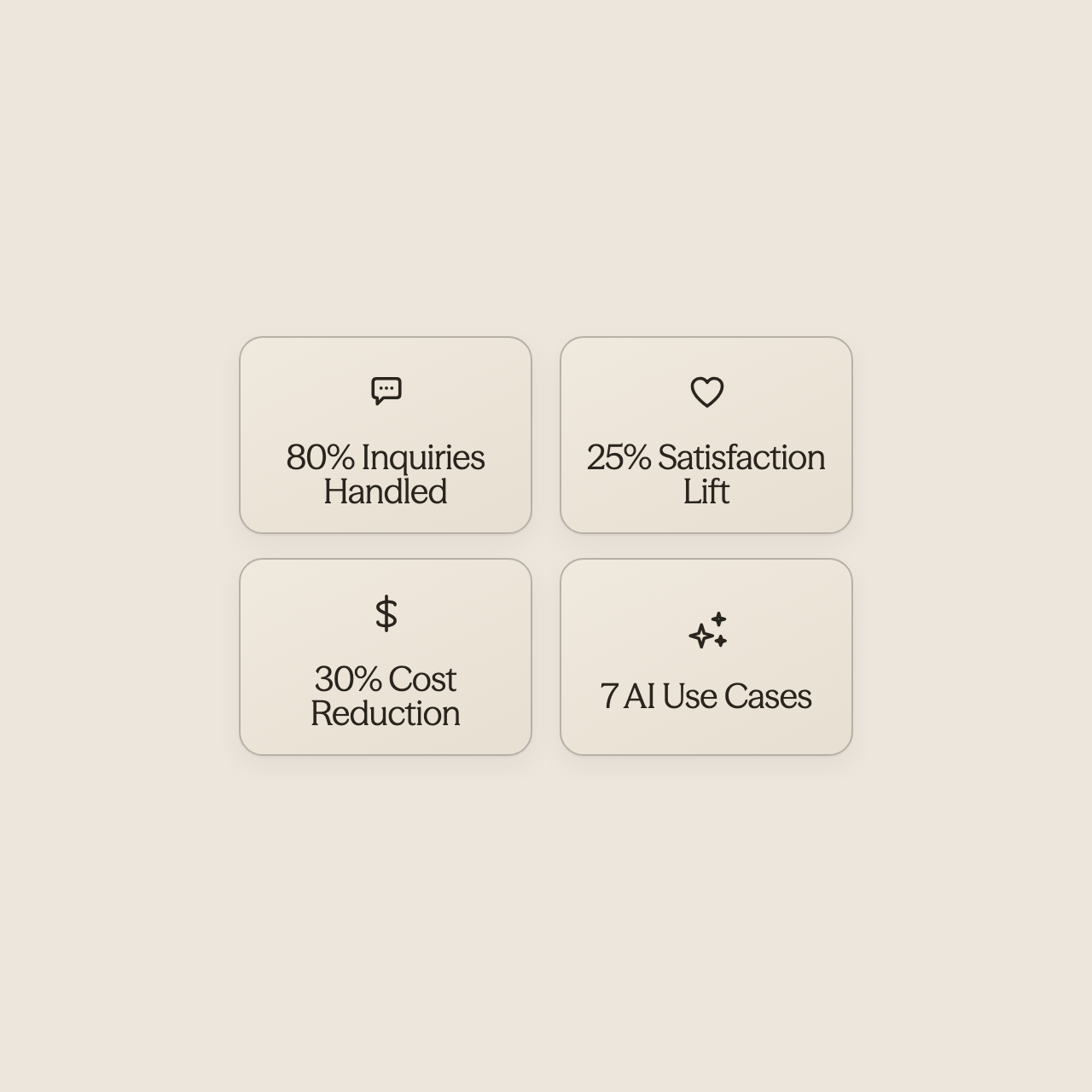
💡 Pro Tip: The most successful hotels implement multiple AI use cases simultaneously rather than focusing on just one area, creating a comprehensive digital transformation that benefits both guests and operations.
1. Guest Messaging and Customer Support Automation
Guest communication never stops. Questions arrive before booking, during the stay, and after checkout, often repeating the same requests throughout the day: check-in procedures, Wi-Fi passwords, parking details, and breakfast hours.
How much can AI chatbots reduce staff workload?
AI chatbots can handle up to 80% of routine guest inquiries, according to O'Rourke Hospitality research from May 2026. This frees hospitality teams from repetitive questions while guests receive immediate responses regardless of time zone or staff availability.
What about multilingual guest support?
Multilingual support enables guests to communicate in their native language without requiring staff to be fluent. A guest from Tokyo can request late checkout in Japanese while a family from Germany receives parking instructions in German, all through the same system.
Response consistency improves as well. The answer to "What time is breakfast?" remains the same regardless of which staff member responds. Information stays accurate across every channel: SMS, web chat, email, and messaging apps.
2. Personalized Guest Experiences and Upsells
Regular service feels indifferent when busy. A couple celebrating an anniversary needs different suggestions than a business traveler attending a conference. The challenge is to offer helpful suggestions without manually tracking every guest's preference. Our AI-powered platform delivers personalized experiences at scale, ensuring every guest feels understood.
Research from Salesforce shows that 73% of travelers expect hotels to understand their needs and preferences. AI analyzes reservation data, booking behavior, and stay history to deliver relevant offers at opportune moments.
How does timing affect upsell success?
Timing determines whether an offer feels helpful or annoying. A room upgrade suggestion right after booking may prompt consideration, while the same offer sent three hours before arrival feels like clutter. AI automates these choices based on guest information rather than set schedules.
Extra revenue grows when suggestions match guest needs. Spa promotions sent to guests who booked treatments before perform better than offers sent to everyone, and late checkout options prove most useful near the end of a stay, not at the start.
The goal is to help guests find services they want rather than pushing unsolicited products.
3. Proactive Guest Engagement
Most hospitality communication is reactive: guests must identify issues, find contact information, and wait for responses. AI enables a proactive approach that guides guests through their stay without requiring constant requests.
How does proactive communication improve the guest experience?
Instructions for arriving before you get there come automatically. Check-in reminders include digital access codes. Local activity suggestions appear when guests plan their day. Clear arrival instructions reduce support requests for directions.
Sharing pool hours in advance reduces front-desk questions. These helpful touches reduce the amount of communication guests need to do while improving their experience.
What problems can AI identify before they escalate?
Problems can surface earlier, too. When rooms aren't ready on time, maintenance requests go unfixed, or check-in information is incomplete, the team can reach out to guests immediately. This resolves issues before they become complaints.
4. Operational Coordination and Workflow Automation
The most valuable AI applications operate behind the scenes, enabling smoother service delivery for guests. Our Conduit platform helps hospitality teams deliver seamless experiences by automating coordination that typically happens manually.
Hospitality operations require constant coordination between the front desk, housekeeping, maintenance, guest services, and food and beverage departments. Manual coordination creates delays when information moves slowly between systems or is lost during shift changes. Conduit streamlines this by ensuring critical information reaches the right team instantly.
How does AI streamline hotel workflow coordination?
AI simplifies workflows by automating task routing, prioritization, and communication. Housekeeping teams receive room turnover priorities based on arrival schedules. Maintenance requests are routed automatically by urgency and responsibility. Escalation workflows move faster because context travels with each request rather than requiring staff to reconstruct information from multiple sources.
What makes automated task prioritization more effective?
Task prioritization improves when systems distinguish between urgent issues, such as a broken air conditioner in an occupied room, and non-urgent ones, such as a burned-out lightbulb in an empty hallway. These distinctions occur automatically rather than relying entirely on human judgment under pressure.
Fewer operational bottlenecks mean fewer guest-facing service failures.
5. Revenue Management and Dynamic Pricing
Pricing decisions directly impact revenue, but demand fluctuates based on seasonality, local events, booking pace, market conditions, and competitor activity. Manual forecasting cannot process these variables quickly enough to respond effectively.
AI systems analyze these factors continuously and recommend pricing adjustments faster than traditional methods. Dynamic pricing allows room rates to respond to changing demand automatically, eliminating delays from weekly revenue meetings.
What market insights can AI provide for revenue management?
Competitor monitoring adds market visibility that would otherwise require manual research. AI tracks pricing movements across comparable properties and identifies emerging trends before they become obvious. Demand forecasting helps operators anticipate future booking patterns, enabling proactive revenue strategies.
The goal is to align pricing with actual market conditions. During high-demand periods, strategic price increases maximize revenue, while during slower periods, pricing adjustments support occupancy goals without sacrificing potential earnings.
6. Forecasting and Resource Planning
Accurate forecasting affects staffing decisions, inventory management, housekeeping schedules, maintenance planning, and operational budgeting. Poor predictions create either understaffing that compromises service or overstaffing that wastes resources.
AI improves forecasting by analyzing larger datasets than traditional methods can process efficiently. Occupancy predictions become more accurate, and staffing demand forecasts simultaneously account for historical patterns, upcoming events, and seasonal trends.
What benefits does proactive resource planning provide?
If a property expects unusually high occupancy during a local festival, AI can predict housekeeping workload, front desk demand, maintenance staffing needs, and guest communication volume. Teams can prepare ahead rather than scramble at the last minute.
Resource allocation becomes more efficient when forecasts improve. Teams avoid service failures from understaffing and budget waste from overstaffing, with operational capacity matching actual demand more reliably.
7. Multilingual Guest Communication
Hospitality welcomes guests from different countries and language backgrounds. Traditionally, effective communication required multilingual staff or costly third-party translation services, which slowed responses.
Modern AI systems enable real-time translation and multilingual messaging across channels. Guests communicate in their preferred language while staff receive messages in theirs, reducing misunderstandings around reservations, directions, policies, amenities, and service requests.
What are the benefits of clear multilingual communication?
Clear communication stops costly mistakes. A guest who understands check-out procedures avoids missed deadlines and unexpected charges. A guest receiving accurate directions in their language arrives less stressed and more satisfied.
For properties serving international travelers, multilingual AI support improves accessibility and consistency without requiring fluent multilingual staff, reducing operational burden while increasing guest confidence.
The Pattern Behind Every Application
These seven applications solve different problems but share a common thread: hospitality teams face growing expectations for faster responses, personalized service, better coordination, and higher satisfaction while managing increasing complexity.
The pattern is not automation for its own sake, but reducing operational friction while improving guest experience. AI handles repetitive coordination so hospitality professionals can focus on meaningful guest interactions that require human judgment, empathy, and creativity.
How does AI solve communication fragmentation in hospitality?
Most teams manage guest communications through email, phone calls, property management systems, and messaging apps. As communication volume grows and guest expectations shift toward instant responses across multiple channels, this fragmented approach creates hidden costs.
Messages get missed between platforms, response times stretch inconsistently, and staff spend increasing time switching between systems rather than serving guests. Conduit centralizes guest communications through automated routing and intelligent escalation, compressing response times from hours to minutes while maintaining consistent service quality across all channels.
What makes hospitality AI implementations truly effective?
The most effective hospitality AI tools help professionals spend less time on repetitive tasks and more time delivering memorable guest experiences.
But not every AI solution works in hospitality, and the reasons why reveal something most operators learn too late.
Related Reading
- AI Communications For Hotels
- AI For Vacation Rentals
- AI For Airbnb Hosts
- Best Hotel Chatbot
- AI Chatbot For Hotels
- Hotel Chatbot
Why Generic AI Tools Often Fail Hospitality Businesses
Generic AI tools don't work well in hospitality because they're designed for conversations, not running operations. Without access to reservation systems, housekeeping schedules, room inventory, and property policies, a chatbot can sound helpful while making promises it cannot keep: a liability rather than an asset. Conduit is purpose-built to integrate with your existing hospitality systems, ensuring AI assistance grounded in real operational data.
🎯 Key Point: The difference between generic AI and hospitality-specific AI isn't just features—it's about operational integration that prevents costly mistakes and guest disappointment.
Without access to real-time operational data, AI chatbots become promise-making machines that create more problems than they solve.
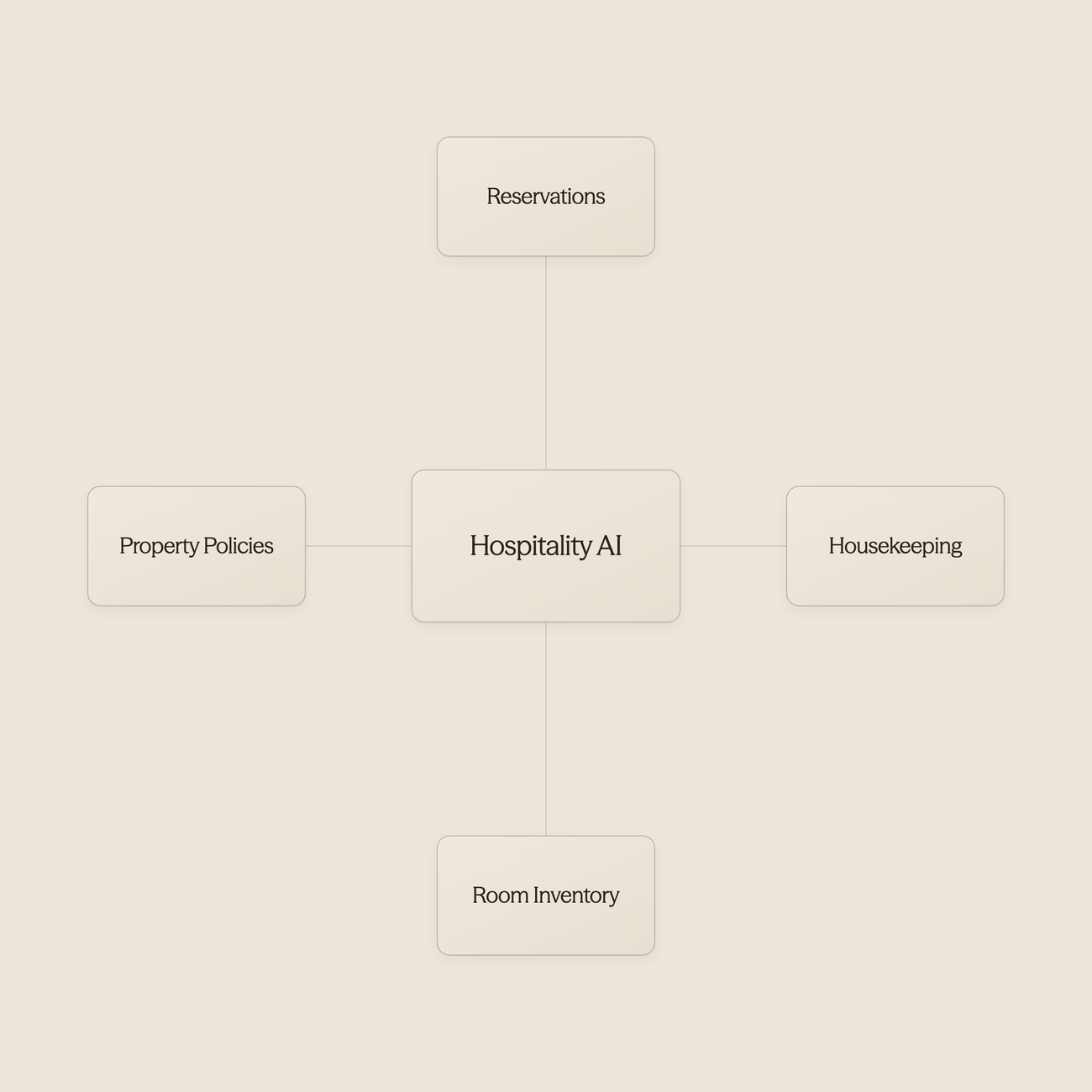
⚠️ Warning: Generic AI tools can actually damage your reputation by providing inaccurate information about availability, policies, or services—turning helpful technology into a guest relations nightmare.
What causes AI to miss critical hotel context?
Hospitality conversations depend on context outside the conversation itself. When a guest asks for early check-in, the answer requires knowing whether the room is clean, whether housekeeping has finished turnover, occupancy that day, and the guest's loyalty status. According to hospitality.today, 70% of hotels report that generic AI chatbots fail to understand hospitality-specific terminology and guest requests. The AI responds confidently but guesses based on patterns rather than facts. Our Conduit platform solves this by grounding AI responses in your actual property data, ensuring every guest interaction is informed by real context rather than assumptions.
How does operational blindness create more work for staff?
Staff spend more time fixing these mistakes than answering the original question. A guest arrives expecting early check-in only to find the room not ready, forcing the front desk team into an unnecessary service recovery situation. The AI created work instead of eliminating it.
Fragmented Communication Creates Inconsistency
Most generic AI operates within a single channel. It responds to web chat but remains unaware of concurrent email threads or yesterday's SMS conversation. Guests receive different answers depending on where they ask the question.
Hospitality businesses handle communication across SMS, email, booking platforms, web chat, guest apps, voice systems, and messaging services. When those channels don't connect, the guest experience fractures. One team member says checkout is at 11 a.m., another says noon, and the chatbot confidently states 10 a.m. because it pulled outdated information from a cached policy document.
When AI Invents Information
Large language models create answers that sound real even when they lack complete information. In hospitality, this becomes dangerous: AI might fabricate amenity details, misstate policies, provide incorrect directions, or recommend closed restaurants. The confident tone compounds the problem—guests believe the misinformation and arrive frustrated when reality diverges from expectations. Our Conduit platform addresses this by grounding AI responses in verified property data, ensuring guests receive accurate, trustworthy information.
A guest who plans their day around wrong pool hours or drives to a restaurant that's closed loses trust in the property. That trust doesn't return easily, and staff bear the emotional cost of a mistake they didn't make.
Why do escalation failures create bigger problems?
Regular AI often doesn't recognise when a situation requires human intervention. Service complaints, maintenance emergencies, billing disputes, accessibility concerns, and emotionally frustrated guests all need immediate assistance from a real person. When AI continues sending automated messages instead of connecting the guest to a human, frustration escalates.
How does timing affect guest satisfaction outcomes?
Timing matters in hospitality more than most industries. A maintenance issue reported at 8 a.m. and escalated at 8:05 a.m. is resolved before it affects the guest experience, whereas the same issue, escalated at 2 p.m. after three automated responses, results in a negative review.
Platforms like AI for hospitality address this by connecting directly to property management systems and operational workflows, enabling AI to recognise when escalation is needed and route issues with full context. But even when AI recognizes the need to escalate, the question remains: what operational awareness does it need to work reliably?
What Effective Hospitality AI Actually Looks Like
Good hospitality AI works as the backbone of operations, not merely as a chatbot. It succeeds when the AI can access reservation data, coordinate work across departments, and recognise when to involve a human for important decisions—not based on how naturally it answers questions.
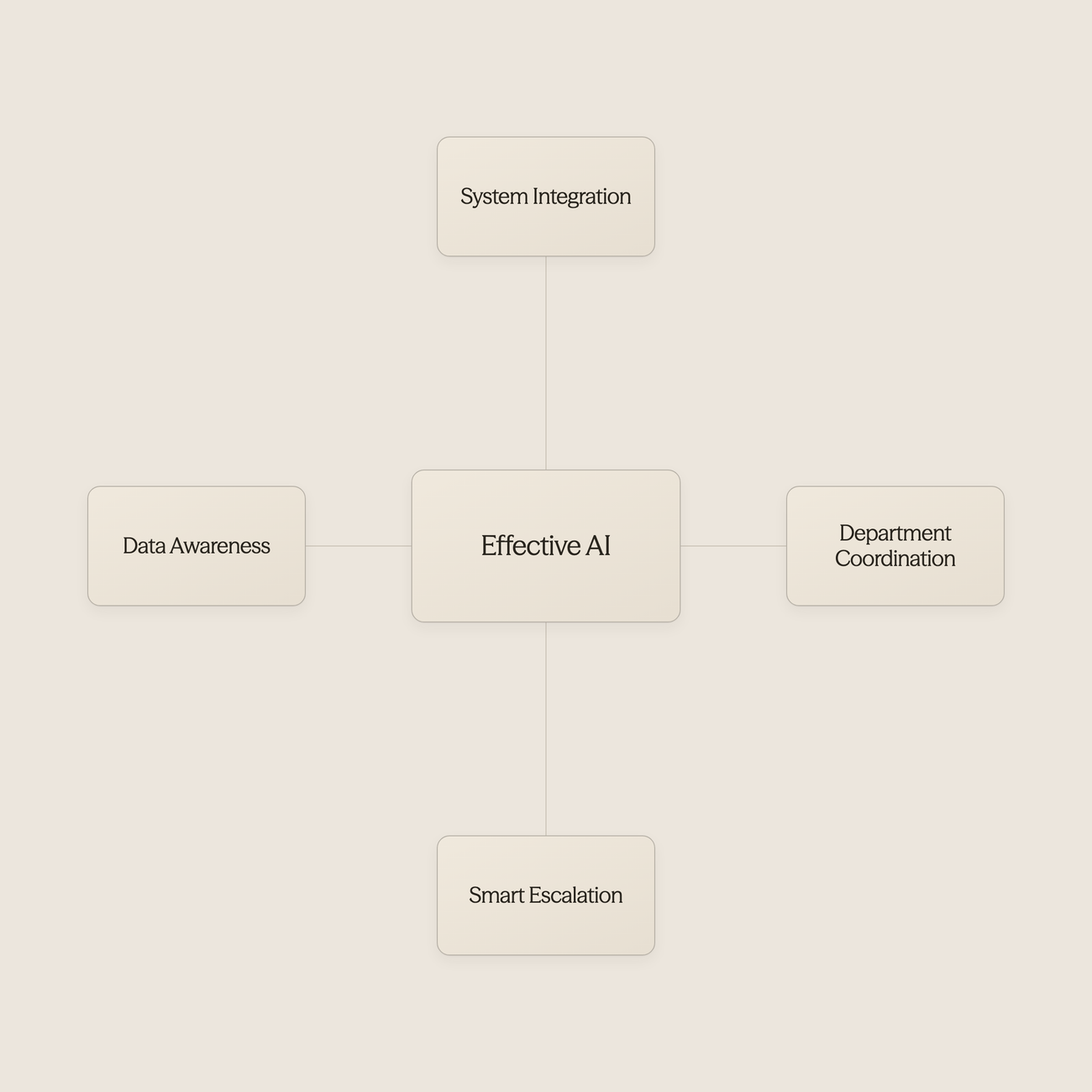
🎯 Key Point: Effective hospitality AI integrates deeply with existing systems rather than operating as a standalone solution—seamless data access and cross-departmental coordination are the true markers of success.
"The most successful hospitality AI implementations focus on operational integration rather than conversational abilities, with data connectivity being the primary success factor."
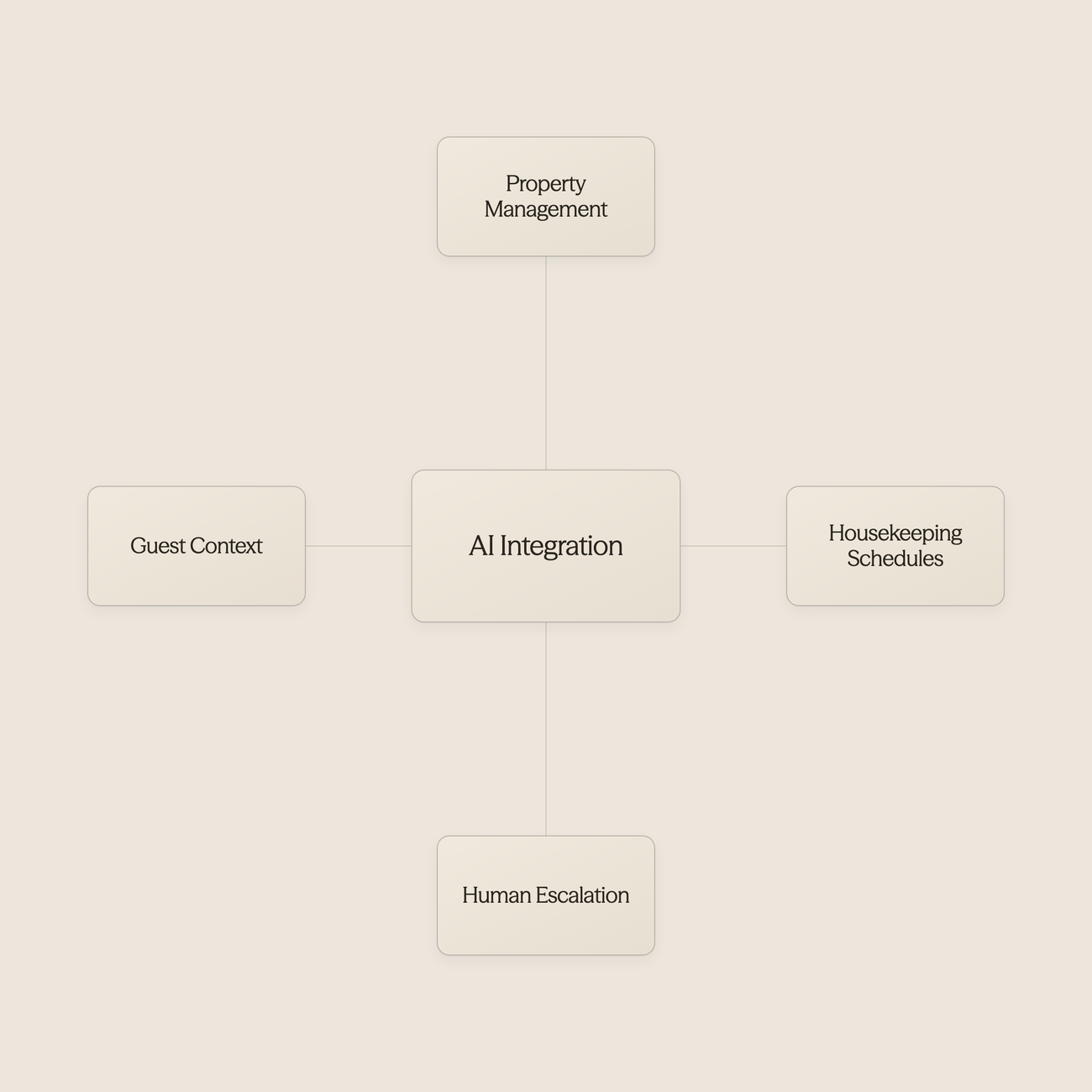
💡 Best Practice: Look for AI solutions that can access your property management system, coordinate with housekeeping schedules, and escalate to human staff when guest issues require personal attention—these capabilities matter far more than natural language processing alone.
Why does system integration matter for hotel AI?
Hospitality conversations rarely happen by themselves. A guest requesting a late checkout initiates a process that depends on room availability, housekeeping schedules, and current occupancy. Without direct access to property management systems, AI cannot determine whether the request is feasible—it can only apologize and transfer the conversation to staff who must rebuild the entire context manually. Conduit integrates directly with your property management system, enabling AI to access real-time data and resolve guest requests without human handoff.
How does contextual awareness improve guest experiences?
The strongest systems understand who the guest is, which reservation they hold, where they are in the stay lifecycle, and what operational actions are underway. This contextual awareness eliminates repetitive information gathering that frustrates both guests and employees. When a conversation moves from email to text message, the AI already knows what was discussed, what was promised, and what remains unresolved.
How does automation extend beyond simple answers?
Many hospitality interactions follow predictable patterns: pre-arrival instructions, reservation confirmations, check-in information, and post-stay follow-ups. These require accuracy but rarely require human creativity. Effective AI handles these workflows completely while maintaining expected service quality.
According to h2c's 2025 global study, 78% of hotel chains already use AI systems. What separates effective implementations from disappointing ones is whether automation coordinates across channels. Guests should never repeat information when the conversation shifts from the booking platform to the mobile app.
Why does operational integration matter for AI success?
Properties that use AI without connecting it to their operations create extra work. Staff spend time fixing promises the system made without understanding room inventory or maintenance schedules. Platforms like AI for hospitality solve this by connecting directly to property management systems. Our platform enables AI to understand how the property operates before generating responses and routing exceptions with full context.
The best hospitality AI feels invisible: guests notice faster responses, smoother arrivals, and consistent service rather than the technology itself. This invisibility requires the system to coordinate housekeeping, maintenance, front desk, and operations without increasing overhead. The question is no longer whether AI can answer guest questions, but whether it functions as an adaptive infrastructure that learns and handles increasingly complex operational coordination over time.
Related Reading
- Hotel Chatbot
- Hotel Automation Tools
- Guest Communication Tools
- AI Tools For Hotels
- AI Agents For Hotels
- Airbnb Automation Tools
- AI Chatbot For Hotels
How Conduit Helps Hospitality Teams Turn AI Into Operational Results
Understanding what hospitality AI can do is one thing. Turning it into real improvements that you can measure is another. Many operators find that using AI tools alone doesn't fix underlying problems. Communication remains scattered, operations don't connect well, and staff spend considerable time coordinating requests manually. Our Conduit platform integrates these AI capabilities into your existing workflows, enabling your team to act on insights rather than collect data.
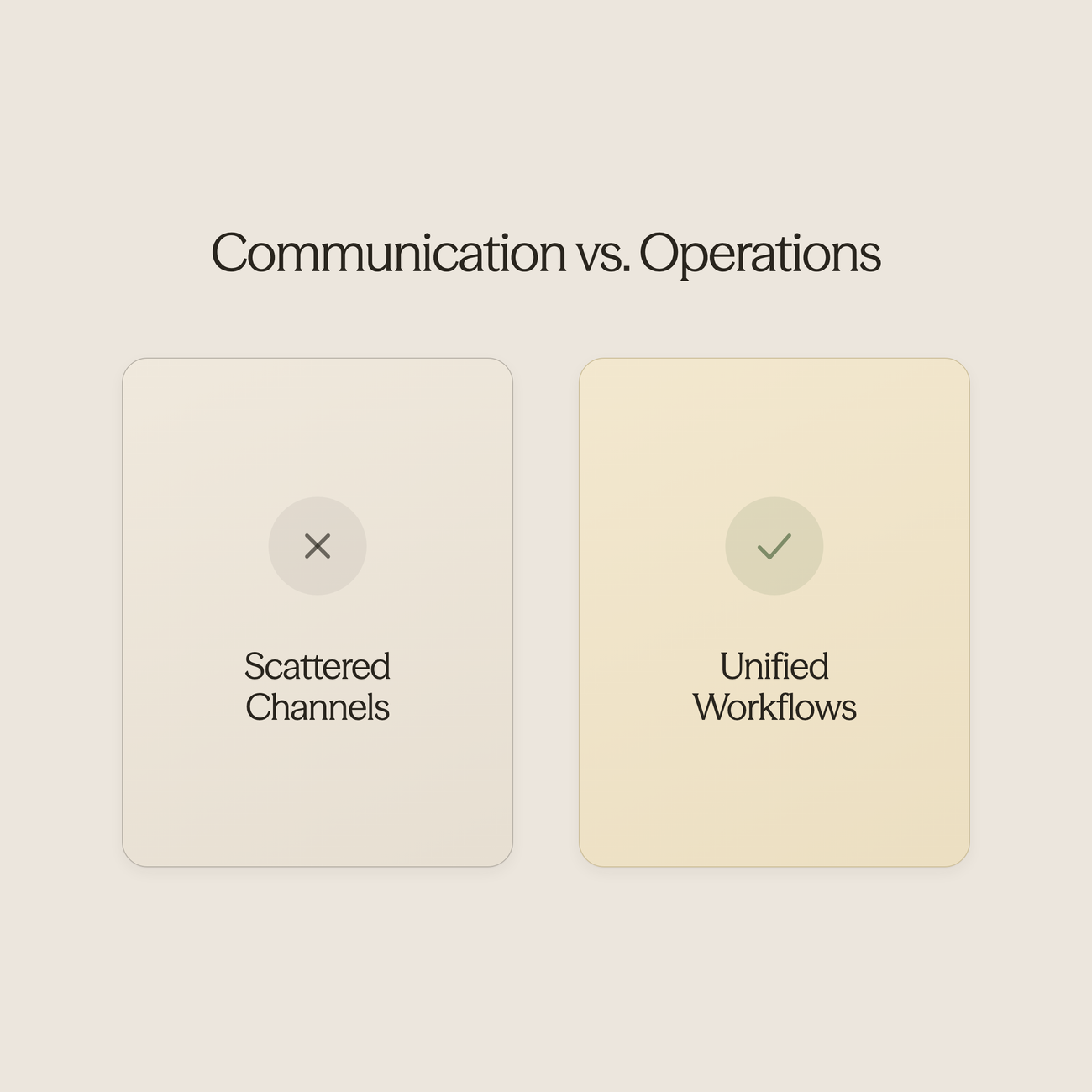
🎯 Key Point: The gap between AI potential and operational reality is where most hospitality teams struggle - Conduit bridges this divide by embedding intelligence directly into your daily workflows.
"Many operators find that using AI tools by themselves doesn't fix the real problems - communication stays scattered and staff still spend significant time on manual coordination." — Hospitality Operations Research, 2024
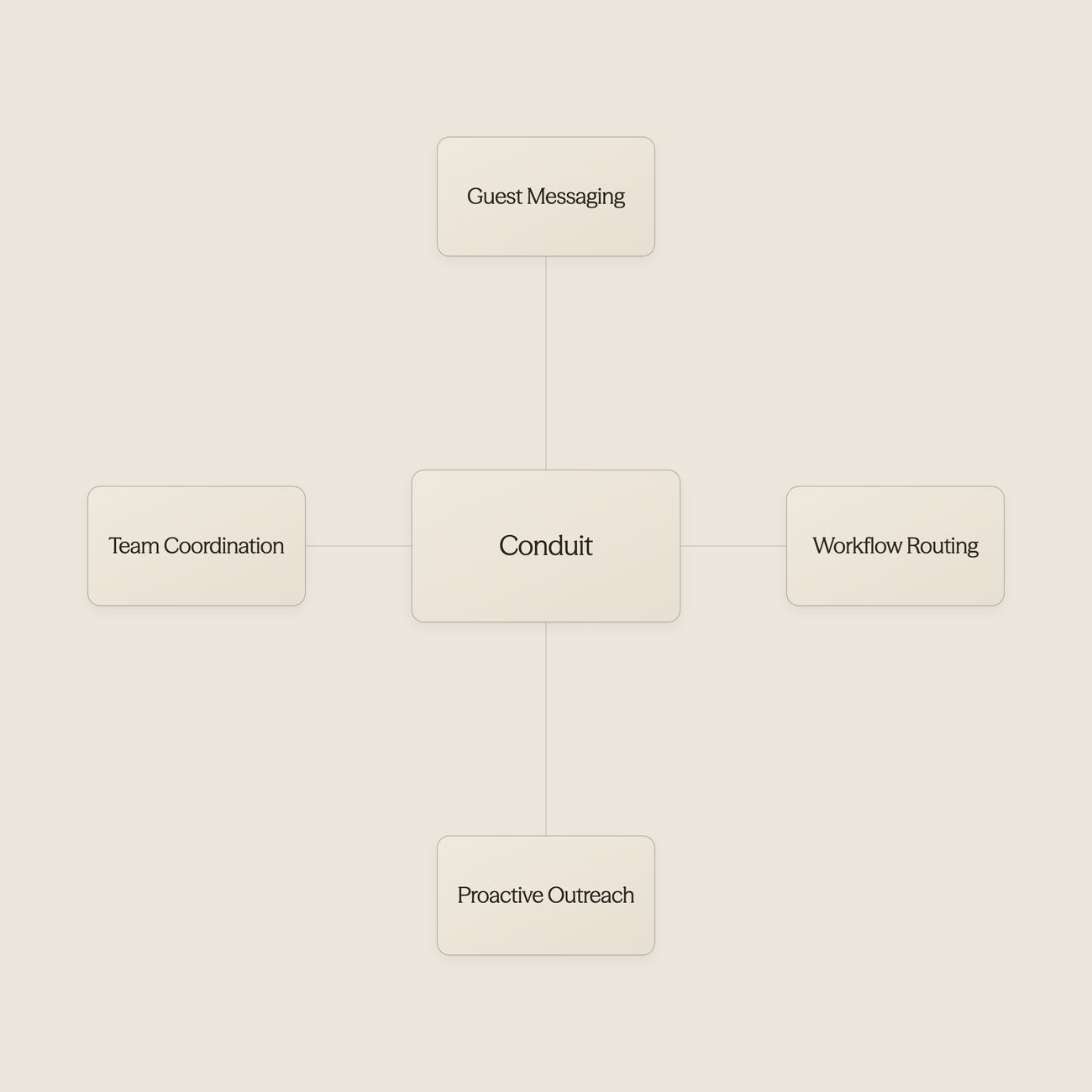
💡 Best Practice: Focus on AI integration that enhances your team's existing processes rather than replacing them entirely - this approach delivers measurable improvements without disrupting established operational rhythms.
Connecting Communication to Operational Workflows
The value of hospitality AI lies in connecting guest communication directly to operational workflows. When a guest requests early check-in, room upgrades, maintenance repairs, or stay extensions, accurate responses require reservation information, property details, workflow status, and operational coordination. Our Conduit platform pulls real reservation and property context directly into guest interactions, ensuring responses reflect the actual state of the guest journey. This operational awareness enables hospitality teams to confidently automate 80% of inquiries, rather than requiring staff to handle repetitive requests manually.
Proactive Engagement Across the Guest Lifecycle
Hospitality operators manage communication across bookings, pre-arrival preparation, check-ins, purchases, upgrades, stay extensions, and post-stay engagement. Manual management becomes difficult as occupancy, property counts, or guest volume increase. https://conduit.ai/book-demo proactively rather than waiting for guests to initiate interactions. Our platform automatically delivers communication triggers based on booking activity, arrival timing, purchases, or other guest lifecycle events, ensuring relevant information reaches guests when needed and reducing inbound support volume.
Coordinating Operational Follow-Through
Guest requests often require action from housekeeping, maintenance, operations managers, guest services, or front desk teams. Without coordinated workflows, information fragments and response times slow. Conduit routes operational follow-through to the right people while preserving request context, ensuring staff receive the information they need and can focus on solving problems rather than gathering data.
Orchestrating Human Intervention When It Matters
Difficult situations, operational problems, and service recovery scenarios require human judgment. Conduit organizes internal communication around these exceptions so teams can step in with the necessary context already attached. By automating repetitive communication and coordinating routine workflows, the platform allows employees to focus on interactions where human hospitality creates the greatest value: those requiring empathy, discretion, or operational decision-making.
Building a More Scalable Operational Model
The result is a more scalable operational model. Teams can manage growing communication volumes, maintain consistency across channels, reduce repetitive administrative work, and improve responsiveness without sacrificing service quality. By combining AI automation, operational awareness, proactive guest engagement, and human oversight into a single coordinated hospitality platform, Conduit transforms AI from a technology initiative into measurable operational results.
Related Reading
- AI Software For Hotels with the Best Reviews
- Best AI For Hotels
- Property Management AI Tools
- Duve Pricing
- Enso Connect Pricing
- Hotel Automation Software
- Airbnb Automated Messages
- Hijiffy Pricing
Book a Demo to See Conduit's AI for Hospitality Customer Service in Action
If your hospitality team spends more time reacting to repetitive requests than improving guest experience strategically, AI can reduce friction in communication and operations. Our platform connects to your hospitality stack, automates guest communication using reservation context, and launches proactive workflows that improve operational efficiency and guest satisfaction. You'll see where automation reduces support volume, improves consistency, and helps your team scale service without adding complexity.
🎯 Key Point: Conduit's AI platform integrates seamlessly with your existing hospitality technology stack to deliver intelligent guest communication automation that goes beyond basic chatbots.
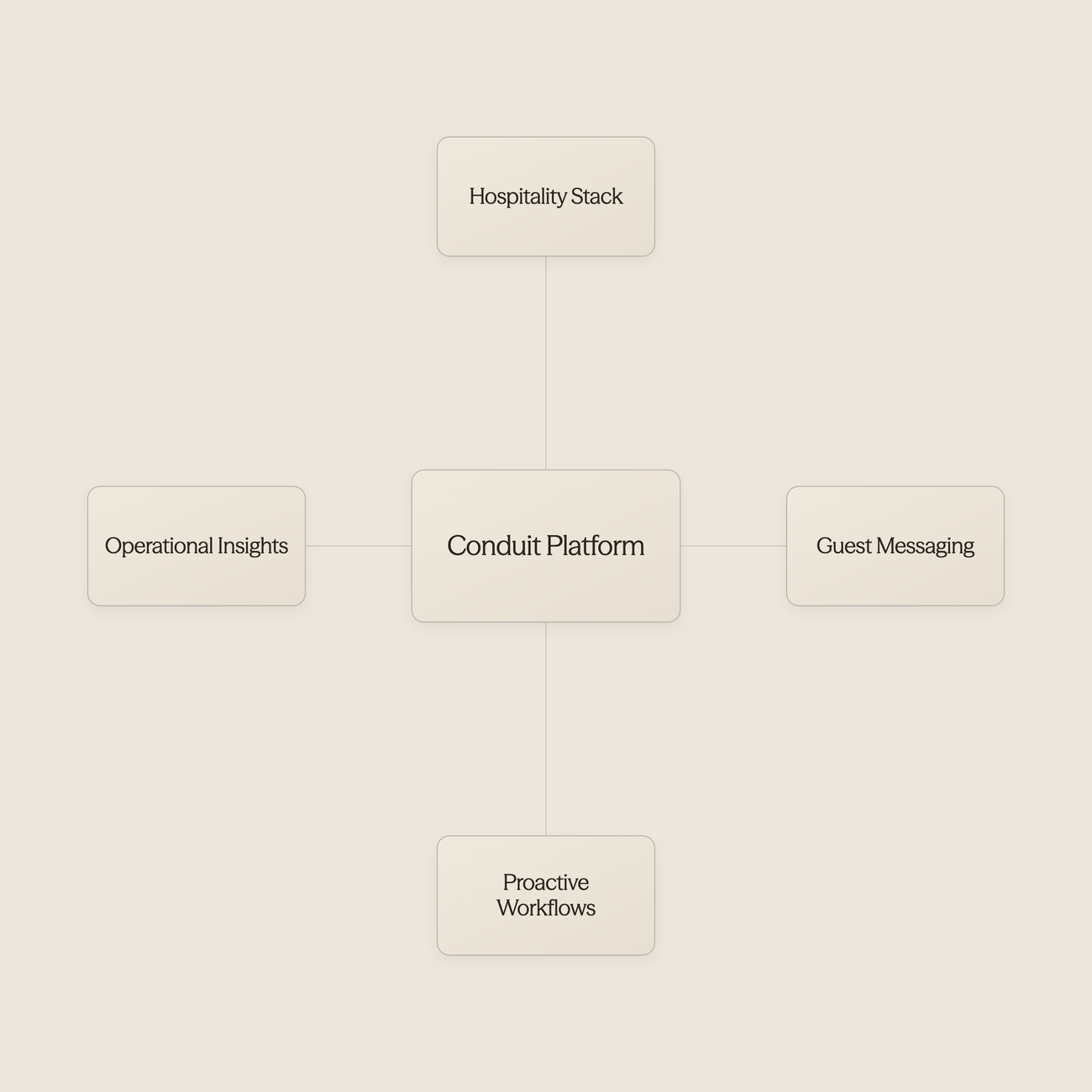
AI-powered hospitality platforms can reduce guest service response times by up to 75% while maintaining personalized communication at scale.
💡 Ready to Transform: Book a demo to see how Conduit can transform your operations and turn reactive guest service into proactive guest delight. Experience firsthand how AI automation can free your team to focus on what matters most: creating exceptional guest experiences.
Stay in the loop
Get the latest on AI automation, product updates, and customer stories.

