13 Best Cloudbeds Alternatives for Hotels in 2026


Cloudbeds Alternatives
13 picks for hotel groups.
Switching PMS platforms fixes your distribution friction. It won't fix the guest communication workload that follows you to every alternative you try.
Most heads of operations and VPs of operations at multi-brand or enterprise hospitality groups think: "If I find the right PMS alternative, better channel management, cleaner integrations, fairer pricing, my operational problems will fall into place and I can stop losing money on reactive guest-service staffing." Most operators searching for a hotel PMS switch have already done the math on Cloudbeds against their own requirements: which features they use, how pricing lands at their room count, what support coverage they need. But there is a quieter problem underneath the platform comparison, one that follows operators to every alternative they try and rarely shows up on any evaluation scorecard. See our AI for hospitality for how this works in practice.
Understanding what actually drives the exit decision, and what the switch genuinely fixes, is the difference between solving your operational problem and restarting it on new software. Cloudbeds earned its position. Hotel Tech Report named it a top PMS consecutively from 2021 through 2026, and its unified channel manager, booking engine, and property management layer genuinely reduce distribution friction for independent hotels and small-to-mid portfolios. Operators managing one or two properties often find it covers 80% of their daily workflow without stitching together separate tools. Exit triggers cluster around three pain points.
Pricing Opacity at Scale Cloudbeds does not publish tier pricing publicly, requiring a sales conversation before any operator can model cost at scale. For a single property this friction is manageable, but for a growing group evaluating total cost of ownership across a portfolio, the inability to run numbers without entering a sales cycle creates a meaningful planning blind spot. Automation Ceilings on Guest Communication Native guest communication tools handle basic confirmations but stop short of the high-volume messaging a busy property generates around the clock. Reservation logic scales; guest communication quality does not. Staff turnover compounds this, because the institutional knowledge that kept messaging consistent walks out with every departing front-desk team member.
Support Lag for Multi-Property Groups Operators managing 10-plus properties report that response times on complex issues stretch in ways a growing group cannot absorb. A 12-property group that moves from Cloudbeds to a competing PMS typically solves distribution and reporting friction within the first quarter. What persists is the guest communication workload, industry benchmarks put guest messaging operations at several hours of staff time per property per day, a number that does not shrink when you change platforms.
several hours Guest messaging staff time per property daily
Key takeaways
- Switching PMS fixes reservation infrastructure, it does not fix the 24/7 inquiry volume, brand-voice consistency, or reactive staffing costs that are actually eating margin.
- Most PMS evaluation scorecards compare channel management, integration depth, and pricing tiers, none of them include a column for guest communication automation readiness.
- Haven Vacation Rentals scaled from 40% to 90% automation and cut their guest support team from roughly 25 staff to 2 people per shift, not by switching PMS, but by layering purpose-built AI on top of their existing stack.
- Every one of the 13 alternatives on this list handles reservations well. None of them closes the communication gap on their own.
- A PMS migration is one of the most disruptive operational moves a hotel group can make, operators who finish it feeling confident they've solved their cost problem often call six months later with the same labor bill.
- Conduit's AI Agents sit on top of whatever PMS you already run, reading from your own SOPs, manuals, and FAQs to handle guest conversations across channels, without human intervention, so the communication layer gets solved independently of whichever reservation system you choose.
Key Features and Evaluation Criteria - Including the One Most Scorecards Miss
Building a rigorous PMS evaluation scorecard feels like the responsible move, and most heads of operations and VPs of operations at multi-brand or enterprise hospitality groups believe that if they find the right PMS alternative, better channel management, cleaner integrations, and fairer pricing, their operational problems will fall into place and they can stop losing money on reactive guest-service staffing. So they map channel management depth, booking engine flexibility, reporting quality, integration breadth, pricing transparency, and onboarding support. They weight each criterion, run the comparison, and pick one.
The problem is that every credible Cloudbeds alternative clears those six bars. They are the floor, not the ceiling. One practical reality compounds this: publicly available feature and integration data for PMS platforms is frequently inaccurate or outdated, which means the comparison spreadsheet a team spends three weeks building often requires direct vendor verification before a single score is reliable.
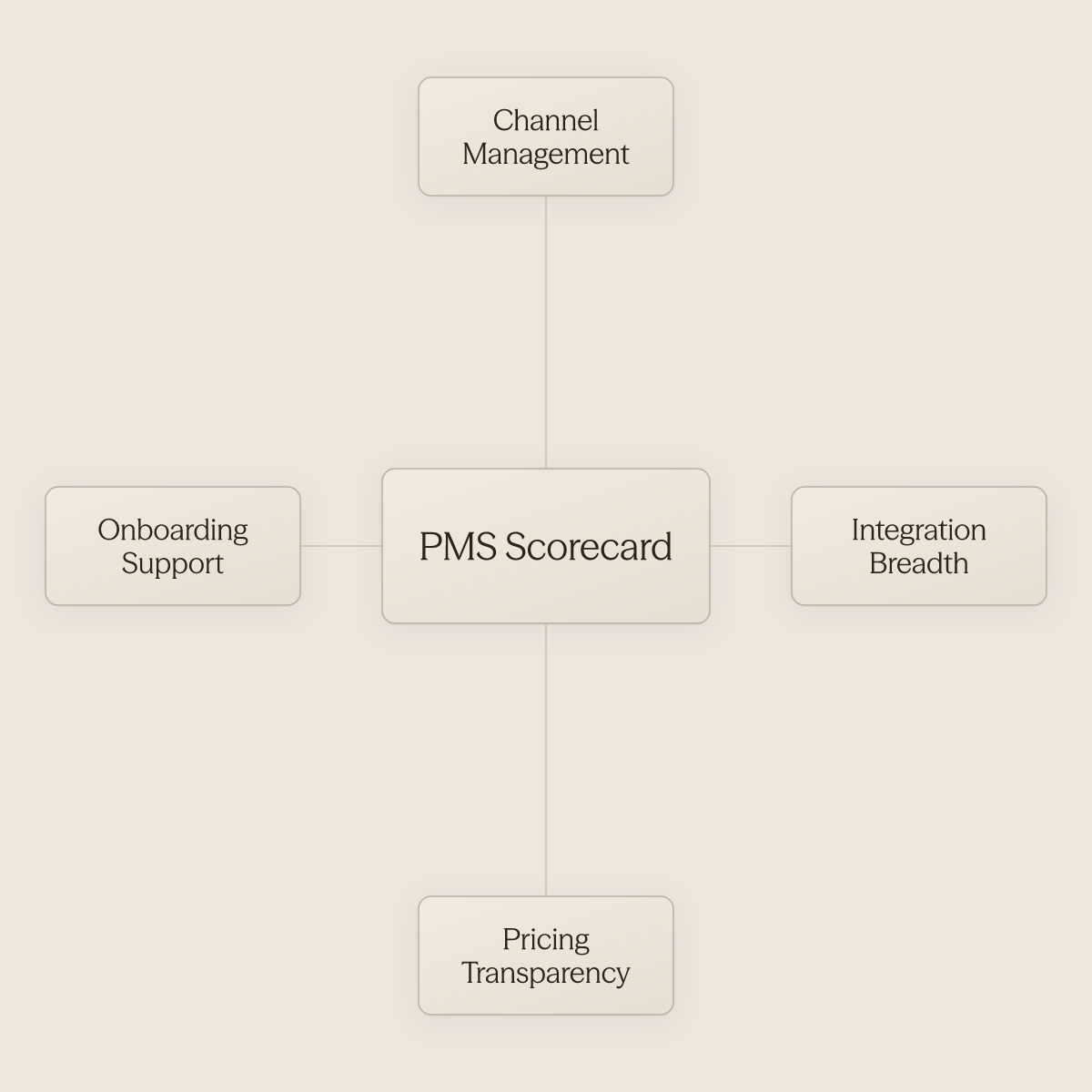
The scorecard is never as finished as it looks.
"Small property operators (e.g., 13-room hotels) struggle to evaluate PMS options because we lack a clear framework for comparing systems against our specific operational needs."
The Six Criteria Every Cloudbeds Alternative Comparison Should Include
Channel sync, OTA connectivity, and clean integrations are necessary. No serious vendor ships without them in 2025. Operators who've been through a PMS migration and found their operational costs unchanged afterward know this firsthand: the scorecard was thorough, the switch was clean, and front-desk headcount never moved. That outcome isn't a vendor failure. It's a criteria failure. The scorecard measured the right things for reservations management and nothing that touches the guest relationship after the booking confirms.
Property Size and Type Is the First Filter, Not a Footnote
The best Cloudbeds alternative for a 12-room boutique inn is structurally different from the best fit for a 400-key urban hotel group. A boutique property needs simplicity, fast onboarding, and a strong direct booking engine. A multi-brand group needs role-based permissions, portfolio-level reporting, and SOP enforcement across properties where staff turnover is constant. Treating size as a footnote after the feature comparison means the shortlist is already wrong before scoring begins.
A Critical Evaluation Criterion Most Cloudbeds Alternative Scorecards Overlook - Guest Communication Automation Depth
This is the dimension that consistently separates high-performing properties from average ones, and it appears on zero mainstream PMS comparison scorecards.
A 2022 study by Baquero across six 4- and 5-star hotels found that the sufficient conditions for high NPS were entirely guest-facing service dimensions: cleanliness, gastronomy, and the quality of human interaction. Channel management and reservations infrastructure do not appear among them. Industry research links NPS directly to electronic word-of-mouth behavior, meaning guest satisfaction scores compound into downstream bookings no channel manager touches. The implication is direct: optimizing the reservation layer without optimizing the guest communication layer leaves the highest-leverage variable unaddressed.
Key takeaway: Optimizing the reservation layer without optimizing the guest communication layer leaves the highest-leverage variable unaddressed, because NPS compounds into downstream bookings no channel manager touches.
The specific failure mode looks like this. Inquiry volume doesn't follow business hours. Booking questions land overnight; pre-arrival messages arrive in bursts across Airbnb, email, and a direct booking engine simultaneously; post-stay follow-up either happens on a manual schedule or it doesn't happen. Every one of those gaps is a moment where a guest's experience, and their likelihood to leave a review or rebook, is decided by whether a staff member happened to be available. Most properties manage this through reactive staffing. That is what makes it expensive.
This is where guest communication automation depth becomes a genuine evaluation criterion, not a marketing differentiator. Conduit.ai's AI Agents are most beneficial precisely when a business receives a high volume of repetitive guest messages and already has existing documentation, SOPs, FAQs, property manuals, that can be used to train the agent. The first automated guest reply is live within days of connecting those materials. The agent then responds continuously, whenever a guest sends a message, before, during, or after a stay, capturing every booking inquiry including the ones that land overnight or after hours, when no staff member is available to respond.
For operations teams managing communications across multiple platforms or multiple properties simultaneously, Conduit.ai's Inbox gives the operations or support team a single place to monitor, review, and manage every conversation the AI agent is handling, without requiring staff to context-switch between Airbnb, email, and direct booking threads. That consolidation matters most at scale, where the coordination cost of fragmented inboxes is itself a staffing burden.
Workflows extend this further. For recurring, predictable guest touchpoints that currently require manual staff action, a confirmation message after booking, a check-in instruction sequence, a mid-stay satisfaction check, a post-checkout review request, Workflows trigger automatically after defined events in the guest lifecycle:
- booking confirmed
- check-in completed
- a specific keyword detected in a conversation
No human has to remember to send the message. No message gets skipped during a high-occupancy period.
For properties already operating in tools like Notion, Google Drive, or Airbnb, Conduit.ai's Integrations allow the AI agent to draw on that existing content without manual re-entry. The SOP library a team already maintains becomes the agent's knowledge base. That is the detail that makes automation practical rather than aspirational: the setup cost is low because the source material already exists.
The evaluation criterion, stated plainly: does a candidate platform, or a tool that integrates with it, automate the guest communication touchpoints that currently require manual staff action, capture inquiries that arrive outside business hours, and consolidate multi-platform conversations into a single reviewable inbox? If the answer is no, the operational cost profile of the new PMS will look nearly identical to the one being replaced. The scorecard will have been thorough. The criteria will have been wrong.
Related Reading
- Hotel Budgeting And Forecasting
- Hotel Demand Forecasting
- How To Improve Hotel Operations
- Hospitality Operations Management
- Hotel Guest Messaging
- Adr Vs Revpar
- How To Increase Revpar
- Hotel Upselling
- Hotel Revenue Management Strategies
- Automated Hotel Reservation System
- Hospitality Automation
The 13 Best Cloudbeds Alternatives for Hotels in 2026
The 13 alternatives scored below each address real problems: distribution fragmentation, reservation workflow friction, and reporting gaps that Cloudbeds leaves unresolved. But before working through the scorecard, one structural fact is worth naming plainly. Mews markets PMS modernization as a path to reducing front-desk labor dependency, and that framing is genuinely persuasive.
The productivity gains operators actually report in 2025, however, came from layering tools above the PMS, not from the migration itself. A modern PMS handles back-office workflows. The guest communication volume that drives staffing costs sits one layer above it, and no PMS on this list natively addresses that layer.
The distribution and reservation workflow problems follow you to a new platform and get solved there. The guest communication layer, running 24 hours a day across every channel, every property, every brand, follows you too, and arrives unchanged.
Comparison at a Glance
The table below maps each alternative to its verified pricing anchor and primary fit. Use it as a first filter before reading the detailed entries.
| Platform | Starting Price | Best Fit |
|---|---|---|
| Conduit.ai | Custom (AI agent layer) | Any property type needing communication automation |
| Mews | Per-room, per-month (tiered: Starter, Elevated, Premium) | Boutique and independent hotels |
| Stayntouch | Custom | Mobile-first hotel operations |
| Oracle OPERA Cloud | $50K-$500K+ implementation | Large hotels and enterprise chains |
| Guesty | From $23/month | Short-term rental operators |
| Sirvoy | Low-cost all-in-one | Small hotels and B&Bs |
| Canary Technologies | Custom | Digital upselling and guest experience |
| GraceSoft Easy InnKeeping | Budget tier | Independent hoteliers on a tight budget |
| HotelRunner | Custom | Channel management and OTA distribution |
| Hostaway | Pricing upon request | Vacation rental managers scaling a portfolio |
| Little Hotelier | From $39/month + 1% booking fee | Micro-properties and B&Bs under 50 rooms |
| Yanolja Cloud Solution | Custom | Asia-Pacific and emerging market hotels |
| Stayflexi | Custom | Hostels and budget hotels needing built-in POS |
1. Conduit.ai - Best AI-Powered Guest Communication for Hotels
Conduit.ai is first on this list not because it replaces your PMS, but because it closes the gap every PMS on this list leaves open. Trusted by Marriott, Alloggio, and vTrip, it deploys AI agents for hospitality that read directly from your SOPs, FAQs, and manuals to answer guests accurately across every channel without human intervention. The benefit materializes most clearly at high volumes of repetitive guest messages where documented procedures already exist. Specifically, properties that receive a high volume of repetitive guest or customer messages and have existing SOPs, FAQs, or manuals to train the agent on will see the strongest and fastest ROI. It is not a PMS feature request; it is a structural addition that works on top of any system below.
2. Mews - Best Modern Cloud PMS for Boutique and Independent Hotels
Mews is the option on this list built for independent hotels moving off legacy on-premise systems. Its open API and marketplace approach let operators connect specialist tools for upselling, revenue management, and operations. Pricing runs on a per-room, per-month model across Starter, Elevated, and Premium tiers, positioning it above budget-first alternatives. The honest trade-off: Mews's digital check-in flows reduce front-desk touchpoints, but not the volume of inbound guest messages that still land in a human inbox at 2 a.m. Communication automation requires a separate layer.
3. Stayntouch - Best for Mobile-First Hotel Operations
Stayntouch is built for hotel teams that want to run the front desk from a tablet or phone, replacing the fixed-terminal model that slows check-in and check-out. It works well for lifestyle hotels where staff mobility is a competitive differentiator, and the onboarding curve is shorter than most enterprise alternatives. The limitation: Stayntouch's strength is operational mobility, not communication depth. Properties needing multi-channel guest messaging automation will still need a dedicated tool on top.
4. Oracle Hospitality OPERA Cloud - Best for Large Hotels and Enterprise Chains
Oracle OPERA Cloud handles the complexity of large-scale hotel operations, multi-brand groups, and global distribution in a way smaller PMS platforms cannot match. For a VP of Operations managing 20-plus properties, OPERA's reporting depth and integration with enterprise ERP and revenue management systems is hard to replicate. The trade-off is significant: implementation costs run from $50,000 to $500,000-plus depending on property count and customization, with timelines measured in months. It is the right choice for enterprise groups with the budget and IT resources to support it, and the wrong choice for anyone expecting a fast migration.
5. Guesty - Best Property Management Platform for Short-Term Rental Operators
Guesty is the clearest Cloudbeds alternative for short-term rental operators managing multiple listings across Airbnb, Vrbo, and direct booking channels. Its native accounting, owner portals, CRM tools, and AI-powered dynamic pricing make it one of the most complete platforms in the STR category. Starting from $23 per month per listing, it is accessible for smaller portfolios but becomes a meaningful cost line past 50 units. Operators across short-term rental communities consistently flag Guesty as the tool that holds up at scale, though the per-listing model requires careful cost modeling before committing.
6. Sirvoy - Best Affordable All-in-One HMS for Small Hotels and B&Bs
Sirvoy is a no-frills hotel management system for properties that need reliable channel management, a booking engine, and front desk functionality without paying for features they will never use. For an owner-operated property under 30 rooms, it covers the operational basics at a price point that does not require a business case. The trade-off is scope: that simplicity means less automation depth, fewer integration options, and lighter reporting. Properties expecting to scale or add brands should check that runway before committing.
7. Canary Technologies - Best for Digital Guest Experience and Upselling
Canary Technologies focuses on the digital guest journey: contactless check-in, upsell offers, digital tipping, and guest messaging. For hotels that want to modernize the arrival experience and capture incremental revenue from upgrades and add-ons, it is a well-regarded option with strong hotel-side adoption. The boundary worth drawing: Canary's messaging capability is oriented toward structured, transactional touchpoints in the pre-arrival and in-stay flow. It is not designed to handle the full volume and variety of inbound guest communication that a 24/7 AI agent layer addresses.
8. GraceSoft Easy InnKeeping - Best Cloud PMS for Independent Hoteliers on a Budget
GraceSoft Easy InnKeeping covers reservations, front desk, and basic reporting without a steep learning curve or price tag, making it a practical starting point for a single-property operator coming off a spreadsheet or aging on-premise system. The honest limitation: its feature set reflects its price positioning. Multi-property operators, anyone needing deep OTA integration, or properties with complex rate structures will need more than it is scoped to carry. It is on this list for the segment it actually serves.
9. HotelRunner - Best Channel Manager and Distribution Platform for Independent Hotels
HotelRunner leads with channel management and OTA distribution, making it a natural fit for independent hotels whose primary pain point is rate parity, inventory synchronization, and booking engine performance across Booking.com, Expedia, and direct channels. Distribution remains its core strength despite expanded PMS capabilities. Operators who need deep front desk workflow management, housekeeping coordination, or guest communication automation will find HotelRunner's PMS layer thinner than dedicated alternatives. Use it when distribution optimization is the primary problem.
10. Hostaway - Best for Vacation Rental Managers Scaling Their Portfolio
Hostaway is an AI-powered vacation rental management platform built for operators actively growing their portfolio. Its API integrations are among the strongest in the STR category, and the platform handles multi-channel synchronization, automated messaging triggers, and owner reporting in a single interface. Pricing is available on request, reflecting its positioning toward professional property managers. The gap worth noting: Hostaway's automated messaging is trigger-based and template-driven. It handles routine pre-arrival and post-stay sequences well, but not the open-ended, conversational guest inquiries that arrive outside those structured windows.
11. Little Hotelier - Best PMS for Micro-Properties and Bed & Breakfasts
Little Hotelier, built by SiteMinder, is optimized for properties under 50 rooms that need a straightforward PMS, channel manager, and booking engine without enterprise complexity. Starting from $39 per month plus a 1% booking fee, it is budget-accessible for B&B owners and guesthouse operators who want to professionalize their distribution without a long implementation project. The interface is straightforward to learn, which matters for owner-operators without a dedicated IT team. The scope is clear: it is not designed for multi-property groups or operators needing advanced reporting, dynamic pricing, or deep API customization.
12. Yanolja Cloud Solution - Best PMS for Asia-Pacific and Emerging Market Hotels
Yanolja Cloud Solution is the option on this list built for hotels operating in Asia-Pacific markets or emerging economies where OTA distribution, local payment rails, and regional channel connectivity are non-negotiable. Its channel manager centralizes rate and inventory management across regional and global OTAs from one platform. For a VP of Operations managing properties across Southeast Asia or Latin America, the localization depth Yanolja offers is difficult to replicate with a Western-built PMS. The trade-off: its integration ecosystem and English-language support are concentrated in those core markets, so operators outside them should scope both before committing.
13. Stayflexi - Best Flexible PMS with Built-In POS for Hostels and Budget Hotels
Stayflexi is purpose-built for hostels, budget hotels, and hybrid properties that need a PMS and point-of-sale system on the same platform. Managing food and beverage, retail, and room inventory in one interface removes a common friction point for properties where the front desk also handles bar tabs and tour bookings. Even so, staff are still drafting responses from memory rather than from policy, and brand voice is still inconsistent across properties because no PMS natively enforces it at the conversation level.
The operators who have actually closed that gap, including multi-property groups managing hundreds of units, did not solve it by finding a better PMS. They solved it by treating guest communication as a separate operational layer and deploying a purpose-built AI agent on top of whatever PMS they already ran.
The PMS decision and the communication decision are independent of each other, and the sooner that distinction is clear in the evaluation, the less expensive the lesson becomes. Picking the right alternative from this list is the visible part of the decision. The next section quantifies exactly what the hidden cost looks like, and identifies the one operational gap that survives every PMS swap regardless of which vendor you pick.
Related Reading
- Digital Concierge Software
- Best Hotel Channel Manager Software
- Hospitality Chatbot
- Hotel Distribution Management
- Hospitality Conferences
- Best Revenue Management Software For Hotels
- Siteminder Competitors
- Canary Technologies Competitors
The Hidden Cost of Switching PMS: and the Operational Gap Every Alternative Leaves Open
Operators who finish a PMS evaluation feeling confident they've solved their cost problem are often the ones who call six months later with the same labor bill and a new contract to show for it. The PMS handles reservations. The guest relationship, the 24/7 inquiry volume, the brand-voice consistency across every property, those live in a different layer entirely, and no PMS switch touches them.
The Switching Cost Operators Model vs. the One That Compounds Silently
Every evaluation spreadsheet captures the visible costs:
- license fees
- data migration
- staff retraining
- integration work
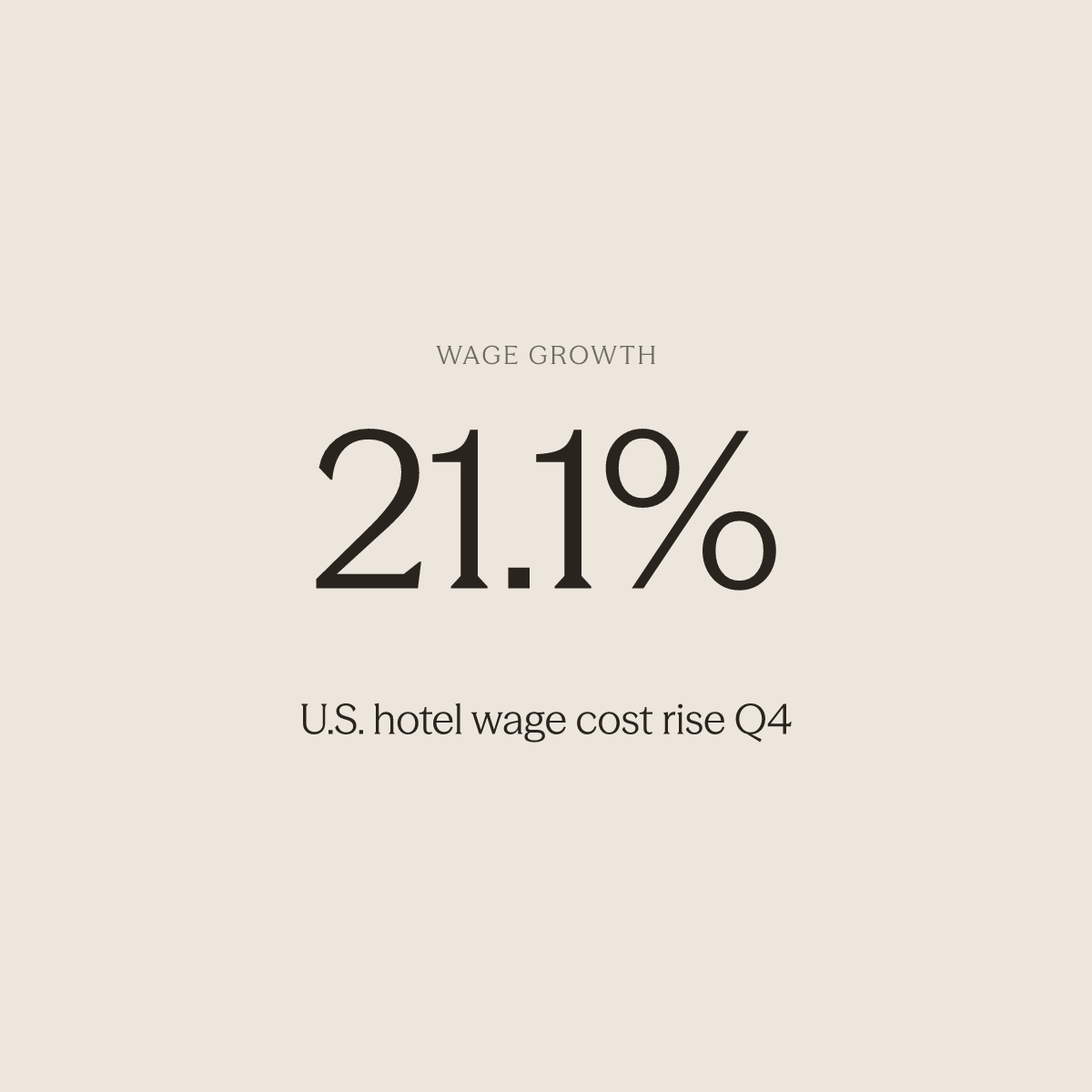
Those are real and finite. What the spreadsheet never captures is the ongoing, compounding cost of a human-staffed guest communication function. U.S. hotel wage costs rose 21.1% in Q4 2025, with guest-facing, front-of-house positions among the fastest-rising cost centers. That line item persists regardless of which PMS you pick.
The Structural Gap Most PMS Alternatives Don't Address - Guest Communication at the Conversation Level
PMS automation gains are real but concentrated in back-office tasks: rate updates, availability sync, reporting. The hours that drove the Q4 2025 wage surge are guest-facing and communication-intensive. No PMS natively automates a 2 a.m. check-in question, a mid-stay maintenance request, or a checkout dispute. The structural gap sits one layer above the PMS, and productivity gains came from operators who added coordination tools on top of existing systems rather than replacing the system underneath.
What the Numbers Actually Show, $22K in Verified Operator Savings Without Changing PMS
Darren, founder of Easy BnB, was managing a short-term rental portfolio with 14 virtual assistants covering 24/7 guest communication. He did not switch his PMS. He layered AI for hospitality onto his existing stack, pushing overnight and daytime messaging to AI agents trained on his own SOPs and FAQs. The result: roughly $22,000 in monthly cost savings, 75 new units added, and zero additional hires.
Key takeaway: Haven Vacation Rentals followed the same path without a PMS migration, moving from 40% to 90% guest communication automation and reducing their support team from roughly 25 staff to 2 people per shift.
Next steps
If your PMS evaluation keeps producing cleaner reservations infrastructure while your guest-facing labor bill grows unchanged, the path forward starts with treating the communication layer as a separate operational decision, independent of which PMS you choose. Start with our AI for hospitality.
The Q4 2025 wage surge of 21.1% is concentrated in guest-facing, communication-intensive roles, the exact hours no PMS natively automates, which means every migration that leaves the communication layer untouched preserves the fastest-rising cost center entirely. And because NPS and review scores correlate with communication speed and consistency rather than channel sync cleanliness, a new PMS produces a new back-office stack while the same NPS trajectory and the same downstream organic booking loss continue compounding. Those two facts point to the same next step: audit and close the communication gap before, or independently of, any PMS decision, because the communication layer's ROI does not depend on which PMS sits underneath it.
Start with conduit.ai to see how Conduit deploys as an additive agent layer on top of your current stack. Your SOPs and FAQs become the agent's knowledge base, guest messages are handled continuously across every channel, and your operations team monitors everything from a single inbox, without a PMS migration required first.
Frequently Asked Questions
Does switching to a new PMS actually reduce my guest communication workload?
Not on its own. Industry benchmarks put guest messaging operations at several hours of staff time per property per day, and that number does not shrink when you change platforms. Operators who have moved from Cloudbeds to a competing PMS typically solve distribution and reporting friction within the first quarter, but the guest communication workload persists unchanged.
When is Cloudbeds the right fit for a property?
Cloudbeds works well for operators managing one or two properties, covering roughly 80% of daily workflow without stitching together separate tools. Exit decisions tend to cluster around pricing opacity (no public tier pricing), automation ceilings on guest communication, and support lag that operators managing 10-plus properties cannot absorb.
Does a Cloudbeds alternative fit a small boutique inn differently than a large hotel group?
Yes, and the post treats property size as the first filter, not a footnote. A boutique property needs simplicity, fast onboarding, and a strong direct booking engine, while a multi-brand group needs role-based permissions, portfolio-level reporting, and SOP enforcement across properties where staff turnover is constant. Treating size as an afterthought means the shortlist is already wrong before scoring begins.
Which evaluation criteria do most PMS comparison scorecards miss?
Guest communication automation depth. Most scorecards cover channel sync, OTA connectivity, booking engine flexibility, reporting quality, integration breadth, pricing transparency, and onboarding support, but those are described in the post as the floor, not the ceiling. A 2022 study cited in the post found that the sufficient conditions for high NPS were entirely guest-facing service dimensions, not reservations infrastructure, meaning the guest communication layer is the highest-leverage variable most scorecards leave unaddressed.
How does Conduit.ai work on top of an existing PMS rather than replacing it?
Conduit.ai deploys AI agents that read directly from a property's existing SOPs, FAQs, and manuals to answer guests across every channel without human intervention, with the first automated reply live within days of connecting those materials. Its Inbox consolidates conversations from Airbnb, email, and direct booking into a single reviewable queue, while Workflows trigger automatically at defined guest lifecycle events, booking confirmed, check-in completed, post-checkout, so no message is skipped during high-occupancy periods. It works on top of any PMS rather than replacing it, closing the guest communication gap every PMS on the market leaves open.
Stay in the loop
Get the latest on AI automation, product updates, and customer stories.

