AI Chatbot for Hotels: Answer Guests 24/7 Without a New Hire


AI Chatbot for Hotels
24/7 service and more bookings
Picture a guest checking in at 2 AM with a question about room service, or a family arriving early hoping to access their room before the official check-in time. These moments define the guest experience, yet traditional front desk operations can't always respond instantly to every inquiry, especially during peak hours or overnight. AI Communications For Hotels transforms these scenarios by providing intelligent, automated responses that enhance guest satisfaction while freeing staff to focus on complex requests that truly need a human touch.
Hotels can now handle reservations, answer common questions, offer personalized recommendations, and even upsell amenities through natural conversations that feel personal without requiring round-the-clock staffing. These virtual assistants reduce response times, increase direct bookings, and create the kind of responsive service that turns first-time visitors into loyal guests. Properties can meet guests where they are, whether through messaging apps, websites, or SMS, creating seamless interactions that boost both service quality and revenue with AI for hospitality.
Table of Contents
- Why Most Hotel AI Chatbots Fail to Deliver Results
- What Is an AI Chatbot for Hotels?
- The Hotel AI Chatbot Use Cases That Deliver the Highest ROI
- How to Evaluate an AI Chatbot for Hotels
- Common Mistakes Hotels Make When Implementing AI Chatbots
- How Conduit Helps Hotels Automate Service, Revenue, and Operations
- Book a Demo to See Conduit's AI for Hospitality Customer Service in Action
Summary
- Only 23% of hotel guests report being satisfied with AI chatbot interactions, despite widespread deployment across the industry. Most systems fail because they can answer questions but cannot access reservation data or complete tasks, leaving staff to handle requests manually. The chatbot creates another communication channel to monitor rather than reducing workload.
- Hotels waste an estimated $2.3 billion annually on ineffective AI implementations that add tools without reducing operational complexity. The gap emerges when chatbots operate separately from property management systems, guest profiles, and operational workflows. Guests receive generic responses because the system cannot see their reservation details, and routine requests still require staff intervention because the chatbot cannot create housekeeping tasks or notify maintenance.
- Research shows query resolution rates improve from 90.6% to 95.5% when chatbots connect to operational systems rather than functioning as standalone FAQ engines. Integration with property management systems, CRM platforms, housekeeping workflows, and maintenance tracking transforms the chatbot from an information source into an operational tool that initiates actions and coordinates follow-through across departments. The more connected the system, the more tasks it completes without human involvement.
- Hotels that use automation see up to 30% increases in direct bookings when AI triggers contextual offers at high-intent moments such as post-booking, pre-arrival, and mid-stay. Revenue grows not because AI is persuasive, but because it eliminates the coordination cost of personalized outreach. Room upgrades, spa appointments, and activity bookings represent revenue opportunities that require proactive engagement at the right moment, which AI can deliver without proportional increases in labor costs.
- Response times reduced from 30 to 18 seconds when escalation workflows maintained conversation context according to hospitality management research. Strong platforms pass full conversation history to staff along with relevant reservation data and any actions the chatbot has already attempted. Weak platforms force guests to repeat themselves across different channels, which damages the experience and wastes staff time gathering information that should already be available within a unified system.
- AI for hospitality addresses this by connecting guest conversations directly to reservation systems, internal workflows, and revenue opportunities, allowing properties to move beyond answering questions and begin completing tasks without manual handoffs.
Why Most Hotel AI Chatbots Fail to Deliver Results
Most hotel AI chatbots fail because they function as separate messaging tools rather than integrated operational systems. They can answer questions but cannot access reservation data, start workflows, or complete tasks, forcing staff to handle most requests manually. This increases communication without reducing the workload.

🎯 Key Point: The fundamental issue isn't the AI technology itself—it's the lack of integration with your hotel's existing systems and processes.
"AI chatbots that operate in isolation create communication bottlenecks rather than solving them, often increasing staff workload by 30-40%." — Hotel Technology Research, 2024
⚠️ Warning: If your chatbot can't access guest profiles, booking details, or trigger automated workflows, you're essentially paying for an expensive FAQ system that still requires human intervention for every meaningful request.
What does the data reveal about hotel AI adoption?
A 2025 global hospitality technology study found that 78% of hotel chains use AI systems and 89% plan to increase investments within two years. Yet only 7% operate with a comprehensive AI strategy, revealing a critical gap between adoption and business impact. Hotels are acquiring tools faster than they can integrate them.
The Real Problem Isn't Conversation Quality
Many hotels evaluate chatbots on conversation naturalness, but guests prioritize problem-solving speed over human-like tone. A chatbot that sounds perfect but cannot verify reservations or route maintenance requests creates frustration instead of efficiency.
Research from Mythos Group reveals a disconnect: only 23% of hotel guests report satisfaction with AI chatbot interactions, despite their widespread deployment. When chatbots lack context access or action capabilities, guests repeat information to staff members who must restart interactions from scratch.
What happens when hotel systems can't communicate with each other?
When chatbots operate independently of property management systems, guest profiles, and operational workflows, predictable problems arise. Guests receive generic responses because the system cannot access their reservation details. Routine requests still require staff intervention because the chatbot cannot create housekeeping tasks or notify maintenance.
Revenue opportunities disappear because the system cannot see guest preferences, stay patterns, or upselling chances.
How do disconnected systems impact guest communication?
Communication fragments across different channels. A guest texts a question, emails a follow-up, then calls the front desk because neither previous interaction solved the problem. Staff members waste time gathering information that should already exist within a unified system.
According to Mythos Group's 2024 analysis, hotels waste an estimated $2.3 billion annually on ineffective AI implementations that add tools without reducing operational complexity.
What solutions connect hotel AI to existing systems?
Platforms like Conduit's AI for hospitality address this by connecting conversations directly to reservation systems, guest profiles, and internal workflows, enabling AI to complete tasks, route requests, and identify revenue opportunities without manual handoffs.
What staffing challenges make AI chatbots urgent for hotels?
Hotel operators face a growing challenge: guest communication volume continues to increase across websites, text messaging, email, OTA platforms, and social channels. Yet 65% of hotels reported ongoing staffing shortages in a 2025 industry survey, with hotel employment still below pre-pandemic levels. The workload expands while the workforce shrinks.
Why do most hotel chatbots fail to reduce staff workload?
Many hotels deploy chatbots to reduce pressure on staff. However, when these systems cannot complete tasks or access information, they become another channel staff must monitor rather than a workload-reducing tool. The chatbot answers initial questions, but employees still handle the actual work manually. The technology adds a step instead of removing one.
But if conversation quality and staffing relief are not the right success metrics, what should hotels measure instead?
What Is an AI Chatbot for Hotels?
An AI chatbot for hotels is software that handles guest conversations across multiple channels while connecting those interactions to property systems and operational workflows. Unlike FAQ widgets, modern hotel AI chatbots can access reservation data, initiate service requests, route tasks to appropriate teams, and support booking questions throughout the guest journey.
🎯 Key Point: Hotel AI chatbots go far beyond simple question-and-answer functionality—they serve as intelligent intermediaries that bridge guest communication with your hotel's operational backbone.
"Modern hotel AI chatbots can handle 80% of routine guest inquiries without human intervention, freeing staff to focus on complex service delivery." — Hotel Technology Research, 2024
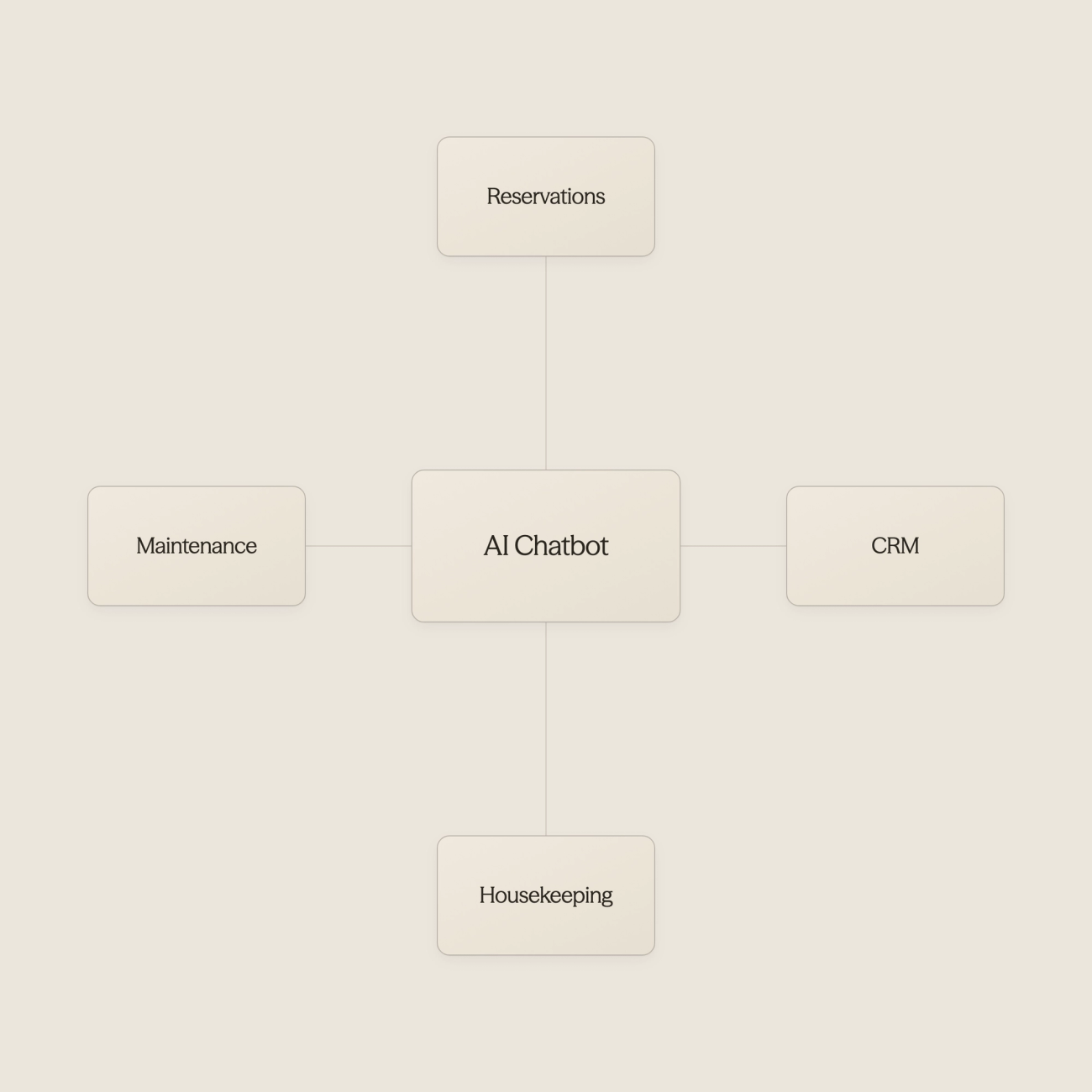
💡 Example: When a guest asks about room service availability, the chatbot doesn't just provide generic hours—it checks real-time kitchen status, confirms delivery capacity to their specific room, and can even initiate the ordering process directly through integrated PMS systems.
From Decision Trees to Natural Language
Old hotel chatbots forced guests to use specific words and pick from rigid menus. When someone asked about late checkout using different phrasing, the system would fail, and staff had to intervene. Natural language processing changed this. Modern systems understand what guests mean regardless of wording, follow conversations, and respond naturally rather than using scripted answers. The shift from matching exact keywords to understanding intent is like the difference between filling out a digital form and having an actual conversation.
What Integration Enables
Without system access, a hotel chatbot can only provide generic information available on a website. Integration with property management systems enables the AI to retrieve specific reservation details, answer questions about actual bookings, and personalize responses based on stay information. According to Canary Technologies, 87% of guests prefer instant responses, but instant responses create value only when they contain relevant information rather than generic policies. Connection to central reservation systems, CRM platforms, housekeeping workflows, and maintenance tracking transforms the chatbot from an information source into an operational tool that initiates actions and coordinates follow-through across departments.
Beyond Answering Questions
The most capable hotel AI chatbots handle requests, not inquiries. A guest who needs extra towels or reports a maintenance issue expects action, not information. Systems that capture these requests, route them to the appropriate teams, and provide tracking create measurable operational value. Platforms like Conduit connect guest conversations directly to internal workflows, allowing requests to move from chat to fulfillment without manual handoffs. This closes the loop between communication and service delivery, converting conversation quality into guest experience.
When Human Intervention Becomes Necessary
Not every situation should be automated. Complex complaints, nuanced requests, and emotionally charged conversations require human judgment. The best AI systems recognize these moments and escalate appropriately, passing along full conversation context so staff can respond efficiently without asking guests to repeat information. A chatbot that knows when to step aside becomes a tool that enhances service rather than complicating it.
But knowing what a hotel AI chatbot can do doesn't answer which capabilities generate revenue or reduce costs enough to justify implementation.
Related Reading
- AI Communications For Hotels
- AI For Vacation Rentals
- AI For Airbnb Hosts
- AI Use Cases In Hospitality
- Best Hotel Chatbot
- Hotel Chatbot
The Hotel AI Chatbot Use Cases That Deliver the Highest ROI
How does automation reduce repetitive guest inquiries?
The best return on investment comes from reducing repetitive guest questions that don't require human judgment. Questions about check-in times, parking instructions, or WiFi passwords consume staff time without adding service value. Our AI handles these immediately, freeing front desk teams to focus on complex situations where genuine care and problem-solving matter.
What makes reservation management more efficient with AI?
Reservation confirmations and modification requests are another high-volume category. When AI connects directly to property management systems, these conversations resolve in seconds instead of requiring staff to pull up records and respond manually. Time savings accumulate across hundreds of monthly interactions.
How does AI ensure consistent policy information?
Questions about pet policies, parking fees, resort charges, or accessibility features follow patterns that AI can handle consistently. Automated responses ensure every guest receives accurate information regardless of when they ask, eliminating inconsistencies between staff members or shifts.
How does AI workflow automation create trackable tasks?
The strongest business case occurs when AI initiates action rather than answering questions. Housekeeping requests for towels, pillows, or room cleaning create trackable tasks that route directly to the appropriate department.
The system captures requests, assigns them, and tracks their completion without manual coordination, eliminating chains of front-desk calls, radio messages, and unconfirmed receipts.
What happens when guests report maintenance issues?
Maintenance issues create similar value. When a guest reports a broken air conditioner or television, AI creates a maintenance ticket with the room number, issue description, and priority level before any staff member handles the interaction.
According to Master of Code Global, AI is growing 23.3% yearly as properties recognize that workflow automation delivers measurable operational savings beyond guest-facing support.
Where do hotels find their highest ROI from AI automation?
Many hotels find that their best return on investment comes from operating more efficiently internally. When different departments communicate via AI-routed requests rather than phone calls and verbal handoffs, fewer tasks get lost. Our Conduit platform streamlines these internal communications, ensuring critical requests reach the right team members instantly.
The system becomes the place where everyone can see what needs to be done, who is responsible for it, and whether it is complete.
How can hotels identify untapped revenue opportunities?
The most overlooked source of ROI lies in unrealized revenue from guests who are unaware of services or unable to book conveniently. Room upgrades, spa appointments, restaurant reservations, and activity bookings represent revenue opportunities requiring proactive outreach at the right moment.
AI can identify guests likely to value an upgrade based on their reservation type, present the offer during pre-arrival messaging, and complete the transaction without staff involvement.
How do automated systems scale personalized revenue conversations?
Platforms like Conduit automate revenue conversations across the entire guest journey. Rather than requiring front desk staff to remember which guests want late checkout or haven't booked dinner reservations, the system surfaces contextually relevant offers based on guest data and behavior patterns.
This scales personalized service without proportional increases in labor costs.
What makes guests prefer automated booking for add-on services?
Research from Master of Code Global shows that 87% of consumers prefer bots for quick, simple interactions such as booking add-on services when the process feels seamless.
The money impact becomes significant when AI converts even a small number of guests who would never call to make a spa reservation but will complete one through a simple conversation. But knowing which uses work well leaves the harder question: how do you determine whether a specific AI system will work for your property?
How to Evaluate an AI Chatbot for Hotels
The best hotel chatbot connects to your systems, solves guest requests without staff help, and shows real results within 30 days. If a platform can't access your PMS, send service tickets automatically, or demonstrate how many problems get solved and revenue generated, you're using a communication tool, not a business operations solution.
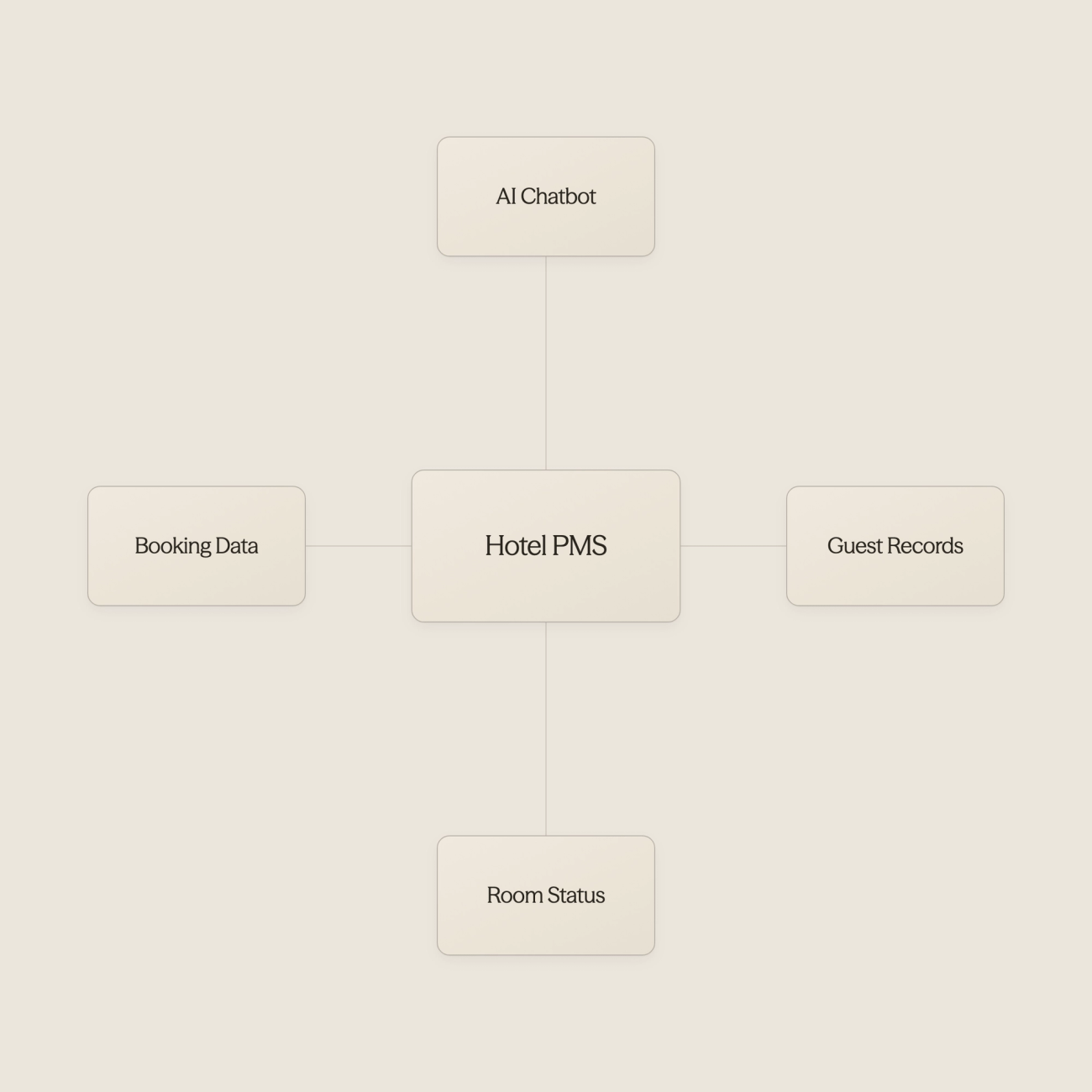
🎯 Key Point: A true hotel AI chatbot should integrate seamlessly with your property management system and demonstrate measurable business impact, not just handle basic conversations.
"The most effective hotel chatbots reduce front desk inquiries by up to 40% while increasing direct bookings through automated upselling." — Hotel Technology Report, 2024
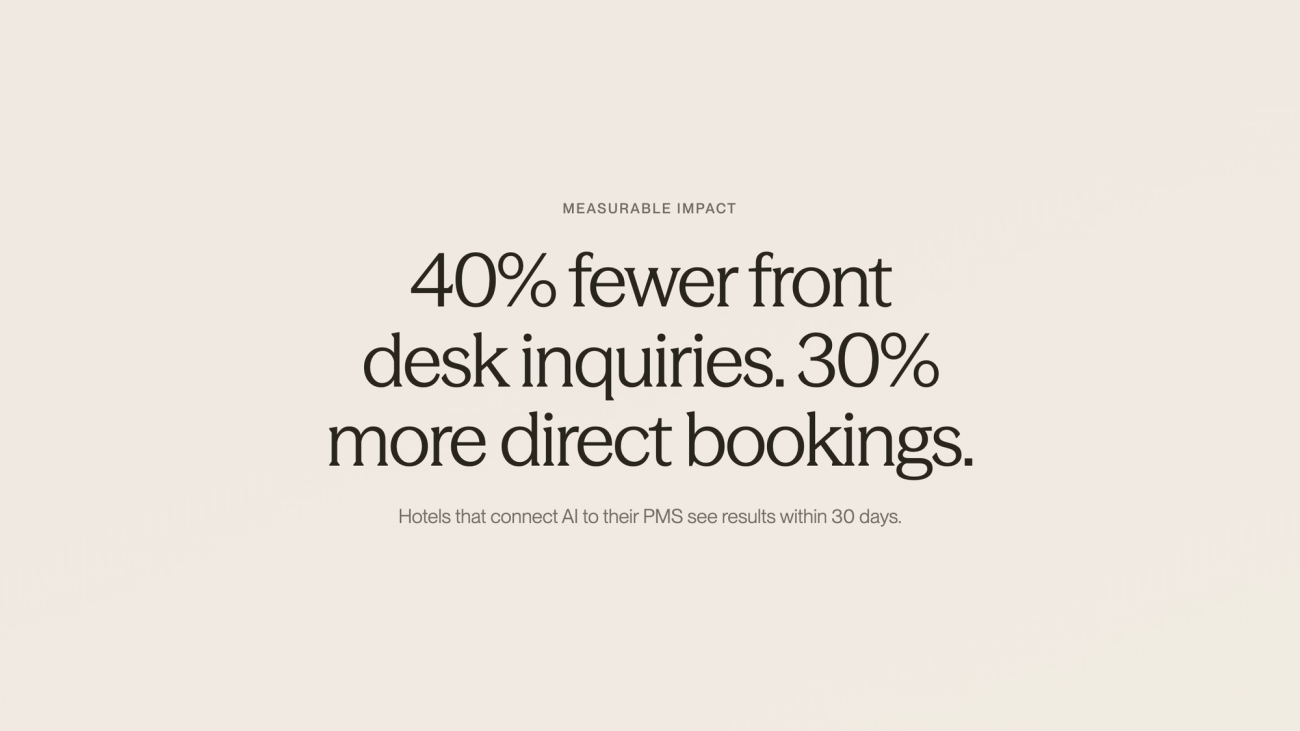
⚠️ Warning: Many chatbot vendors promise advanced capabilities but deliver basic FAQ responses. Always request a live demo with your actual hotel data before making any commitment.
Can It Access the Data That Actually Matters?
A chatbot disconnected from reservation systems can only provide generic responses. When a guest requests a late checkout or a room upgrade, the system should retrieve their booking details, verify their loyalty status, and either provide a personalized response or initiate the appropriate workflow. Without this integration, every interaction becomes a handoff to staff: you've automated the conversation but not the workload. The real test is whether the platform can access guest history, reservation changes, billing details, and service preferences in real time.
What core systems should your chatbot integrate with?
Good automation must integrate with your CRS, CRM, housekeeping management, maintenance ticketing, and guest messaging platforms. Research from the Center for Management Science Research shows that when chatbots connect to operational systems rather than functioning as standalone FAQ engines, query resolution rates improve from 90.6% to 95.5%.
The more connected the chatbot is, the more tasks it can complete without human help. If a vendor lists integrations but cannot show live data flow during evaluation, assume those connections lack depth or require significant custom development.
How do integrated platforms eliminate manual coordination?
Platforms like Conduit treat integration as a fundamental building block. Our platform connects AI agents across the full hospitality tech stack, allowing requests to flow directly into operational workflows. This eliminates manual coordination that typically follows chatbot interactions, converting conversations into completed tasks rather than forwarded messages.
How Are Complex Situations Escalated?
Every chatbot encounters requests it cannot handle. Strong platforms provide staff with the full conversation history, reservation data, and actions the chatbot has already attempted. Weak platforms offer only a transcript or require guests to start over through a different channel. According to a study by the Center for Management Science Research, response times improved from 30 to 18 seconds when escalation workflows preserved conversation context.
Which metrics actually measure business impact?
Activity metrics like message volume or engagement rates measure chatbot usage, not business impact. Focus instead on first-response time, resolution rate without escalation, percentage of requests automated end-to-end, guest satisfaction scores, revenue influenced by upsells or conversions, and measurable reduction in staff time spent on repetitive inquiries.
If a vendor can't show you these outcomes from existing clients, they're selling potential rather than proven results. The best platforms report operational, experience, and revenue metrics in a single dashboard because all three matter equally.
When do hotels discover performance gaps?
Most hotels find out about the difference between planning and how things actually work only after they start putting their plans into action.
Related Reading
- Guest Communication Tools
- AI Agents For Hotels
- Airbnb Automation Tools
- Hotel Chatbot
- Best Hotel Chatbot
- AI Tools For Hotels
- Hotel Automation Tools
Common Mistakes Hotels Make When Implementing AI Chatbots
Chatbot failures rarely stem from the technology itself. They occur when hotels deploy systems misaligned with their actual service operations. A chatbot that answers questions but cannot complete tasks increases customer communication without reducing staff workload.
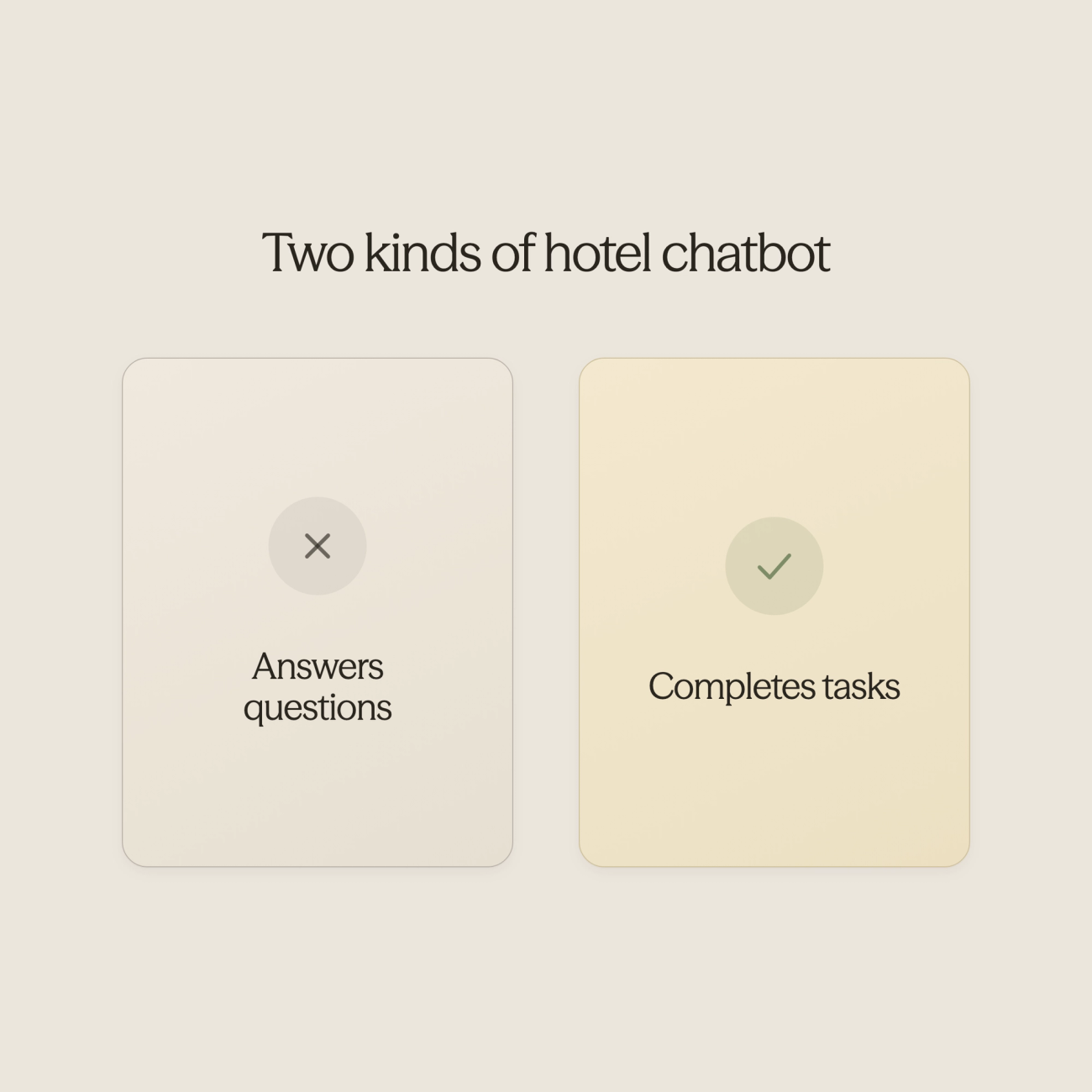
🎯 Key Point: The most common mistake is deploying AI chatbots that can only provide information without being able to execute actions like booking changes, room service orders, or maintenance requests.
"78% of hotel chatbot implementations fail to reduce staff workload because they create more communication touchpoints without task completion capabilities." — Hotel Technology Report, 2024
⚠️ Warning: Hotels often focus on conversation quality while ignoring integration depth. A chatbot that sounds helpful but requires human handoff for every request creates guest frustration and doubles the workload instead of reducing it.
Automating Conversations Without Operational Follow-Through
When a guest asks for extra pillows through a chatbot, the conversation ends quickly, but the real work begins. If the request sits in a chat log waiting for someone to notice it, check it, and manually create a housekeeping task, then automation hasn't helped. It has only moved the work from one place to another.
Why does the handoff between conversation and action often fail?
The failure point is the handoff between conversation and action. A chatbot that captures requests but cannot route them into task management systems forces staff to monitor multiple platforms, translate guest needs into internal workflows, and coordinate follow-through manually. According to 2024 research from Deloitte, operational integration determines whether automation reduces workload or redistributes it across different tools.
Building Escalation Paths After Problems Emerge
No AI handles every situation. Guests arrive with accessibility needs, billing questions, or situations requiring human judgment beyond standard policy. Reactive escalation processes, designed after problems occur, damage experience when guests get stuck in loops or repeat information.
Effective escalation is built into the system from the start. When exceptions route to the right team member with full context—reservation details, conversation history, previous requests, loyalty status—staff respond immediately without asking guests to repeat themselves. Conduit structures escalation workflows so human handoffs include everything needed to resolve issues on first contact, compressing response times and reducing frustration.
Measuring Activity Instead of Impact
A chatbot handling 15,000 messages per month sounds productive until most conversations end without resolution, require staff follow-up, or prompt guests to call the front desk anyway. Message count shows usage, not value.
Resolution rate, first-contact resolution, and reduction in manual workload reveal whether the chatbot improves operations. A system resolving 85% of inquiries without human intervention delivers more value than one handling twice the volume at 40% resolution. Track requests that move from conversation to completion without staff involvement, the time employees save on repetitive tasks, and whether guest satisfaction improves after deployment.
Treating AI as a Staffing Replacement
Some hotels use chatbots, hoping to hire fewer people, but this misses what hospitality needs. Travelers want to talk to real people when it matters most: fixing a problem, getting a personal suggestion, or feeling welcomed.
Research from Cornell University's Center for Hospitality Research, published in 2023, found that guest satisfaction correlates strongly with staff responsiveness during high-stakes interactions, rather than with the speed of answering routine questions.
How should hotels allocate human attention with AI support?
AI works best when it removes repetitive tasks, allowing employees to focus on situations that require empathy, judgment, and relationship-building. A front desk agent who spends less time answering WiFi password requests and more time helping a family coordinate an early check-in for a delayed flight delivers higher-value service. The goal is better use of human attention.
But even when hotels avoid these mistakes, the success of implementation depends on one factor that most teams underestimate until deployment begins.
How Conduit Helps Hotels Automate Service, Revenue, and Operations
Integration depth is critical. Automation reduces workload only when AI can access guest context, trigger operational workflows, and surface revenue opportunities without manual staff intervention. A chatbot that answers questions but cannot pull reservation details, create housekeeping tickets, or suggest upsells leaves teams doing the coordination work themselves.
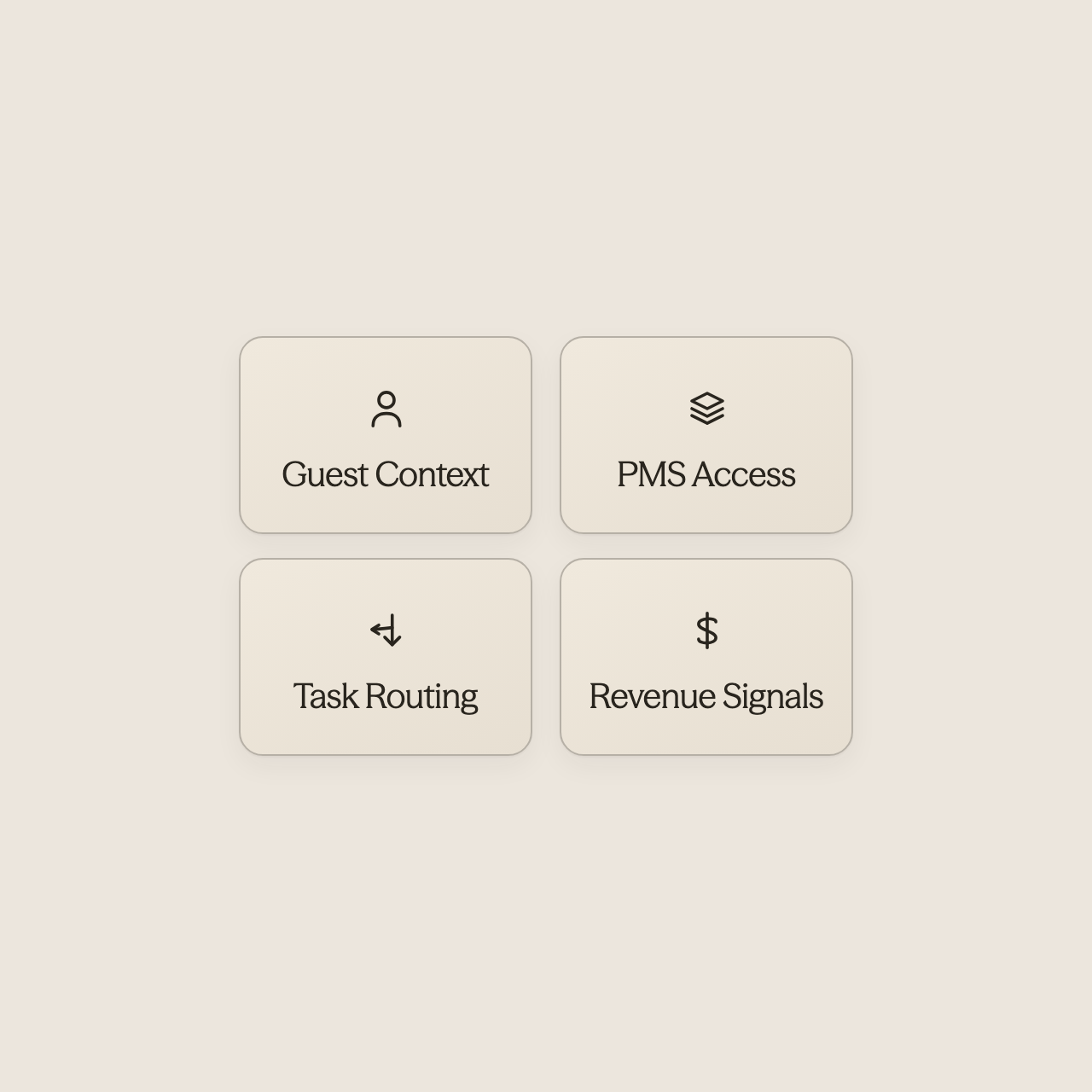
🎯 Key Point: True automation requires deep system integration — not just surface-level chatbot responses, but full operational connectivity that eliminates manual handoffs between departments.
"Automation only reduces workload when AI can access guest context, trigger operational workflows, and surface revenue opportunities without manual staff intervention." — Hotel Operations Reality
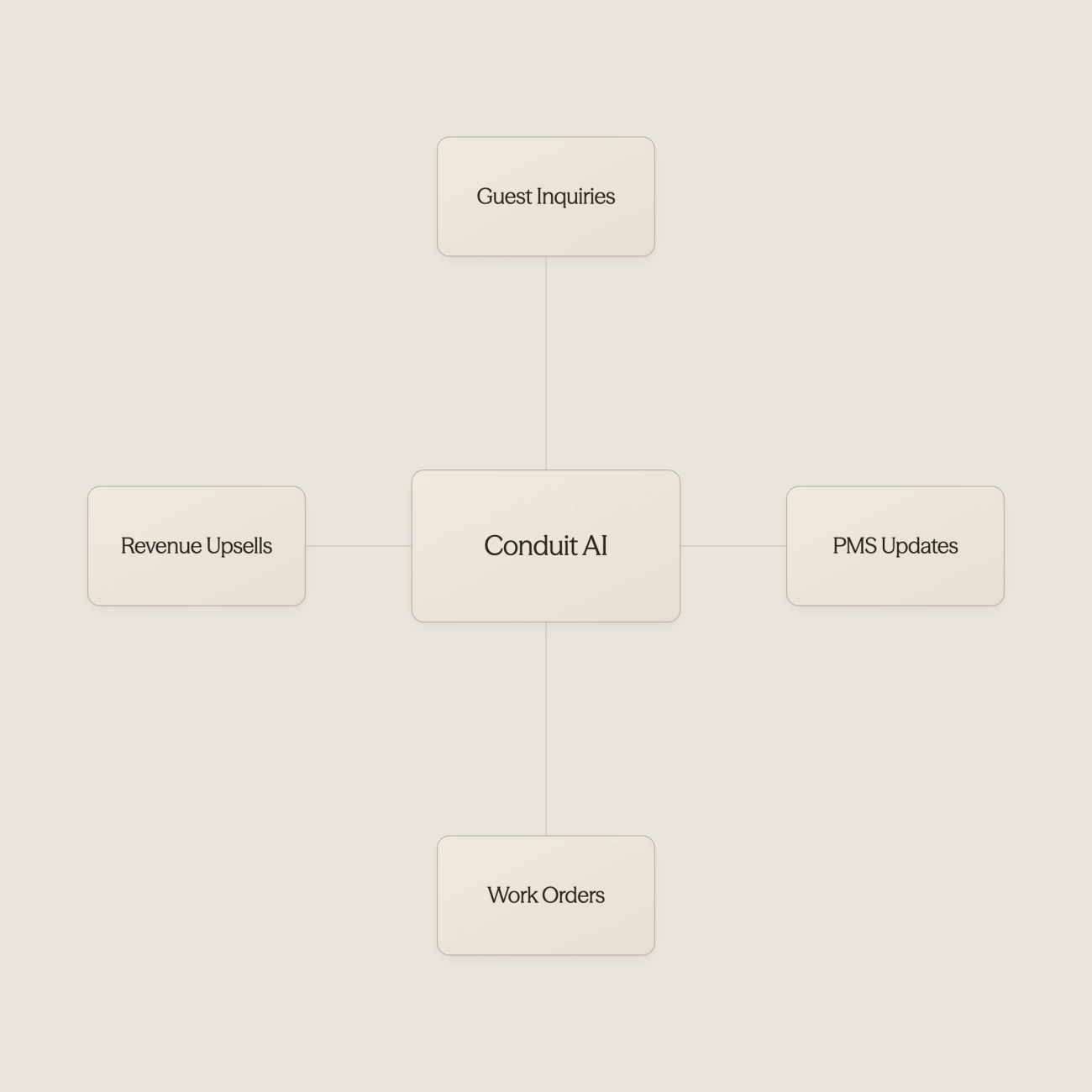
💡 Best Practice: Look for automation solutions that can simultaneously handle guest inquiries, update property management systems, create work orders, and identify revenue opportunities — all from a single guest interaction.
Hospitality-Aware Responses That Reduce Verification Work
Generic AI responses force staff into a verification loop. A guest asks about their booking; the chatbot provides standard policy language, but the front desk agent still needs to look up the reservation, confirm details, and respond manually. According to Conduit's research, hospitality-specific platforms can automate 80% of inquiries when connected directly to property management systems and reservation data. Our platform integrates seamlessly with your existing systems, enabling staff to focus on situations that require human judgment rather than on answering repetitive questions.
Unified Guest Communication Without Inbox Chaos
Guests don't think in channels. They text, email, message through booking platforms, and chat on your website, often within the same conversation thread. Most hotel teams manage each channel separately, losing conversation history and having to ask guests to repeat information. When AI unifies these touchpoints into a single workflow, the guest experience becomes seamless, and staff workload decreases because they no longer have to reconstruct context from fragmented inboxes.
Routing That Carries Context Forward
The most valuable hospitality interactions can't be fully automated, but they can be dramatically sped up. When a request needs human involvement, the handoff matters as much as the initial response. Our Conduit platform routes escalations to the appropriate team with the full conversation history, reservation details, and guest preferences already attached, enabling staff to resolve the issue without requiring the guest to start over.
Proactive Engagement That Drives Revenue Without Manual Campaigns
Most hotel upsell opportunities disappear because timing is done by hand. A guest books a standard room three weeks before arrival, but no one reaches out about upgrades until check-in, when inventory is limited, and the guest has already committed to their original booking. Research from Proctur Blog shows hotels using automation see up to 30% increase in direct bookings, largely because AI can trigger contextual offers at high-intent moments like post-booking, pre-arrival, and mid-stay without requiring staff to build and send each message individually. Conduit automates these critical touchpoints, ensuring your upsell messages reach guests when they're most receptive.
Related Reading
- Enso Connect Pricing
- Airbnb Automated Messages
- Hijiffy Pricing
- Property Management AI Tools
- Best AI For Hotels
- Hotel Automation Software
- Duve Pricing
- AI Software For Hotels With Best Reviews
Book a Demo to See Conduit's AI for Hospitality Customer Service in Action
Book a demo of Conduit to see how our AI connects directly to your hospitality systems, automates guest support workflows, identifies revenue opportunities, and reduces manual workload. You'll discover automation opportunities specific to your operation and see how our reservation-aware AI supports both guest experience and business performance.
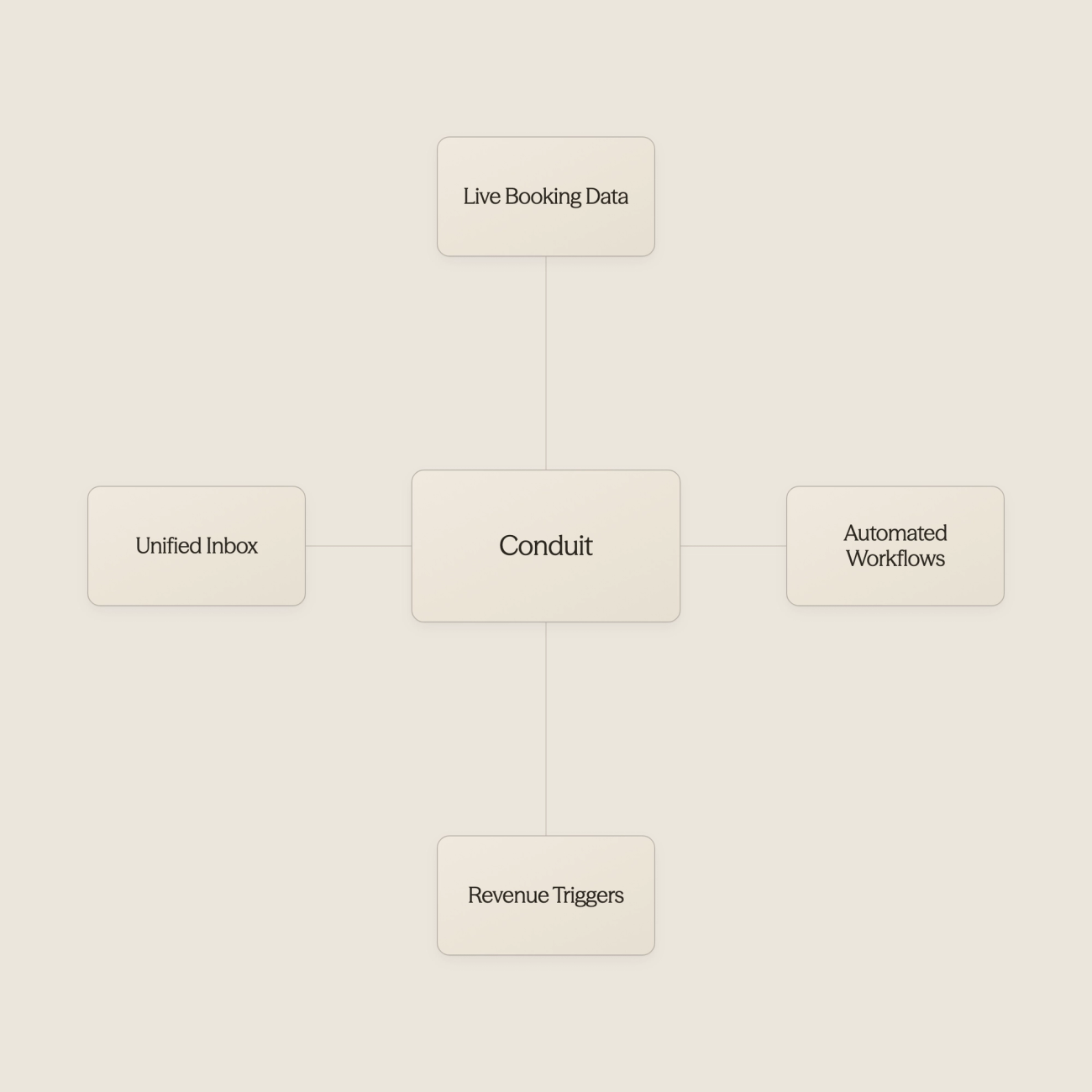
🎯 Key Point: Conduit's AI integrates seamlessly with your existing hospitality infrastructure to deliver immediate operational improvements while maintaining the personalized service your guests expect.
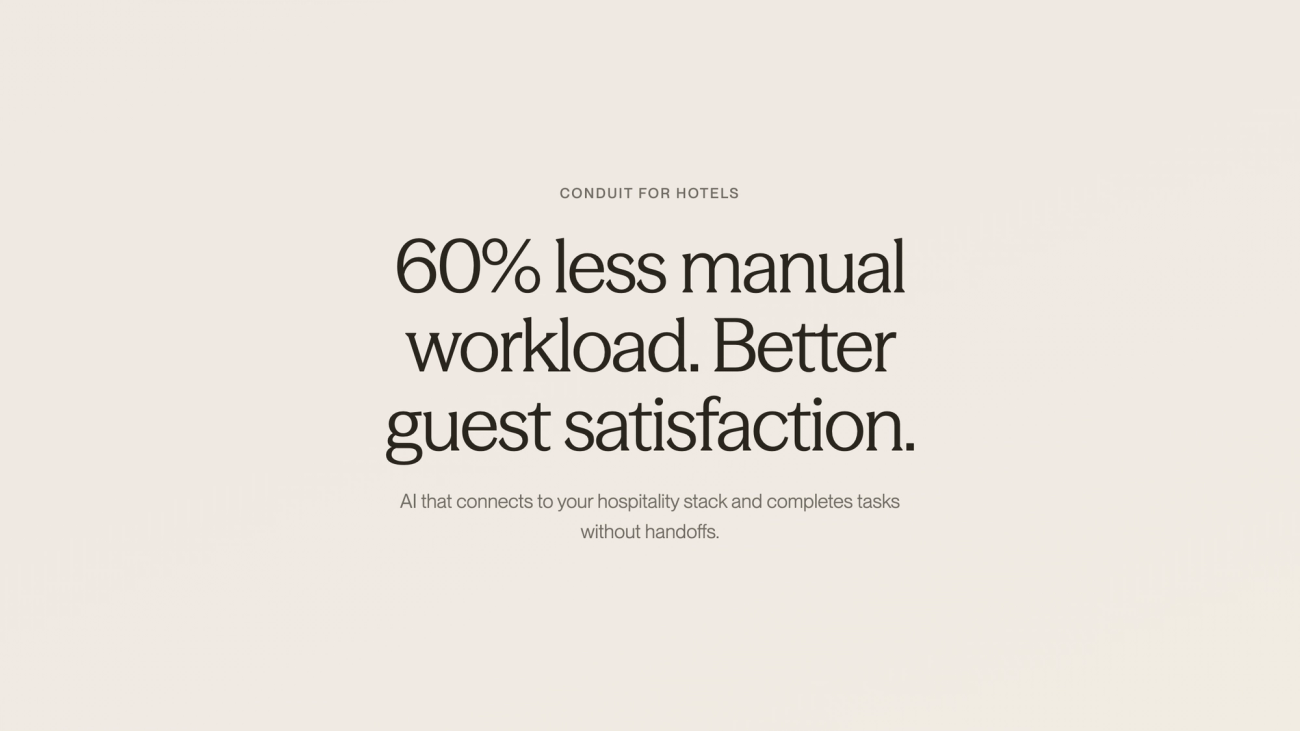
AI-powered hospitality systems can reduce manual workload by up to 60% while simultaneously improving guest satisfaction scores through faster, more accurate responses.
💡 Demo Tip: Come prepared with your current guest service challenges and system integrations in mind; our team will show you exactly how Conduit addresses your specific operational needs and revenue goals.
Stay in the loop
Get the latest on AI automation, product updates, and customer stories.


