12 Best Hotel Chatbot Platforms for Faster Guest Service


12 Hotel Chatbots
Platforms ranked for guest service
Guests expect instant responses to their questions, whether they're asking about pool hours at 2 AM or requesting room service menus during peak check-in times. Without automated support, front desk staff spend countless hours answering repetitive inquiries while guests wait for basic information. The best hotel chatbot platforms and AI Communications For Hotels solutions now handle these routine requests instantly, freeing staff to focus on personalized service that creates memorable experiences.
Modern hotel chatbots go beyond simple FAQ responses to deliver sophisticated guest communication that maintains brand standards around the clock. These platforms understand hospitality-specific needs, from booking confirmations to local recommendations, while seamlessly integrating with existing hotel management systems. Properties looking to transform their guest communication can explore comprehensive AI for hospitality solutions designed specifically for the unique demands of hotel operations.
Table of Contents
- Most Hotel Chatbots Don't Solve the Real Problem
- What Makes a Hotel Chatbot Actually Effective?
- 12 Best Hotel Chatbot Platforms Compared
- Beyond FAQs: The Hotel Chatbot Use Cases That Deliver ROI
- How Hotels Should Evaluate Hotel Chatbot Vendors
- How Conduit Helps Hotels Automate Service, Revenue, and Operations
- Book a Demo to See Conduit's AI for Hospitality Customer Service in Action
Summary
- Hotel chatbots fail to deliver operational value when they lack direct integration with property management systems. Hotel chatbots fail to convert browsing guests into bookings when they lack access to reservation data, room availability, or guest history. Without this connection, chatbots become expensive FAQ pages that answer surface-level questions, while front desk teams still handle every request that requires actual booking context or transactional capability.
- Message volume continues to climb across SMS, WhatsApp, website chat, Instagram, and OTA platforms, while chatbot effectiveness remains flat. Staff toggle between systems, trying to maintain context across channels, and the chatbot often just adds another interface to monitor rather than reducing workload. Revenue opportunities slip through these gaps because conversations that could lead to spa bookings, room upgrades, or dining reservations never progress beyond basic information exchange when the system can't complete transactions.
- Guests abandon chatbots that cannot answer complex questions, typically those requiring access to specific booking details or preferences. Guests expect recognition and personalized service based on their reservation, but disconnected chatbots treat every interaction as if it's the first contact. The personalization gap widens as guest expectations rise, while basic chatbots continue to operate without memory, context, or access to operational data scattered across PMS, CRM, and interaction logs.
- Hospitality-specific platforms consistently outperform generic chatbot builders because they treat reservation data as the foundation of every conversation rather than an optional integration. Chatbots can handle up to 80% of routine service questions, but only when those questions don't require dynamic operational data that changes with every booking. Generic platforms require configuration effort most independent properties cannot justify, and even after customization, they lack the hospitality intelligence that comes from being built exclusively for hotel operations.
- Hotels using automation see up to 30% increases in direct bookings when systems surface relevant offers during active guest engagement moments. Proactive workflows triggered by booking events, check-ins, and purchases turn the guest communication layer into a revenue channel rather than a purely cost center. Room upgrades, stay extensions, and ancillary service offers presented with actual reservation context convert at higher rates than generic broadcast promotions because they appear at moments when guests are already engaged, and the offers align with their specific circumstances.
- AI for hospitality addresses this by connecting conversational interfaces directly to property management systems, allowing automated agents to access reservation data, coordinate across operational platforms, and complete guest requests without requiring staff to act as intermediaries for every transaction.
Most Hotel Chatbots Don't Solve the Real Problem
Most hotel chatbots can answer simple questions like breakfast times, but can't extend stays or handle important requests. The problem is that basic chatbots don't connect to the systems and workflows that complete guest requests. Our platform bridges this gap by integrating directly with your property management and booking systems, enabling chatbots to fulfill guest requests end-to-end.
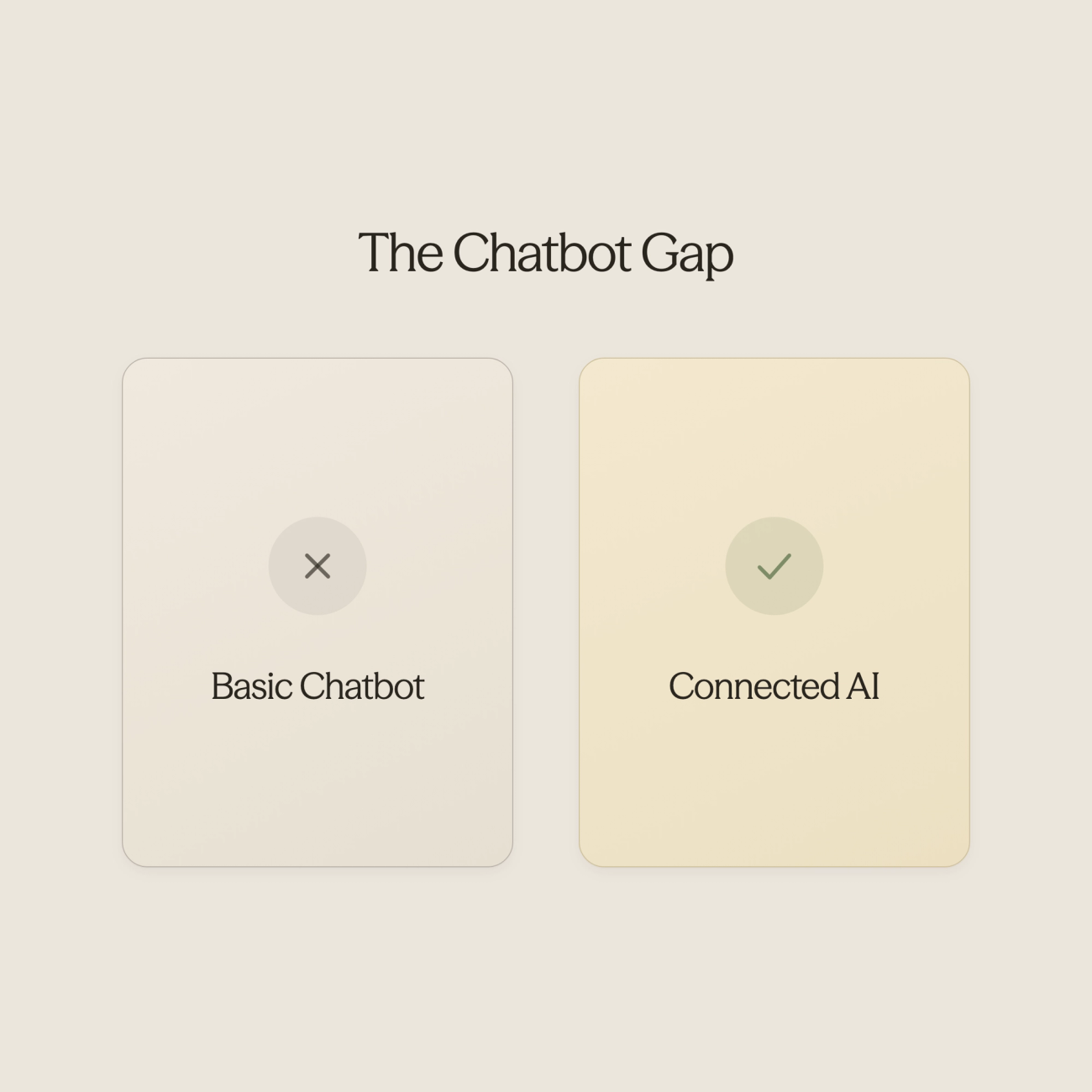
🎯 Key Point: The difference between a basic chatbot and a truly effective one isn't intelligence—it's system integration. Without connecting to your core hotel systems, even the smartest chatbot becomes just an expensive FAQ machine.
"Basic chatbots handle simple queries but fail at request fulfillment—the gap that frustrates guests and creates more work for hotel staff."
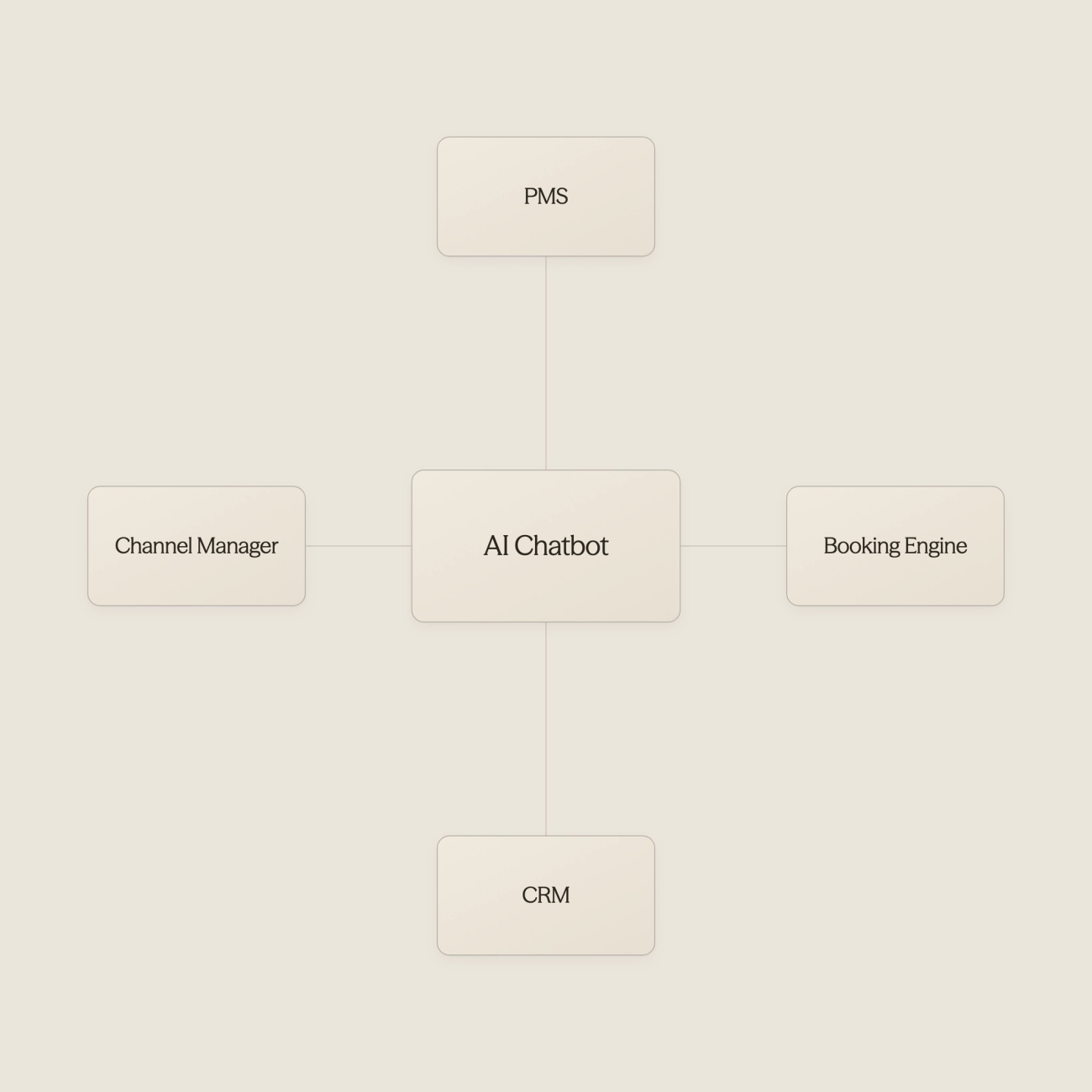
⚠️ Warning: Many hotels invest in chatbot technology only to discover their shiny new assistant can't perform the most important tasks guests actually need—like booking extensions, room service orders, or maintenance requests.
Why do most hotel chatbots fail to convert guests?
Hotels deploy chatbots to streamline operations, only to find a digital receptionist that knows the Wi-Fi password but cannot access reservations. Most hotel chatbots fail to convert browsing guests into bookings because they lack integration with property management systems and booking engines.
A guest asks about upgrading to a suite, and the bot offers a phone number. Someone wants to add late checkout, and the conversation gets handed off to email. The technology answers questions but doesn't solve them.
What happens when chatbots lack operational context?
The breakdown happens when requests need context: reservation details, room availability, guest history, and loyalty status. Without access to this operational data, chatbots become expensive FAQ pages that frustrate guests expecting personalized service. Guests type their confirmation number expecting recognition, but the system treats them like strangers browsing a website.
What happens when message volume outpaces chatbot capabilities?
The number of messages keeps growing, but chatbots are not getting better at helping. Guests want to send messages through SMS, WhatsApp, website chat, Instagram, OTA messaging platforms, and email. Front desk teams switch between different systems and try to remember what guests said while helping people at the desk and answering phone calls. The chatbot becomes another system to monitor because it cannot finish requests independently.
How do revenue opportunities slip through communication gaps?
Revenue opportunities slip through these gaps. A guest messaging about dinner reservations might book a spa treatment if prompted. Someone asking about parking could upgrade their room. These moments require both conversational and transactional capabilities. When your chatbot can only chat, your team handles every request manually, and ancillary revenue conversations never happen.
How do integrated AI platforms solve operational challenges?
Platforms like Conduit's AI for hospitality connect conversational interfaces directly to hotel operations. Rather than answering questions in isolation, the system retrieves reservation data, integrates with property management platforms, and routes requests through existing workflows. When a guest asks to extend their stay, the AI checks availability, provides pricing, processes the booking, and confirms the change without staff intervention.
Why do guests abandon chatbot conversations?
Guests notice when service feels generic. Guests stop chatbot conversations when the chatbot cannot answer complex questions, particularly those requiring access to their specific booking or preferences.
They want to know if their room will be ready early, whether the restaurant can accommodate dietary restrictions, or whether housekeeping can skip their room tomorrow. These requests seem straightforward to guests, but chatbots disconnected from the right systems cannot handle them.
What makes personalization truly effective?
True personalization requires memory and context: recognizing returning guests, knowing their previous floor preferences, and understanding they're traveling with children. This intelligence exists scattered across your property management system, CRM, and past interaction logs, but most chatbots cannot access it.
Every conversation starts from zero, forcing guests to re-explain their situation to a system that should already know them.
How wide is the expectation gap?
The gap between what guests expect and what basic chatbots deliver continues to widen. You've built the digital front door, but it doesn't recognize anyone walking through it.
What Makes a Hotel Chatbot Actually Effective?
The best hotel chatbots don't respond well—they execute. They pull reservation details, route maintenance requests, create service tickets, and update records across multiple systems without staff intervention. Conversation quality matters, but operational integration determines whether a chatbot reduces workload or adds another channel requiring manual follow-up.
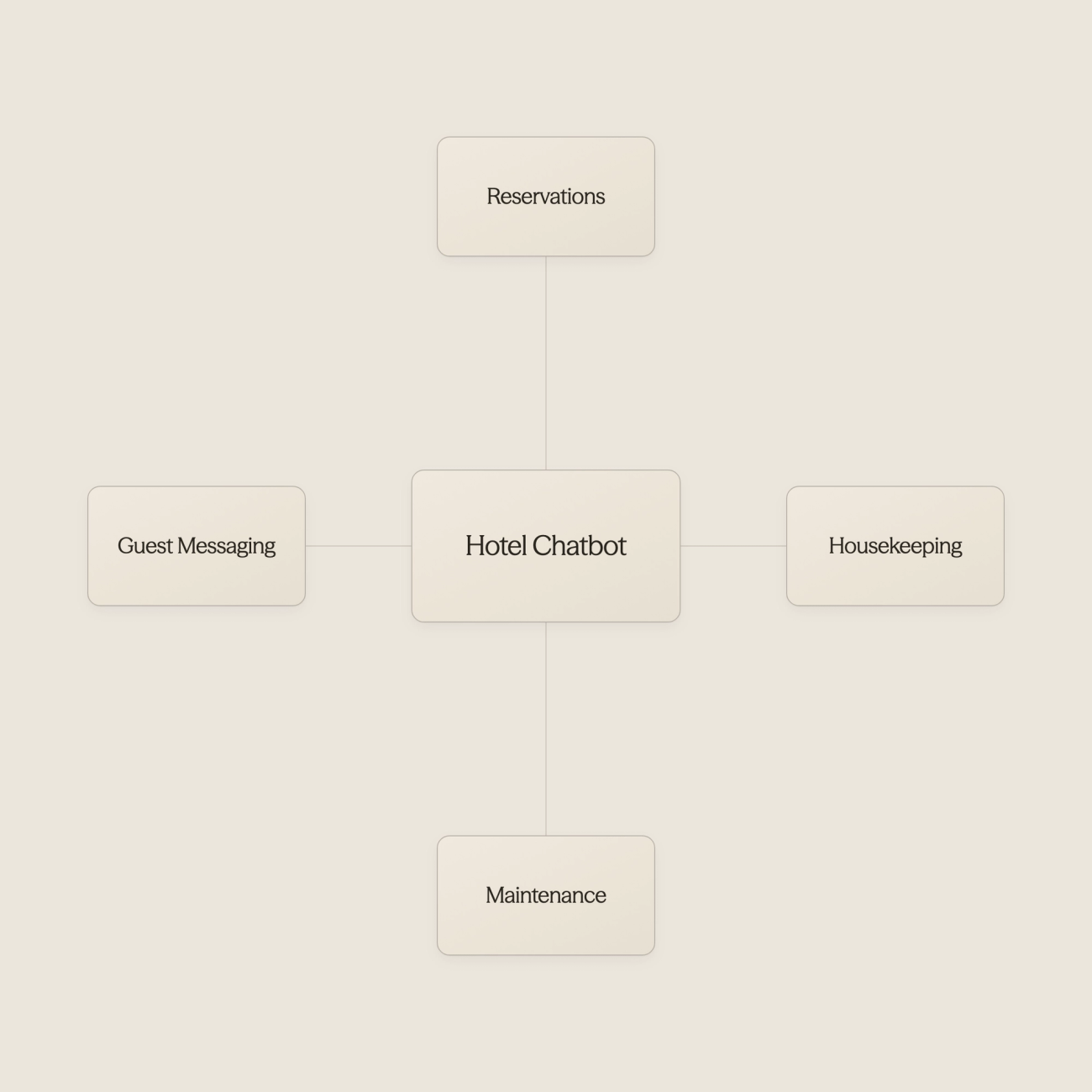
🎯 Key Point: The most effective hotel chatbots combine conversational AI with deep system integration to handle complete guest requests without human handoffs.
"87% of guests prefer instant responses, but speed without accuracy shifts frustration from waiting to correcting." — Canary Technologies
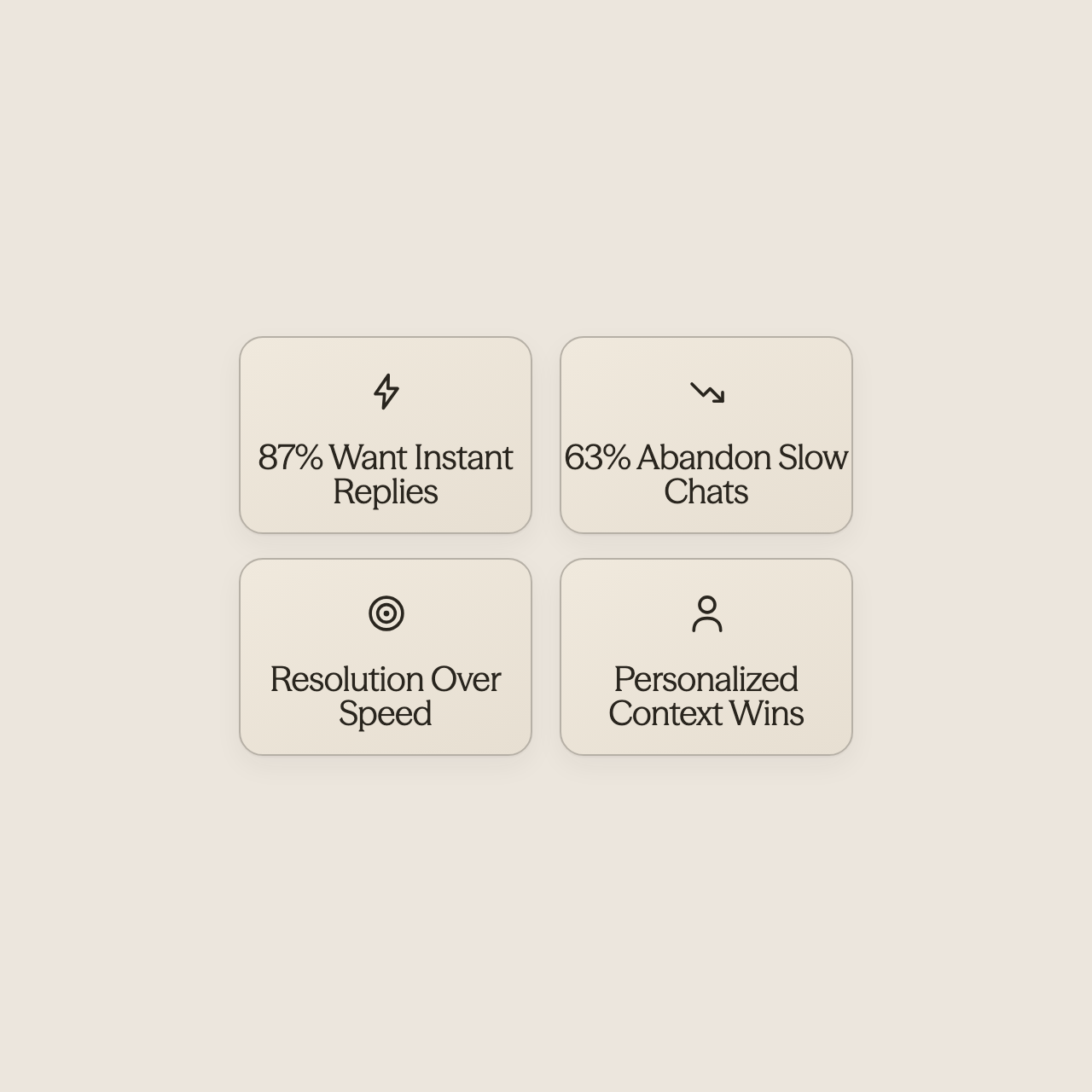
According to Canary Technologies, 87% of guests prefer instant responses. Speed without accuracy shifts frustration from waiting to correcting. A chatbot that answers quickly but cannot access the right data forces guests to repeat themselves when reaching a human. The goal is resolution, not reply speed.
💡 Tip: Measure chatbot success by resolution rate and guest satisfaction scores, not just response time—a fast wrong answer creates more work than a slightly slower correct one.
Access to Reservation and Guest Context
When a guest asks about their room type or requests late checkout, the chatbot should already know their reservation details, stay dates, and preferences. Without that context, every interaction starts from zero: the guest provides their confirmation number, explains their situation, and waits while the system retrieves information or transfers them to a human. This wastes time and erodes trust in the automation.
How do strong chatbots use property management system data?
Strong chatbots pull data directly from the property management system. They recognize returning guests, reference past stays, and tailor responses based on booking history, loyalty status, or special requests on file. This eliminates repetition and makes interactions feel less transactional.
Integration With Hotel Systems
Hotels and other hospitality businesses use many different software tools: a property management system (PMS), customer relationship management (CRM), housekeeping software, maintenance ticketing systems, and guest messaging tools. When a chatbot is separate from these systems, it becomes an extra layer requiring manual translation. Someone must take the chatbot conversation, open the PMS, update the record, and notify the appropriate department.
How does deep system integration improve chatbot performance?
The more deeply a chatbot connects with existing infrastructure, the more it can do independently. It can check room availability, process upgrade requests, log maintenance issues, update housekeeping schedules, and create service tickets without staff intervention. Platforms like Conduit integrate directly into hotel tech stacks, allowing AI agents to handle requests from start to finish while escalating only exceptions requiring human judgment.
Omnichannel Support
Guests use multiple channels (website, SMS, WhatsApp) often within a single journey. If each channel treats them as a new conversation, they repeat information three times, creating friction faster than any single slow response.
Effective chatbot platforms maintain conversation history across channels, remembering previous discussions and picking up where the last interaction ended. This reduces duplicate work for guests and staff while creating a smoother experience.
Workflow Automation
Completing tasks delivers operational gains. The strongest hotel chatbots automate workflows that previously required manual coordination: upgrade requests, stay extensions, housekeeping scheduling, maintenance reports, and reservation modifications. With system access and proper logic, they handle these independently. Research from Master of Code Global shows AI adoption in customer service is growing at 23.3% annually, driven largely by this operational value.
Which workflows should remain manual?
Not every workflow should be automated: some requests involve judgment calls, exceptions, or emotional nuance that require human involvement. However, routine requests such as extra towels, wake-up calls, or maintenance reports shouldn't require phone calls or manual ticket creation. The chatbot should handle, log, and route these tasks to the appropriate team without interrupting workflows.
Human Handoff and Escalation
Not every conversation should be automated. Complaints, complex requests, and situations requiring empathy or careful judgment need a real person. The best chatbot platforms recognise these moments and route them to the appropriate team with full conversation details.
How does intelligent escalation benefit both guests and staff?
The guest doesn't have to repeat their issue: the staff member can see the entire history and respond with the right information at hand. This smart escalation keeps human teams focused on interactions that require their expertise, while the chatbot handles repetitive, data-driven requests. The goal isn't to eliminate human service, but to protect it from operational noise.
What comes after understanding chatbot effectiveness?
Knowing what makes a chatbot work well is only half the challenge. Choosing the right platform from dozens of options requires a different kind of clarity.
Related Reading
- AI Communications For Hotels
- AI For Vacation Rentals
- AI For Airbnb Hosts
- AI Use Cases In Hospitality
- AI Chatbot For Hotels
- Hotel Chatbot
12 Best Hotel Chatbot Platforms Compared
Choosing a hotel chatbot platform means finding one that integrates with your property management system to handle guest requests without requiring constant staff support. The most effective platforms are built around how hotels operate from the start, not generic chatbot builders with added hotel-specific templates.
Platform Type
Hotel-Native Platforms
- Integration Quality:
✅ Deep PMS integration - Staff Dependency:
✅ Minimal staff intervention - Guest Experience:
✅ Seamless operations
Generic Chatbot Builders
- Integration Quality:
❌ Surface-level templates - Staff Dependency:
❌ Frequent staff backup needed - Guest Experience:
❌ Disconnected experience
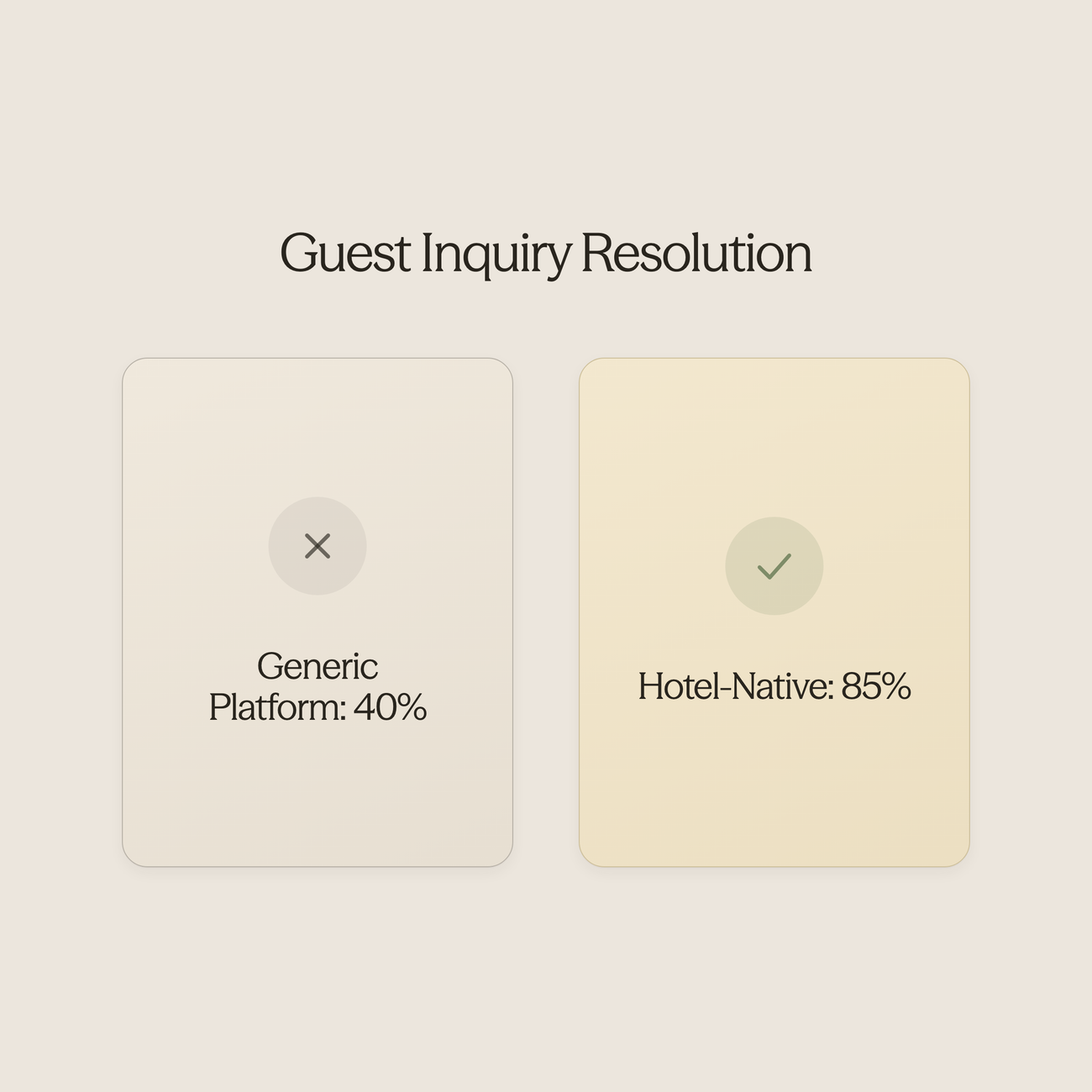
"Hotel chatbots that integrate deeply with property management systems can handle up to 85% of guest inquiries without staff intervention, compared to just 40% for generic platforms." — Hotel Technology Report, 2024
🔑 Key Takeaway: The best hotel chatbot platforms are purpose-built for hospitality operations, not retrofitted from generic solutions.
💡 Pro Tip: Look for platforms that offer native PMS integration and can handle complex booking modifications without requiring staff to step in for every guest request.
1. Conduit
Conduit is built for hospitality operations that need a single platform for reactive guest support, proactive revenue generation, and internal operational coordination, without having to rebuild their existing tech stack. Unlike generic chatbot builders, Conduit pulls real reservation and property context into every interaction, ensuring responses are accurate, personalized, and actionable rather than generic FAQ replies. Its proactive guest workflows automatically trigger timely upgrade offers, stay extensions, and add-on recommendations based on booking events such as reservations, check-ins, and purchases, transforming the guest communication layer into a revenue channel. On the operational side, Conduit escalates exceptions with full context to the right team members while keeping humans in control of decisions that require judgment. For properties seeking to automate support, unlock proactive revenue, and streamline internal coordination, Conduit is the most purpose-built solution available.
2. Cloudbeds Amplify
Cloudbeds Amplify is a guest engagement and messaging platform built directly into the Cloudbeds property management system, making it ideal for independent hotels, boutique properties, and small hotel groups already using Cloudbeds PMS. Its strong connection with reservation data enables relevant automated messages at key moments in the guest experience without manual work. A unified inbox consolidates communication across email, SMS, and OTA messaging channels, reducing front desk workload. For properties already using Cloudbeds, Amplify delivers strong automation value without the complexity of third-party tools.
3. Bookboost
Bookboost is a guest communication platform combining a unified messaging inbox, CRM functionality, and automated guest journey workflows for hospitality operators. It supports WhatsApp, email, SMS, and web chat, enabling properties to reach guests through their preferred channel. Bookboost excels for independent hotels and small groups seeking structured pre-arrival, in-stay, and post-stay communication sequences without enterprise pricing. Its CRM layer builds guest profiles that improve personalization across repeat visits.
4. Quicktext
Quicktext is a hospitality AI platform that combines a guest-facing chatbot with backend analytics and CRM tools to help hotels understand guest behavior, identify revenue opportunities, and measure the effectiveness of communication. Its AI chatbot answers guest questions automatically across web chat, WhatsApp, Facebook Messenger, and SMS, connecting to major property management systems to deliver responses based on real reservation data rather than generic scripts. It suits hotels seeking both front-facing automation and business intelligence to continuously improve guest communication.
5. Asksuite
Asksuite is a hotel-specific AI platform that converts website visitors into direct bookings by answering pre-booking questions, checking availability, and comparing rates through a smart chat interface connected to a hotel's booking engine. It focuses on the pre-arrival phase, making it valuable for hotels losing direct bookings to OTAs due to slow website response times. For hotels with a strong direct booking strategy, Asksuite fills a specific gap in guest acquisition.
6. HiJiffy
HiJiffy is a popular AI chatbot platform for the European hospitality industry. It automates guest communication across more than 20 channels—including WhatsApp, Facebook Messenger, Instagram, web chat, and SMS—from a single management console. Its AI, trained on hospitality use cases, handles guest requests from pre-booking inquiries and FAQ responses to in-stay service requests and post-stay feedback collection without requiring custom conversation flows. HiJiffy works especially well for hotel groups needing consistent guest communication standards across multiple properties and languages without additional staffing.
7. Whistle for Cloudbeds
Whistle for Cloudbeds is a guest messaging and upsell platform within the Cloudbeds ecosystem designed to improve guest satisfaction while generating extra revenue through automated upsells and service requests. Its contactless check-in, digital concierge, and automated messaging reduce front desk workload during busy arrivals and keep guests engaged throughout their stay. For properties focused on operational efficiency and revenue generation, Whistle combines both goals within a single integrated platform.
8. Kipsu
Kipsu is a guest messaging platform that enables real-time, text-based communication between hotel staff and guests, with a focus on service recovery and satisfaction during the stay. Unlike heavily automated competitors, it prioritizes genuine human-to-guest conversations through structured digital channels, making it ideal for luxury and upper-upscale properties where interaction quality matters as much as response speed. For hotels requiring a personal touch in every guest communication, Kipsu delivers digital messaging without sacrificing the warmth high-end hospitality demands.
9. Intercom
Intercom is a general-purpose customer communication and support platform that hotel groups and hospitality technology companies have adapted for guest-facing use. Its AI-powered chatbot, help center integration, and automation workflows are capable and well-designed, but they require meaningful setup to understand reservation data, property context, and hotel-specific workflows. For larger hotel groups with dedicated technology teams, Intercom's breadth and maturity deliver strong results; for most independent properties, the setup complexity outweighs operational returns.
10. Zendesk for Hospitality
Zendesk is widely adopted across industries for its AI-powered automation, ticketing system, and omnichannel communication capabilities. Like Intercom, it's a general-purpose platform requiring hospitality-specific customization. It suits large hotel groups with complex multi-property support operations better than independent properties seeking straightforward guest communication. Its strength lies in advanced reporting, escalation workflows, and agent management tools rather than built-in hospitality features.
11. HubSpot Service Hub
HubSpot Service Hub is a customer service and CRM platform that hospitality operators use to manage guest relationships, pre-stay communication, and post-stay follow-up. Its strength lies in connecting guest communication data with marketing automation and CRM features, making it valuable for hotel groups already using HubSpot for marketing. However, it lacks native property management system integrations and hospitality-specific workflow logic that purpose-built platforms provide. This limitation becomes apparent when handling in-stay operational requests requiring real reservation context.
12. Drift
Drift is a conversational marketing platform originally designed for B2B companies. Some hotel groups have adapted it for website visitor engagement and pre-booking lead capture. Its AI-powered chatbot qualifies website visitors, answers initial questions, and routes prospects toward booking or sales conversations. However, its hospitality application is limited to the top of the guest acquisition funnel, not the full guest journey. For hotel brands with significant corporate travel or group booking revenue, Drift's conversational sales capabilities can capture and qualify leads that would otherwise leave the website. It is a conversion tool rather than a comprehensive guest experience platform.
Why do hospitality-specific platforms consistently outperform generic chatbots?
You can see the difference between hotel-specific chatbots and general chatbot builders when a guest asks a question requiring real reservation information. A regular chatbot can answer common questions about amenities, parking, and check-in times using stored information, but it cannot tell a specific guest if their room is ready early, confirm their booking, handle service requests for active reservations, or suggest upsell offers based on departure dates without deep integration with the property management system.
According to IBM, chatbots can handle up to 80% of routine customer service questions, provided those questions don't require access to dynamic operational data that changes with every booking.
How do reservation-centered platforms deliver better guest experiences?
Hospitality-specific platforms like Conduit are built on the principle that reservation context, property data, and operational workflows form the foundation of meaningful guest interactions. This enables them to automate responses that feel genuinely helpful rather than generic.
For most hotel operations, a purpose-built platform like Conduit pays for itself quickly through reduced staff workload, higher guest satisfaction scores, and extra revenue from proactive upsell workflows that generic tools cannot support. A guest asking about late checkout isn't looking for a policy explanation: they're looking for someone to check their specific reservation and make a decision.
What makes hospitality intelligence different from generic customization?
Generic platforms require extensive setup that most independent hotels cannot afford. Even after customization, they lack hospitality-specific intelligence. Successful hospitality platforms treat reservation data as central to every conversation, not an optional integration. Our Conduit platform is built with this hospitality-first approach, ensuring that reservation data drives every interaction.
When a chatbot can pull a guest's confirmation number, recognize their loyalty status, check housekeeping schedules, and route requests to the right department with full context, it becomes an operational asset that scales service without scaling headcount. Conduit enables this contextual awareness, transforming guest interactions into opportunities for operational efficiency.
Understanding which specific use cases deliver measurable return on investment separates effective automation from expensive experimentation.
Beyond FAQs: The Hotel Chatbot Use Cases That Deliver ROI
The biggest returns come from automating workflows that require multiple handoffs, manual coordination, and staff intervention. When a chatbot captures a request, routes it to the right system, and closes the loop without human involvement, it becomes an operational multiplier rather than a support tool.
🎯 Key Point: The highest ROI comes from end-to-end automation that eliminates entire workflow chains, not just individual tasks.

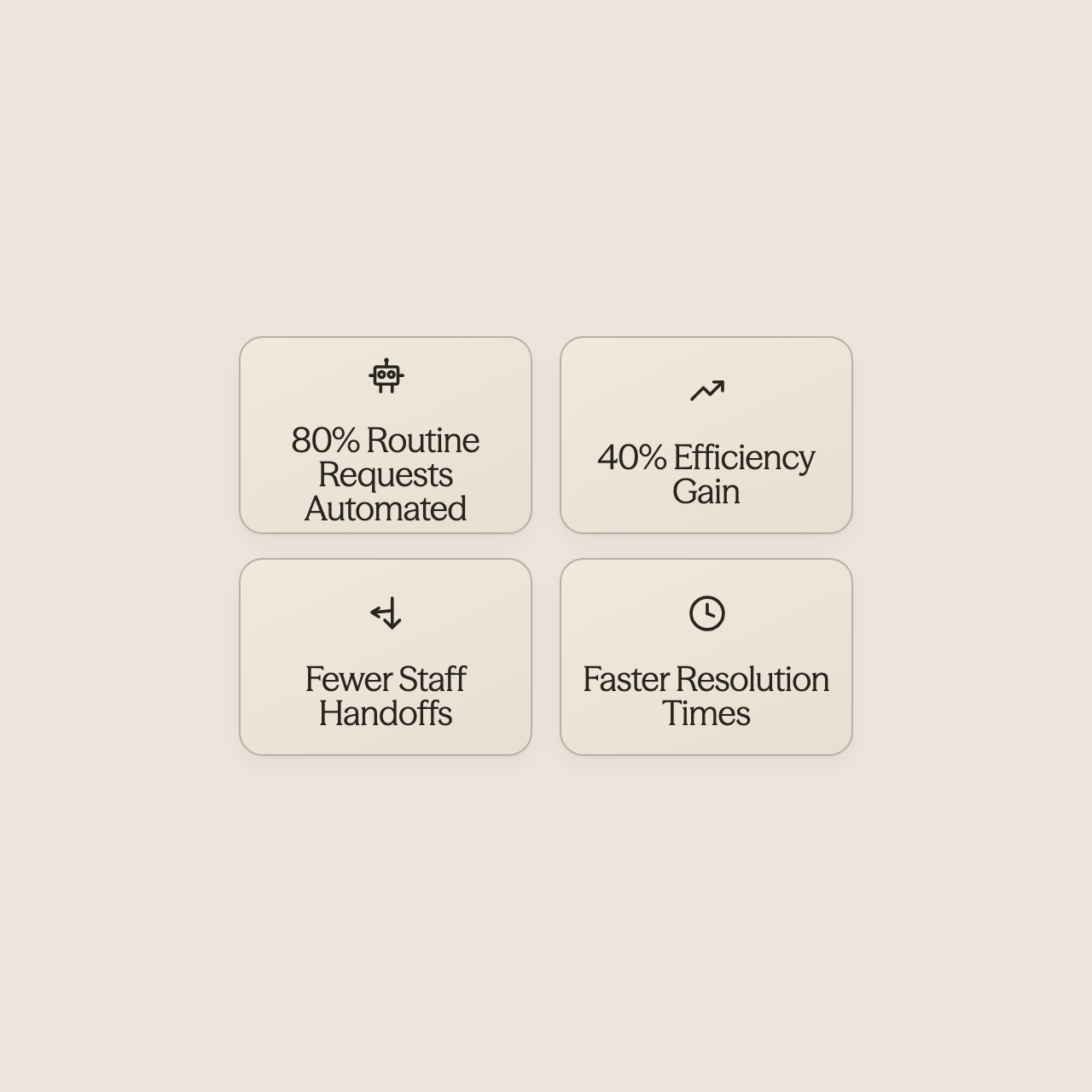
Hotels that implement comprehensive chatbot workflows see operational efficiency gains of up to 40% compared to traditional support channels.
💡 Best Practice: Focus on high-frequency requests that typically require multiple touchpoints - these offer the greatest potential for cost savings and efficiency gains.
Reservation and Stay Management
Guests often contact hotels about existing bookings to check confirmation numbers, ask about arrival times, learn about cancellation policies, or request special accommodations. Each question creates work for front desk staff, even when the answer is already in the property management system.
A chatbot with direct access to the property management system can handle these conversations without human intervention. It retrieves reservation details instantly, confirms changes, and updates records immediately. Guests receive fast answers while front desk staff focus on check-ins, check-outs, and situations requiring human judgment.
What happens when guests request changes to their booking?
Modification requests follow the same pattern. The chatbot handles date changes and room upgrades, escalating only when inventory constraints or policy exceptions require attention, which cuts resolution time and unnecessary back-and-forth.
Check-In and Check-Out Support
Guests often ask about early check-in, parking, key pickup, and late checkout. These questions require accurate, timely information rather than personalized service.
Automating this communication reduces repetitive work while improving guest experience. Our chatbot provides check-in instructions before arrival, handles early check-in requests based on room availability, processes late checkout inquiries, and delivers departure guidance on the guest's schedule, not the front desk's.
Housekeeping and Maintenance Requests
Operational requests create friction through multiple touchpoints: a guest needs towels, another reports a broken thermostat, someone requests a room refresh, or toiletries. Each requires a phone call, a message to housekeeping, manual tracking, and follow-up confirmation.
An integrated chatbot captures requests, routes them to the right team with full context, and provides status updates. Jotform reports that chatbots can handle up to 80% of routine customer service questions, so most housekeeping and maintenance requests resolve without manual staff coordination. Resolution times shrink and administrative workload drops.
Revenue Opportunities Hidden Inside Guest Conversations
Most hotels use chatbots to reduce costs, but they're missing a larger opportunity. Guest conversations reveal moments where hotels can offer additional services, upgrades, or extended stays. For example, hotels can offer room upgrades when guests express satisfaction, suggest early check-in for early arrivals, or recommend spa appointments and restaurant reservations based on guest preferences. Our Conduit platform identifies these opportunities in real-time, transforming routine interactions into revenue-generating moments.
How can contextual offers improve guest experience?
When these offers arrive at the right time, based on guests' needs rather than general promotions, they feel helpful rather than annoying. A chatbot that notices early arrival can offer paid early check-in; one that detects an extended trip can suggest room upgrades or late checkout options. These interactions generate revenue while improving guest satisfaction.
Platforms like Conduit handle service automation and proactive revenue generation within the same conversation flow, treating each guest interaction as an opportunity to resolve requests and surface relevant offers without requiring staff to manually identify upsell moments.
Related Reading
- AI Agents For Hotels
- Hotel Automation Tools
- Guest Communication Tools
- AI Tools For Hotels
- Hotel Chatbot
- Airbnb Automation Tools
- AI Chatbot For Hotels
How Hotels Should Evaluate Hotel Chatbot Vendors
Questions Every Buyer Should Ask
The difference between a useful platform and an expensive disappointment shows up in the details. Most vendors claim integration capabilities, but the quality of those integrations determines whether the chatbot becomes part of your operational workflow or simply another interface guests abandon.
What data access capabilities should you verify first?
Start with data access. Can the platform pull real reservation details, guest preferences, and booking status directly from your property management system? Ask which specific PMS platforms integrate natively, rather than through workarounds or manual data entry.
System connectivity matters more than feature lists. Identify whether the vendor connects directly with your CRM, ticketing systems, housekeeping software, and guest messaging tools.
How can you measure true automation effectiveness?
According to the h2c 2025 global study, 78% of hotel chains use AI systems, but only 7% operate with a comprehensive AI strategy. The gap stems from the extent to which AI is integrated into hotel systems: hotels deploy platforms that engage guests but cannot complete tasks, forcing staff to finish what the chatbot started.
Ask what percentage of requests the platform can fully resolve without human help. Vendors should explain which tasks are automated from start to finish, which require staff review, and where problems are escalated to management. If they can't provide specific numbers or describe their problem-handling process, you're likely looking at a system that will create more work than it saves.
What happens when chatbots can't resolve guest requests?
No chatbot solves every situation. How a platform handles requests it cannot manage alone reveals its true quality.
When a guest complaint needs service recovery or a VIP makes a special request, does the system transfer the full conversation to your team, or must staff ask the guest to repeat everything? Hospitality platforms preserve conversation history during handoffs, maintaining the guest relationship rather than forcing a restart.
How quickly can hotel chatbots be implemented?
Implementation timelines reveal system readiness. Some platforms require weeks of setup, custom coding, and workflow planning before becoming operational. Others address common requests within days through built-in hospitality-specific features. Clarify what setup work your team must handle versus what the vendor provides, and whether you'll need dedicated technical staff to maintain the platform post-launch.
What metrics actually matter for hotel chatbot performance?
Tracking conversation volume tells you almost nothing about business impact. You need to measure first response times, resolution rates, automation usage, changes in guest satisfaction, and revenue from automated offers.
If a vendor cannot demonstrate how their platform reduces workload, improves service quality, or helps your business, you're buying a tool that counts activity instead of showing results. The best systems identify patterns in guest requests, highlight workflow problems, and reveal which automation investments deliver value.
How do leading platforms turn automation into measurable business value?
Most hotel chatbots handle conversations. Platforms like Conduit treat each interaction as part of a larger operational system, connecting guest requests directly to workflows, data sources, and revenue opportunities, thereby transforming automation into measurable business value without manual staff intervention.
But knowing what to look for matters only if you can recognize the warning signs that separate functional platforms from expensive distractions.
How Conduit Helps Hotels Automate Service, Revenue, and Operations
By the time hotels evaluate chatbot capabilities, a bigger question emerges: how can AI improve guest service without creating additional complexity for staff? Many platforms answer common questions, but hotels still manually check reservations, route requests between departments, follow up on unresolved issues, and manage guest communications across multiple channels. The result is often better responsiveness but limited operational improvement.
🎯 Key Point: Most hotel AI solutions focus on guest-facing interactions but ignore the backend operational workflows that consume staff time.
Our Conduit platform automates these backend workflows, so your team spends less time on manual handoffs and more time on meaningful guest interactions.
Hotels that automate backend workflows see 40% reduction in manual task completion time while maintaining higher guest satisfaction scores.
💡 Tip: Look for AI solutions that integrate with your existing property management system to create seamless automation rather than adding another tool to manage.

How do hotel chatbots access real guest information?
Most hotel chatbots rely on general knowledge or scripted answers that are disconnected from guests' needs. When a guest asks about their reservation, a generic bot might provide a phone number or suggest checking their confirmation email—information the guest already possesses. What they need is an answer about their specific booking.
What benefits do integrated systems provide for staff and guests?
Systems that connect to property management platforms receive reservation details, stay history, and property data immediately. Responses show actual booking information instead of generic instructions. Staff spend less time verifying details because the system already knows the guest's check-in time, room type, and available upgrades for their dates.
One Guest Conversation Across Every Channel
Guests contact hotels through their preferred channels: website chat before booking, text messages during arrival, WhatsApp for requests, and email for receipts. Most hotels treat each channel as a separate process, forcing guests to repeat information and requiring staff to piece together conversations scattered across platforms.
A unified automation layer manages these conversations as one continuous thread across all channels. A guest who asks about late checkout via text message need not repeat themselves when following up through the website. Staff see the full conversation history with all relevant details, eliminating repetition and manual searches across platforms.
How does intelligent routing prevent guest frustration?
Not every request should be automated. When a conversation needs human attention, how it reaches staff determines whether the problem gets solved quickly or delayed by unnecessary handoffs.
What happens when escalation includes full context?
According to Conduit's analysis of hotel automation, effective systems can automate 80% of inquiries while routing the remaining 20% to the appropriate team with full context. Staff immediately see the guest's request, conversation history, and supporting information.
The maintenance team receives facility issues with room numbers and descriptions already documented. The front desk receives upgrade requests with current booking details and availability already checked. This eliminates delays and communication gaps that occur when guests must repeat themselves across multiple interactions.
Proactive Guest Engagement Throughout the Journey
Most chatbot solutions only respond to questions—a reactive approach that misses opportunities for engagement. Proactive communication triggered by lifecycle events (bookings, check-ins, purchases, stay milestones) reaches guests when context makes messages relevant rather than intrusive.
A guest who books receives pre-arrival information at the right time. Someone who checks in gets dining recommendations based on their reservation length. A departing guest sees a feedback request acknowledging their specific stay details. These interactions feel personalized because they're based on actual guest behavior and property data, not generic broadcasts.
How do guest conversations create natural revenue opportunities?
Guest conversations create natural revenue opportunities that manual outreach cannot scale. A guest asking about checkout time might pay for late checkout if offered immediately. Someone asking about parking might book a spa treatment if they knew availability matched their schedule.
What results do hotels see from automated revenue opportunities?
Research from Proctur indicates that hotels using automation see up to 30% increase in direct bookings by showing relevant offers when guests are attentive. Room upgrades, stay extensions, early check-in options, extra services, and property experiences can be presented based on guest behavior and reservation details rather than relying on staff to suggest them manually.
Automation only creates value if the system does what guests request, not merely records what they asked for.
Book a Demo to See Conduit's AI for Hospitality Customer Service in Action
If your current chatbot only answers questions while your team manages the real work, book a demo of Conduit to see deeper hospitality automation in action. You'll identify guest requests that can be automated, uncover proactive revenue opportunities within the guest journey, and understand how reservation-aware AI reduces response times without adding staff.
🎯 Key Point: The difference between documentation and execution shows up in measurable outcomes that directly impact your bottom line.
"Teams using Conduit typically see operational impact within 30 days because our system completes guest requests across property management, housekeeping, and service platforms—not just chat." — Conduit Performance Data
Teams using Conduit typically see operational impact within 30 days because our system completes guest requests across property management, housekeeping, and service platforms—not just chat. You'll learn which workflows can shift from manual handoffs to automatic resolution and what that means for guest satisfaction and team capacity.
💡 Demo Tip: Come prepared with your most time-consuming guest request types to see real-time automation possibilities for your property.

Related Reading
- Hijiffy Pricing
- Enso Connect Pricing
- Airbnb Automated Messages
- AI Software For Hotels with the Best Reviews
- Duve Pricing
- Hotel Automation Software
- Best AI For Hotels
- Property Management AI Tools
Stay in the loop
Get the latest on AI automation, product updates, and customer stories.


