11 Best Hotel Automation Tools for Modern Hotel Operations


11 Automation Tools
Streamline hotel operations
Front desk staff often find themselves overwhelmed by repetitive guest requests while phones ring unanswered during overnight hours. Modern hotels face mounting pressure to deliver instant, personalized service across multiple channels, yet traditional operations struggle to meet evolving guest expectations. Hotel automation tools now transform these challenges by streamlining everything from booking confirmations to late-night room service requests.
Property management systems, chatbots, guest messaging platforms, and smart room controls work together to create seamless experiences that guests actually notice. These integrated solutions handle routine communications automatically, allowing staff to focus on meaningful interactions that build loyalty rather than answering identical questions repeatedly. Hotels seeking comprehensive solutions can explore AI for hospitality platforms that integrate with existing systems to manage inquiries and maintain consistent communication across all guest touchpoints.
Table of Contents
- Why Hotels Are Automating More Operations Than Ever
- What Are Hotel Automation Tools?
- 11 Best Hotel Automation Tools
- Hotel Automation Use Cases That Deliver the Highest ROI
- What Makes a Hotel Automation Tool Actually Effective?
- How Conduit Helps Hotels Automate Guest Service and Operations
- Book a Demo to See Conduit's AI for Hospitality Customer Service in Action
Summary
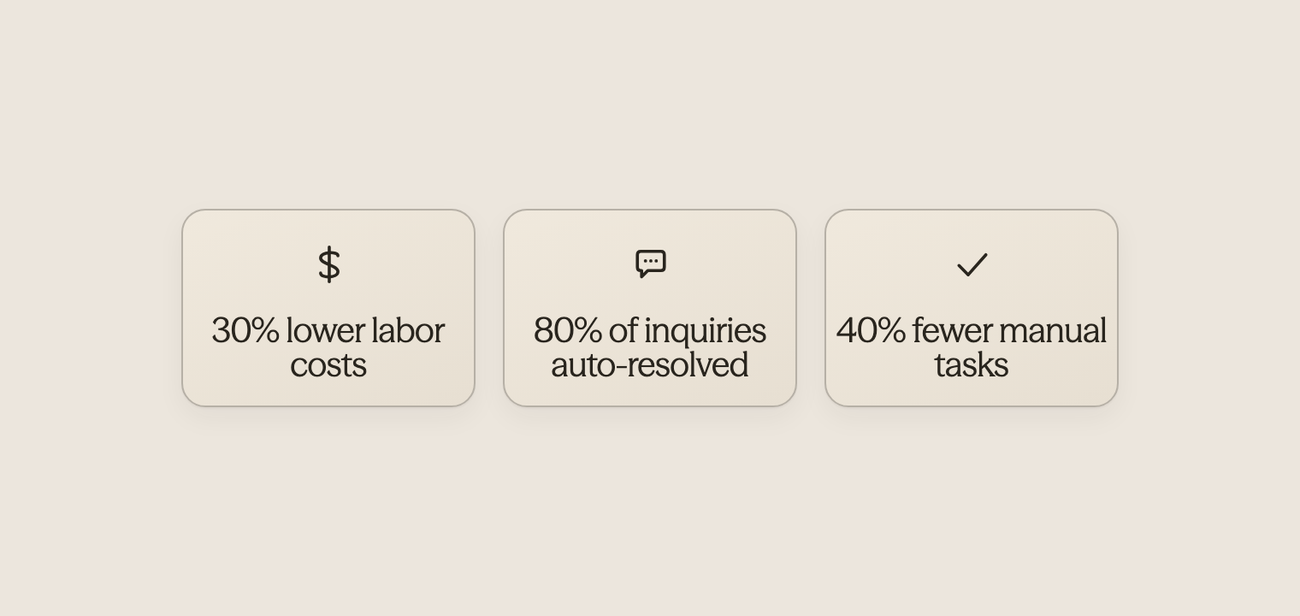
- Hotels implementing automation have achieved a 30% reduction in labor costs according to Hospitality Net's 2025 research, with returns coming primarily from eliminating repetitive coordination work rather than cutting headcount. The strongest ROI comes from platforms that connect guest communication directly to operational workflows, allowing service requests to route automatically through departments with full context attached, rather than requiring manual coordination across fragmented systems.
- Automated systems can handle up to 80% of routine guest inquiries when they are directly integrated with the property management system, but without that connectivity, they operate in isolation and still require human follow-up for most requests. The difference between effective automation and another dashboard for monitoring comes down to whether the platform can access real-time reservation data, room availability, guest history, and billing information to provide actionable responses rather than generic acknowledgments.
- Guest expectations for immediate digital responses create operational pressure that traditional staffing models cannot meet. Properties now receive inquiries across six or seven channels (SMS, WhatsApp, email, social platforms, web chat), each requiring monitoring and a response, while guests expect resolution within minutes, regardless of when they reach out or which channel they use.
- Hotels using workflow automation see a 40% reduction in manual tasks when platforms connect communication to execution rather than stopping at the conversation layer. A maintenance request that previously required front desk coordination, manual task creation, staff assignment, and separate guest follow-up now triggers the entire workflow automatically, with status updates flowing to both staff and guests at each step without human intervention.
- Revenue automation captures opportunities that manual processes miss during high-volume periods. Automated upsell systems present room upgrades, early check-in, late checkout, and ancillary services consistently throughout the guest journey, regardless of front desk workload, thereby converting offers that would otherwise disappear when staff are too busy to pitch them individually during rush periods.
- AI for hospitality addresses these operational challenges by maintaining conversation context across channels, routing service requests, triggering department workflows, and connecting guest communications directly to property management systems, so teams spend less time coordinating logistics and more time on interactions that differentiate the guest experience.
Why Hotels Are Automating More Operations Than Ever
Guests expect quick responses across text, email, WhatsApp, and social platforms, along with personalized recommendations and smooth service from booking through checkout. Hotel teams face staffing shortages, rising labor costs, and communication volumes that outpace headcount growth.
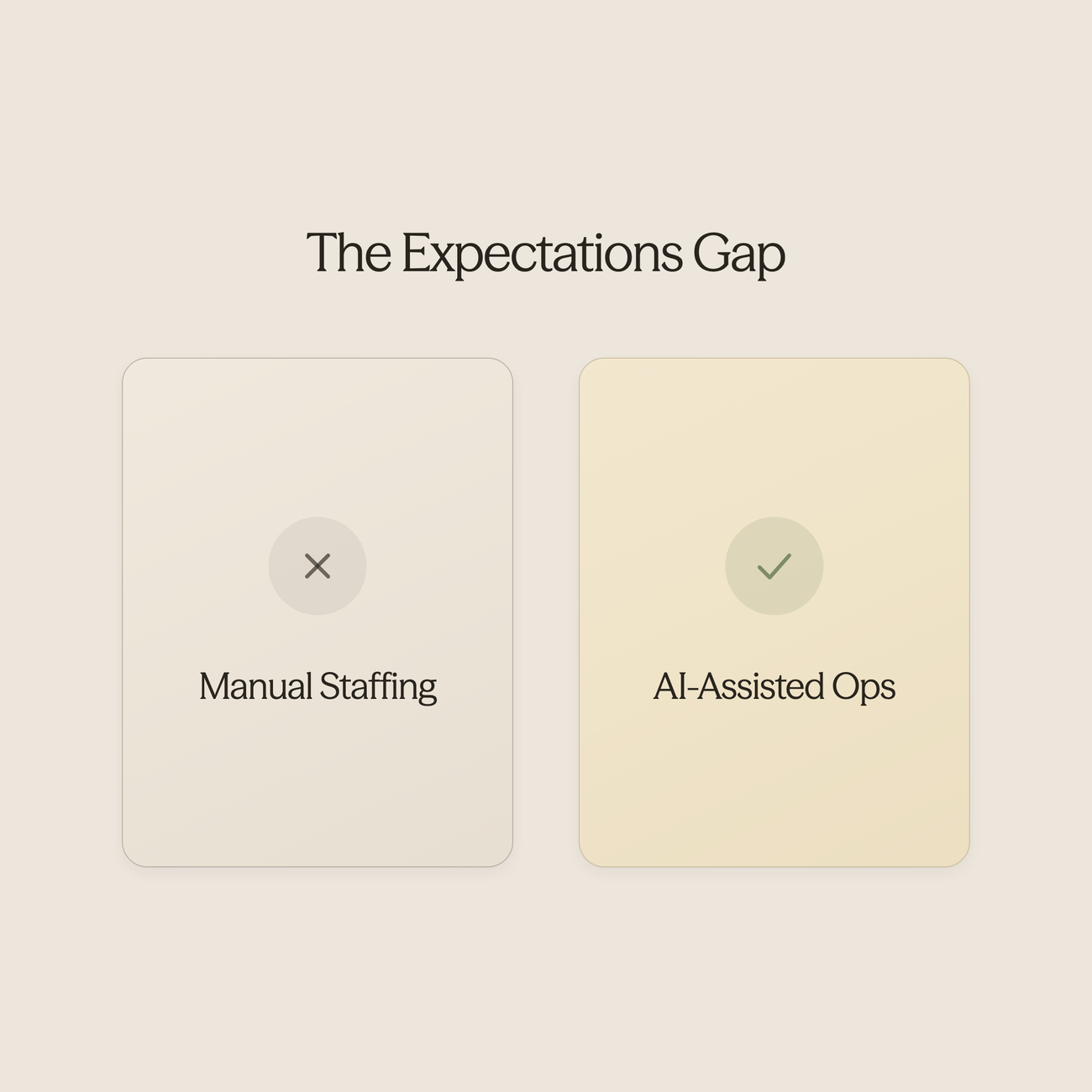
🎯 Key Point: The gap between guest expectations and operational capacity is driving hotels toward automation solutions that can handle multiple communication channels simultaneously while maintaining service quality.
"Hotels are experiencing communication volumes that grow faster than their ability to hire and train staff, creating an urgent need for scalable automation solutions."
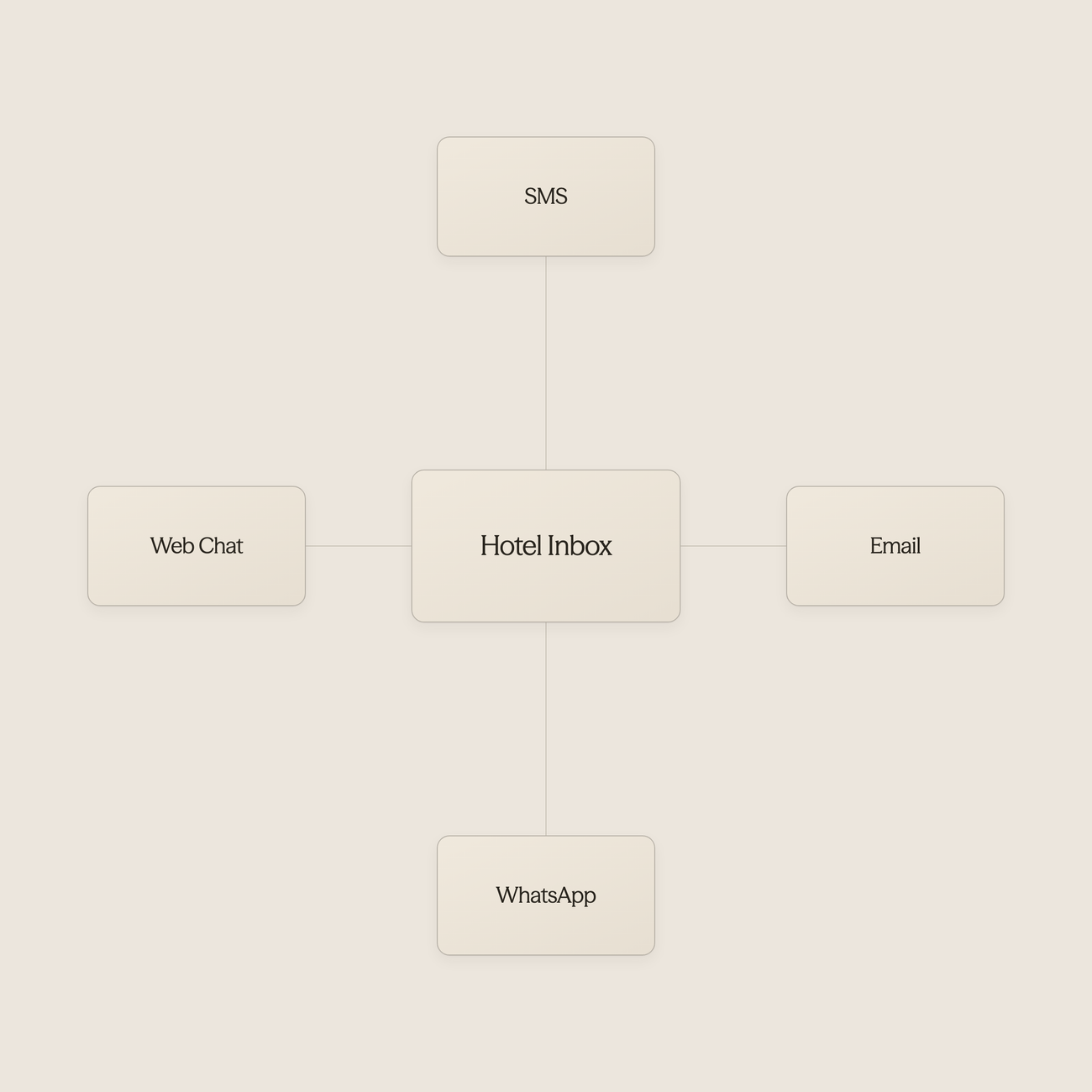
💡 Tip: Smart automation doesn't replace human touch—it amplifies your team's ability to deliver personalized service at scale while reducing response times and operational stress.
How does the traditional hotel model break under modern pressure?
The traditional model breaks under this pressure. A simple request for extra towels involves multiple touchpoints: message received, front desk review, housekeeping notification, task assignment, delivery confirmation, and guest follow-up. Multiply that across hundreds of daily interactions, and the front desk staff spends more time coordinating logistics than building relationships. According to H2C's 2025 study, 62% of hotel operators cite a lack of expertise as the top barrier to adopting automation, though operational necessity is driving rapid change despite these knowledge gaps.
Why are hotels struggling with communication overload?
Guests now message properties through six or seven different channels: hotel website, booking platforms, SMS, email, and Instagram DMs, each of which requires monitoring and a response. A single reservation can generate questions across all channels about amenities, pet policies, and confirmations. Hotel teams didn't become less capable; the volume and complexity outpaced manual processes.
How do disconnected systems impact hotel operations?
Each channel operates independently unless someone manually connects the information. Staff switch between systems, duplicate information, and lose important details when conversations shift from email to text mid-discussion. Questions get missed when staff members switch shifts. Upgrade opportunities slip past because nobody connected the anniversary note in the reservation with the couple's dinner inquiry. Revenue leaks through cracks in disconnected systems.
How does automation restructure hotel operations?
The most effective automation transforms how hotels work rather than reducing headcount. When routine questions about check-in times, parking fees, and WiFi passwords are answered immediately, front desk staff can focus on guests with complex needs or those celebrating special occasions. Our AI for hospitality handles multi-step conversations across channels, manages policy-based responses, and integrates with property management systems, enabling teams to spend less time on logistics coordination and more time on interactions that enhance the guest experience.
What revenue opportunities does smart automation surface?
Smart automation finds revenue opportunities that manual processes miss. When a system recognizes that a guest's late arrival matches available suite inventory and automatically offers an upgrade, it delivers hospitality at scale. Intelligent systems adjust recommendations based on occupancy, guest history, and revenue management rules—capabilities that static scripts cannot match.
How do integrated platforms create unified intelligence?
The shift happens when automation moves from isolated point solutions to integrated platforms. Hotels that connect guest communication, operational workflows, and revenue systems create a unified intelligence layer. Staff see the complete guest context regardless of channel. Requests are automatically routed to the appropriate department with the full history attached. Follow-up happens proactively instead of reactively. Technology handles complexity while humans handle connection. But knowing automation delivers value and understanding which tools work are entirely different challenges.
Related Reading
- AI Communications For Hotels
- AI For Vacation Rentals
- AI For Airbnb Hosts
- AI Use Cases In Hospitality
- Best Hotel Chatbot
What Are Hotel Automation Tools?
Hotel automation tools are software programs that handle routine work tasks and guest interactions without manual intervention. They process booking confirmations, route service requests, coordinate housekeeping schedules, adjust room pricing, and manage guest messaging across channels like SMS, WhatsApp, and email.
💡 Key Point: These tools transform manual hotel operations into automated workflows, freeing up staff to focus on high-value guest experiences rather than repetitive administrative tasks.
"Hotel automation tools can reduce operational costs by 20-30% while improving guest satisfaction through faster response times." — Hotel Technology Report, 2024
🔑 Takeaway: The primary benefit of hotel automation is not just efficiency—it's the ability to deliver consistent service quality at scale while reducing human error in critical guest touchpoints.
How do hotel automation tools create operational connections?
The most effective tools create operational connections that were previously impossible without hiring more people. When a guest texts about a maintenance issue, the right platform logs the request, assigns it based on staff availability and priority rules, updates housekeeping schedules if the room needs blocking, notifies the guest when someone's en route, and closes the loop with a follow-up message after resolution—all without a front desk agent manually coordinating across multiple systems.
Why adoption accelerated
Hospitality Net reports that hotels using automation achieved a 30% reduction in labor costs. Guests expect responses within minutes across channels, while staffing challenges and wage pressure mount. Automation has become essential as the volume of communication increases and qualified staff become harder to retain. When staff spend less time routing requests and updating spreadsheets, they focus on interactions that affect guest satisfaction and revenue. Automation handles repetitive coordination and policy compliance, while humans handle judgment calls, recovery moments, and conversations that build loyalty.
Why do automation platforms struggle with connected workflows?
Most automation platforms handle individual workflows well, but break down when those workflows need to connect. A guest books through the website, asks a question via WhatsApp, requests a late checkout through the app, and mentions a billing issue over email. Without a unified system, each interaction exists in isolation: staff see fragments rather than context, guests repeat information, and follow-up occurs inconsistently. Conduit addresses this by maintaining conversation context across channels and connecting guest communications directly to operational systems, so requests flow to the right department with full history attached.
What's the difference between proven results and practical solutions?
Knowing that automation delivers measurable results and identifying which specific tools solve your operational problems are different challenges.
11 Best Hotel Automation Tools
Hotels automate across different operational areas: guest messaging, revenue pricing, housekeeping coordination, and marketing campaigns. The best tools reduce manual work in one area while connecting to the rest of the operation. Choose platforms by identifying which process creates the most friction, then finding software that eliminates it without creating coordination problems.
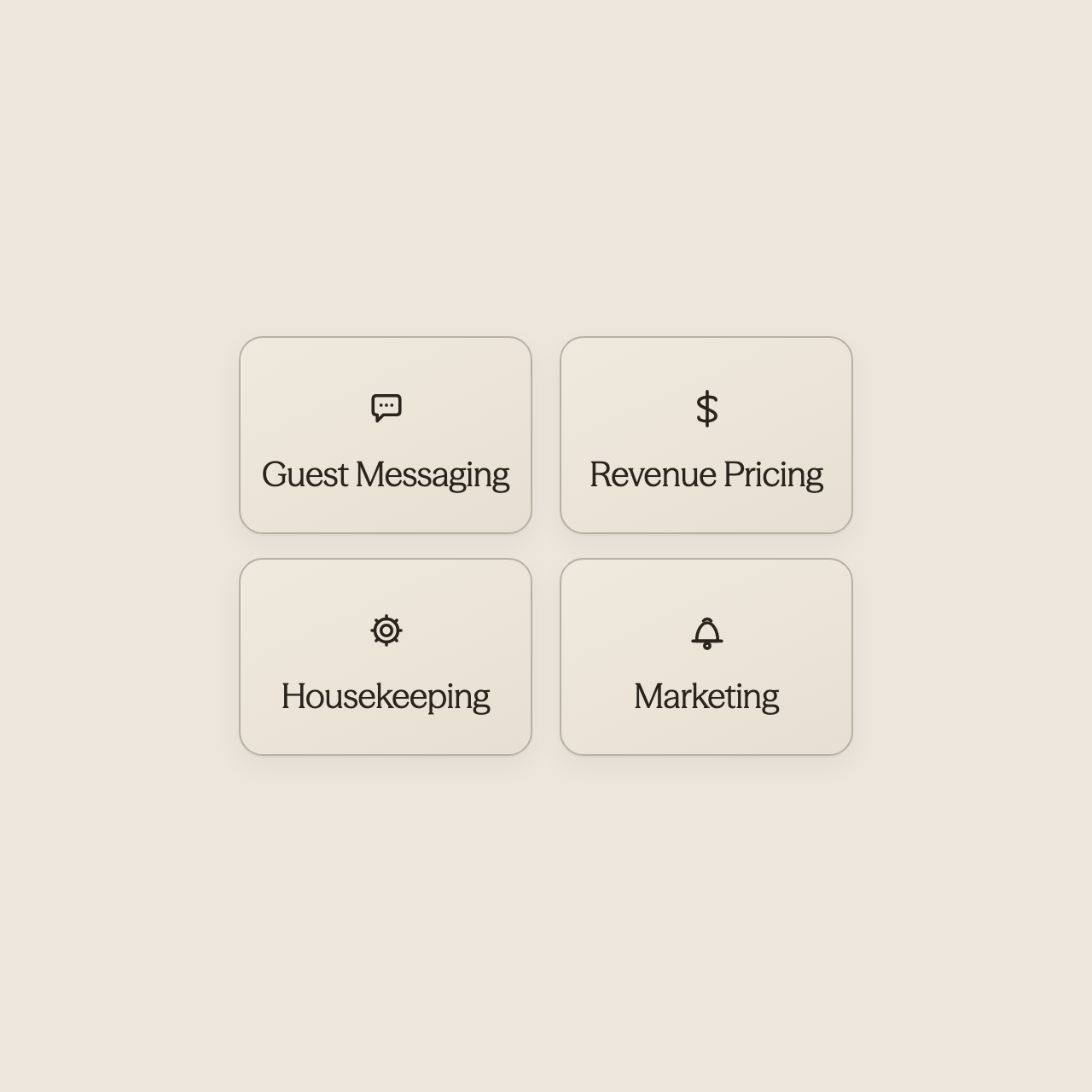
🎯 Key Point: Focus on automation tools that solve your biggest operational bottleneck rather than trying to automate everything at once.
"The most successful hotel automation implementations target one specific process first, then expand to connected systems." — Hotel Technology Report, 2024
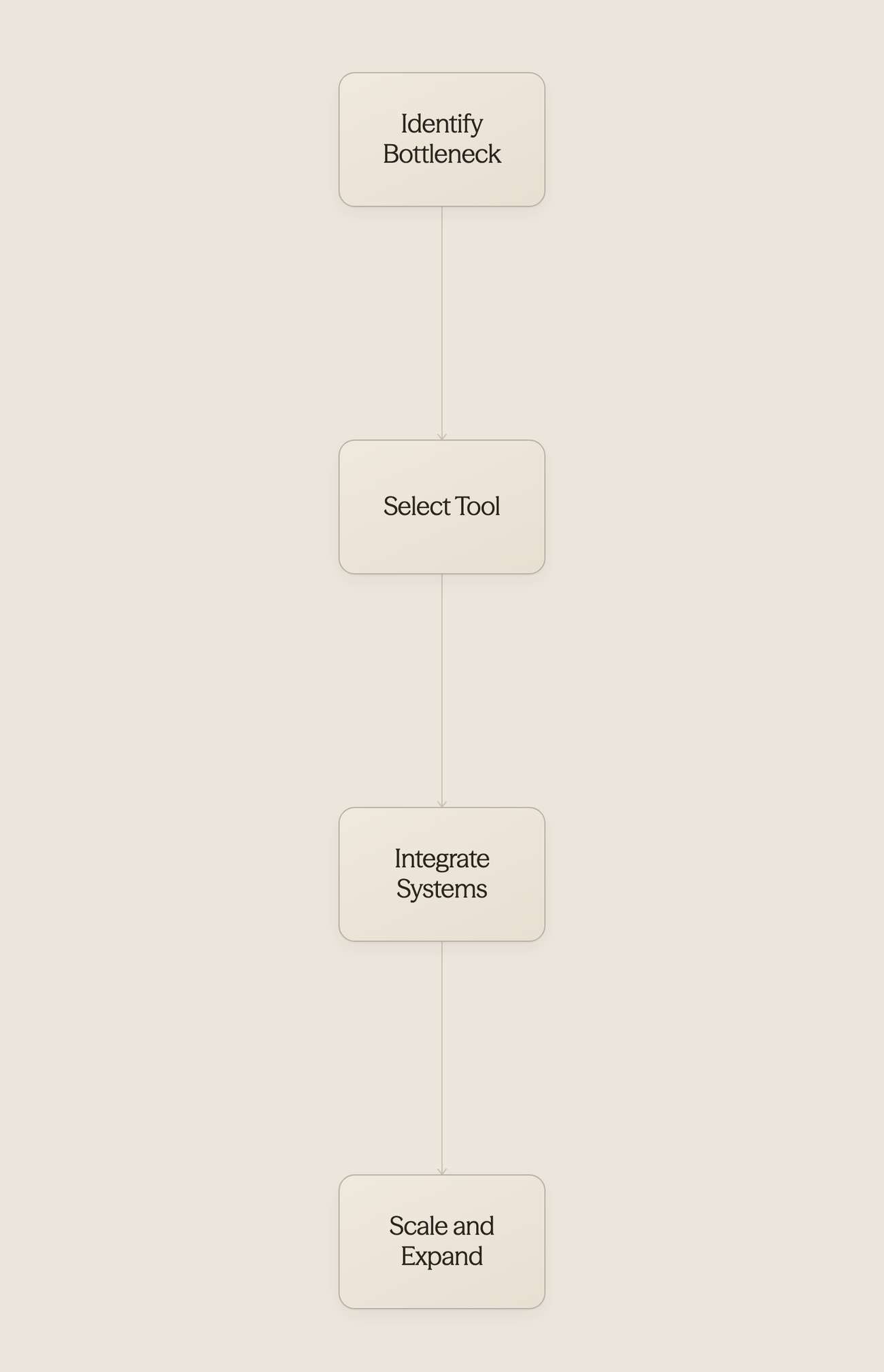
💡 Best Practice: Start with the operational area that consumes the most staff time daily - whether that's guest communications, pricing adjustments, or housekeeping schedules - and ensure your chosen tool integrates seamlessly with existing systems.
1. Conduit

Conduit connects AI-powered guest communication directly to hotel operations. The platform handles messaging across multiple channels (SMS, WhatsApp, email, web chat) and routes service requests, triggers workflows, and identifies revenue opportunities through automated task assignment, PMS integration, and proactive follow-up.
Key strengths
Messaging across multiple channels, AI-powered communication automation, deep PMS integrations, workflow automation, service request routing, and revenue opportunity generation.
Best fit
Hotels seeking guest communication automation and operational efficiency improvements.
2. Canary Technologies
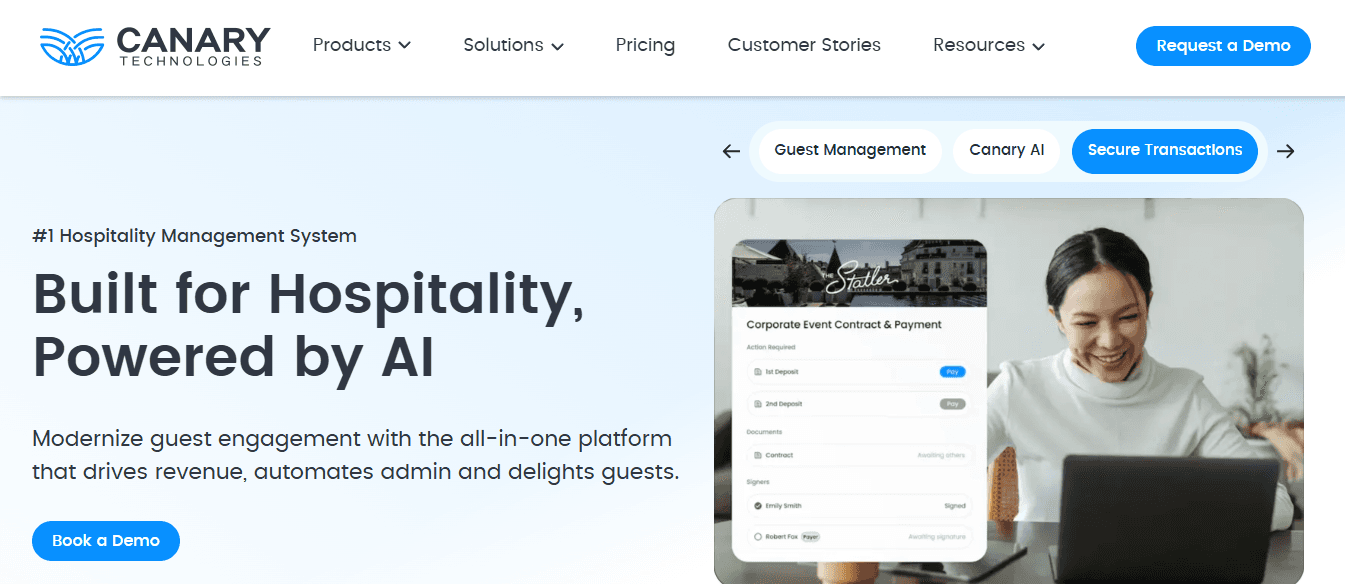
Canary Technologies modernizes the guest journey through digital workflows, automating guest-facing processes from pre-arrival communication through post-checkout engagement. Digital check-in reduces front desk volume, while upselling tools present room upgrades and amenities at high-conversion moments.
Key strengths
Guest journey automation, digital check-in, upselling tools, and guest messaging.
Best fit
Hotels are modernizing guest-facing processes.
3. HiJiffy

HiJiffy specializes in AI chatbot automation for the hospitality industry, handling multilingual guest inquiries across channels. Chatbots operate 24/7, answering availability questions and common inquiries while assisting with reservations when human staff are unavailable.
Key strengths
AI chatbot automation, multilingual communication, and booking assistance.
Best fit
Hotels focused on automating guest inquiries.
4. Asksuite
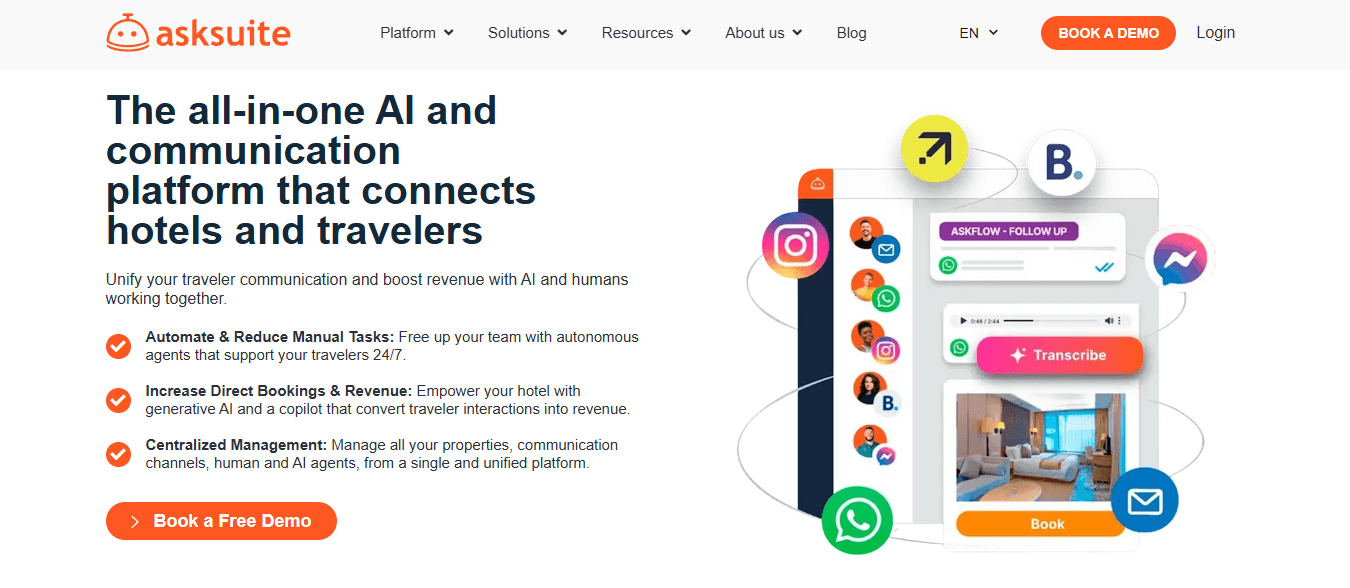
Asksuite automates reservation inquiries and direct-booking conversions through conversational AI, qualifying leads, answering booking questions, and guiding guests toward direct reservations rather than OTA bookings. Response speed in pre-booking conversations directly impacts conversion rates.
Key strengths
Reservation automation, lead qualification, and direct booking assistance.
Best fit
Hotels seeking automated booking support.
5. Duve

Duve provides guest journey automation with an emphasis on self-service. The platform enables digital check-in, automated upselling, and guest engagement workflows that reduce front desk interactions. Guests manage their own experience through mobile interfaces while the platform coordinates with hotel systems in the background.
Key strengths
Guest journey automation, digital check-in, and upselling workflows.
Best fit
Properties emphasizing self-service experiences.
6. ALICE by Actabl

ALICE coordinates internal operations and staff communication by managing service requests, routing tasks to appropriate departments, and tracking completion status. Housekeeping, maintenance, and front desk teams work from a shared system rather than fragmented communication channels. According to Hospitality Net, operational automation can drive a 30% reduction in labor costs when deployed across departments.
Key strengths
Service request management, staff coordination, and housekeeping workflows.
Best fit
Hotels focused on operational task management.
7. HotSOS by Amadeus

HotSOS handles operations management for large hotels with complex coordination needs. The platform automates maintenance scheduling, housekeeping coordination, and operational task tracking across multiple departments. HotSOS integrates with legacy systems that newer platforms often cannot accommodate.
Key strengths
Maintenance automation, housekeeping coordination, and operational task tracking.
Best fit
Large hotels with complex operations.
8. IDeaS Revenue Solutions

IDeaS automates pricing decisions through predictive analytics and dynamic rate optimization, analyzing demand patterns, competitive pricing, and booking pace to automatically adjust room rates. Revenue managers shift from manually updating rates to reviewing system recommendations and adjusting strategy based on forecasting insights.
Key strengths
Automated pricing decisions, forecasting, and revenue optimization.
Best fit
Revenue-focused hotel organizations.
9. Duetto

Duetto combines revenue management with dynamic pricing automation, using real-time data to adjust rates based on demand, market conditions, and booking velocity. Forecasting models help hotels optimize pricing across room types and channels simultaneously.
Key strengths
Dynamic pricing automation, forecasting, and revenue management.
Best fit
Hotels seeking advanced revenue automation.
10. Revinate
Revinate combines CRM functionality with marketing automation, segmenting guests by booking history and preferences to trigger personalized email campaigns, loyalty offers, and re-engagement messaging. Marketing teams automate communication sequences while maintaining brand voice and personalization.
Key strengths
Marketing automation, CRM-driven communication, and guest engagement.
Best fit
Hotels focused on personalized marketing and guest retention.
11. Zapier

Zapier connects thousands of applications through automated workflows. While not purpose-built for hotels, it enables custom automation between hotel systems, triggering actions across reservations, guest messaging, and operations platforms in response to specific events or data changes.
Key strengths
Workflow automation, application integrations, process automation.
Best fit
Hotels seeking custom automation between existing systems.
What factors determine the best hotel automation platform
The best platform depends on the operational challenge being addressed. Some tools specialize in guest communication, others in revenue optimization, marketing, or internal operations. Hotels seeking maximum impact prioritize solutions that connect guest interactions directly to operational workflows, enabling communication, service delivery, and revenue opportunities to function together within a unified system.
Why do integration gaps occur with separate automation tools?
Most teams evaluate tools one category at a time: guest messaging separately from revenue systems, separately from operations software. As complexity grows, this creates integration gaps. Guest requests arrive through automated messaging but require manual coordination with housekeeping; revenue opportunities identified in one platform don't trigger actions in another. Platforms like AI for hospitality address this by unifying guest communication with operational workflows. Our platform ensures guest requests automatically trigger the right internal process while maintaining conversation continuity across channels.
How can hotels identify which problems automation tools actually solve
Knowing which tools exist differs from understanding which specific operational problems they solve.
Hotel Automation Use Cases That Deliver the Highest ROI
The automation projects that produce the strongest returns solve two problems simultaneously: they eliminate repetitive manual work while enhancing the guest experience through speed, consistency, or personalization. Hotels gain improvements in efficiency, satisfaction scores, and revenue without sacrificing operational savings or service quality.
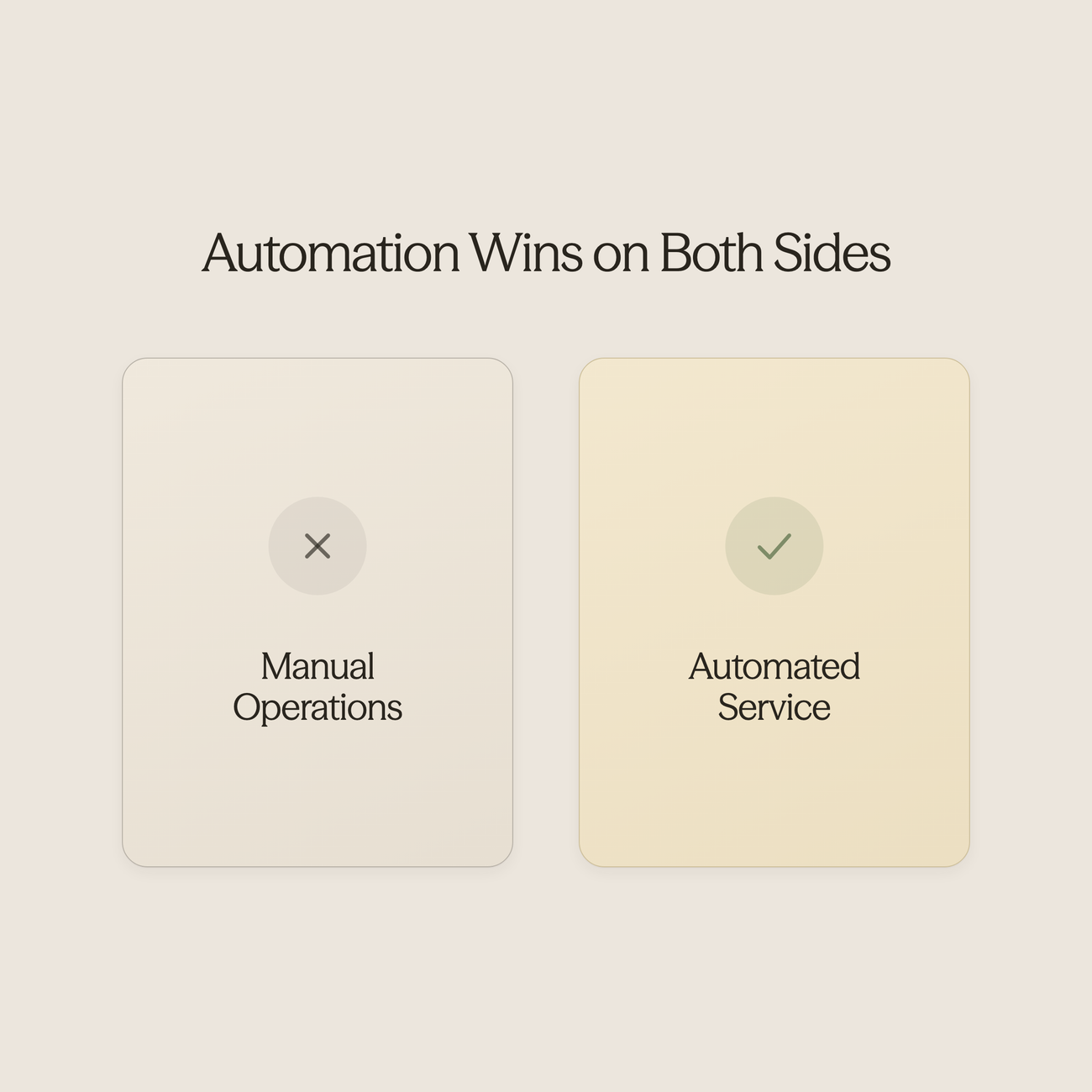
🎯 Key Point: The most successful hotel automation initiatives create a win-win scenario where operational efficiency gains directly translate to enhanced guest satisfaction rather than forcing hotels to compromise on service quality.
"The best automation projects solve two problems simultaneously: they eliminate repetitive manual tasks while making the guest experience faster, more consistent, or more personalized."
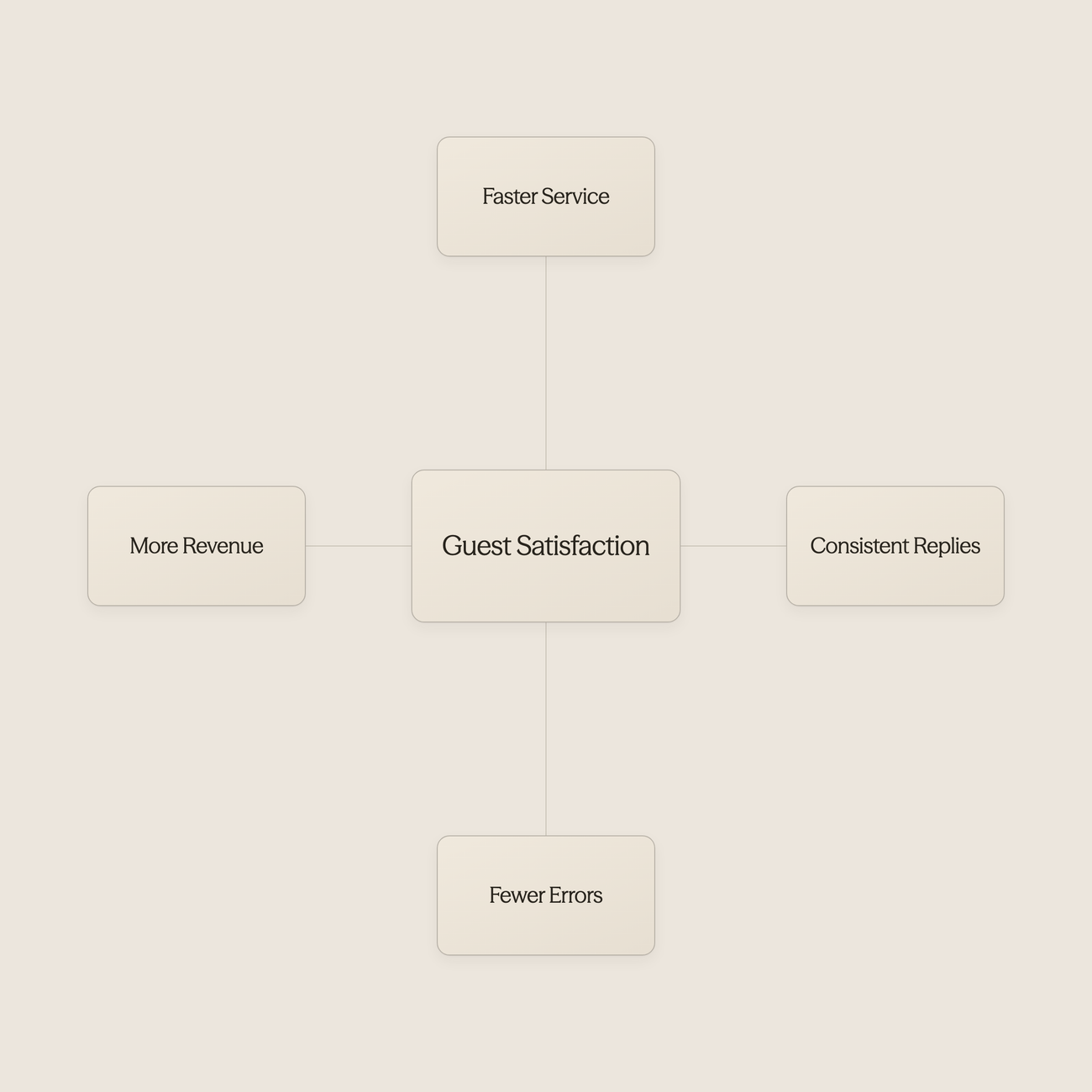
💡 Best Practice: When evaluating automation opportunities, prioritize solutions that deliver measurable improvements in both operational metrics and guest satisfaction scores to maximize your return on investment.
What types of guest questions can automation handle?
Guest questions come in constantly: What time is breakfast? Where do I park? Can I check in early? How do I cancel? Most hotels receive dozens of inquiries daily via text, email, WhatsApp, and website chat. Each one diverts staff from in-person assistance or more complex requests.
How does automation improve guest service efficiency?
Automation handles these high-volume, low-complexity interactions immediately. Guests receive accurate answers at any time, without waiting, while staff capacity shifts toward situations that require judgment, empathy, or problem-solving rather than information retrieval.
Why do guests expect immediate digital responses?
Salesforce research shows customers expect immediate digital responses. In hospitality, this expectation intensifies because guests often message with time-sensitive needs. Slow responses about parking or check-in procedures create problems before arrival, damaging satisfaction scores before guests even enter.
How does service request automation work in practice?
A guest texts the front desk requesting extra towels. Someone logs the request, calls housekeeping, waits for confirmation, updates the guest, and follows up to ensure delivery. This workflow involves multiple people, system entries, and communication handoffs for a simple task.
What changes when automation handles service requests?
Automation sends the request directly to housekeeping, creates the task in their system, automatically sends status updates to the guest, and records completion without manual coordination. The process that previously required three staff members and 15 minutes now takes seconds, with no human intervention until delivery.
What benefits do hotels see from automated service requests?
Hotels handling hundreds of service requests each week can reduce office workload while ensuring consistent responses. Guests receive faster service, and staff can focus on tasks that require their physical presence rather than relaying messages.
Revenue Automation
The automation projects that generate the most revenue capture opportunities disappear when staff lack time to inform guests. A guest checking in during a rush doesn't hear about the spa package. A family extending their trip never receives a late checkout offer because no one had time to call.
How do automated systems capture missed revenue opportunities?
Automated systems offer room upgrades, early check-in, late checkout, dining reservations, and extra services at optimal times during a guest's stay. These offers appear consistently, regardless of front-desk workload, capturing opportunities that manual processes miss. Hospitality marketing research shows that hotels using automated upsell campaigns generate meaningful additional revenue per stay when offers are delivered to guests regularly rather than sporadically.
Dynamic pricing automation adjusts rates continuously as demand changes, capturing revenue that fixed pricing leaves untapped. Revenue management platforms analyze booking patterns, competitor rates, and occupancy forecasts faster and more frequently than manual review permits.
What creates the strongest automation returns?
Most hotels view automation as a cost-cutting measure. The best implementations create value across multiple dimensions simultaneously. An automated messaging system reduces work, improves response times, increases satisfaction scores, and generates additional revenue from the same workflow. Platforms like Conduit integrate these capabilities so guest conversations trigger operational tasks, revenue opportunities, and service workflows concurrently rather than requiring separate systems for each function. Knowing automation delivers ROI and knowing which specific tool will work in your operation are different challenges.
Related Reading
- AI Agents For Hotels
- Guest Communication Tools
- Hotel Chatbot Guide
- Best Hotel Chatbot
- AI Chatbot For Hotels
- AI Tools For Hotels
- Airbnb Automation Tools
What Makes a Hotel Automation Tool Actually Effective?
Good hotel automation tools connect what guests need directly to how the hotel runs. The difference between software that makes work easier and software that adds another screen comes down to how well everything connects together. When a guest texts about staying late, the system should check if rooms are available in the PMS, update the housekeeping schedule, change the bill, and confirm with the guest automatically. If any of those steps require manual intervention, the automation is incomplete.
🎯 Key Point: True automation means zero manual handoffs between guest requests and hotel operations.
"The best hotel automation tools eliminate manual touchpoints entirely, creating seamless workflows from guest request to task completion." — Hotel Technology Research, 2024
💡 Best Practice: Look for systems that handle the entire workflow chain from initial guest contact through billing updates without requiring staff intervention.
Why does PMS connectivity matter for automation effectiveness?
Without direct PMS connectivity, automation tools operate in isolation. They can send messages but cannot access reservation details, room status, guest preferences, or billing information. Staff must manually pull data from separate systems, verify availability, and coordinate responses across platforms. Automated systems can handle up to 80% of routine guest inquiries when they have full access to operational data; without it, human follow-up remains necessary.
How does real-time PMS data transform guest responses?
Direct PMS integration allows automation to work with real-time information. A guest requesting early check-in receives an answer based on actual room availability rather than a generic "we'll check and get back to you" response. The system can see whether housekeeping has finished the room, whether another guest is extending their stay, and whether the request fits within operational capacity before responding.
Why do generic responses frustrate hotel guests?
Generic responses frustrate guests because they ignore the specifics of the situation. A guest requesting a stay extension needs an answer based on their current reservation, room type, available inventory, and rate structure. Automation without a reservation context can only acknowledge the request; the guest still has to wait for staff to manually review their booking and respond.
How does reservation context enable automated resolution?
Reservation context access allows automation to handle requests that previously required staff judgment. The system knows whether the guest is a loyalty member, whether they booked a promotional rate with restrictions, whether their room is available for extension, and what pricing applies. Conversations move from acknowledgment to resolution without manual intervention.
Workflow Automation Connects Communication to Execution
Saying you got a housekeeping request is not the same as finishing it. Many automation tools communicate with guests automatically, but don't address the actual work: staff still receive requests through different channels, manually create tasks, assign them, and verify completion. Guests see automation, but the behind-the-scenes work remains unchanged.
How do effective platforms automate operational workflows?
Good platforms automate work processes that occur after guest interactions. When a guest requests maintenance, the system automatically creates a work order ticket, assigns it to available staff based on their skills, blocks rooms in housekeeping schedules if needed, sends guest updates, and records completion for billing and quality tracking. Hotels using automation tools see a 40% reduction in manual tasks when workflows connect communication to execution. Platforms like Conduit integrate guest communication with operational task management, triggering the right workflows across departments without manual coordination between systems. This integration delivers significant operational impact.
What's the difference between knowing automation theory and practical implementation?
But knowing what makes automation work well differs from knowing whether a specific platform will deliver that value in your operation.
A Platform Built for Operational Continuity, Not Just Messaging
Conduit connects guest conversations across SMS, WhatsApp, web chat, and other messaging channels into a single operational layer. Teams see all communication in one place instead of monitoring separate inboxes. The platform integrates reservation data, guest history, and property context from hospitality systems, enabling responses tailored to actual stay details rather than generic scripts. When a guest texts about a maintenance issue or requests amenities, Conduit automatically triggers the appropriate workflow. Housekeeping and maintenance receive tasks with room details attached, and the guest receives status updates without staff having to manually coordinate across departments.
Automation That Routes Work, Not Just Replies
Most automation platforms handle responses. Conduit handles the operational follow-through. When escalation is needed, tasks are routed to the right team with full conversation history attached. Staff receive context, priority level, and the exact request in a single view, reducing response time and eliminating friction from incomplete handoffs. Conduit reports that 90% of guest inquiries are resolved automatically, freeing teams to focus on situations where judgment and hospitality matter most. The platform protects human services by eliminating repetitive coordination tasks that bury staff in administrative work.
Proactive Engagement and Revenue Without Extra Effort
Conduit automates communication throughout the guest journey: messages before arrival, check-ins during the stay, and follow-ups after departure. Revenue opportunities like room upgrades, extended stays, and extra services appear when guests are most likely to take action, without requiring staff to manually suggest or track offers. Automation handles large volumes of work and routine tasks, freeing employees to focus on the moments that define hospitality. The result is faster response times, fewer missed requests, and better guest experiences without operational overload.
Book a Demo to See Conduit's AI for Hospitality Customer Service in Action
Book a demo with Conduit to see how our platform handles messages from guests across multiple channels, routes service requests to different departments, and integrates with your existing property management system. You'll see how automation processes large volumes of messages without requiring staff to monitor every conversation, and how your team maintains control of the moments that matter most.
🎯 Key Point: See exactly which guest interactions get automated and which remain human-driven during your personalized demo.
"Automation handles large amounts of messages without requiring staff to watch every conversation, while keeping your team in control of the moments that matter most." — Conduit AI Platform
A demo shows what gets automated, what stays human, and how quickly your team can shift from reacting to guest needs to proactive hospitality. The platform transforms guest service from reactive responses to helpful, anticipatory care that enhances the guest experience.
💡 Tip: During your demo, ask to see how Conduit integrates with your specific PMS to understand the full automation potential for your property.
Related Reading
- AI Software For Hotels with the Best Reviews
- Property Management AI Tools
- Airbnb Automated Messages
- Hijiffy Pricing
- Duve Pricing
- Enso Connect Pricing
- Best AI for Hotels
- Hotel Automation Software
Stay in the loop
Get the latest on AI automation, product updates, and customer stories.

