5 Ways Artificial Intelligence Is Being Used in the Hotel Industry


AI in Hotels: 5 Ways
How hotels use AI today
A hotel guest checks in at midnight, exhausted from travel, only to wait in line while the front desk juggles phone calls, reservation questions, and room assignments simultaneously. This scenario plays out thousands of times daily across hotels worldwide, revealing why artificial intelligence in hotel industry operations has become essential for modern hospitality. Machine learning algorithms, chatbots, and automated messaging systems now address these real challenges by transforming guest experiences and streamlining operations.
Hotels can now automate guest communications, manage inquiries instantly, and free up staff to focus on meaningful interactions that truly matter. These AI applications help properties deliver personalized service at scale while improving operational efficiency and revenue management. For hotels ready to elevate their property's performance and create memorable stays for every guest, AI for hospitality provides the working solutions needed today.
Table of Contents
- Why Hotels Are Turning to Artificial Intelligence Faster Than Expected
- 1. AI-Powered Guest Communication and Customer Support
- 2. AI for Personalized Guest Experiences and Upsells
- 3. AI for Hotel Operations and Internal Coordination
- 4. AI for Revenue Management and Forecasting
- 5. AI for Proactive Guest Engagement
- Why Generic AI Tools Often Fail Hotels
- How Conduit Helps Hotels Scale Guest Operations With AI
- Book a Demo to See Conduit's AI for Hospitality Customer Service in Action
Summary
- Hotels face staffing shortages while guest expectations for instant, personalized communication continue to rise. Around 76% of hotels reported staffing shortages in 2024, according to the American Hotel & Lodging Association, creating operational bottlenecks, especially during peak seasons when every interaction multiplies across thousands of guests simultaneously. The gap between what guests expect and what manual workflows can deliver is widening quickly.
- AI can resolve up to 80% of routine customer inquiries, according to Zendesk research. Hotels use AI to automate responses to check-in instructions, parking information, breakfast hours, amenity details, and Wi-Fi access without waiting for staff availability. AI-powered chatbots can also reduce customer service costs by up to 30%, which becomes significant when hotels maintain 24/7 manual support coverage across multiple communication channels.
- Effective personalization can drive up to a 20% increase in guest spending while simultaneously improving satisfaction according to McKinsey research. AI systems analyze reservation patterns like trip duration, booking channel, and loyalty status to determine when guests are most receptive to specific offers for spa services, dining reservations, late checkout, or stay extensions. This precision creates revenue opportunities that untargeted campaigns consistently miss.
- Generic AI tools miss 60% of hotel-specific use cases because they operate without operational integration, according to hospitality.today research. Without access to property management systems, housekeeping workflows, or maintenance queues, AI responses become unreliable quickly. The AI may correctly answer simple questions about WiFi passwords, but it fails when guests need real-time coordination involving multiple departments.
- Only about 36% of hotel leaders expect automation to reduce workforce size significantly over the next several years, according to Deloitte's hospitality automation research. Instead, 52% of hospitality executives view generative AI as a tool to enhance personalized customer support, while 44% see it as a way to automate guest communication and engagement. Hotels are adopting AI to improve operational efficiency rather than eliminate hospitality from the guest experience.
- AI for hospitality addresses this by integrating directly with property management systems and operational workflows, enabling hotels to automate repetitive guest communications while maintaining accurate, context-aware responses across every channel.
Why Hotels Are Turning to Artificial Intelligence Faster Than Expected
Hotels are using AI because guest expectations are outpacing the capabilities of human teams. When properties manage hundreds of guest messages simultaneously across SMS, email, booking platforms, and direct messaging, staffing shortages make manual processes untenable. Our AI-powered solutions streamline guest interactions across all channels.
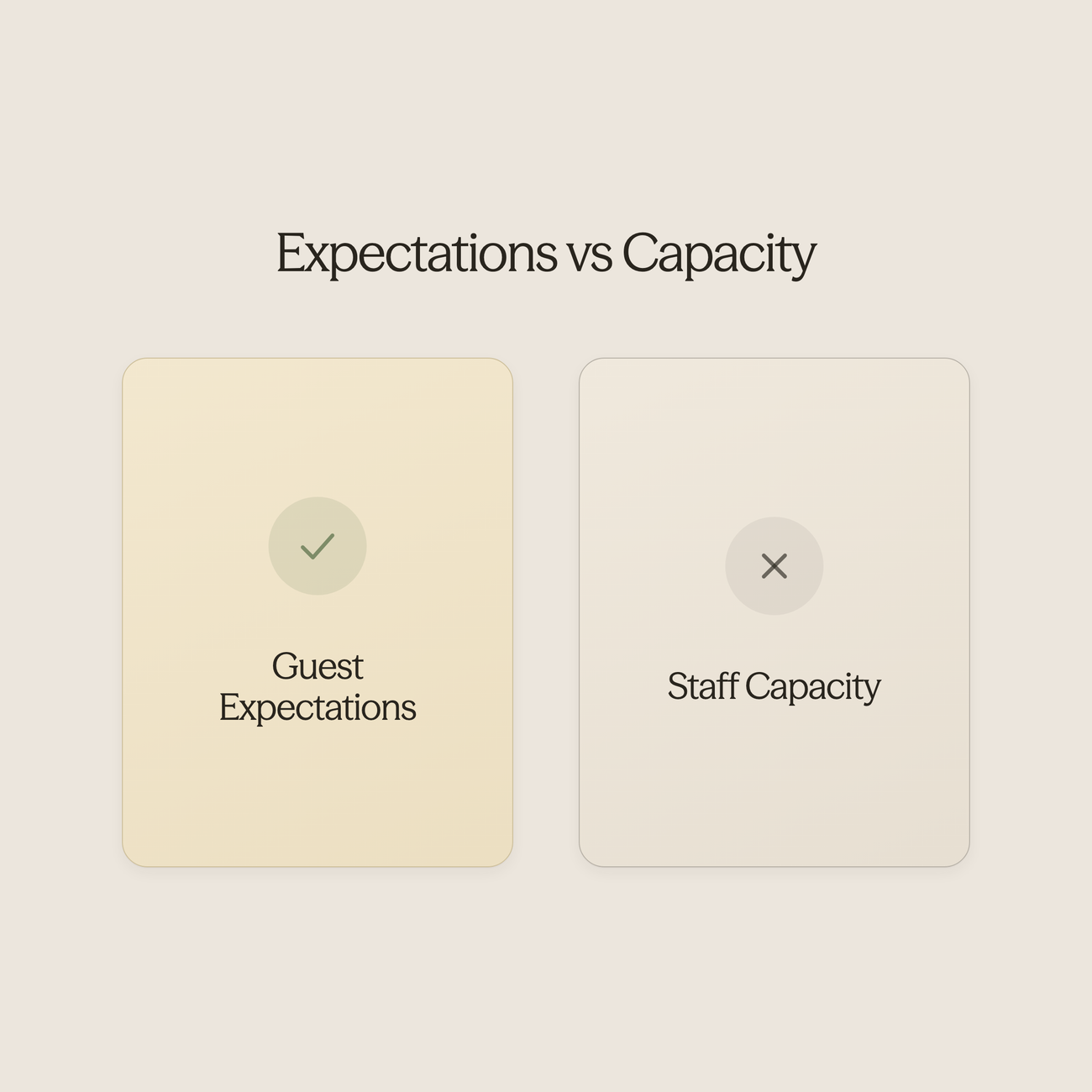
🎯 Key Point: The gap between guest expectations and human capacity is widening rapidly, making AI adoption a necessity rather than a luxury for modern hotels.
"Managing hundreds of simultaneous guest messages across multiple channels while dealing with staffing shortages makes manual processes impossible to sustain." — Hotel Industry Analysis, 2024
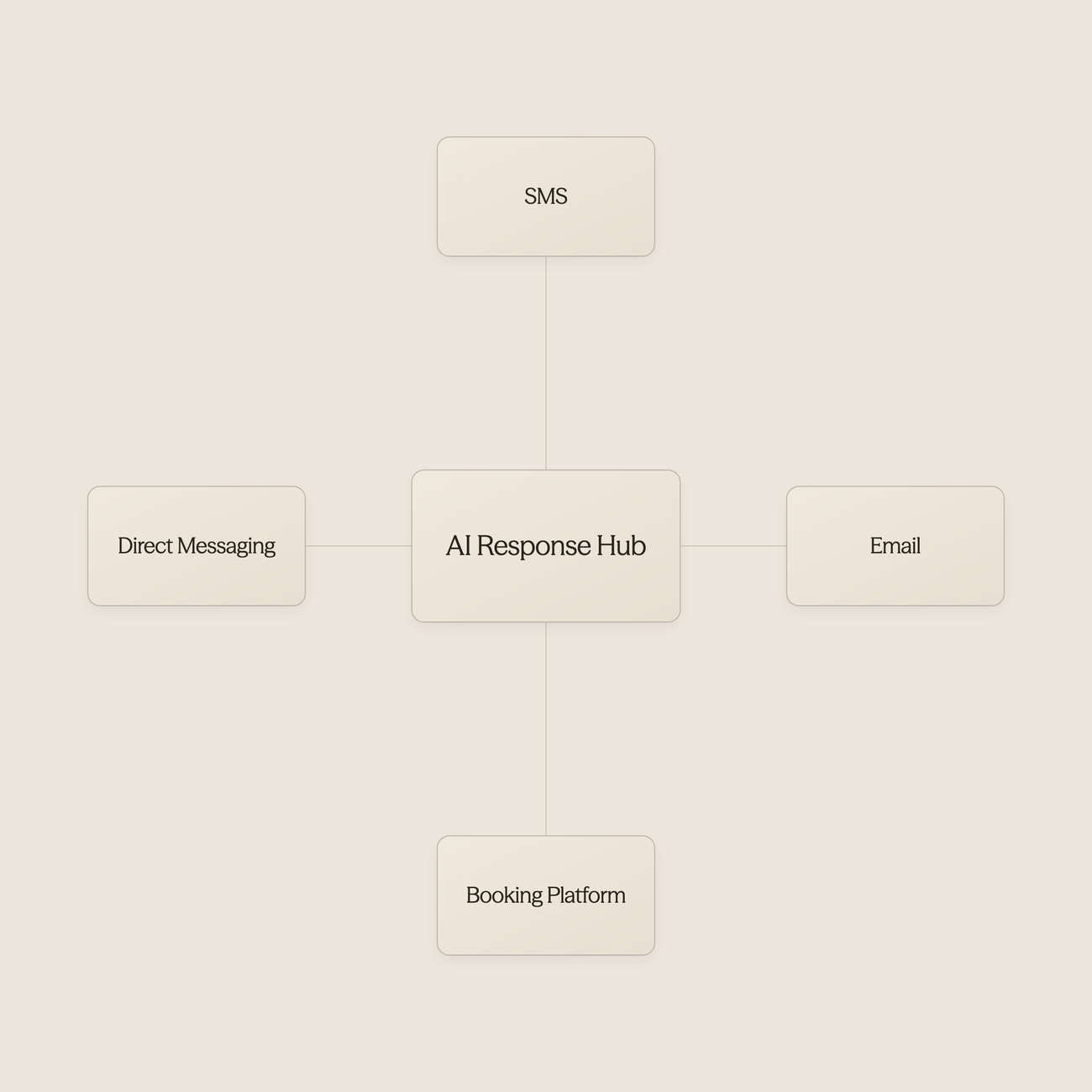
⚠️ Warning: Hotels that don't adopt AI-powered communication systems risk falling behind in guest satisfaction and operational efficiency as customer expectations continue to rise.
The Collision Between Guest Expectations and Operational Reality
Guests expect quick responses, personalized recommendations, smooth communication across every channel, and 24/7 support. Yet according to the American Hotel & Lodging Association, around 76% of hotels reported staffing shortages in 2024. This mismatch creates operational bottlenecks, particularly during peak seasons when occupancy surges and interactions among thousands of guests multiply.
A single guest stay involves booking confirmations, pre-arrival communication, check-in coordination, room requests, maintenance issues, upgrade offers, dining recommendations, and post-stay follow-ups. Hotels must stay responsive across fragmented channels while delivering personalized experiences. Manual coordination cannot scale without adding staff.
Why Personalization Drives AI Adoption
A joint Deloitte and Mews hospitality study found that 76% of hoteliers believe personalization improves reputation and repeat business, while 70% believe technology enables better personalized guest experiences. Personalization becomes difficult to deliver consistently through manual communication alone, particularly during high-volume periods when teams are stretched thin.
Hotels are increasingly using AI to manage repetitive guest communication, improve response times, automate workflows, and personalize outreach without proportional increases in headcount. Our Conduit platform automates guest communications and manages inquiries instantly, freeing staff to focus on meaningful interactions while maintaining responsiveness across every channel.
AI as Operational Support, Not Workforce Replacement
Most hotel leaders are not expecting AI to eliminate staff entirely. Research from Deloitte shows that hospitality leaders prioritize AI for operational efficiency, workflow automation, and personalized guest experiences over replacing the workforce. 52% of hospitality executives view generative AI as a tool to enhance personalized customer support, while 44% see it as a way to automate guest communication and engagement. Only 36% of hotel leaders expect automation to reduce workforce size significantly over the next several years.
Why are hotels choosing AI for operations over workforce reduction?
Hotels are not adopting AI to remove the human element from the guest experience. They are adopting it because operational complexity is outpacing manual workflows, and the technology helps teams deliver better service without burnout or loss of quality.
Where is AI being deployed first in hotel operations?
The real question is where that AI is being used first and why guest communication has become the most urgent operational priority for competitive properties.
1. AI-Powered Guest Communication and Customer Support
Why guest messaging is the first priority
Guests expect instant responses across SMS, email, booking platforms, hotel apps, WhatsApp, and website chat 24/7, including outside front desk hours and during peak season. Late-night check-in requests, Wi-Fi troubleshooting, room access issues, housekeeping requests, booking changes, and multilingual inquiries arrive constantly, regardless of staffing capacity. Our AI-powered guest messaging systems handle this volume without requiring teams to respond to repetitive interactions manually.
Instant responses for repetitive requests
According to Zendesk, AI can resolve up to 80% of routine customer inquiries. Hotels use AI to automate responses to check-in instructions, parking information, breakfast hours, amenities, room service availability, Wi-Fi access, and checkout timing. Guests expect hospitality communication to match consumer technology platforms. When a guest messages at 2 AM requesting room access instructions after missing check-in, the AI system verifies the reservation, provides correct access details, and resolves the issue within seconds without waiting for overnight staff.
Multilingual support and after-hours coverage
Conversational AI systems automatically translate and respond across multiple languages, helping hotels support international guests without multilingual staff. AI handles routine guest requests overnight, eliminating manual handoffs. Zendesk reports that AI-powered chatbots reduce customer service costs by up to 30%, a significant savings for 24/7 operations.
Reducing front desk workload
Answering the same questions repeatedly consumes significant time. One wedding planner managing 50+ guests built an AI chatbot to handle nearly identical questions. Front desk teams face this pressure daily, interrupted by simple questions that require answers but not human attention.
AI can reduce that communication load, freeing staff to focus on more important guest interactions and operational issues that require personal handling.
What makes hotel AI systems operationally effective?
Solutions like Conduit connect directly into reservation and property systems, ensuring responses remain accurate and operationally useful. Our platform helps hospitality teams avoid generic chatbots, which fail because hospitality communication requires reservation data, room status, timing, property details, operational workflows, and escalation handling.
The strongest hotel AI systems understand real operational context rather than matching keywords to scripted responses.
How do hotels scale guest support with AI communication?
Hotels use AI to reduce repetitive messages while keeping guest support faster, more consistent, and able to handle more guests across every communication channel. Efficient operational communication is only the beginning of what AI can accomplish in hospitality.
2. AI for Personalized Guest Experiences and Upsells
Hotels use AI to create personalized guest experiences and drive revenue through targeted communication. McKinsey research shows 71% of consumers expect personalized interactions, yet 76% get frustrated when this doesn't happen. AI closes this gap by understanding guest behavior, predicting preferences, and delivering relevant offers at the right time during their stay.
"71% of consumers expect personalized interactions, yet 76% get frustrated when this doesn't happen." — McKinsey Research, 2024
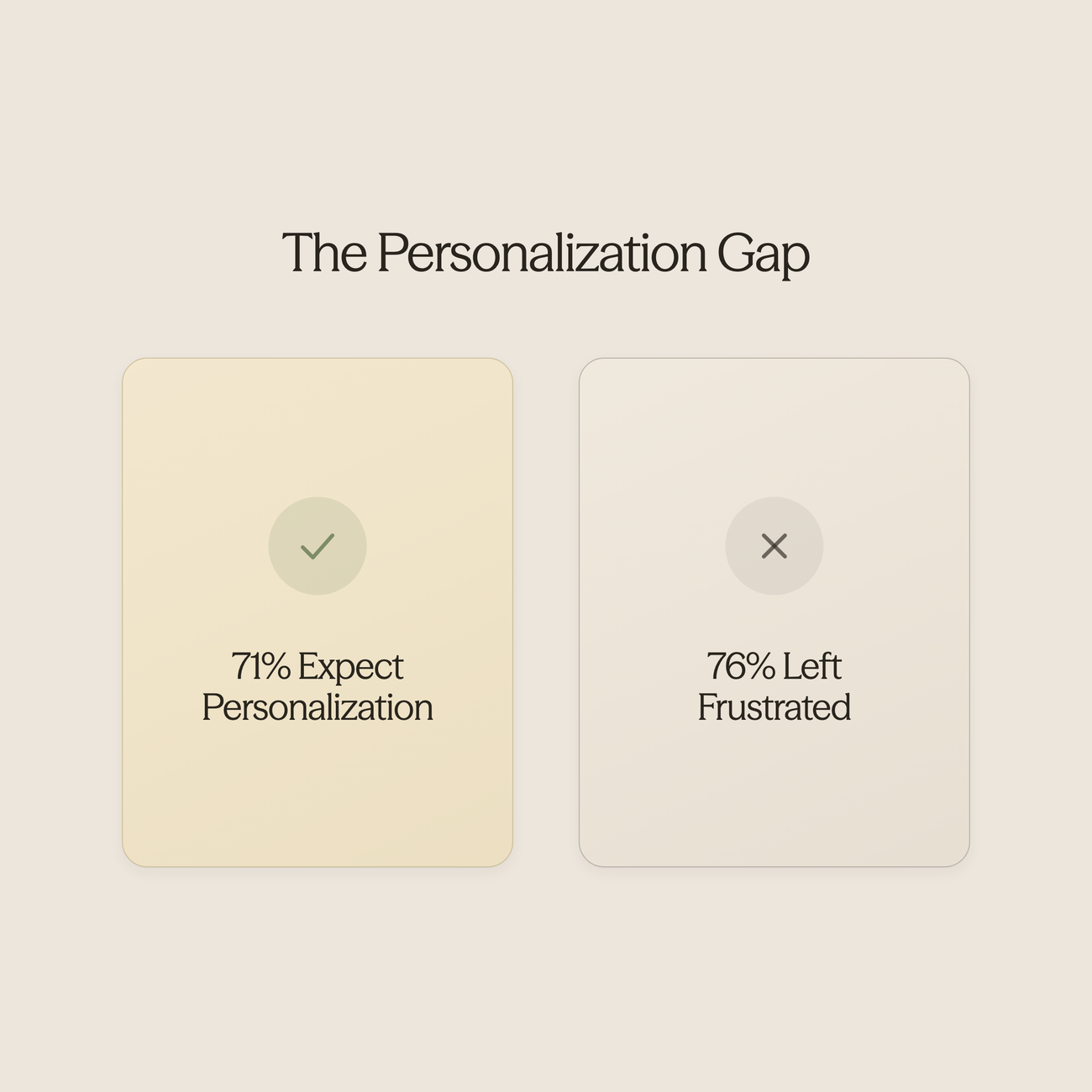
🎯 Key Point: The personalization gap represents a massive opportunity for hotels to differentiate themselves and increase guest satisfaction while driving additional revenue.
💡 Tip: AI-powered personalization works best when it feels natural and helpful, not pushy or intrusive to the guest experience.
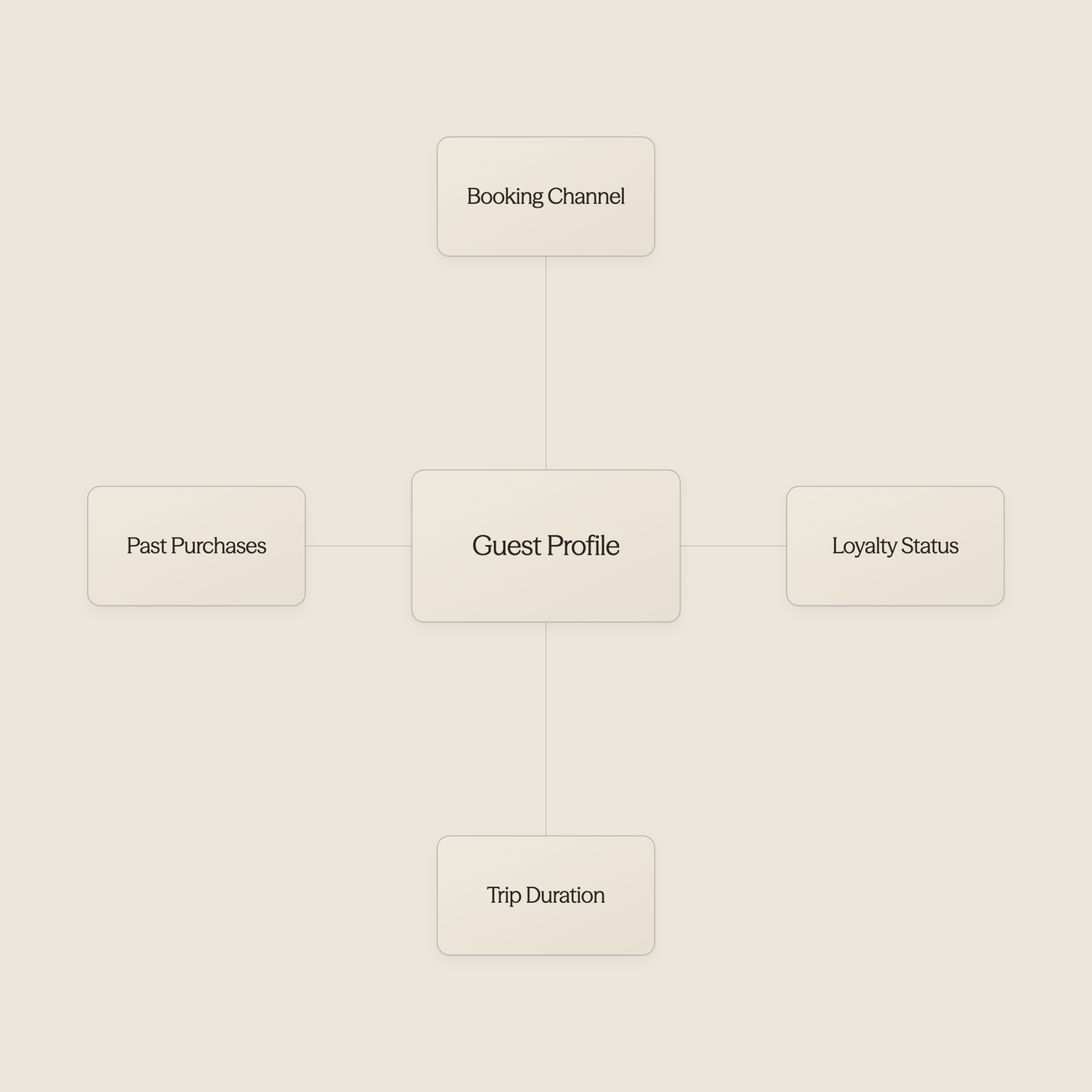
How does AI determine optimal upsell timing?
The difference between an effective upsell and an annoying one often comes down to timing. A room upgrade offer sent three days before arrival converts differently from the same offer sent at 11 PM the night before checkout.
AI systems analyze reservation patterns—such as trip duration, booking channel, loyalty status, and previous purchases—to identify when guests are most receptive to specific offers. Hotels can deliver personalized recommendations for spa services, dining reservations, late checkout, or stay extensions based on guest behavior rather than broad demographic assumptions.
What commercial impact does precise timing deliver?
That precision matters for business. According to research from McKinsey, good personalization can drive up to a 20% increase in guest spending while improving satisfaction. Guests prefer offers that feel helpful rather than annoying, and hotels benefit from higher conversion rates on promotions that reach the right audience at the right time.
How do hotels track guest preferences across multiple visits?
Guests who stay at hotels multiple times expect the hotel to remember their preferences without having to ask again. AI systems track patterns such as preferred room types, contact methods (text message or email), frequently requested services, and past upgrades.
What makes preference-based offers feel natural rather than intrusive?
A guest who frequently books spa appointments during weekend stays might receive wellness package offers automatically, while a business traveler who regularly requests early check-in can see that option without asking.
This creates natural monetization opportunities. When a hotel system recognizes that a guest has booked dining reservations during their last three stays, offering a restaurant recommendation before arrival feels thoughtful rather than pushy.
How does AI enable proactive guest engagement?
AI enables personalized messaging to guide guests through their stay and increase revenue. A family arriving for a multi-day holiday weekend receives different offers than a solo business traveler staying two nights midweek. Our Conduit platform automatically adjusts messaging, timing, and delivery channels based on reservation details, eliminating the need for manual coordination.
What platforms automate personalized hotel outreach?
Platforms like AI for hospitality automate personalized outreach across SMS, email, and messaging apps while maintaining consistent brand voice and operational policies. Our platform lets teams set up offer logic, approval workflows, and escalation rules, and then automatically handles delivery, response tracking, and conversion measurement. This drives measurable revenue without adding headcount or manual promotion management.
How does AI enable personalization across multiple languages?
Personalization becomes harder across multiple languages and cultural contexts. AI translation enables hotels to deliver tailored communication to international travelers without requiring multilingual staff. A guest preference recognized in English can automatically trigger a personalized offer in Spanish, Mandarin, or French, maintaining consistency across diverse guest populations and high volumes of international bookings.
The challenge extends beyond translation to maintaining tone and context, and to offering relevance across languages, while ensuring communication feels natural rather than robotic. Strong AI systems navigate this linguistic complexity while preserving the personalization logic that drives conversions.
What operational transformation happens beyond guest communication?
Personalized guest communication is one way businesses use AI in their operations. The bigger change happens behind the scenes, where internal coordination and workflow automation determine whether service delivery can scale.
Related Reading
- AI Communications For Hotels
- AI For Vacation Rentals
- AI For Airbnb Hosts
- AI Use Cases In Hospitality
- Best Hotel Chatbot
- AI Chatbot For Hotels
- Hotel Chatbot
3. AI for Hotel Operations and Internal Coordination
The biggest operational gains from AI in hospitality happen behind the scenes. While guest-facing chatbots attract attention, the systems that transform hotel performance coordinate housekeeping schedules, route maintenance requests, and flag operational exceptions before they cascade into guest experience problems. These internal coordination systems determine whether service delivery scales or collapses under pressure.
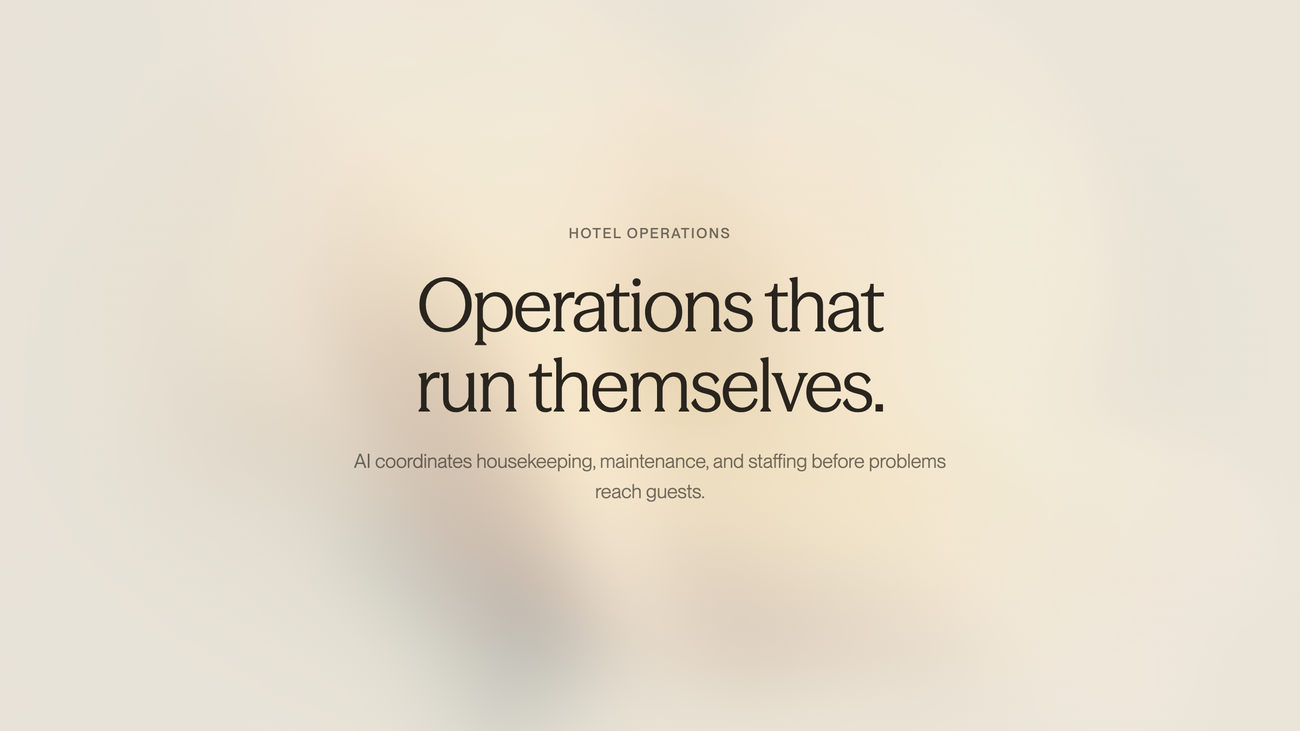
🎯 Key Point: AI-powered coordination systems serve as the invisible backbone of hotel operations, ensuring that staff workflows, resource allocation, and preventive maintenance work in perfect harmony to deliver seamless guest experiences.
"Internal AI systems can reduce operational inefficiencies by up to 35% while improving staff productivity and guest satisfaction scores simultaneously." — Hotel Technology Research, 2024
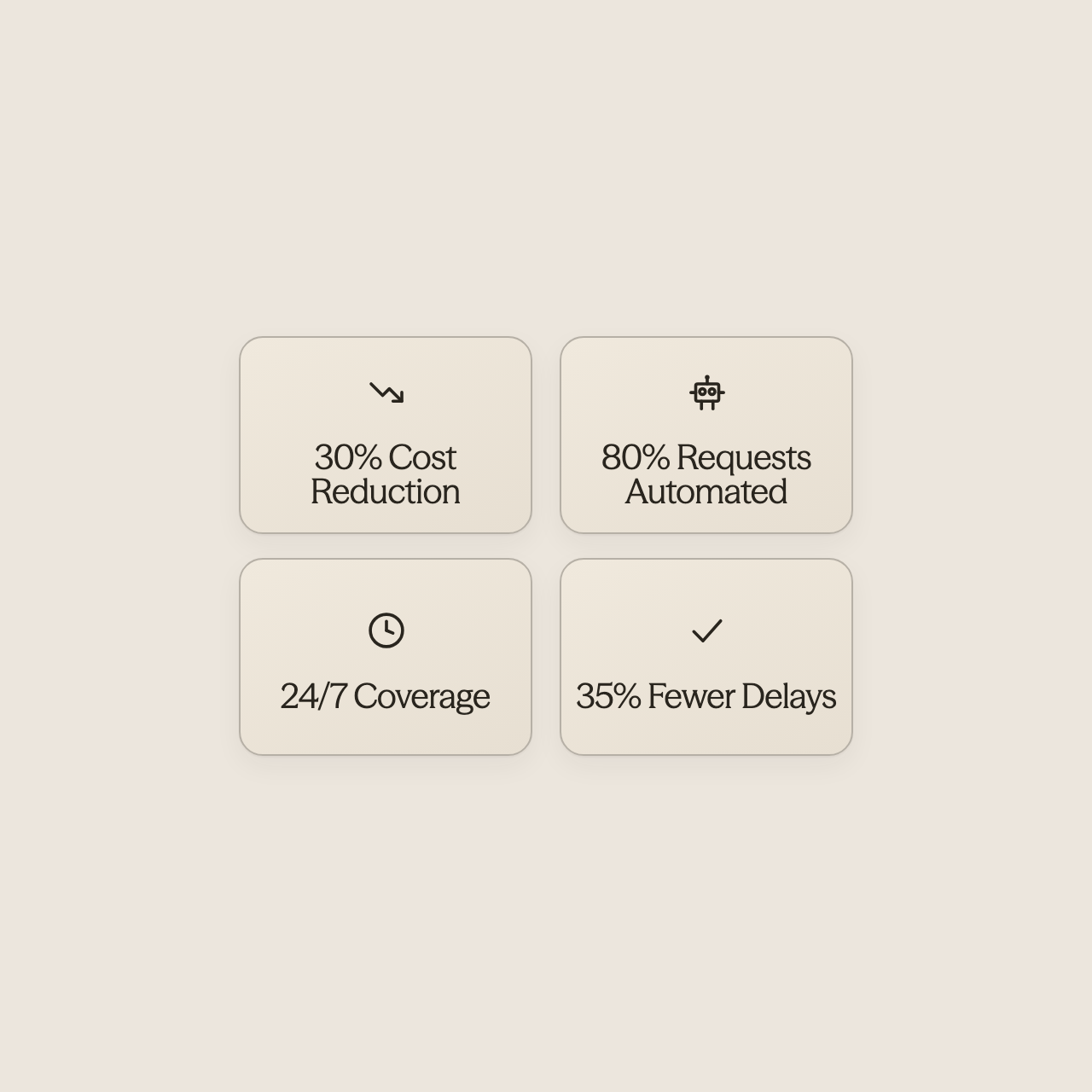
💡 Best Practice: Focus on AI solutions that integrate multiple operational functions rather than point solutions that only address single departments. Cross-functional coordination is where the real ROI emerges in hotel operations.
Why internal coordination matters more than most realize
Hotel operations are deeply interconnected. A single guest request affects front desk teams, housekeeping, maintenance, food and beverage, and operations managers simultaneously. As guest volume increases, coordinating everything manually becomes increasingly difficult: staff spend time consolidating fragmented information from different systems before addressing the actual problem.
According to Infor Hospitality, AI can reduce operational costs by up to 30% by eliminating coordination overhead, not staff.
Housekeeping coordination and dynamic scheduling
AI systems decide which rooms to clean first by analyzing real-time occupancy, guest arrivals, and arrival patterns. Rather than relying on radio communication or fixed schedules, the systems prioritize rooms by urgency, upcoming arrivals, and workload accumulation. Staff allocation across areas adjusts throughout the day based on demand.
When housekeeping falls behind, problems spread to other areas. Delays in cleaning rooms push back check-in times, create stress at the front desk, and force staff to spend time fixing problems for unhappy guests instead of preventing them.
Maintenance routing and escalation logic
Hotels receive constant requests for help with operations: HVAC failures, plumbing issues, key access problems, appliance malfunctions, internet connectivity drops, and room repairs. AI systems route these requests automatically based on urgency, responsible department, occupancy status, and operational impact. An issue affecting an occupied premium suite escalates differently than a lower-priority task in an unoccupied wing.
When should AI escalate issues to human staff?
Good systems know when to stop automating. Some situations require human judgment, empathy, or immediate managerial intervention. The best hospitality AI recognizes when to escalate an issue and provides full context, enabling staff to act without having to reconstruct what happened.
Operational pattern monitoring and exception flagging
AI identifies operational patterns that remain hidden until guests complain: rooms requiring excessive cleaning and preparation time, unresolved maintenance requests, recurring guest issues, staff shortages, slow service, and poor interdepartmental communication.
Most problems in hospitality stem from poor coordination, not individual employee performance. Guests notice operational inconsistencies regardless of which department caused them. Hotels increasingly use AI to improve interdepartmental collaboration, not simply to automate individual tasks.
Task prioritization under competing operational pressure
Hotel teams handle VIP arrivals, maintenance emergencies, housekeeping delays, guest complaints, staffing shortages, and operational escalations simultaneously. AI organizes and routes these workflows intelligently, enabling faster response without relying on manual coordination under pressure.
Traditional radio communication, shift handoffs, and manager judgment calls work until occupancy spikes, staffing shortages hit, or multiple exceptions collide—then coordination breaks down and response times stretch. Platforms like Conduit centralize operational workflows with automated routing and real-time visibility, reducing coordination friction while preserving human judgment where it matters most.
How are hotels shifting from automation to coordination?
According to PwC's 2024 research, hotels increasingly view AI as a tool to improve operational coordination and worker productivity rather than as a replacement for workers. They're automating conversations while making operations more scalable, responsive, and consistent.
What visibility advantages does AI coordination provide?
The advantage lies in visibility. When managers can see where delays occur, which requests await handling, and where communication breaks down, they can intervene before problems escalate and damage the guest experience. AI enables this operational awareness at scale without requiring staff to manually track every moving piece across disconnected systems.
But operational coordination is only one layer of how hotels use AI to improve performance. The next transformation occurs in revenue decision-making.
4. AI for Revenue Management and Forecasting
How has revenue management timing changed in modern markets?
Revenue management used to be a weekly routine: teams reviewed performance reports, adjusted rate tiers, and hoped demand patterns remained stable until the next review cycle. That rhythm worked when markets moved slowly.
Demand shifts faster than manual pricing workflows can keep up with. A local festival announcement, a competitor selling out, or sudden weather disruptions can change booking velocity in hours, not days. Hotels that wait until Friday's revenue meeting to respond are already behind.
How do AI-powered revenue systems respond to market changes?
AI-powered revenue systems continuously monitor booking patterns, competitor rates, and market signals. When demand increases, pricing adjusts before occupancy is fully filled. When pace slows, rates shift to protect fill levels without human intervention.
According to McKinsey's 2024 research on AI-driven commerce, hospitality businesses using intelligent pricing systems respond to market signals faster than traditional forecasting methods, capturing revenue opportunities that manual processes miss.
AI can process booking velocity, cancellation trends, event calendars, competitor positioning, and guest segmentation patterns simultaneously. Manual forecasting typically relies on historical averages and periodic rate adjustments, an approach that assumes tomorrow resembles yesterday. In volatile markets, that assumption quickly breaks down.
How does AI improve occupancy forecasting accuracy?
Predicting future occupancy requires accounting for booking windows, cancellation behavior, seasonal patterns, and shifting local demand drivers. Hotels need accurate forecasts for pricing, staffing schedules, inventory allocation, housekeeping workflows, and operational resource management. Forecast errors cascade: overestimate occupancy and you overstaff, inflating labor costs; underestimate and service quality suffers.
AI forecasting systems analyze historical trends, reservation pace, cancellation rates, and market demand signals with greater precision than spreadsheet models, enabling proactive planning. When forecasts show a surge three weeks out, staffing adjusts early. When demand softens, promotional timing shifts before occupancy drops.
What seasonal patterns can AI identify for hotels?
AI can identify seasonal demand patterns across larger datasets faster than manual analysis. Resorts affected by tourism cycles, urban hotels dependent on conference schedules, and business properties tracking corporate travel gain earlier visibility into demand shifts, enabling strategic rather than reactive responses.
Why do revenue teams struggle with manual competitor monitoring?
Revenue teams that manually check competitor rates work with outdated information. Competitor rates now change constantly in response to AI systems, booking pace, and inventory levels. By the time manual adjustments occur, market conditions have shifted.
How do AI systems provide continuous market visibility?
AI systems automatically monitor competitor pricing, occupancy trends, and market positioning, providing continuous visibility across booking channels and guest segments. When competitors adjust aggressively, revenue teams see it immediately and can decide whether to match, differentiate, or hold position based on their occupancy targets and guest mix.
What advantages do automated platforms offer over manual monitoring?
Watching the market by hand doesn't work when you have many competitors, different sales channels, and multiple price categories. Platforms like AI for hospitality provide continuous market analysis and automatic pricing adjustments. Our Conduit solution compresses decision cycles from days to hours while maintaining strategic control over positioning and profitability targets.
Why does revenue optimization matter more now?
Hospitality demand is increasingly unpredictable. Flight disruptions, economic changes, local events, and booking platform trends create constant shifts in the market. Hotels that react slowly to pricing opportunities lose revenue during peak periods or struggle to maintain occupancy when conditions deteriorate.
Even small pricing mistakes create significant revenue problems when multiplied across hundreds of rooms and dozens of rate categories.
How does AI reduce reaction lag in pricing?
AI reduces reaction lag by enabling continuous pricing and inventory adjustments as conditions change. Modern hospitality markets reward speed: the hotel that adjusts rates first when demand spikes captures higher-value bookings before competitors react, while properties responding quickly when pace slows protect occupancy before discounting becomes necessary.
Revenue optimization now means setting the right price at the right moment, across the right channels, for the right guest segments, faster than market conditions change. That responsiveness requires processing more data, more frequently, with greater precision than traditional forecasting workflows support. AI makes that operational reality possible at scale.
But pricing and forecasting capture only part of how hotels are using AI to improve performance. The next shift happens before guests arrive.
Related Reading
- Ai Agents For Hotels
- Airbnb Automation Tools
- Ai Chatbot For Hotels
- Ai Tools For Hotels
- Hotel Chatbot
- Guest Communication Tools
- Hotel Automation Tools
5. AI for Proactive Guest Engagement
How does proactive engagement change hotel operations?
Being proactive about guest engagement transforms how hotels manage the entire stay lifecycle. Rather than waiting for guests to ask about amenities, parking, or room readiness, AI systems automatically deliver relevant information at the right moment based on reservation timing and behavioral patterns. This reduces friction for guests while lowering the number of repetitive inquiries to front desk teams.
What makes pre-arrival messaging so effective?
Pre-arrival messaging demonstrates this shift. AI systems automatically send parking instructions, digital key access codes, local recommendations, and arrival reminders before check-in. A guest who receives clear guidance about property access at 2 PM is less likely to call the front desk at 4 PM asking where to park or how to enter the building. The result is reduced call volume at scale.
Why does timing matter more than content in hotel communications?
The real advantage of proactive AI lies not in what gets communicated, but when. A late-checkout offer sent three hours before departure is more relevant than a generic promotional email sent two weeks after booking.
AI systems monitor reservation timing and trigger contextual offers for room upgrades, spa packages, dining reservations, or stay extensions when guests are most likely to convert.
How do personalized experiences impact hotel revenue?
Research from Salesforce shows that 80% of customers are more likely to buy from a brand that offers personalized experiences.
Hotels using AI to match offers to guests' needs make more money by timing promotions to when guests are ready to act.
How does AI optimize post-stay communication timing?
After guests leave, communication follows the same principle. AI systems automatically send review requests, satisfaction surveys, loyalty program updates, and future booking prompts based on checkout timing rather than random campaign schedules. This keeps guests engaged without manual coordination across hundreds of departing guests.
How can AI systems identify operational risks before they impact guests?
AI systems can identify operational risks by monitoring delayed room readiness, unresolved maintenance requests, and guest communication patterns that signal dissatisfaction. Hotels can intervene before frustration escalates into public complaints or negative reviews, protecting both guest experience and reputation.
What happens when AI automatically escalates urgent guest issues?
For example, if a guest messages about a broken air conditioner and receives no response within 30 minutes, the AI system automatically escalates the issue to management while notifying the guest that help is on the way. This prevents small operational failures from becoming service disasters.
How does proactive communication reduce support volume while improving satisfaction?
Most hotels use a reactive communication model in which occupancy increases with support volume. Conduit enables hotels to predict guest needs and automate contextual communication throughout the stay lifecycle, reducing inbound support volume while improving satisfaction, consistency, and revenue.
How does AI reduce staffing needs while maintaining service quality?
Reactive models require additional staff as guest volume increases, since every interaction demands someone to initiate and respond. Proactive AI workflows reduce repetitive guest messages by predicting and solving needs before problems arise, allowing hotels to maintain service quality during peak periods without significant staffing increases.
Why is manual personalization no longer sustainable for hotels?
According to AI in Hospitality: The 2025 Reality and the 2026 Horizon, 85% of travelers now expect personalized recommendations. Meeting that expectation manually across hundreds of guests simultaneously is unrealistic for most operations. AI delivers personalized, proactive communication at scale without requiring staff to write every message or time every interaction manually.
What challenges do hotels face when implementing AI solutions?
Being proactive with your workflows reduces team workload while increasing guest satisfaction, revenue from additional services, and consistent service quality throughout the guest's stay.
Using AI successfully requires more than installing software. Most hotels find that general AI tools underperform expectations, revealing important truths about hotel operations.
Why Generic AI Tools Often Fail Hotels
Generic AI tools fail in hospitality because they treat communication as isolated conversations rather than operational events connected to live systems. A guest asking about early check-in isn't making small talk—they're triggering a request that depends on room readiness, housekeeping status, occupancy levels, reservation timing, and property policies. Without access to that operational context, AI responses become unreliable and disconnected from reality.
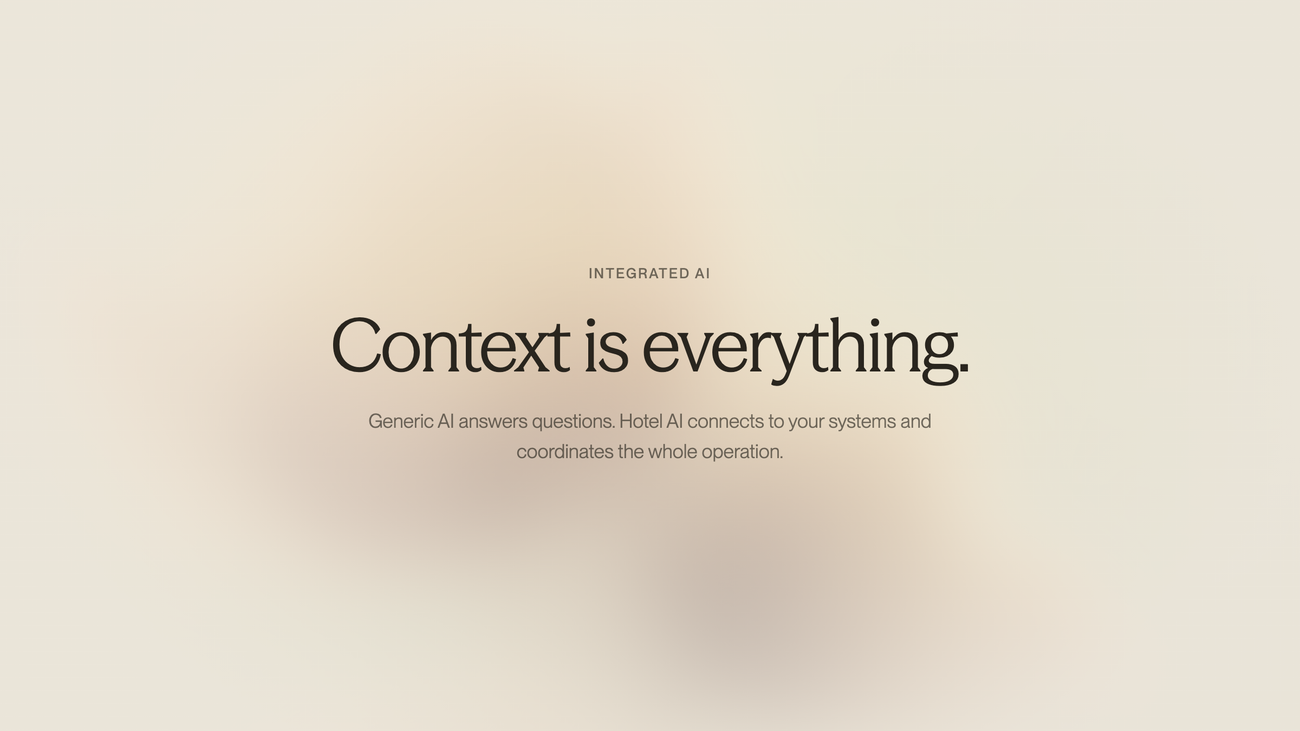
🎯 Key Point: Hotel conversations are never just conversations—they're operational triggers that require real-time system integration to provide accurate, actionable responses.
"Without access to operational context, AI responses become unreliable and disconnected from the guest's actual needs." — Hotel Technology Research, 2024
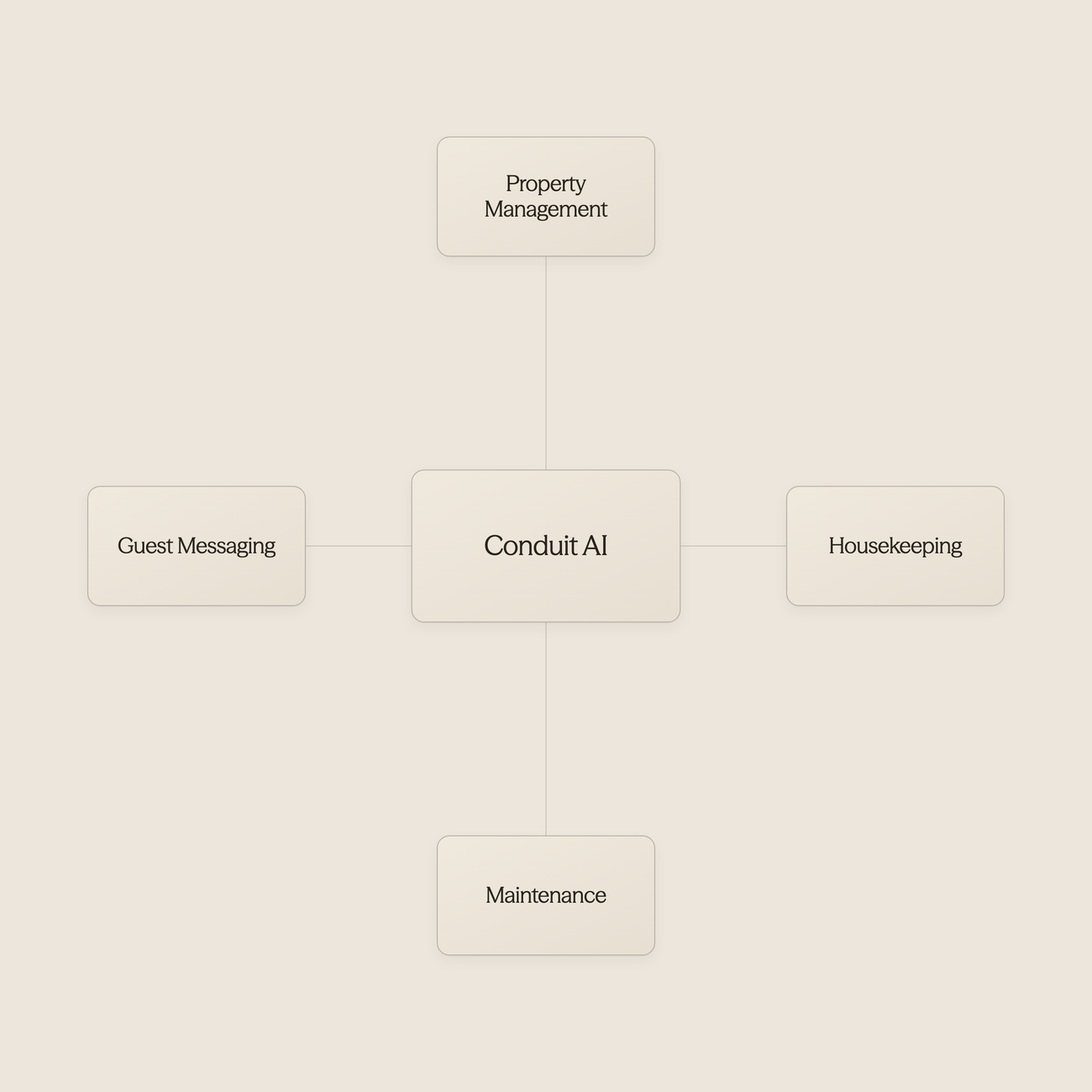
⚠️ Warning: Generic chatbots that can't access your PMS, housekeeping systems, or inventory data will consistently provide outdated or incorrect information to guests, damaging service quality and guest satisfaction.
What makes operational context so challenging for hotel AI?
Most chatbots create conversational responses without integrating across hospitality systems. They cannot access property management systems, housekeeping workflows, maintenance queues, or billing platforms.
Why do generic AI tools fail at real-time hotel coordination?
When a guest asks whether their room is ready, a generic AI tool cannot see whether housekeeping completed turnover, whether maintenance flagged an issue, or whether the previous guest checked out late. It guesses or provides outdated information that contradicts what the front desk staff can deliver.
Research from hospitality.today found that generic AI tools miss 60% of hotel-specific use cases due to a lack of operational integration. They answer simple questions about WiFi passwords or pool hours, but fail when guests need real-time coordination across multiple departments.
Why are AI hallucinations more dangerous in hotel communications?
Hospitality communication is more important than standard customer service because incorrect information immediately affects property operations and guest expectations. An AI system that incorrectly confirms unavailable room upgrades, provides wrong check-in instructions, or misunderstands property policies creates front desk problems, disappoints guests, and disrupts operations.
How do large language models create convincing but wrong responses?
According to research from Stanford Human-Centered AI Institute, large language models generate responses that sound credible but lack accuracy when they lack access to verified operational data. In hotels, these false responses can provide incorrect information about amenities, communicate wrong timing, or overlook unresolved operational problems. The AI sounds confident, yet the information is wrong, and guests believe and act on it.
Why do hotels struggle with disconnected AI responses across channels?
Hotels communicate across text messages, email, booking platforms, hotel apps, website chat, and voice support. Generic AI tools operate within isolated messaging layers without understanding the guest's journey or how operations interconnect. A guest who texts about late checkout, emails about a billing question, and calls about parking may receive three contradictory responses. The AI fails to recognise it's the same guest with overlapping needs.
That fragmentation forces staff to manually reconnect conversations and operational details across systems. Rather than eliminating coordination work, AI shifts the burden elsewhere. According to hospitality.today, 70% of hotel AI projects fail to deliver the expected ROI because they automate replies without addressing the operational complexity behind them. Hotels need AI that understands context across channels and systems, not isolated conversation threads.
How can hotels avoid creating new coordination problems with AI?
Teams implement basic chatbots to streamline work, only to discover they've added a disconnected tool that requires constant oversight. Platforms like Conduit integrate directly with property management systems, housekeeping workflows, and internal escalation protocols, enabling AI to access real-time operational data and coordinate cross-departmental actions rather than merely generating conversational responses.
The difference between conversational automation and operational intelligence determines whether AI reduces workload or creates new coordination problems staff must resolve manually.
Related Reading
- Ai Software For Hotels with the Best Reviews
- Hijiffy Pricing
- Airbnb Automated Messages
- Enso Connect Pricing
- Property Management Ai Tools
- Hotel Automation Software
- Best Ai For Hotels
- Duve Pricing
How Conduit Helps Hotels Scale Guest Operations With AI
How does real-time data integration improve guest interactions?
Conduit pulls live reservation data, room status, housekeeping workflows, and guest history directly into every conversation. When a guest asks about early check-in, the system knows their reservation details, current room availability, and housekeeping schedules without requiring staff to manually check information across disconnected platforms. Responses remain accurate and actionable rather than conversational placeholders that create follow-up coordination work.
How does automated routing streamline hotel operations?
The platform automatically sends requests to the right department with all necessary information. If a guest reports a maintenance problem at 11 PM, the request reaches the correct team member with the guest's details, room number, urgency level, and full conversation history ready for immediate action. Staff no longer need to piece together fragmented conversations or search through information scattered across email threads and separate messaging apps.
Proactive Workflows Reduce Inbound Volume
Most hotels respond to problems after they occur, spending shifts answering the same repetitive guest questions. Conduit sends automated messages at strategic moments—around bookings, before arrival, during check-in, for upgrades, and after departure—before guests need to ask. According to O'Rourke Hospitality, AI chatbots handle up to 80% of routine questions, freeing staff to address situations requiring judgment and empathy.
Sending parking instructions at 2 PM stops front desk calls at 4 PM; offering late checkout at departure time eliminates last-minute arguments. Stress on operations decreases while guest satisfaction increases. These workflows create natural opportunities to sell extra services: a spa package offered when a guest is ready to relax converts better than regular marketing because timing makes it relevant.
Human Oversight Stays Where It Matters Most
Platforms like Conduit keep humans in control of sensitive situations, operational exceptions, and high-impact decisions where empathy matters. Our platform shifts staff capacity from answering repetitive questions, such as WiFi passwords, to resolving complex situations that require human judgment.
But knowing when to automate and when to escalate requires more than conversational AI.
Book a Demo to See Conduit's AI for Hospitality Customer Service in Action
If your hotel team spends more time answering the same guest questions than improving operations, it may be time for a change. Conduit connects directly into your hotel systems, automating repetitive guest requests using real reservation information while initiating proactive workflows that enhance efficiency and guest experience.
💡 Tip: The average hotel staff answers the same basic questions 40+ times per day - imagine what your team could accomplish with that time back.
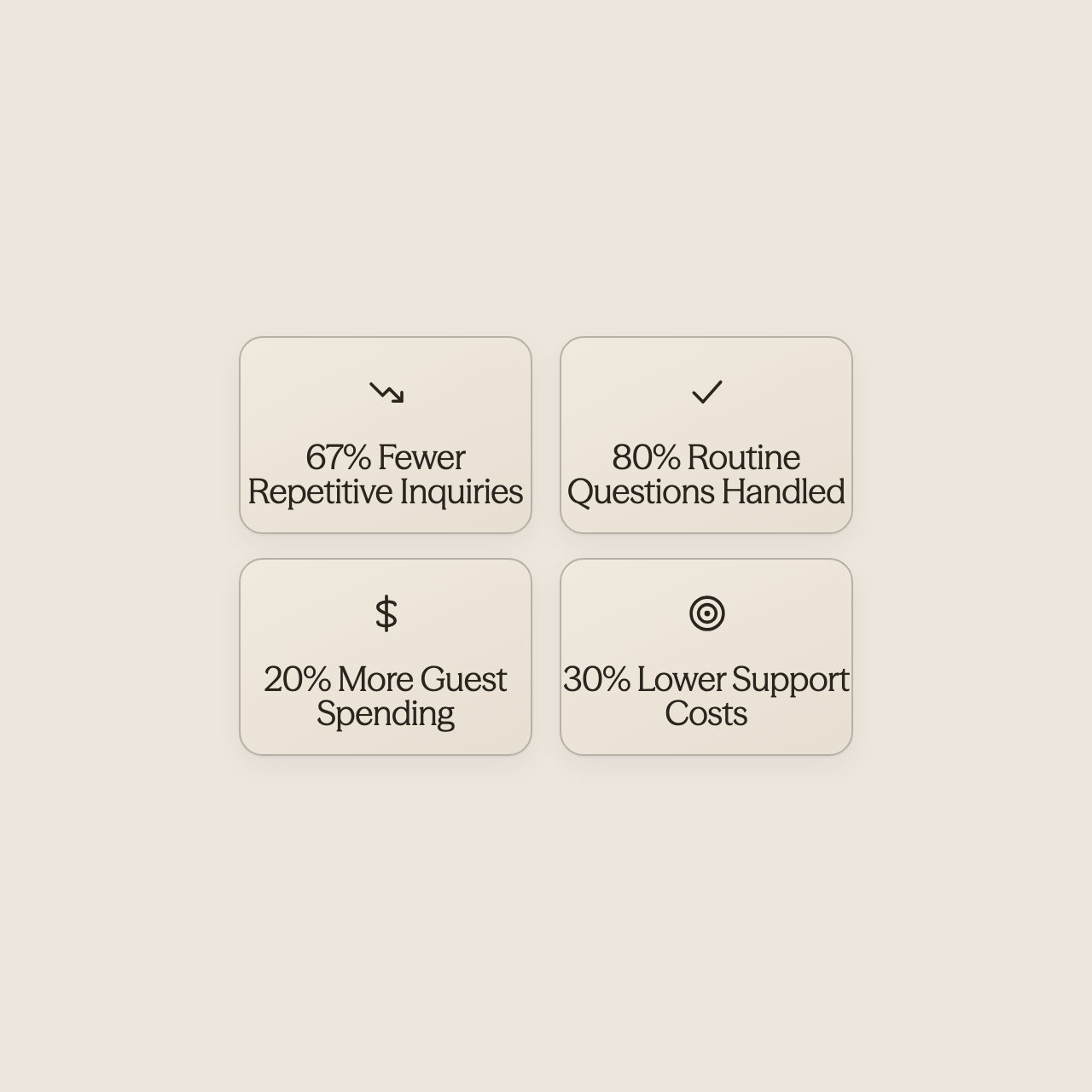
Hotels using AI automation report 67% reduction in repetitive guest inquiries, freeing staff to focus on complex guest needs that truly require human touch.
🎯 Key Point: Book a demo with Conduit to see how our AI, designed specifically for hotels, can help your team stop answering the same questions 40 times a day and start solving complex situations that need human judgment.
Stay in the loop
Get the latest on AI automation, product updates, and customer stories.


