How to Improve Hotel Operations: 10 Tips to Boost Efficiency


Improve Hotel Operations
Tips to Boost Efficiency
Running a hotel means managing check-ins, housekeeping, guest requests, and staff coordination all at once, with little room for error. When any part of that system breaks down, guests notice and so does the bottom line. More hoteliers are investing in AI communications for hotels to streamline workflows, reduce manual workload, and consistently deliver better guest experiences.
Automating routine interactions, such as answering repeat guest questions or coordinating service requests, frees staff to focus on the personal touches that build loyalty. That shift in focus can meaningfully improve both team performance and guest satisfaction. Hotels looking to make that transition can start by exploring AI for hospitality.
Table of Contents
- Why Efficiency Matters More Than Ever
- What Does Hotel Operations Management Include?
- How to Improve Hotel Operations: 10 Proven Strategies
- Common Hotel Operations Challenges That Reduce Efficiency
- How Better Operations Improve the Guest Experience and Hotel Performance
- How Conduit Helps Hotels Improve Operations at Scale
- Book a Demo to See Conduit's AI for Hospitality Customer Service in Action
Why Efficiency Matters More Than Ever
Staffing shortages have become a structural challenge for the hotel industry, not a temporary one. According to the American Hotel and Lodging Association, 65% of hotels reported staffing shortages in 2025 despite raising pay and expanding benefits. This means most properties are already operating with teams stretched beyond their original capacity, and every inefficient process adds direct pressure to the people carrying that load.
High turnover compounds the staffing problem in ways that go beyond open positions. Hotel staff turnover rates exceed 70% annually across the industry, which means a significant portion of any given team is new, undertrained, or covering responsibilities that were not originally theirs. When institutional knowledge regularly walks out the door, service consistency becomes dependent on who shows up that day rather than on systems that function regardless of staffing changes.
Communication infrastructure, not just communication tools, is where most operational breakdowns originate. Front desk staff relay requests verbally, housekeeping updates live in separate systems, and guest messages sent through OTA platforms go unread until the next morning. These are not failures of effort. They are failures of design, and they accumulate into a pattern of missed expectations that guests notice even when they cannot identify the source.
Manual workflows carry a cost that rarely appears on a budget line. Research cited in Akia's 2025 analysis of hospitality challenges found that 73% of travelers say they would switch to a competitor after a bad experience. Many of those experiences trace back not to a rude employee or a broken amenity, but to a delayed response or a request that fell through the cracks of a process that required someone to remember to follow up.
Operational improvements have a measurable and compounding effect on guest satisfaction and revenue. Hotel response times dropped by 50% compared to Q1 2023, now averaging 3.1 days according to the Shiji Group and ReviewPro Q1 2025 Guest Experience Benchmark Report. Research from the Cornell University School of Hotel Administration has also documented a direct correlation between guest satisfaction metrics and both occupancy growth and revenue performance, meaning operational consistency builds a competitive advantage that is genuinely difficult to replicate.
Automation creates capacity for the kind of service that actually builds loyalty. Operational automation can reduce staff workload by up to 30%, according to Revfine's 2025 guest experience trends analysis, freeing employee attention for interactions that require human judgment, empathy, and presence rather than administrative coordination. AI for hospitality helps hotel teams close the gap between departments by routing guest requests, automating internal handoffs, and surfacing the right information to the right person without requiring staff to manually relay messages.
Operational excellence separates hotels that grow from those that struggle. Guests expect more, staff retention is harder, and operational complexity increases with each new channel, platform, and property.
"Every new channel, platform, and property adds a layer of operational complexity that hotels must actively manage or risk falling behind."
Key Point: Operational efficiency isn't a back-office concern. It's the single biggest factor determining whether a hotel scales successfully or stalls.
Tip: Audit your current workflows across every channel and platform regularly. The earlier you catch inefficiencies, the less they cost in lost revenue and staff burnout.
What does the staffing crisis mean for hotel operations?
The staffing reality is striking. According to the American Hotel & Lodging Association, 65% of hotels reported staffing shortages in 2025 despite raising pay and expanding benefits. When teams are stretched thin, every inefficient process, manual handoff, and duplicated task exhausts the people you depend on most.
The failure point is usually invisible until it isn't. A guest submits a maintenance request that gets logged and followed up on eventually, or not. They check out without hearing back and leave a negative review on the way to the airport. Reactive operations create the moments that erode guest loyalty and reputation, the two things that drive long-term revenue.
Why can't hotels just add more human effort to fill the gaps?
Most teams compensate for system gaps with human effort: more check-ins, more group chats, more manual follow-ups. But as guest volume increases and departments grow, that effort doesn't scale.
Conduit addresses this by learning how a specific property operates, handling guest communication across every channel, and running proactive workflows before guests need to ask, so your team's energy can go toward decisions that require human judgment. Our AI for hospitality solution helps you eliminate those manual touchpoints and scale operations without scaling headcount.
According to Gallup, disengaged employees cost the global economy $8.9 trillion, or 9% of global GDP. In hospitality, this manifests as the front desk agent answering repetitive questions, the housekeeper working from an outdated schedule, and the manager firefighting instead of developing their team. Efficiency protects the attention and energy of those who create the guest experience.
How are leading hotels turning efficiency into a competitive advantage?
The winning hotels aren't those with the largest budgets. They've reframed efficiency from cost-cutting to guest satisfaction. Faster response times, better problem-solving, and consistent service delivery drive satisfaction scores, repeat bookings, and five-star reviews that compound over time.
Related Reading
- How To Increase Hotel Occupancy Rate
- Best Hospitality Management Software
- Hotel Revenue Generating Ideas
- Self-Service Hotel
- Hotel Operating Costs Breakdown
- How To Improve Guest Experience In Hotel
- How To Maximize Your Hotel Revenue
What Does Hotel Operations Management Include?
Hotel operations management is the coordinated system that keeps a property running, connecting every department from booking through checkout. While guests only see the surface — clean rooms, friendly service, and quick problem solving — the work happening behind the scenes is far more complex, layered, and mission-critical than most realize.
"The difference between a good hotel and a great one isn't what guests see — it's the invisible system of coordinated operations working seamlessly beneath every interaction." — Hotel Operations Insight
Tip: Think of hotel operations management as the central nervous system of a property — when it functions well, every guest touchpoint feels effortless and seamless.
| What Guests See | What Operations Manages |
|---|---|
| Clean, ready rooms | Housekeeping schedules & quality control |
| Friendly, fast service | Staff training & shift coordination |
| Quick problem resolution | Maintenance workflows & escalation protocols |
| Smooth check-in/out | Front desk systems & reservation management |
Key Point: Hotel operations management isn't a single role or department — it's an interconnected framework that aligns people, processes, and technology to deliver a consistent guest experience at every stage of the stay.

The department's guests never think about
The front desk works like a relay station: every check-in triggers housekeeping confirmation, maintenance clearance, and real-time inventory reconciliation. When one link in that chain is slow or uninformed, the guest feels it, even if they cannot identify the source.
Why does housekeeping carry so much operational weight?
Housekeeping is more important to hotel operations than most people realize. How quickly rooms are cleaned directly affects occupancy rates. When a guest checks out late and housekeeping isn't notified in time, it disrupts not just one arrival but the entire schedule, creating cascading delays for hours.
Where does information flow break down across hotel departments?
The failure point in most hotel operations is the flow of information. Departments work in silos without real-time visibility into neighboring teams' activities and needs. Maintenance teams learn about recurring guest complaints too late to prevent them, and front desk staff lack visibility into room readiness, leading them to make promises they cannot keep.
Most teams coordinate through radio calls, group chats, and manual handoffs because those tools are familiar and require no new infrastructure. As occupancy scales and guest expectations rise, this approach breaks down: requests get missed, context gets lost between shifts, and management makes decisions based on incomplete information.
AI for hospitality addresses this by serving as a connected layer across departments, automating communication handoffs, routing guest requests to the right team, and providing management with a unified view of operational performance without adding headcount.
Why silos are the real operational risk
The same issue shows up in properties of all sizes: when departments work without shared visibility, the guest experience becomes inconsistent. A reservation processed through one system, a room prepared by a team with no arrival update, a maintenance request logged in a separate tool that nobody checks until morning. Each gap is small, yet together they define the guest's perception of the property.
The surprising part isn't that these gaps exist, but how much of hotel operations management is designed to close them, and how rarely that design gets fully executed.
How to Improve Hotel Operations: 10 Proven Strategies
Improving hotel operations requires ten proven strategies that eliminate gaps between departments, reduce wasted time, and create memorable consistency across every guest touchpoint. Properties that truly run well have built interconnected systems where each moving part reinforces the others — turning reactive management into proactive excellence.
"Hotels that invest in operational systems don't just run smoother — they deliver the kind of consistent guest experience that drives loyalty, repeat bookings, and stronger revenue performance." — Hotel Operations Best Practices
Key Point: Operational improvement isn't about fixing one department — it's about building a unified system where every team, process, and tool works in sync.
Warning: Focusing on isolated fixes — like upgrading housekeeping without addressing front desk communication — creates new gaps even as old ones close. Always approach hotel operations as an interconnected whole.
| Operational Focus Area | Primary Benefit |
|---|---|
| Inter-department communication | Eliminates costly gaps and delays |
| Time and workflow optimization | Reduces wasted staff hours |
| Guest experience consistency | Builds loyalty and repeat revenue |
| Systems integration | Ensures every moving part reinforces the others |
1. Standardize Before You Automate
The failure point is usually the sequence. Hotels rush toward new technology before their core processes are documented, and automation built on chaos follows. Standardizing procedures for check-ins, room inspections, maintenance requests, and service interactions first gives every subsequent improvement something solid to attach to. When staff follow consistent procedures regardless of shift or seniority, training time drops and service quality stops depending on who happens to be working.
2. Build Communication Infrastructure, Not Just Channels
Teams have tools, but not infrastructure. A group chat is a tool; a defined protocol that tells housekeeping which information triggers which action is infrastructure. When departments share timely, structured information, rooms turn over faster, guest requests are resolved before escalating, and managers spend less time coordinating between misaligned teams.
How does informal coordination create invisible delays as volume grows? Most teams handle cross-departmental updates through radio calls, shift notes, and informal messages because they require no new behavior. As guest volume grows and staff changes, that approach creates invisible delays: requests fall through the cracks, priorities conflict. Our AI for hospitality solution addresses this by acting as a shared operational layer that learns how a property runs and routes the right information to the right team at the right moment, without requiring staff to check another inbox.
3. Automate the Work That Doesn't Need a Human
According to the A Perfect Stay AI Blog, automated check-in systems can reduce front-desk workload by up to 30%. Automating reservation confirmations, pre-arrival instructions, payment processing, and post-stay follow-ups frees staff to focus on interactions requiring judgment, empathy, and presence.
Guests notice where attention goes. A front desk agent unburdened by administrative processing can recognize the couple celebrating an anniversary, the exhausted business traveler, or the family deserving a quiet room upgrade. Automation doesn't remove the human element; it creates the conditions for it.
4. Use Real-Time Data to Lead, Not React
Making decisions based on yesterday's information means you're already falling behind. Real-time visibility into occupancy rates, available rooms, maintenance needs, and service performance enables managers to deploy staff and resources more effectively. When late checkouts delay new arrivals, a manager with current data can resolve the issue within minutes. Without it, guests are waiting before anyone recognizes the problem.
5. Sharpen Housekeeping Coordination
Housekeeping is where how things should work meets what actually happens. A room that isn't cleaned on time delays a guest's arrival. A missed inspection creates a complaint. When housekeeping teams receive timely updates about departures, early arrivals, room changes, and special requests, they can plan their work strategically rather than from an outdated list. Collaboration between housekeeping and the front desk is one of the best improvements any property can make.
6. Reduce Friction at Arrival and Departure
Check-in and check-out are the moments guests remember most clearly and the most expensive places to fail. Long waits, unclear processes, and payment problems create frustration that service during the stay cannot fully resolve. Properties that simplify these touchpoints through digital pre-check-in, clear pre-arrival communication, and efficient departure processes see measurable gains in both efficiency and guest satisfaction scores.
7. Train Consistently, Not Just at Onboarding
Most hospitality training happens once at hire, then stops—a model that guarantees inconsistency in high-turnover environments. Ongoing training tied to performance data, guest feedback, and updated procedures keeps staff calibrated to current standards and signals investment in employee development, which directly affects retention.
8. Monitor Feedback Before It Becomes a Pattern
Guest feedback is operational data. A complaint about slow maintenance response signals a workflow gap. A pattern of cleanliness comments points to a coordination or inspection problem. Properties that treat reviews and surveys as operational diagnostics catch problems before they compound into reputation damage.
9. Price Dynamically, Operate Accordingly
Revenue strategy and operational strategy are more connected than most properties recognise. According to the PurchasePlus Blog, hotels that use dynamic pricing see revenue increases of up to 25%. Pricing changes that shift occupancy patterns also affect operational demand: a surge in weekend arrivals requires adjustments to housekeeping schedules, front-desk staffing, and maintenance availability. Properties that align their revenue and operations teams around shared data make better decisions on both sides.
10. Treat Improvement as Infrastructure, Not an Event
Being excellent at operations isn't something you finish and then stop. Guest expectations change. Your staff changes. Technology changes. Properties that stay ahead make continuous improvement a habit: they examine their processes, identify problems, and make small fixes regularly. Fixing a five-minute slowdown this quarter may seem minor, but multiplied across every shift for a whole year, it adds up significantly.
But knowing which strategies to use is only half the battle.
Common Hotel Operations Challenges That Reduce Efficiency
Hotel operations break down in predictable ways. Staffing pressure, fragmented tools, and rising guest expectations compound each other across shifts and departments, accumulating quietly until costs become impossible to ignore. That compounding is where efficiency dies.
"Staffing pressure, fragmented tools, and rising guest expectations don't fail independently — they compound across every shift, turning small inefficiencies into costs that can no longer be hidden."
Warning: The most dangerous inefficiencies in hotel operations aren't sudden — they're silent. By the time staffing strain and tool fragmentation become visible on the balance sheet, the damage is already done.
| Operational Pressure | Where It Breaks Down | Compounding Effect |
|---|---|---|
| Staffing Pressure | Shift coverage gaps, high turnover | Overworked staff, declining service quality |
| Fragmented Tools | Disconnected systems across departments | Miscommunication, duplicated effort, lost time |
| Rising Guest Expectations | Real-time demands, personalization gaps | Negative reviews, reduced repeat bookings |
Tip: Audit your hotel's operational stack across all departments — the compounding of even two or three friction points is enough to erode efficiency hotel-wide.
Takeaway: Efficiency doesn't collapse all at once — it erodes shift by shift, department by department, until the accumulated cost becomes a crisis that's far harder to reverse.
Where Staffing Pressure Creates a Cascade
The staffing problem extends beyond open positions on a schedule. According to the Akia Blog's 2025 analysis of top hospitality challenges, hotel staff turnover rates exceed 70% annually across the industry. At any given moment, a significant portion of your team is new, undertrained, or stretched across responsibilities outside their original scope. Response times slow down, service inconsistencies emerge, and experienced staff spend time covering gaps instead of delivering quality work. You lose institutional knowledge when someone leaves.
The instinct is to handle pressure manually through group chats, verbal handoffs, and managers stepping into frontline roles. This works for a shift or two, but over weeks it creates a fragile operation where performance depends on who showed up rather than on systems that function regardless of staffing.
When Communication Gaps Become the Real Bottleneck
Most communication failures in hotels stem from bad infrastructure, not bad intentions. Front desk staff relay maintenance requests verbally. Housekeeping marks a room as clean in one system while the front desk uses another. A guest messages through an OTA platform that nobody checks until morning. Small gaps at volume become a pattern of missed expectations.
Teams using AI for hospitality with Conduit route guest messages, internal requests, and escalations through a single coordinated layer that removes dependency on individuals remembering to follow up. Resolution happens because the system ensures it, not because someone caught it in time.
Why do manual workflows carry hidden costs for hotels?
Manual processes have hidden costs. Staff time spent copying information between systems, chasing updates, and manually logging requests is time not spent helping guests. According to the Akia Blog's 2025 hospitality challenges report, 73% of travelers say they would switch to a competitor after a bad experience. Many of those bad experiences stem from delayed responses or requests that get lost in manual workflows, rather than from rude staff or broken rooms. Hard work alone cannot scale to meet the volume and speed guests now expect.
How does technology fragmentation make operational inefficiency worse?
Technology fragmentation makes the problem worse. When reservations, housekeeping, guest messaging, and maintenance operate on separate platforms, staff waste mental energy switching between them instead of solving problems. A front desk agent moving between four systems to answer one question isn't slow—the infrastructure requires it. Bringing information together so the right data reaches the right person without manual searching is where real operational improvements come from.
Once you measure these gains in practice, the picture of hotel performance changes in ways that extend well beyond operations.
How Better Operations Improve the Guest Experience and Hotel Performance
When operational systems work well, guests notice right away. The room is ready on time. Requests get handled quickly. Nobody asks them to repeat themselves. That smooth, seamless quality isn't by accident—it's the direct result of coordinated workflows, clear communication channels, and teams that aren't wasting energy on problems that could be avoided.
"That smooth quality isn't by accident—it's the direct result of coordinated workflows, clear communication channels, and teams operating at their best." — Core Principle of Operational Excellence
Key Point: Guest satisfaction is directly tied to how well your internal operations are coordinated—when the back-of-house runs smoothly, the front-of-house experience shines.
Tip: Audit your communication channels and workflow handoffs regularly. The moments guests feel friction —a late room, a repeated request—are almost always symptoms of an operational gap, not a staffing one.
| Operational Breakdown | Guest Impact | Business Impact |
|---|---|---|
| Room not ready on time | Frustration at check-in | Negative reviews, lost loyalty |
| Slow request handling | Feeling undervalued | Reduced repeat bookings |
| Repeated information requests | Distrust in staff coordination | Lower satisfaction scores |
| Coordinated workflows | Seamless stay experience | Higher performance metrics |
What does response speed actually signal about hotel operations?
How fast you respond signals how well your business is running. According to the Shiji Group / ReviewPro Q1 2025 Guest Experience Benchmark Report, hotel response times dropped by 50% compared to Q1 2023, now averaging 3.1 days. Guests don't separate response speed from care: they perceive them as one.
Why do manual handoffs break down as volume increases?
When requests route automatically to the right team, problems get solved faster, fewer things get missed, and staff spend less time searching for updates. Most teams currently handle this through manual handoffs, group chats, or shift-change conversations—a system that works with low request volumes but breaks down when guest arrivals increase or staffing decreases.
AI for hospitality, like Conduit, helps by acting as a teammate that learns how a specific property operates, sends requests to the right place, starts workflows, and follows steps for serious problems without requiring staff to manage the process.
Where satisfaction scores actually come from
Guest satisfaction builds through many small interactions: accurate information before arrival, quick check-in, whether the room matches the description, and how quickly problems are acknowledged. Each touchpoint adds to or detracts from the overall impression. Hotels that treat these as separate events don't perform as well on satisfaction metrics because they optimize individual moments without managing how these moments connect.
How does operational automation free staff for higher-value guest interactions?
According to Revfine's Guest Experience Trends Shaping 2025 and Beyond, automated systems can reduce staff workload by up to 30%, freeing employees to focus on guest service that builds loyalty. This allows staff to shift from manual request handling and system coordination to interactions requiring human judgment, empathy, and personal attention.
The compounding return on operational consistency
Strong operations create compounding returns over time. Returning guests book directly, spend more on extra services, and refer others. Consistent service quality generates better reviews, improving search visibility and attracting new guests primed to trust the property.
Research from the Cornell University School of Hotel Administration shows that improvements in guest satisfaction metrics and online reputation correlate directly with occupancy growth and revenue performance. This competitive advantage is difficult to replicate because it stems from hundreds of small systems working together reliably, day after day.
Once you see the full picture of what consistency makes possible, the question of where to invest next becomes clear.
Related Reading
- Hotel Revenue Management Strategies
- Hospitality Automation
- Hotel Demand Forecasting
- Hospitality Operations Management
- What is RevPar
- Hotel Budgeting And Forecasting
- Automated Hotel Reservation System
- Adr Vs Revpar
- How To Increase RevPAR
- Hotel Upselling
- Hotel Guest Messaging
How Conduit Helps Hotels Improve Operations at Scale
Making hotel operations better means creating systems that help teams communicate effectively, respond quickly, and deliver consistent guest experiences without increasing staff workload.
"The foundation of great hospitality is not harder work — it's smarter systems that let teams focus on what matters most: the guest."
Key Point: Operational excellence isn't about doing more — it's about building communication systems that make every interaction faster, smoother, and more consistent.
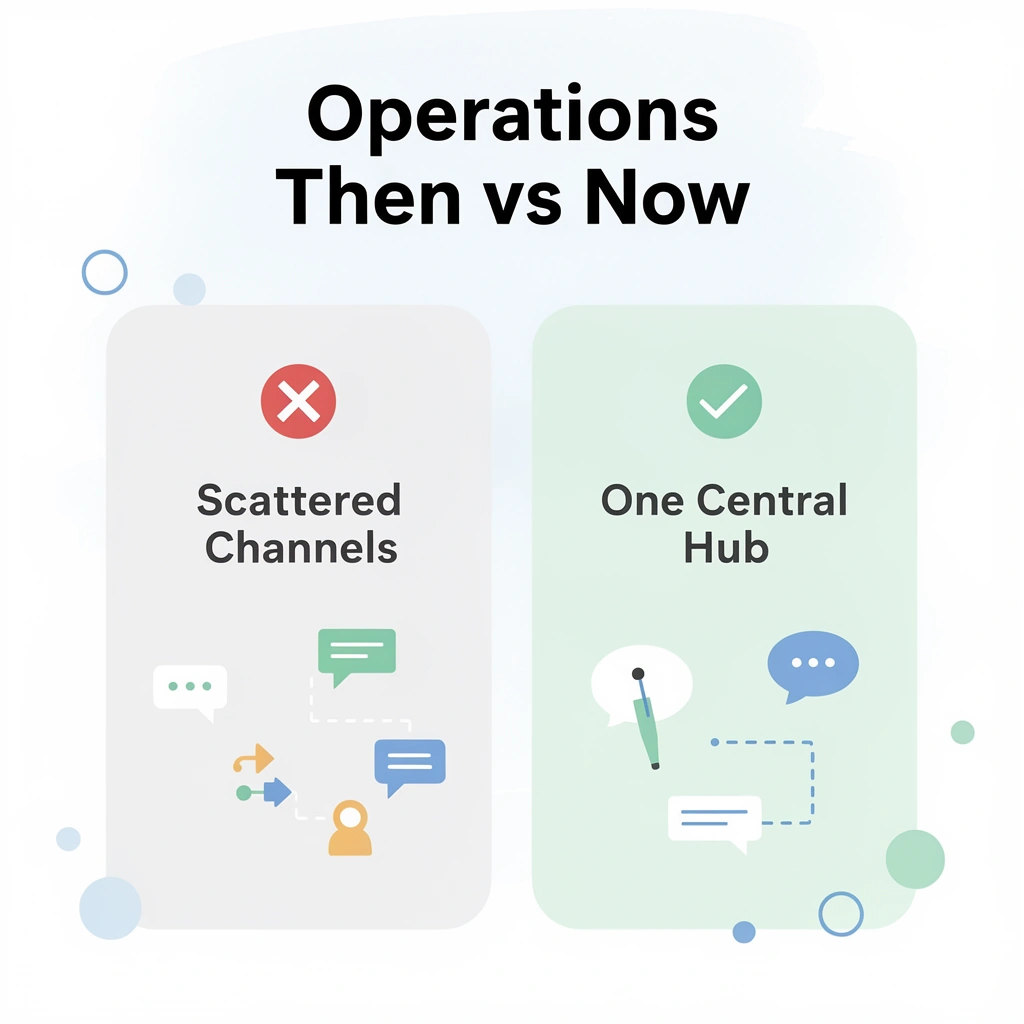
As hotels deal with guests who expect more, not enough staff, and increasingly harder operations to manage, Conduit makes guest communication and work coordination easier by putting key interactions in one central place. Instead of managing guest conversations across different systems, hotel teams can see all guest interactions in one place throughout the whole stay.
| Challenge | Without Conduit | With Conduit |
|---|---|---|
| Guest communication | Scattered across multiple platforms | Centralized in one place |
| Team coordination | Siloed, slow handoffs | Streamlined workflows |
| Staff workload | Heavier manual effort | Reduced operational burden |
| Guest experience | Inconsistent across touchpoints | Consistent throughout the stay |
Tip: Centralizing guest interactions is the single most effective step hotels can take to improve both staff efficiency and guest satisfaction simultaneously.
Best Practice: Look for platforms like Conduit that unify guest conversations across the entire stay — from pre-arrival to checkout — so no interaction falls through the cracks.
How does Conduit centralize and automate guest communication?
One of Conduit's core strengths is centralized guest communication. Guests interact with hotels at multiple stages: booking confirmations, pre-arrival questions, in-stay requests, and post-stay follow-ups. Conduit consolidates these conversations in one place, enabling staff to stay informed and respond quickly.
The platform supports automated messaging across the guest journey, sending routine communications such as booking confirmations, arrival instructions, stay updates, and post-stay messages without constant manual work.
Conduit offers AI-powered voice and messaging capabilities that help hotels manage guest interactions more efficiently. By automating common inquiries and communication workflows, the platform enables hotel teams to respond faster while reducing the operational burden from repetitive requests.
Because Conduit is built around reservation-based guest engagement, communication ties directly to guest bookings and stay information. This enables hotels to deliver more relevant and personalized interactions throughout the guest journey, improving convenience and the overall guest experience.
How does Conduit reduce staff workload and improve response times?
These capabilities significantly reduce manual workload for hotel teams. Rather than spending hours on repetitive communication tasks, staff can focus on higher-value activities that require personal attention and hospitality expertise, a focus that is particularly valuable given ongoing staffing shortages. Our AI solutions automate routine interactions, freeing your staff to deliver the personalized service guests truly value.
Guests benefit from faster response times, which improve satisfaction by ensuring questions, requests, and concerns are addressed promptly. In hospitality, speed and responsiveness directly impact how guests perceive service quality.
How does Conduit support coordination, revenue, and operational visibility?
Beyond communication, Conduit improves interdepartmental collaboration. When guest information and interactions are easier to access, teams can identify guest needs and service requests more clearly, enabling the front desk, guest services, housekeeping, and other departments to work together more smoothly.
Conduit creates opportunities to sell additional services and increase revenue. By engaging guests at strategic moments during their stay, hotels can suggest room upgrades, premium services, dining experiences, late check-outs, and other offerings when guests are most receptive.
Another benefit is a better understanding of guest interactions and hotel operations. Instead of using multiple communication channels, hotel teams gain a clearer picture of guest engagement, response activity, and communication effectiveness. This insight helps managers identify opportunities for improvement and make better operational decisions.
Ultimately, operational excellence requires consistency. Guests expect the same high-quality experience whether a property operates at half capacity or during peak travel periods. Conduit helps hotels scale communication, coordination, and engagement processes to ensure consistency without a proportional increase in staff workload.
Book a Demo to See Conduit's AI for Hospitality Customer Service in Action
AI for hospitality, like Conduit, handles guest communication across every channel, automates internal workflows, and tracks key metrics without adding headcount or complexity. Whether it's front desk inquiries, service requests, or post-stay follow-ups, Conduit delivers seamless, intelligent automation that keeps your team focused on what matters.
"The future of hospitality isn't about great service alone — it's about smart, scalable systems that deliver great service automatically across every touchpoint." — Conduit
Key Point: Conduit manages every guest communication channel in one place: no extra staff, no added complexity, just streamlined hospitality operations at scale.
Book a demo to see how our automated guest communication, AI-powered engagement, and centralized workflows can transform your property's performance. Conduit is built to improve efficiency, enhance guest experiences, and drive measurable revenue — giving your team the tools to deliver exceptional hospitality at every stage of the guest journey.
Tip: Use your demo session to explore specific use cases for your property type — from boutique hotels to large-scale resorts, Conduit's AI adapts to your unique operational needs.
Best Practice: Come prepared with your top 3 guest communication pain points — a live demo is the fastest way to see exactly how Conduit's AI solves them in real time.
| What Conduit Delivers | Business Impact |
|---|---|
| Automated Guest Communication | Faster response times, higher satisfaction |
| AI-Powered Engagement | Personalized interactions at scale |
| Centralized Workflows | Reduced operational complexity |
| Key Metrics Tracking | Data-driven decisions without extra headcount |
| Revenue Optimization | Increased upsells and direct bookings |
Related Reading
- Cloudbeds Alternatives
- Hospitality Conferences
- Hotel Distribution Management
- Best Revenue Management Software For Hotels
- Siteminder Competitors
- Hospitality Chatbot
- Canary Technologies Competitors
- Digital Concierge Software
- Best Hotel Channel Manager Software
Stay in the loop
Get the latest on AI automation, product updates, and customer stories.

