Hotel Chatbot Guide: Features, Benefits, and ROI


Hotel Chatbot Guide
Features, benefits, and ROI
A guest messages your hotel at 2 AM asking about breakfast hours, room service menus, and late checkout options. Without automated support, that inquiry sits unanswered until morning, potentially costing you a booking or damaging the guest experience. Hotel chatbots have transformed how properties handle guest interactions, operating around the clock to answer questions, process requests, and personalize stays without adding staff. These tools deliver measurable benefits from streamlined operations to increased direct bookings.
Understanding automated guest communication becomes simpler with the right approach to implementation and measurement. Properties can boost guest satisfaction scores and reduce operational costs by using intelligent messaging systems that handle routine inquiries instantly. Whether exploring chatbot technology for the first time or upgrading existing guest messaging systems, hotels need practical insights on choosing features that match their needs and measuring bottom-line impact through AI for hospitality.
Table of Contents
- Why Many Hotel Chatbot Projects Fail to Meet Expectations
- What Is a Hotel Chatbot?
- What Makes a Hotel Chatbot Actually Effective?
- The Hotel Chatbot Use Cases That Deliver the Highest ROI
- Common Mistakes Hotels Make When Implementing Chatbots
- How Hotels Should Evaluate Hotel Chatbot Vendors
- How Conduit Helps Hotels Automate Service, Revenue, and Operations
- Book a Demo to See Conduit's AI for Hospitality Customer Service in Action
Summary
- Hotel chatbots fail most often because they answer questions without completing work. Research shows that 70 to 85% of AI initiatives fall short of their intended outcomes, typically because the technology operates independently of the systems that execute tasks. Guests receive information, but employees still manage follow-through manually, creating another channel to monitor instead of reducing workload.
- Integration depth determines whether a chatbot creates value or friction. A system disconnected from reservation data, loyalty profiles, and previous interactions treats every guest like a stranger, delivering generic responses that undermine trust. More than 65% of travelers expect hotels to respond within an hour, regardless of channel, yet properties operating separate workflows for email, SMS, and messaging platforms achieve only partial automation that doesn't match how guests actually communicate.
- Operational workflow automation often delivers higher returns than guest-facing conversations alone. When chatbots collect housekeeping requests, log maintenance issues, and route tasks directly to appropriate teams, they eliminate the manual work of receiving, documenting, and forwarding requests. This reduces delays and administrative overhead while ensuring nothing gets overlooked, producing measurable efficiency gains that answering FAQs cannot match.
- Contextually aware chatbots drive a 30% increase in direct bookings by leveraging real guest data to personalize responses. When a guest asks about checkout time, the system should already know their name, room number, and late-checkout privileges, rather than offering generic suggestions. Properties implementing comprehensive automation see up to 30% reductions in labor costs, but only when systems connect deeply enough to eliminate manual handoffs between guest requests and backend execution.
- Chatbots reduce customer service costs by up to 30% by handling routine inquiries without staff intervention, yet 70% of hotel chatbots still fail to resolve queries without human involvement. The gap exists because most implementations focus on conversation quality rather than workflow execution capability. Measuring conversation volume reveals little about value, whereas resolution rates, automation percentages, and staff workload reduction indicate whether the chatbot improves operations or merely generates activity.
- AI for hospitality addresses this by integrating guest conversations directly with property management, housekeeping, and maintenance systems, allowing requests to move from message to resolution without manual handoffs.
Why Many Hotel Chatbot Projects Fail to Meet Expectations
Most hotel chatbot implementations answer questions instead of completing work. Guests receive responses, but staff still handle actual requests, leaving operational pressure unchanged.
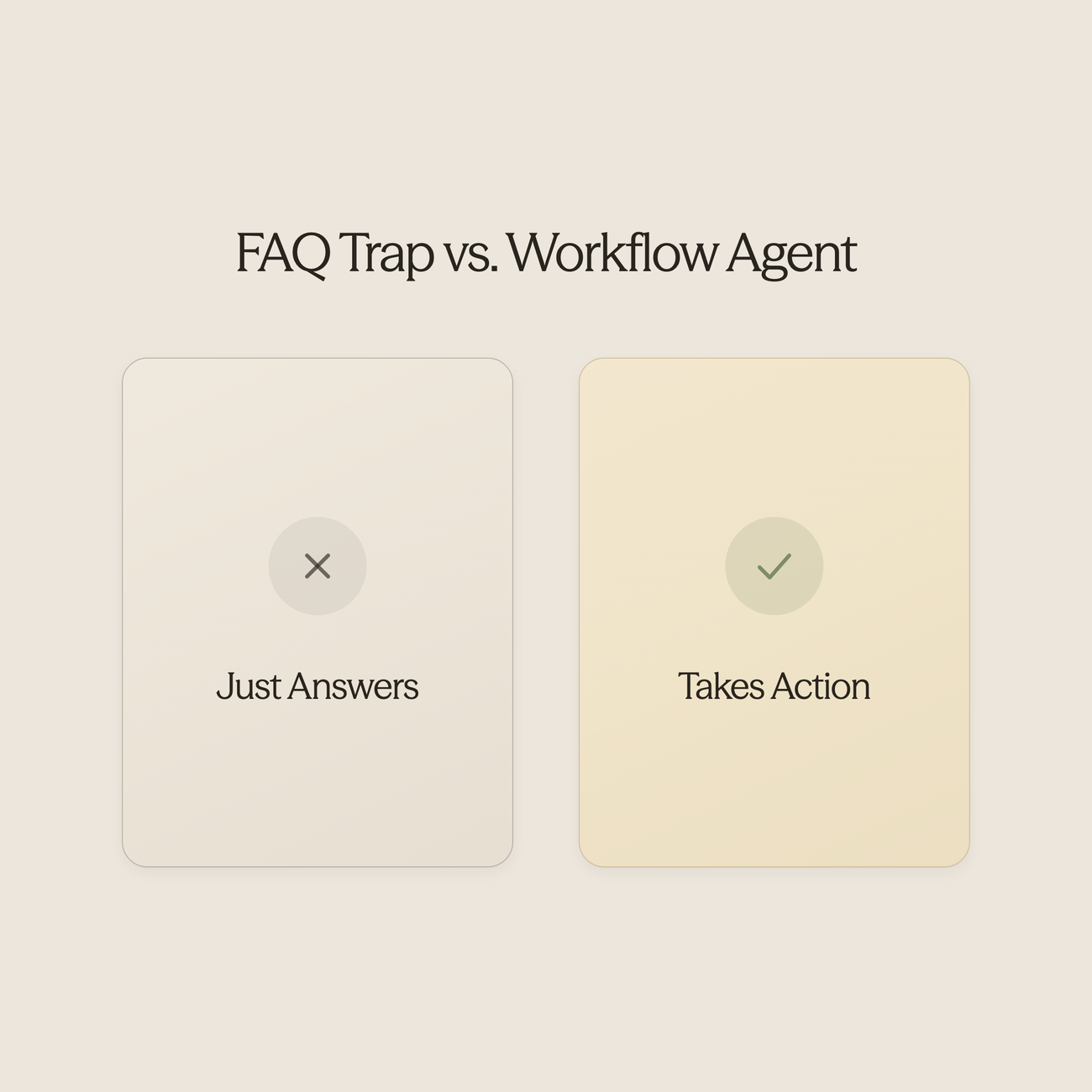
🎯 Key Point: The fundamental flaw in most hotel chatbot projects is treating them as information dispensers rather than task completion systems. This approach creates the illusion of automation without delivering real operational relief.
"85% of hotel chatbots fail to reduce staff workload because they focus on answering rather than acting." — Hotel Technology Research, 2024
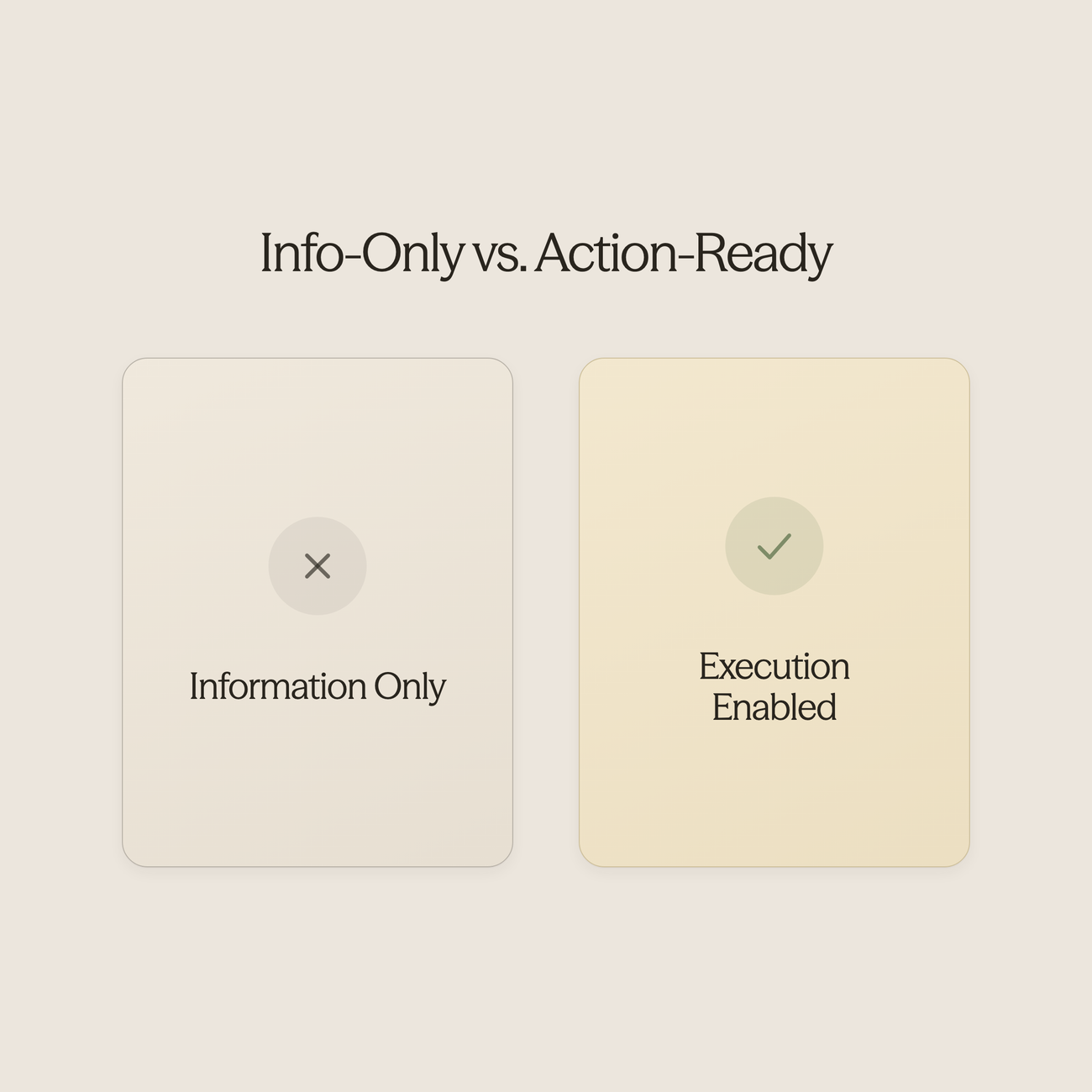
⚠️ Warning: When chatbots only provide information without execution capability, hotels experience increased guest expectations for instant service while maintaining the same staffing requirements to fulfill actual requests.
What makes chatbots fall into the FAQ trap?
A chatbot that explains check-in times but cannot access reservation details, change bookings, or create service requests leaves the hardest work untouched. Guests receive information, yet employees still manage follow-through manually. According to NTT Data, 70 to 85% of AI initiatives fail to achieve their intended outcomes because the technology operates independently of the systems that perform tasks.
Why do routine inquiries still reach front desk teams?
Routine questions continue reaching front desk teams despite chatbot investments. Leading hospitality AI platforms can handle 70 to 90% of routine questions automatically, though this requires deep integrations and workflow automation beyond conversation alone. Without those connections, the chatbot becomes another channel to monitor instead of a tool that reduces workload.
Disconnected systems create inconsistent experiences
A chatbot without access to reservation data can't show a guest's booking details, loyalty status, or previous interactions. Guests notice when a system doesn't know who they are or what they've already asked for. That disconnect undermines trust faster than a slow human response. Communication fragmentation compounds the issue. More than 65% of travelers expect hotels to respond within an hour across all channels, yet many properties operate separate workflows for email, SMS, WhatsApp, and other messaging platforms. A chatbot limited to the website misses guests who prefer texting or social messaging.
How do revenue opportunities slip through the cracks?
A chatbot designed solely for FAQs cannot offer room upgrades, stay extensions, dining reservations, or spa bookings when guests are most interested in them. Those conversations happen naturally when staff interact with guests, but automation that only answers questions misses revenue opportunities. Our AI for hospitality connects guest conversations with reservation systems and service workflows, enabling AI agents to complete transactions and coordinate follow-through with staff, transforming routine interactions into revenue opportunities.
Why do operational outcomes matter more than conversation quality?
Many hotels judge chatbots mainly on conversation quality. If the chatbot sounds natural and answers common questions correctly, the project is deemed successful. In reality, what actually happens matters far more. The best hotel chatbots don't just talk; they act.
What Is a Hotel Chatbot?
A hotel chatbot is software that manages guest conversations across digital channels like website chat, SMS, WhatsApp, email, and messaging apps. The best ones understand natural language, maintain context across messages, and complete tasks that affect operations, such as capturing service requests and routing issues to the right staff member.
💡 Key Point: Modern hotel chatbots go far beyond simple FAQ responses—they're intelligent conversation managers that integrate with your hotel's operational systems.
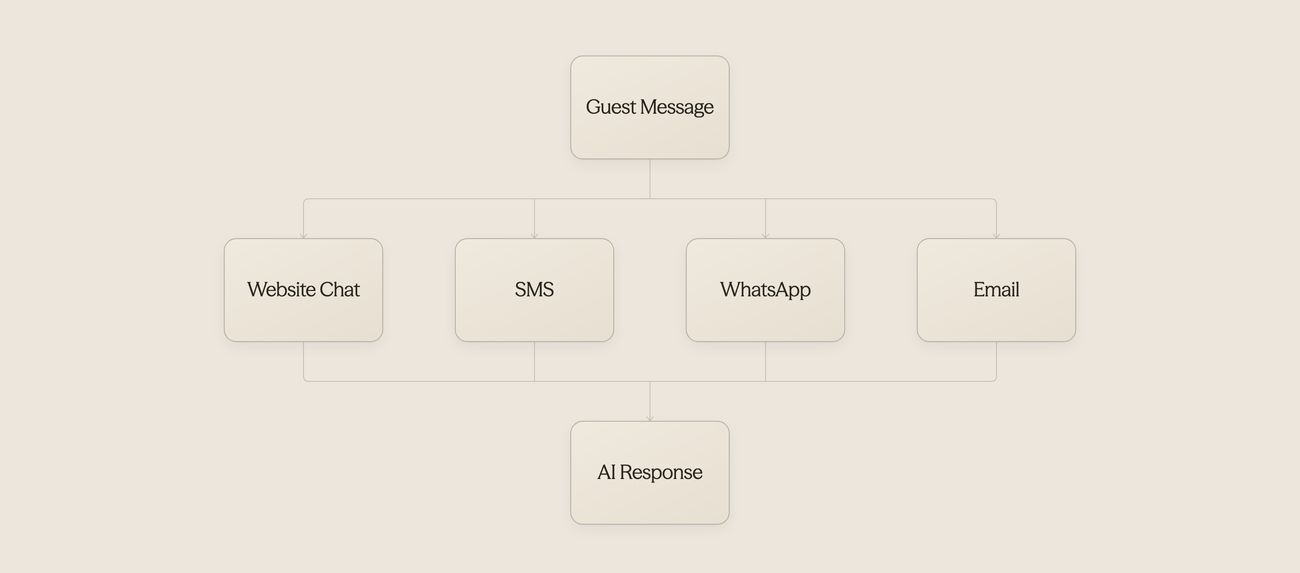
Today's systems parse intent, adapt to conversational flow, and connect to the hotel's operational backbone. Early versions followed rigid scripts and failed when guests asked anything outside predetermined paths.
"The evolution from rule-based chatbots to AI-powered conversational systems represents a fundamental shift in how hotels can deliver 24/7 guest service at scale."
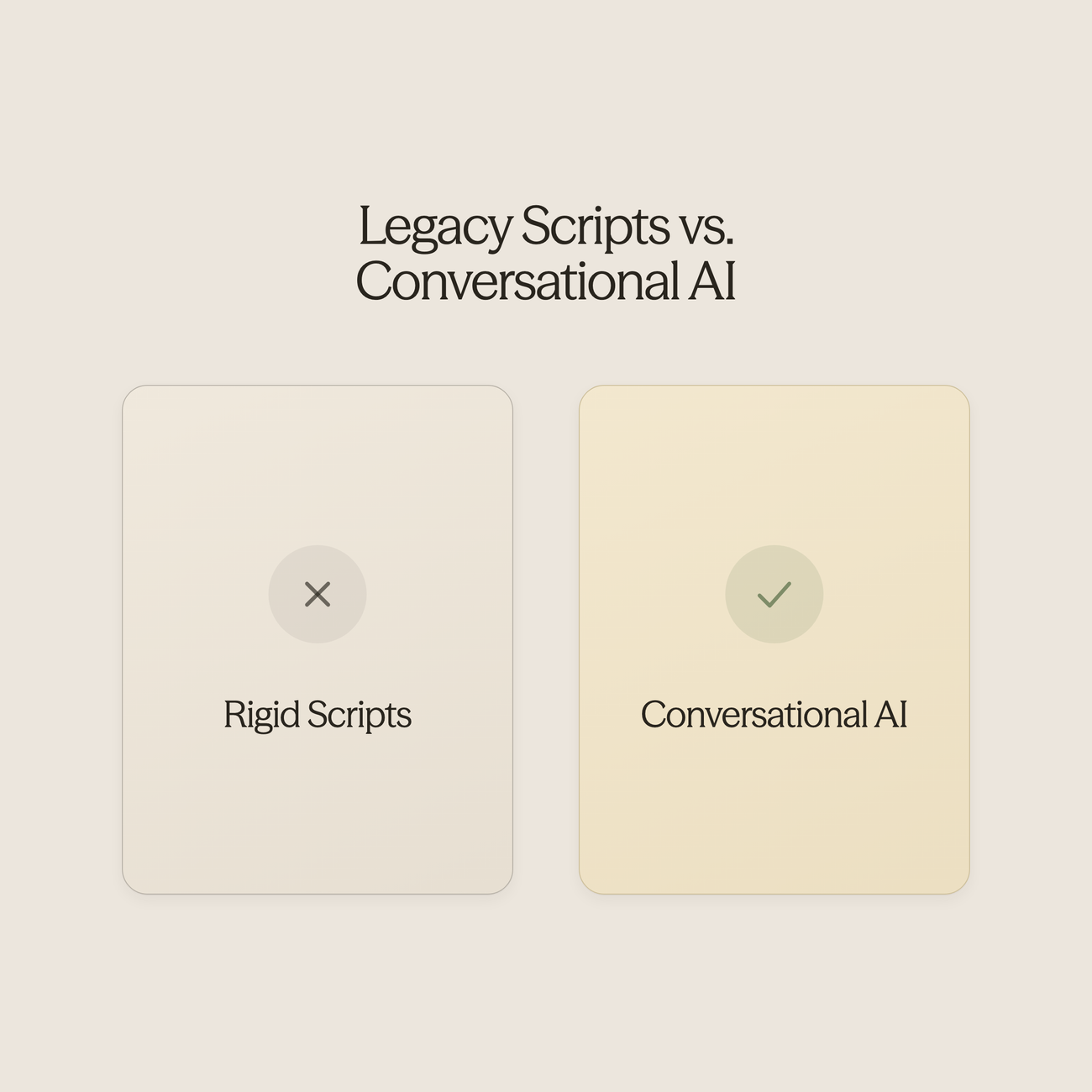
⚠️ Warning: Not all hotel chatbots are created equal—legacy systems that rely on keyword matching will frustrate guests and create more work for your staff, not less.
What separates functional chatbots from valuable ones?
Most hotels judge chatbots by how well they answer common questions: check-in times, Wi-Fi passwords. What makes a chatbot truly useful is whether the system can act on guests' needs.
How do integrated chatbots handle operational requests?
A guest messages at 2 a.m. requesting extra pillows. The chatbot captures the request, logs it in housekeeping, assigns it to the next available attendant, and confirms delivery timing. The request moves through the workflow automatically because the chatbot is integrated rather than conversational.
Why do information-only chatbots create guest frustration?
According to Hospitality Insights, 64% of travelers expect 24/7 customer service. Chatbots limited to information during off-hours create frustration. Guests want problems solved, not policy explanations.
Why does integration matter for hotel chatbots?
A disconnected chatbot operates in isolation, unable to access reservation details, room status, or guest preferences. This forces generic responses and requires human follow-up for every request, leaving guests to repeat themselves and staff to duplicate effort. The automation creates more work, not less.
When a chatbot connects to the property management system, it gains access to booking data. When it links to the CRM, it recognizes returning guests and their preferences. When it integrates with housekeeping and maintenance platforms, it can route requests to the right team while preserving context. These connections transform conversations from informational exchanges into operational triggers.
What prevents hotels from achieving effective AI integration?
Hospitality Upgrade's 2025 global study found that 78% of hotel chains already use AI systems, yet only 7% operate with a complete AI strategy. The gap between using AI and maximizing its value depends on how deeply it integrates with existing systems.
Teams report frustration when chatbots can't access information guests expect them to know—such as a confirmation number already provided via email or a request to change a reservation. These moments erode trust faster than a chatbot builds it. Solutions like Conduit treat integration as foundational, connecting guest conversations directly to reservation systems, service workflows, and staff coordination so requests move from message to resolution without manual handoffs. The question isn't whether a hotel chatbot can hold a conversation. It's whether it can change what happens next.
Related Reading
- AI Communications For Hotels
- AI For Vacation Rentals
- AI For Airbnb Hosts
- AI Use Cases In Hospitality
- Best Hotel Chatbot
What Makes a Hotel Chatbot Actually Effective?
Good hotel chatbots do more than talk with guests. They run actual workflows and processes, access real information about guests, initiate actions across hotel systems, and retain what guests have said through all contact channels.
🎯 Key Point: The most effective hotel chatbots integrate seamlessly with your existing property management system, CRM, and booking platforms to provide real-time information and execute automated processes.
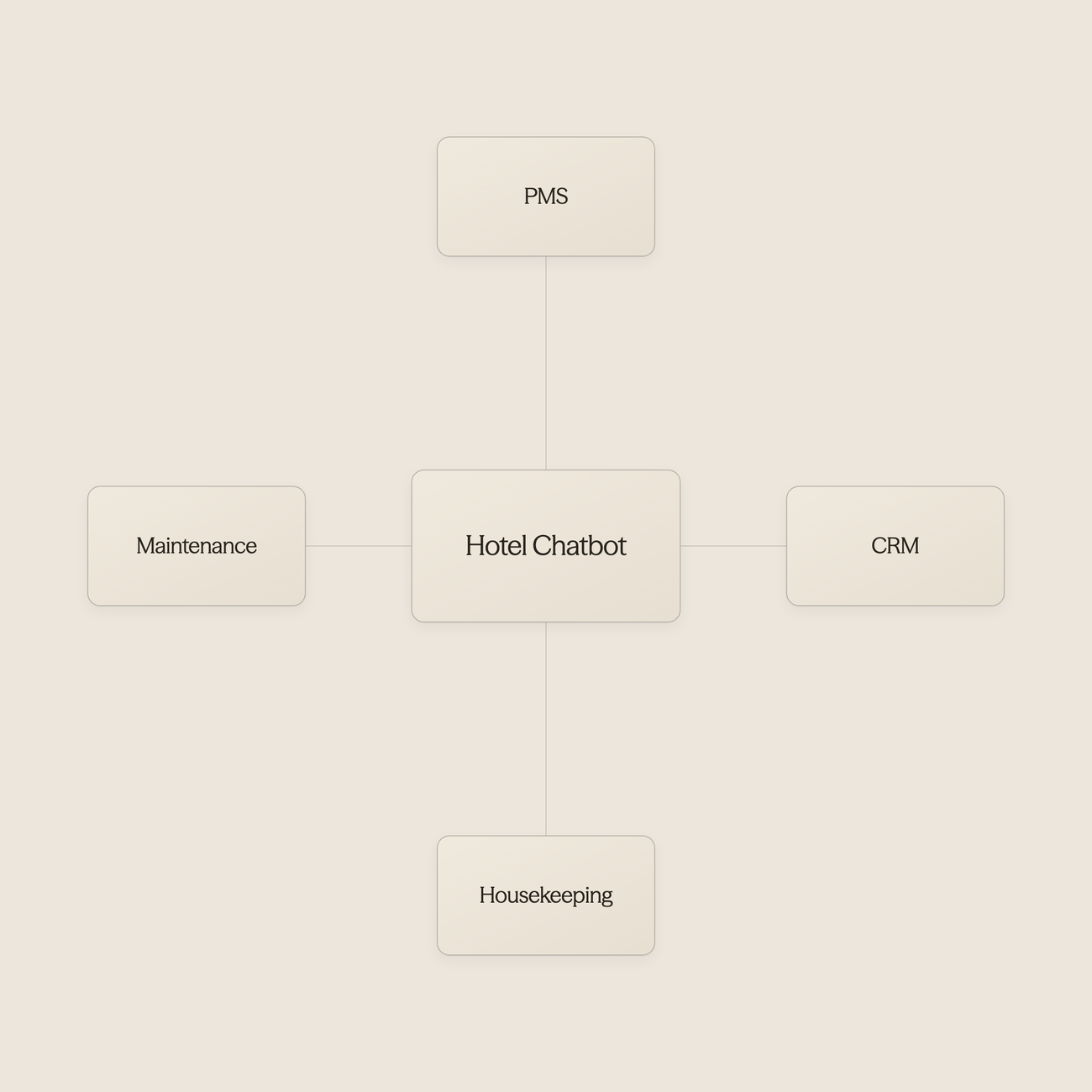
"Chatbots that can access and act on guest data across multiple touchpoints deliver 3x higher guest satisfaction scores compared to basic FAQ bots." — Hotel Technology Report, 2024
💡 Best Practice: Look for chatbots that offer omnichannel memory - meaning they can recall previous conversations, whether a guest contacted via website chat, mobile app, or social media messaging.

Access to Guest Context
A chatbot that cannot see reservation details, loyalty status, or previous interactions treats every guest like a stranger. When a guest asks about their checkout time, the chatbot should know their name, room number, and whether they have late checkout privileges. Without that context, responses become generic suggestions rather than personalized service. Canary Technologies reports that hotels using contextually aware chatbots see a 30% increase in direct bookings because guests receive relevant information matching their specific situation.
Omnichannel Continuity
Guests switch between channels mid-conversation: starting on the website, continuing via SMS, and following up through WhatsApp. When each platform treats interactions as separate, guests repeat themselves, and staff lose important details. The strongest chatbots carry conversation history and guest preferences across every touchpoint, so a housekeeping request submitted through Instagram doesn't require re-explanation when the guest texts a follow-up question an hour later.
Workflow Execution Capability
Chatbots delivering measurable ROI trigger actions inside PMS platforms, housekeeping systems, and maintenance tools rather than simply providing information. When a guest reports a broken air conditioner at midnight, the system creates a work order, notifies maintenance, and updates the guest when it is resolved.
This operational integration requires hospitality-specific connections. Generic chatbot platforms lack connectors for property management systems, point-of-sale platforms, and guest experience tools. Conduit builds integrations directly into hotel tech stacks, enabling chatbots to read reservation data, update guest profiles, and coordinate service delivery across departments without manual data transfer.
Intelligent Escalation
Not every issue can be automated. When a guest expresses frustration, requests a manager, or describes a situation that requires judgment, the chatbot should transfer the conversation to a human while preserving the full context. Staff should see the entire conversation history and pick up the interaction without forcing the guest to repeat information. This seamless handoff prevents frustration and signals that the hotel values the guest's time. Most systems break down at the decision point: distinguishing between requests the chatbot can resolve and situations that require human empathy.
Related Reading
- Ai Tools For Hotels
- Ai Agents For Hotels
- Ai Chatbot For Hotels
- Best Hotel Chatbot
- Hotel Automation Tools
- Airbnb Automation Tools
- Guest Communication Tools
The Hotel Chatbot Use Cases That Deliver the Highest ROI
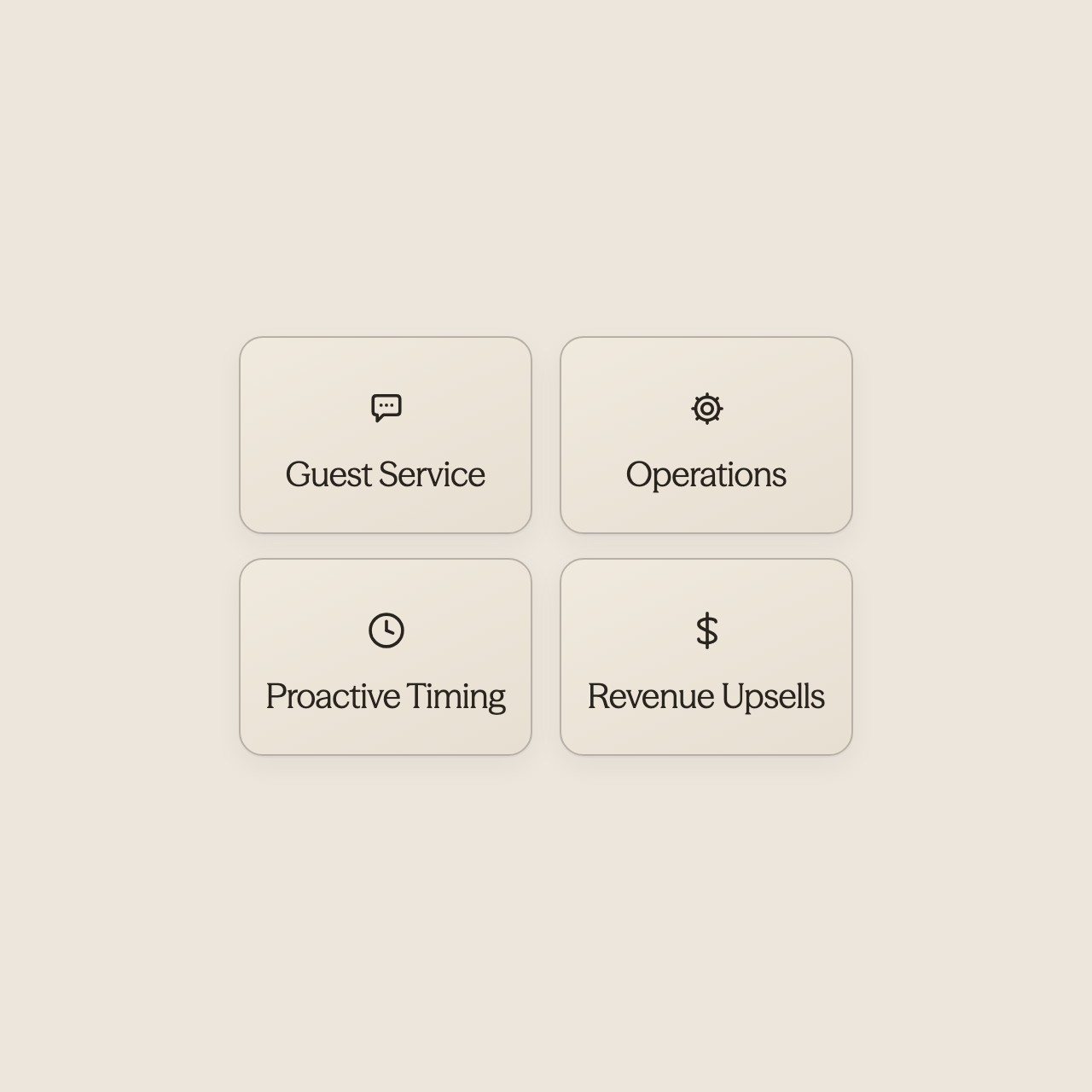
Hotels get the best return on investment from chatbots when they automate workflows that make money or reduce operational costs. The most effective chatbot setups handle guest service questions, complete internal tasks, reach out to guests at optimal times, and present upsell opportunities when guests are most receptive. When chatbots work across all four areas, they become growth infrastructure.
🎯 Key Point: The highest ROI comes from chatbots that don't just answer questions—they actively generate revenue and reduce operational costs across multiple touchpoints.
"When chatbots work across all four areas—service, operations, timing, and upselling—they become growth infrastructure that transforms guest experience into measurable business results."
💡 Best Practice: Focus your chatbot implementation on workflows that have a direct impact on your bottom line, rather than just basic FAQ automation that provides minimal ROI.
Guest Service Automation
Questions about reservations, check-in details, property policies, amenity information, and local directions are among the most frequently asked questions from guests. These predictable requests are ideal candidates for automation. ChatBot Blog reports that chatbots can reduce customer service costs by up to 30% by handling routine conversations without staff intervention, freeing teams to focus on situations requiring judgment or empathy.
Operational Workflow Automation
Chatbots that collect housekeeping requests, log maintenance issues, create service tickets, and route tasks directly to the appropriate team eliminate manual work and reduce delays. This operational workflow automation often produces larger returns than guest-facing conversation alone because it streamlines the work that follows a guest request.
Proactive Guest Engagement
Messages before arrival, check-in communications, help during the stay, and follow-up after the guest leaves can all be automated and timed to match when the guest needs them. These interactions deliver information at the right moment while reducing incoming questions. MxChat notes that 90% of customers expect immediate responses. Proactive communication meets that expectation before frustration sets in, making interactions feel more timely and personalized.
Revenue-Generating Workflows
Many hotels view chatbots primarily as cost-cutting tools, but they can drive revenue by capitalizing on booking and stay moments. A guest arriving for a weekend stay might receive an upgrade offer before check-in; another might be asked to extend a reservation, reserve a table at a restaurant, or book a spa treatment. Because chatbots engage guests at scale and at critical touchpoints, they can suggest relevant offers without requiring staff to handle every interaction manually. Platforms like Conduit automate these revenue-generating workflows alongside service automation, so a system handling towel requests can suggest a spa booking when a guest checks in for a three-night stay.
ROI Comes From More Than Automation
The best implementations deliver value across multiple dimensions: automating routine interactions, streamlining workflows, improving responsiveness, enhancing guest experience, and creating revenue opportunities. This broader impact separates a useful chatbot from a strategic technology investment that contributes to cost savings, operational performance, and commercial growth. But even the best use cases fail with flawed implementation, and most hotels make the same avoidable mistakes.
Common Mistakes Hotels Make When Implementing Chatbots
Many chatbot projects aim for faster responses, lower workloads, improved guest satisfaction, and operational efficiency. Yet not every implementation delivers those outcomes. The problem often lies not in the technology itself, but in how hotels deploy and evaluate it.
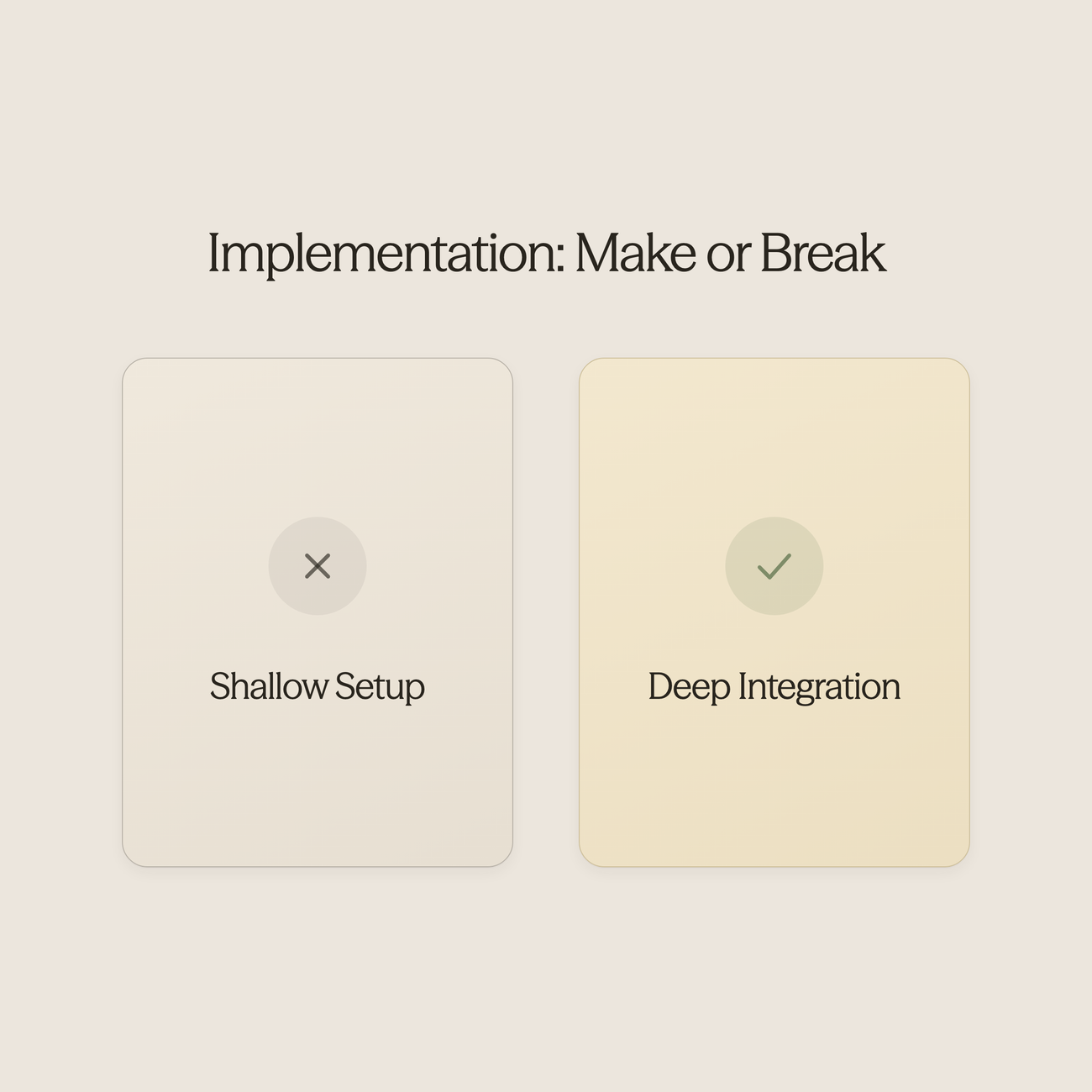
🎯 Key Point: The success of hotel chatbots depends more on implementation strategy than the technology platform chosen.
"The problem often lies not in the technology itself, but in how hotels deploy and evaluate their chatbot solutions." — Hotel Technology Implementation Analysis
⚠️ Warning: Poor planning and unrealistic expectations are the top reasons why hotel chatbot projects fail to deliver their promised ROI.
Treating Chatbots as Standalone Tools
One of the most common mistakes is setting up a chatbot without connecting it to the systems that run your business. A chatbot that cannot access reservations, create service requests, update workflows, or communicate with operational platforms cannot effectively help guests. Staff still have to do the actual work manually, which means the automation is shallow and does not change how things work.
Focusing Only on Guest Conversations
Hotels often evaluate chatbots based on conversation quality, but this misses the full picture. Behind every guest request lies an operational process: housekeeping requests must reach the teams, maintenance issues must be converted into work orders, and special requests must be routed and tracked. When chatbots improve communication without improving workflow execution, employees continue managing the same operational workload despite increased automation.
What happens when chatbots lack proper escalation paths?
No chatbot can solve every situation. Complex requests, service recovery issues, special accommodations, and unexpected problems require human judgment. According to research published on LinkedIn, 70% of hotel chatbots fail to resolve guest queries without human intervention. Without clear escalation paths, guests get stuck in repetitive conversations that never reach the right employee, increasing frustration and delaying resolution.
How can hotels automate escalation routing effectively?
When staff manually monitor escalations, problems emerge as conversation volume increases. Team members miss critical moments, response times lengthen, and guests must repeat themselves across channels. Solutions like AI for hospitality automatically escalate conversations to the right team by understanding context, ensuring conversations reach the appropriate team member with full history intact. Our AI helps hospitality teams reduce response times and address every guest's concern.
Measuring Activity Instead of Outcomes
Another common mistake is focusing on chatbot activity metrics rather than business results. High conversation volume doesn't indicate success. Instead, measure resolution rates, guest satisfaction, response times, automation rates, revenue generated or influenced, and staff workload reduction. A chatbot handling fewer conversations but resolving more requests creates significantly more value than one generating high engagement numbers. But even with the right metrics in place, choosing the wrong vendor can undermine everything you've built.
How Hotels Should Evaluate Hotel Chatbot Vendors
Look at hotel chatbot vendors based on how well they work, not how they sound. Check if the platform connects with your current systems (PMS, housekeeping, maintenance), uses guest and reservation information, and shows real results like how many problems it solves, how much revenue it generates, and how much work it reduces for your staff. A chatbot that sounds intelligent but cannot take action or integrate with your operations creates problems instead of solving them.
🎯 Key Point: Focus on integration capabilities and measurable performance metrics rather than flashy features when evaluating chatbot vendors.
"A chatbot that sounds smart but can't make things happen or work with your operations just creates problems instead of helping."
⚠️ Warning: Don't get distracted by impressive demos - demand to see actual integration examples and performance data from similar hotel properties.
Hospitality System Evaluation Criteria
- System integration
- What to look for:
- PMS connectivity
- Housekeeping integration
- Maintenance system access
- Cross-platform communication reliability
- What to look for:
- Data usage
- What to look for:
- Access to real guest data
- Reservation information accuracy
- Live operational visibility
- Secure data handling
- What to look for:
- Performance metrics
- What to look for:
- Problem resolution rates
- Revenue impact
- Response times
- Guest satisfaction improvements
- What to look for:
- Staff impact
- What to look for:
- Measurable workload reduction
- Fewer repetitive tasks
- Faster coordination between teams
- Improved operational efficiency
- What to look for:
Questions That Reveal Operational Depth
Learn how the platform connects to your technology environment. Can it pull reservation details to personalize responses? Does it integrate with your PMS, CRS, CRM, and service management tools? What guest requests can it resolve without staff intervention? How does it escalate situations that require human judgment, and does that escalation include the full conversation context? If a vendor struggles to explain how their chatbot triggers workflows or accesses guest data, you're likely looking at a generic conversational interface rather than a hospitality solution.
What should you watch for in vendor responses?
Watch for platforms that emphasize FAQ capabilities over workflow execution. If the chatbot cannot create service tickets, route tasks to housekeeping, or update reservation systems, your team will handle most operational work manually. Our Conduit platform is designed to move beyond static responses by enabling your team to automate critical operational workflows directly within your existing systems. According to research from Hospitality Technology (2024), 68% of hotel operators report that their chatbot's inability to complete tasks is the primary barrier to ROI.
Why do limited integrations create problems?
Limited integration options signal similar problems. Without direct access to your systems, responses remain generic and disconnected from guest needs. Weak escalation workflows create another failure point: guests should reach staff quickly when automation cannot help, and that handoff should include the full conversation history so staff doesn't ask guests to repeat themselves.
How do integrated platforms solve these issues?
Platforms like Conduit automate hotel workflows from guest request through task assignment to completion confirmation. Our platform reduces issue resolution time from hours to minutes while maintaining full visibility into resolved versus escalated tasks.
Metrics That Measure Real Impact
How many people talk to your chatbot doesn't indicate whether it's working well. Instead, focus on response time, problem resolution rate, automation rate, customer satisfaction, revenue from add-on services, and staff workload reduction. These metrics show whether the chatbot improves your business operations or merely keeps people occupied. It only matters to know what to measure if the company selling you the chatbot can deliver on its promises about how it will help your business.
Related Reading
- Hotel Automation Software
- Airbnb Automated Messages
- Hijiffy Pricing
- Property Management AI Tools
- Duve Pricing
- Enso Connect Pricing
- AI Software For Hotels with the Best Reviews
- Best AI for Hotels
How Conduit Helps Hotels Automate Service, Revenue, and Operations
Conduit connects AI-powered guest communication with property management, housekeeping, maintenance, and revenue systems to complete tasks, send requests with full context, and identify upsell opportunities. This transforms chatbot interactions from answering questions into active service coordination that reduces manual work while supporting revenue growth.
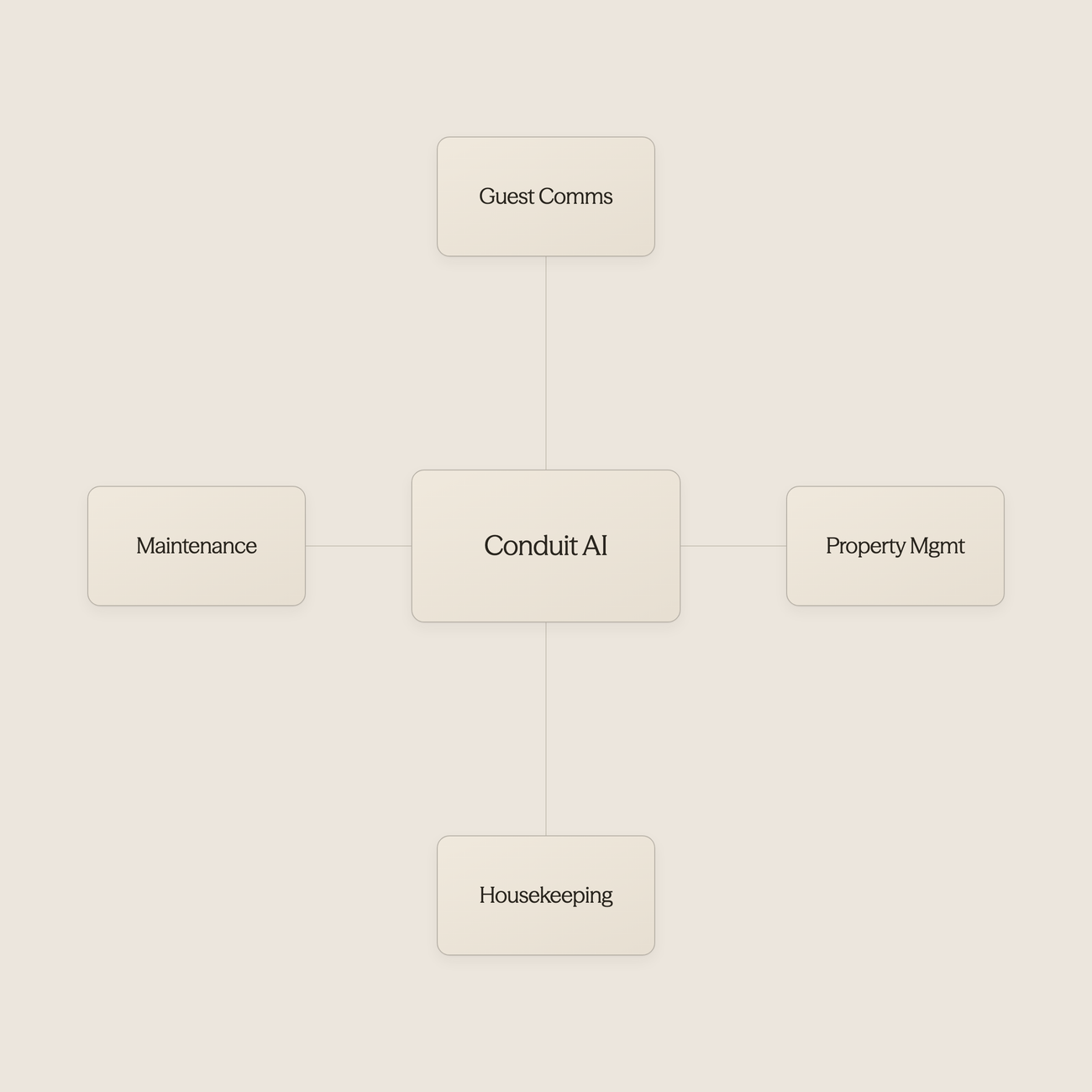
🎯 Key Point: Unlike traditional chatbots that only provide information, Conduit's AI actively coordinates between departments to complete guest requests and identify revenue opportunities in real-time.
"AI-powered service coordination transforms chatbot interactions from passive Q&A into active revenue-generating workflows that reduce manual work." — Hotel Technology Integration Report, 2024
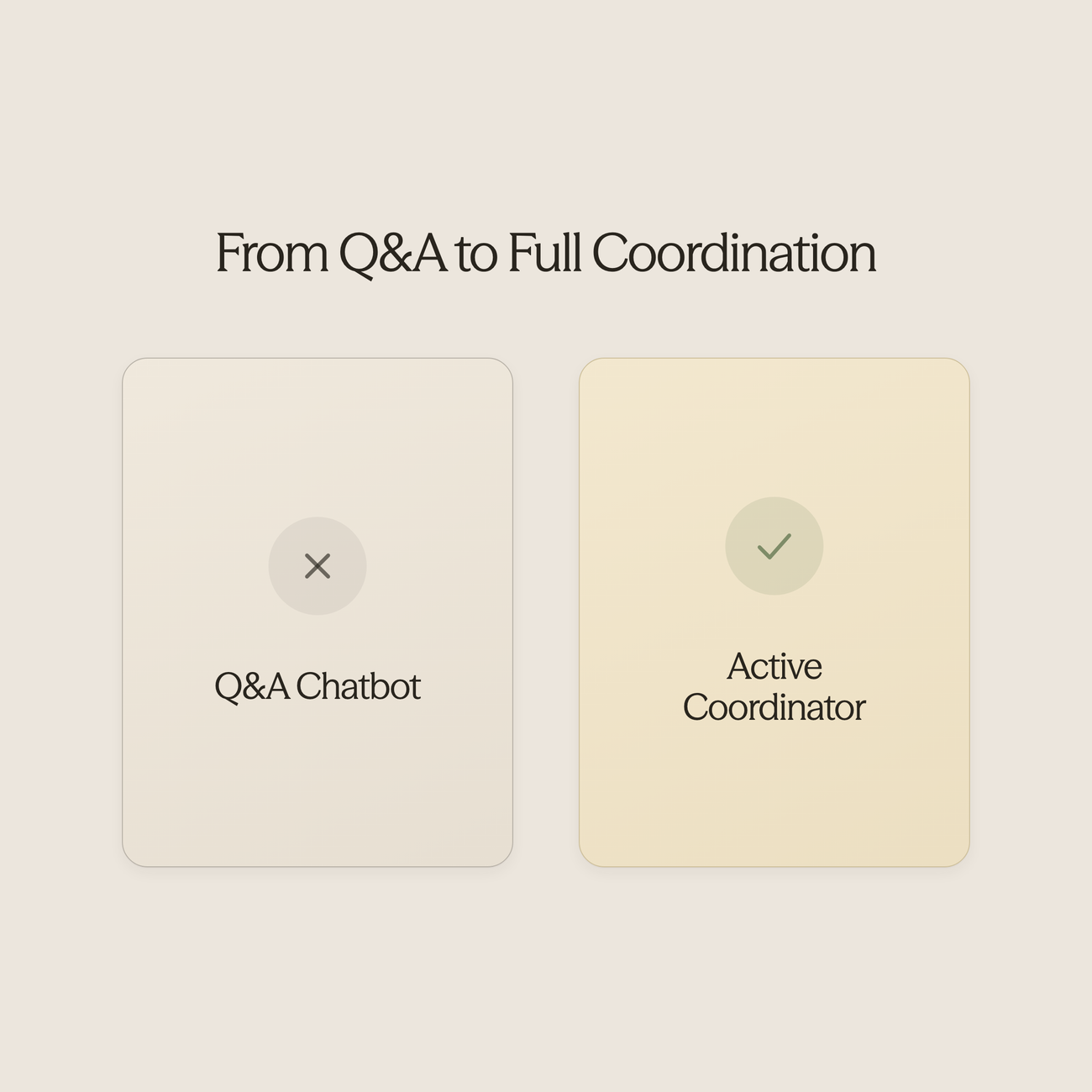
💡 Tip: The true value of integrated AI systems lies not in replacing human staff, but in automating routine coordination tasks so your team can focus on high-value guest experiences and strategic revenue opportunities.
How does deep system integration benefit hotel operations?
Regular chatbot companies lack sufficient understanding of hotel operations to drive meaningful improvements. According to Hospitality Net, hotels using complete automation can cut labor costs by up to 30%, but only when systems integrate deeply enough to eliminate manual information transfer between guest requests and backend operations.
Conduit accesses reservation data, guest profiles, and property information to provide answers based on real booking details. When a guest asks about late checkout, the system already knows their loyalty status, departure time, and hotel occupancy before responding.
How does automated workflow execution work in practice?
This integration extends into workflow execution. A towel request doesn't generate a transcript for staff to process manually; Conduit creates the housekeeping ticket, assigns it based on room location and staff availability, and confirms completion with the guest. Maintenance issues, dining reservations, and transportation requests follow the same pattern: capture, route, execute, confirm.
How does omnichannel continuity work across different platforms?
Hotels manage guest conversations across website chat, SMS, WhatsApp, email, Instagram messages, and OTA platforms. Most systems treat each channel as a separate interaction, forcing guests to repeat information and staff to rebuild context from fragmented sources.
Conduit maintains conversation history and guest context across channels. A pre-arrival question asked via website chat connects seamlessly to an in-stay SMS request and post-checkout email inquiry, with staff viewing the complete interaction timeline without switching platforms.
Why does conversation continuity matter during service recovery?
This continuity matters most during service recovery. When a guest escalates a maintenance issue from WhatsApp to a phone call, the front desk agent can see the original request timestamp, previous responses, and the current status without requiring the guest to restart the conversation. The efficiency gain compounds across properties as they manage hundreds of daily guest interactions.
How does proactive messaging create new revenue opportunities?
Most hotels use reactive communication, responding only when guests reach out first. Conduit enables triggered messaging based on booking events, check-in status, purchases, and stay milestones. Pre-arrival communications can confirm details and offer early check-in upgrades.
Mid-stay messages can suggest dining reservations during slower periods at restaurants or promote spa services to guests who booked wellness packages. Post-checkout follow-ups can encourage direct rebooking before guests return to OTA platforms.
What results do hotels see from automated guest engagement?
These proactive touchpoints create revenue opportunities that manual outreach rarely captures at scale. When Conduit AI, combined with SuiteOp, delivered what operators described as a 5-star experience, the impact stemmed from consistent engagement across every stage of the guest journey.
Hotels identify patterns in guest behavior, respond with relevant offers at high-intent moments, and capture additional revenue. The platform handles repetitive interactions end-to-end while routing exceptions to staff with complete context, enabling teams to focus on situations requiring personalized attention or service recovery. The question isn't whether AI can handle guest communications anymore, but whether your current approach leaves revenue and efficiency on the table every day.
Book a Demo to See Conduit's AI for Hospitality Customer Service in Action
The most effective hotel chatbots connect guest conversations to the systems, workflows, and teams that deliver hospitality. This connection transforms AI from a cost-saving tool into a growth platform that scales service without scaling headcount.
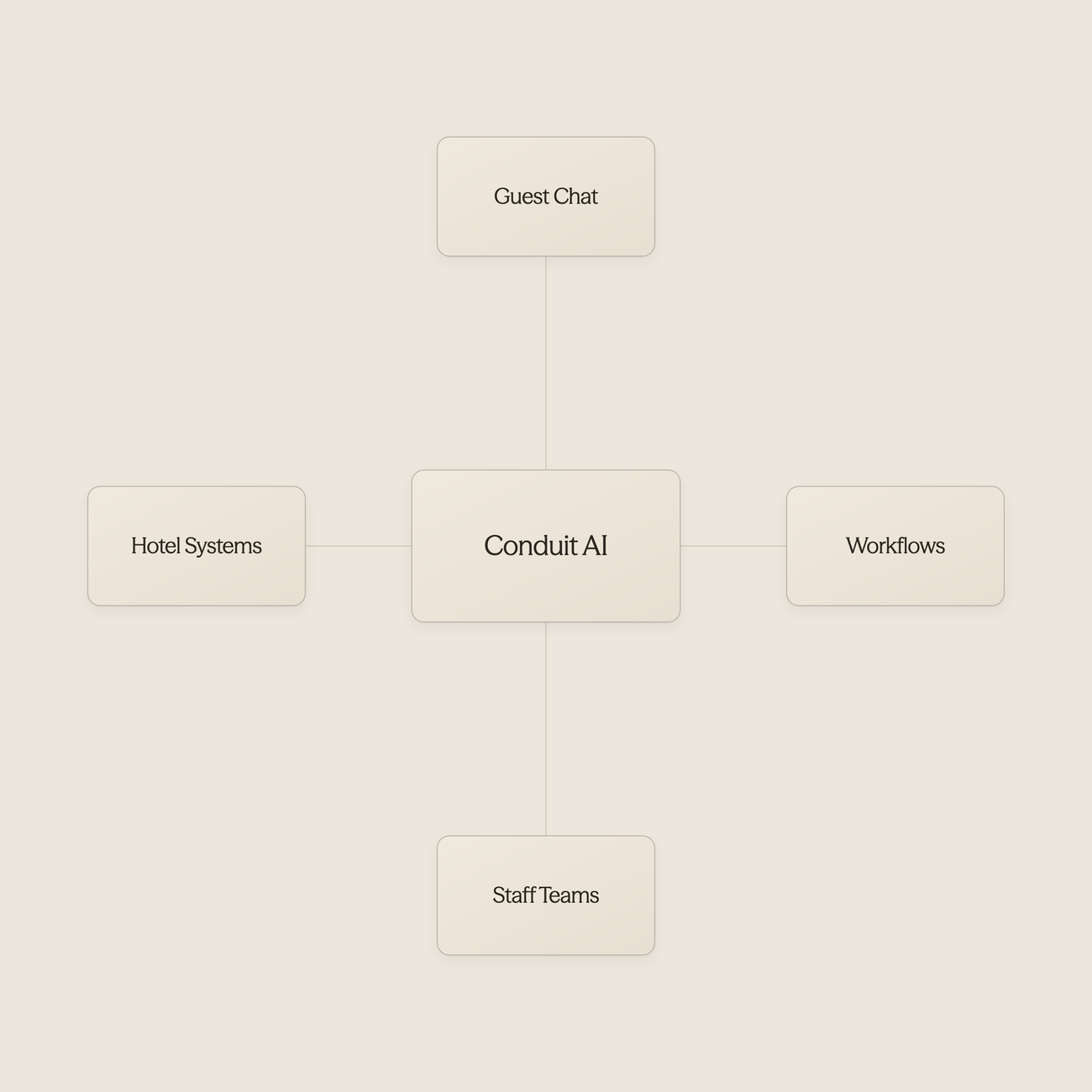
💡 Tip: The best AI solutions integrate seamlessly with your existing hotel management systems to create a unified guest experience.
"AI transforms from a cost-saving tool into a growth platform that scales service without scaling headcount." — Conduit AI Platform
Book a demo with Conduit to see how our AI automates guest support, drives proactive revenue opportunities, and streamlines operations using your existing technology stack. You'll see production-ready agents handle real guest scenarios, execute workflows, and route exceptions with complete context attached.
🎯 Key Point: Conduit's demo showcases live AI agents managing actual guest interactions, not just theoretical capabilities.
Hospitality Demo Features Overview
- Guest support automation
- AI handling real guest inquiries and service requests
- Instant responses across common hospitality scenarios
- Revenue opportunities
- Proactive upselling (room upgrades, amenities)
- Cross-selling services (spa, dining, experiences)
- Workflow integration
- Seamless connection with existing hotel systems (e.g., PMS, booking tools)
- Real-time synchronization across departments
- Exception handling
- Smart routing for complex or unusual requests
- Maintains full conversation context during escalations
Stay in the loop
Get the latest on AI automation, product updates, and customer stories.


