7 Hotel Revenue Management Strategies That Increase Profitability


Hotel Revenue Management
Boost hotel revenue with proven strategies
Pricing decisions in hotels happen constantly, and the margin for error is slim. From adjusting rates during peak demand to closing occupancy gaps across booking channels, revenue management requires both precision and speed. Effective hotel revenue management strategies combine dynamic pricing, demand forecasting, and smart channel distribution to turn operational data into measurable profit gains.
The challenge for most operators is translating that data into timely action without relying on guesswork or manual tracking. Tools that connect occupancy trends, average daily rate, and revenue per available room give teams a clearer picture and faster response time. Conduit helps hotels do exactly that through AI for hospitality.
Table of Contents
- Why Many Hotel Revenue Management Strategies Fail to Deliver Results
- 7 Core Hotel Revenue Management Strategies That Drive Growth
- Why Guest Communication Has Become a Revenue Management Tool
- The Revenue Opportunities Most Hotels Miss
- How to Build a Modern Hotel Revenue Management System
- How Conduit Helps Hotels Capture More Revenue Opportunities
- Book a Demo to See Conduit's AI for Hospitality Customer Service in Action
Revenue managers regularly navigate five or more data screens just to make a pricing decision for a single date, according to Xotels' 2025 analysis. That cognitive load pushes teams toward familiar defaults like matching competitor rates or applying last year's seasonal discounts, rather than making the nuanced calls that separate strong performance from average results. The complexity of modern demand signals has made instinct alone a ceiling, not a foundation.
OTA commissions ranging from 15 to 25 percent per booking can quietly erode net revenue even when occupancy looks healthy. A hotel filling rooms through high-commission channels at the same rate as direct bookings meaningfully generates less margin per stay. Total revenue per available room tells a more accurate story of profitability than occupancy figures alone, yet many operators still optimize for the latter.
Demand forecasting errors of just 5 to 10 percent create mispriced inventory across multiple dates simultaneously, with rooms discounted when demand would have supported higher rates or held too high when it would not. The problem rarely surfaces until month-end reviews, well after the window to correct it has closed. Earlier identification of demand shifts gives properties more options to respond without discounting.
Hotels using personalized guest communication see up to a 20 percent increase in ancillary revenue, according to research from Cesar Ritz Colleges. The highest-converting upsell window sits between 24 and 72 hours before arrival, when guests are actively thinking about their trip rather than locked into a decision made weeks earlier. Timing and relevance together determine whether an offer feels like service or noise.
Ancillary revenue from food and beverage, spa, and parking can account for 20 to 30 percent of total hotel revenue when properly optimized, according to MMCG Invest's 2025 hospitality outlook. Most of those opportunities are lost not because the offer was wrong, but because the lag between a guest expressing interest and receiving a response was long enough for the moment to pass.
Direct booking channels compound this further, reducing OTA commission costs by 15 to 25 percent and raising the net margin on every ancillary sale captured outside third-party platforms. Dynamic pricing can increase hotel revenue by up to 25 percent, but that lift only materializes when the operational layer can deliver on pricing signals in real time.
Hotels using revenue management systems see RevPAR improvements of up to 20 percent when pricing decisions are informed by actual demand data rather than intuition. Properties that also track upsell conversion rates alongside RevPAR consistently identify the gap between what guests were offered and what they accepted, which is where the next round of improvement lives.
AI for hospitality helps teams close the gap between identified revenue opportunities and captured revenue by running guest communication workflows continuously across every channel, without relying on staff availability or manual follow-through during high-demand periods.
Why Many Hotel Revenue Management Strategies Fail to Deliver Results
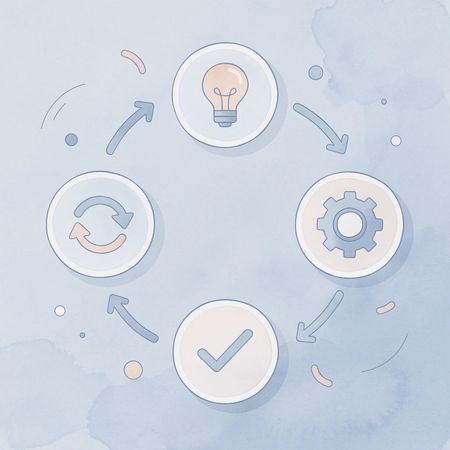
Revenue management fails most often not because of bad strategy, but because of a broken feedback loop between data, decisions, and execution. Hotels collect occupancy figures, ADR, and RevPAR religiously, yet the gap between what the numbers say and what the team actually does in response is where profitability quietly leaks away.
"The gap between what the numbers say and what the team actually does in response is where profitability quietly leaks away."
— Core Revenue Management Insight
Warning: A sophisticated data stack means nothing if your team lacks a clear, consistent process for translating those insights into real pricing decisions.
Tip: Audit your feedback loop — from data collection to team action — before investing in any new revenue management tool or strategy.
| Breakdown Stage | What Goes Wrong | Impact on Profitability |
|---|---|---|
| Data Collection | Metrics tracked but not contextualized | Missed revenue signals |
| Decision-Making | Insights not acted on in time | Suboptimal pricing windows |
| Execution | Team actions misaligned with strategy | Profitability leakage |
The cognitive load problem hiding in plain sight
The problem is the huge amount of information a revenue manager must process before making a single pricing decision. According to Remko West of Xotels in a 2025 LinkedIn post, revenue managers navigate five or more screens to set pricing for a single date. When time is tight, teams default to familiar tactics: matching competitor rates, applying last year's seasonal discounts, filling rooms. The nuances that distinguish adequate pricing from optimal pricing slip away.
Most teams rely on experience, but as demand signals grow more complex, experience alone reaches its limit. Our AI for hospitality solves this by operating as an active layer within hotel workflows: handling guest communication, surfacing upsell opportunities in real time, and automating multi-step operational tasks so staff can focus on decisions requiring human judgment rather than paperwork.
When the distribution strategy quietly erodes the margin
The second failure mode is distribution dependency. AltexSoft's 2025 analysis of hotel revenue management found that OTA commissions can reach 15 to 25 percent per booking. A hotel can show strong occupancy numbers while net revenue per available room declines, because customer acquisition costs erode profit before check-in. Total revenue per available room, not occupancy, reveals the true picture.
How does forecasting error compound the cost of mispriced inventory?
Demand forecasting compounds this problem. A 5 to 10 percent forecasting error creates mispriced inventory across multiple dates: rooms get discounted when demand would have supported a higher rate, or are held at a rate that drives guests to competitors. The error rarely surfaces until the month-end review, by which point the opportunity to correct it has passed.
What separates hotels that consistently outperform their competitive set?
Hotels that consistently outperform their competitors don't rely on the most complicated pricing models. They succeed where strategy and execution remain connected, where the right offer reaches the right guest at the right moment, and where ancillary revenue is treated as a core part of the financial plan rather than a bonus.
7 Core Hotel Revenue Management Strategies That Drive Growth
Hotels can grow their money-making ability in a sustainable way by using seven strategies that work together. These strategies address different parts of the guest and booking lifecycle, creating a system where each decision reinforces the next.
"A hotel's revenue potential is only fully unlocked when its core strategies operate as a unified system — not as isolated tactics."
— Revenue Management Best Practices
Key Point: These seven core strategies are not standalone fixes — they form an interconnected framework where every decision strengthens overall revenue performance.
Tip: Before implementing any single strategy, map it against your full booking lifecycle to ensure it reinforces — rather than conflicts with — your existing revenue levers.
| Strategy Focus Area | Part of Lifecycle It Addresses |
|---|---|
| Pricing Optimization | Pre-booking & demand capture |
| Distribution Channel Management | Booking & acquisition |
| Demand Forecasting | Pre-arrival planning |
| Ancillary Revenue | On-property & post-booking |
| Guest Segmentation | Targeting & personalization |
| Direct Booking Growth | Acquisition & loyalty |
| Performance Analytics | Full lifecycle measurement |

1. Dynamic Pricing Based on Demand
The failure point is treating room rates as a starting point rather than a signal. Dynamic pricing flips that assumption: rates move with demand levels, booking pace, competitor positioning, and seasonal patterns. The goal shifts from "fill the room" to "maximize what each room earns." According to RoomPriceGenie, revenue management strategies can boost hotel revenue by 20%, with dynamic pricing as a primary driver.
2. Seasonal and Event-Based Revenue Planning
Hotels that anticipate demand shifts outperform those that react after they occur. Local festivals, conferences, and school holidays are predictable events. Properties that adjust pricing and inventory weeks in advance gain a competitive advantage, while most properties leave money on the table.
3. Strategic Inventory Management
Not all rooms generate equal revenue. Good inventory management controls premium room availability, manages suite offerings, and uses length-of-stay restrictions during peak periods to prevent short stays from blocking longer, more profitable bookings. This ensures inventory decisions serve revenue targets, not just occupancy numbers.
4. Demand Forecasting
Revenue decisions are only as strong as the forecast behind them. Strong forecasting draws from historical booking pace, market trend data, competitor rate behavior, and local event calendars. Early identification of demand shifts gives properties more options to respond without discounting.
5. Smarter Distribution Management
The most common distribution mistake is measuring bookings without measuring their cost. AltexSoft reports that OTA commissions typically range from 15 to 25 percent of booking value, so a room sold through a high-commission channel at the same rate as a direct booking generates less net revenue. Distribution strategy requires understanding acquisition cost per booking and building a channel portfolio that protects margin alongside occupancy.
How can hotels convert more direct booking inquiries at scale? Most front desk and reservations teams handle direct booking inquiries through phone calls, email, and manual follow-through. This works when inquiry volume is low but breaks down under pressure. As volume grows, response times lengthen, upsell moments disappear, and the gap between a guest's question and confirmed booking widens. AI for hospitality, like Conduit, closes that gap by handling guest communication end-to-end across every channel, converting inquiries into direct bookings without adding headcount.
6. Ancillary Revenue Optimization
Total Revenue Per Available Room (TRevPAR) tells a more complete story than ADR alone. A guest who books a standard room but adds early check-in, a spa treatment, and dinner generates more total value than a guest booking a premium room with no extras. Hotels that design ancillary revenue pathways—upgrades, food and beverage, parking, and curated experiences—consistently extend guest spend beyond the room rate.
7. Personalized Guest Revenue Strategies
Personalized offers drive conversion through relevance. A family traveler ignores spa packages but responds to connecting room upgrades or children's activities. Personalization transforms revenue management into a guest experience strategy, making offers feel like service rather than sales.
Revenue Growth Requires More Than Pricing
Hotels that measure performance by ADR and occupancy alone miss the complete picture of revenue generation. The best-performing properties maximize profit across the entire guest experience: from demand forecasting and inventory management through post-booking spending and channel profitability. Pricing is one part of a larger system, and treating it as the sole focus stalls growth.
Even hotels with strong plans often find the biggest revenue gaps in places most managers overlook.
Related Reading
- How To Improve Guest Experience In Hotel
- Hotel Operating Costs Breakdown
- Self-Service Hotel
- Best Hospitality Management Software
- How To Increase Hotel Occupancy Rate
- How To Maximize Your Hotel Revenue
- Hotel Revenue Generating Ideas
Why Guest Communication Has Become a Revenue Management Tool
Guest communication was once viewed as an expense managed by front desk staff and measured by incoming complaints. This approach no longer works as revenue management has expanded far beyond setting room rates and occupancy targets.
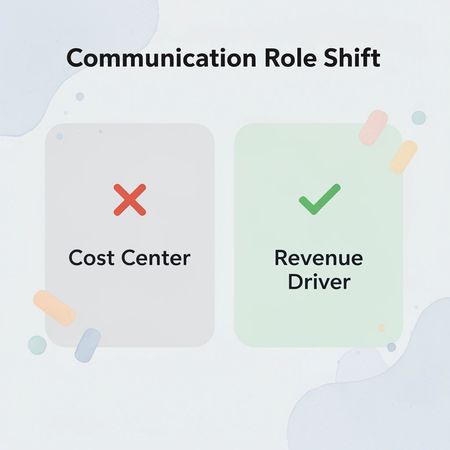
"The shift is clear: guest communication is no longer a cost center — it's a revenue-generating function that directly impacts booking value, retention, and long-term profitability."
Key Point: Hotels and short-term rental operators that treat guest communication as a strategic tool — not just a reactive service function — consistently unlock higher revenue per guest and stronger repeat booking rates.

Tip: If your team is still measuring communication success by complaint volume alone, it's time to reframe the metric. Track upsell conversions, guest satisfaction scores, and direct rebooking rates instead — these are the real indicators of communication performance.
How does personalized communication drive ancillary revenue?
The most profitable hotels treat every guest touchpoint as a revenue event. Each interaction reveals what the guest values, what they're likely to spend on, and whether the timing suits an offer. According to Cesar Ritz Colleges' research on the future of revenue management in hospitality, hotels using personalized guest communication see up to a 20% increase in ancillary revenue. This represents a structural shift: personalization at scale is a revenue management discipline, not a marketing exercise.
Why timing reshapes the entire equation
The best time to offer an upsell is between 24 and 72 hours before a guest arrives. A guest who booked three weeks ago has stopped thinking about their decision, while a guest arriving tomorrow is actively thinking about their trip, checking the weather, planning meals, and looking forward to their stay. An upgrade offer makes a bigger impact at this moment.
Hotels that automate messages to guests before arrival during this window consistently report stronger ancillary conversion than properties that upsell at the front desk, where guests are tired, distracted, and already in transaction mode.
Why does manual handling undermine consistent revenue results?
Most properties handle this manually, leading to inconsistent treatment. Pre-arrival emails go out in groups rather than timed to individual booking windows. Guest requests sit in inboxes until someone responds. AI for hospitality platforms like Conduit replaces that fragmented process with an operational layer that runs continuously, sending the right message to the right guest at the right moment, handling responses across every channel, and feeding outcomes back into the system so it improves over time. The revenue gain isn't from the technology itself; it's from the consistency it creates.
What personalization actually means in practice
Generic promotions fail because they treat a solo business traveler and a family of four the same way. The business traveler may pay for early check-in without hesitation, while the family wants information about connecting rooms or local activities. Matching offers to reservation details, stay characteristics, and prior behavior requires a communication infrastructure that most hotel teams lack.
According to the Hotel Yearbook's analysis of guest communication trends for 2025, AI-driven hyper-personalization now spans every touchpoint across the guest journey, from booking to departure, enabling real-time personalization at scale. This is the operating standard for hotels that are outpacing the industry in ancillary revenue.
The revenue opportunities after a booking is confirmed are often larger than most hotels realize.
Related Reading
- Automated Hotel Reservation System
- Hotel Upselling
- Hotel Guest Messaging
- Hospitality Operations Management
- What is RevPar
- How To Increase RevPAR
- Hospitality Automation
- How To Improve Hotel Operations
- Hotel Demand Forecasting
- Hotel Budgeting And Forecasting
- Adr Vs Revpar
The Revenue Opportunities Most Hotels Miss
Most hotels lose money not because of wrong pricing, but because they fail to act on the signals guests send every day: questions, requests, and inquiries.
"Most hotels lose money not because of wrong pricing, but because they fail to act on the signals guests send every day."
— Key Industry Insight
Warning: Every unanswered guest signal is a missed revenue opportunity that cannot be recovered once the moment passes.
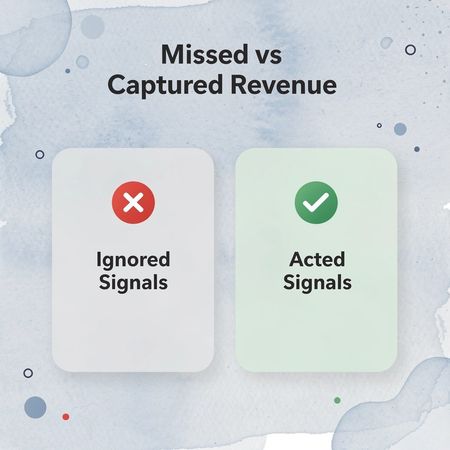
A guest asks about staying longer. A family wants a bigger room. A couple asks about a dinner package. Each one is a live revenue signal that expires quickly. According to MMCG Invest's US Hospitality Market Outlook 2025, extra revenue from food and drinks, spa services, and parking can make up 20 to 30 percent of total hotel revenue when done right—meaning captured all the time, not just once in a while.
| Revenue Signal | Opportunity Type | Revenue Category |
|---|---|---|
| The guest asks to stay longer | Upsell / Extension | Room Revenue |
| The family requests a bigger room | Room Upgrade | Room Revenue |
| A couple inquires about the dinner package | Cross-sell | F&B Revenue |
| Spa or parking inquiry | Ancillary Add-on | 20–30% of Total Revenue |
Takeaway: Ancillary revenue streams—food and drinks, spa services, and parking—represent a massive share of hotel income, but only when hotels are consistently capturing every guest signal, not just occasionally.
Tip: Train your team to treat every guest question as a live revenue opportunity with a short expiration window—because it is.
Where the real gaps appear
The failure point is usually not the offer itself, but the delay between when a guest shows interest and when the hotel responds. A guest considering a suite upgrade at 10 a.m. will likely have decided differently by 2 p.m. without follow-up. Delayed responses don't appear as lost revenue in any dashboard; they simply disappear.
AI for hospitality platforms like Conduit addresses this by running guest communication workflows end-to-end, responding across every channel in real time, and routing upgrade or extension requests to the right team before the window closes. Most teams rely on front-desk staff to catch these moments during check-in, which works during light occupancy but breaks down during high-occupancy periods: exactly when upgrade inventory is most valuable. The system learns each property's specific inventory, pricing logic, and guest patterns over time, becoming more precise and faster.
The coordination problem nobody tracks
Revenue opportunities requiring action from multiple departments are especially at risk of being lost. A request to extend a stay involves reservations checking room availability, housekeeping ensuring the room is ready, and the front desk confirming with the guest. When those teams work in separate systems with no shared signal, the request stalls. The guest sees a slow response and decides to go elsewhere.
Why does margin leak through everyday guest conversations?
Direct booking channels can reduce OTA commission costs by 15 to 25 percent, meaning every ancillary sale through a direct channel generates more revenue than through a third party. The revenue hidden in guest conversations extends beyond room upgrades to the combined profit impact of dozens of small, high-intent moments lost daily.
How do you close these gaps reliably without adding headcount?
The harder question is how to build a system that reliably closes these gaps at scale without hiring more people as demand increases.
How to Build a Modern Hotel Revenue Management System
Building a modern hotel revenue management system means treating pricing, guest engagement, and operational execution as a single, integrated discipline. Properties that are pulling ahead are doing so because every department, guest touchpoint, and data signal feeds into the same revenue outcome.
"Properties that integrate pricing, guest engagement, and operations into a single revenue discipline consistently outperform those that treat them as separate functions."
— Modern Hotel Revenue Strategy
Key Point: A modern revenue management system is not just about setting room rates — it's about connecting every data signal across your property into a unified revenue strategy.
Warning: Hotels that manage pricing, guest touchpoints, and operations in silos leave significant revenue on the table. Integration is essential — not optional.
| Disconnected Approach | Modern Connected Approach |
|---|---|
| Pricing set in isolation | Pricing informed by all departments |
| Guest data siloed by team | Unified guest touchpoint data |
| Reactive operational decisions | Proactive, data-driven execution |
| Missed revenue signals | Every signal feeds one outcome |
Connect Revenue and Operations First
The failure point is usually structural. Revenue managers identify opportunities, but front desk, reservations, and guest services operate on separate rhythms and communication schedules. By the time an upgrade opportunity reaches the right person, the guest has already checked in and mentally moved on.
Bridging that gap requires shared revenue objectives across departments, not shared data alone. When operational teams understand the revenue value of each guest interaction, the property functions as a coordinated system.
Why does consistent guest communication require automation?
Most hotels handle routine guest communication by hand, which breaks down during demand spikes. Staff respond inconsistently, offers go out sporadically, and the pre-arrival window closes without action.
According to Ramsi's analysis of hotel revenue strategies, dynamic pricing can increase hotel revenue by up to 25%, but this lift only materializes when operations deliver on pricing signals in real time. Automation ensures upgrade offers, early check-in options, and stay extension communications go out on schedule, every time, regardless of property occupancy.
How do AI platforms close the gap between opportunity and captured revenue?
As the number of guests grows, manual processes make it harder to find opportunities and capture revenue. AI for hospitality platforms like Conduit runs guest communication workflows from start to finish: handling calls, responding across channels, and executing multi-step procedures without adding staff. Our system learns each property's patterns over time, becoming more accurate and faster.
Measure What Actually Drives Profitability
Occupancy tells you how full the hotel is, not how profitable each guest was. A complete measurement framework tracks ADR, RevPAR, TRevPAR, upsell conversion rates, and ancillary revenue per guest, as each metric reveals a distinct performance dimension.
Ramsi reports that hotels using revenue management systems see RevPAR improvements of up to 20%, resulting from pricing decisions informed by real demand signals rather than intuition. Properties that track upsell conversion rates alongside RevPAR identify the gap between what guests were offered and what they accepted, where the next improvement opportunity lies.
Build Around the Entire Guest Journey
The booking-focused mindset treats the reservation as the finish line; the guest-focused mindset treats it as the starting line. Revenue opportunities exist before arrival through upgrades and add-ons, during the stay through service bookings and extended nights, and after checkout through loyalty engagement and future reservations.
How does capturing every guest moment build a true revenue system?
A guest who books a standard room, accepts an upgrade offer 48 hours before arrival, adds a dining package at check-in, and extends their stay by one night generates far more revenue than their original booking suggested. Designing the system to capture each of those moments, rather than hoping staff remembers to ask, separates a revenue strategy from a revenue system.
Properties that excel at this are not necessarily the largest or most technically sophisticated. They've stopped treating revenue management as a back-office function and integrated it into every guest interaction. Once running at full capacity, the gap between potential and performance becomes impossible to ignore.
How Conduit Helps Hotels Capture More Revenue Opportunities
Many hotels lose revenue opportunities not because of bad pricing decisions, but because they fail to talk to guests at the right time, respond fast enough, or consistently show relevant offers throughout the guest journey. Revenue management may identify opportunities to increase upgrades, drive ancillary revenue, or encourage stay extensions, but reliably executing them across hundreds or thousands of guest interactions remains challenging.
"Revenue opportunities are lost not from poor strategy, but from inconsistent execution across the guest journey—at scale, manual workflows simply cannot keep up."
Tip: The gap between identifying a revenue opportunity and capturing it comes down to timing and consistency, two things manual processes struggle to deliver at scale.
Warning: Even the best pricing strategy will underperform if your team cannot surface the right offer to the right guest at the right moment.
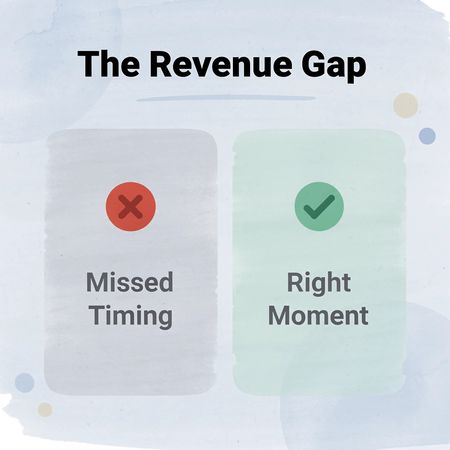
Conduit enables hotels to automate and streamline guest communication across multiple channels, creating more consistent guest experiences while reducing the operational burden of manual workflows. Rather than relying on staff to manually manage every interaction, hotels can ensure revenue opportunities are surfaced when they are most relevant.
| Challenge Without Conduit | Outcome With Conduit |
|---|---|
| Manual outreach misses optimal timing | Automated messaging hits guests at the right moment |
| Inconsistent offer visibility across touchpoints | Consistent offers surfaced throughout the guest journey |
| Staff overwhelmed by high-volume interactions | Reduced operational burden through streamlined workflows |
| Upgrade and ancillary opportunities go uncaptured | Revenue opportunities executed reliably at scale |
Key Point: Conduit doesn't just automate communication—it ensures that every upgrade prompt, ancillary offer, and stay extension opportunity reaches guests at the exact moment they are most likely to convert.
Takeaway: By replacing reactive, manual workflows with proactive, automated guest communication, hotels can capture more revenue without adding operational complexity.
How does combining guest communication with reservation context improve offers?
One of Conduit's key advantages is its ability to combine guest communication with reservation and property context. When hotels access information about a guest's reservation, stay details, and previous interactions, communication becomes more relevant. Rather than sending generic messages, hotels can deliver offers that match a guest's specific situation: automatically presenting room upgrades before arrival, notifying guests about extension availability, or introducing add-on offers when guests are most likely to consider them.
Why does lifecycle outreach matter for capturing guest revenue?
Conduit supports lifecycle guest outreach, keeping in touch with guests before arrival, during their stay, and after departure. Revenue opportunities emerge across multiple touchpoints: upgrades before arrival, late checkout during the stay, or rebooking after departure. Staying connected throughout the guest journey helps hotels maximize value from each relationship.
How does a faster response time reduce lost revenue opportunities?
Speed is critical because many revenue opportunities are time-sensitive. A delayed response to a stay extension inquiry or upgrade request can result in lost revenue. By helping hotels respond more quickly and consistently, Conduit reduces the likelihood that opportunities disappear before guests receive an answer. Our platform also helps operational teams work more efficiently by providing escalations with the context needed to resolve requests effectively, improving both operational efficiency and the guest experience.
How does Conduit help hotels scale revenue capture across every guest interaction?
Conduit addresses a major challenge in modern hotel revenue management: converting guest interactions into revenue opportunities at scale. By automating guest communication, enabling proactive outreach, accelerating response times, and helping teams engage guests throughout their stay, the platform reduces revenue leakage from manual communication processes.
Book a Demo to See Conduit's AI for Hospitality Customer Service in Action
Building a revenue system that works at full capacity requires finding where your guest journey loses opportunities. Map every touchpoint from booking confirmation to checkout: where are upgrade requests going unanswered, stay extension conversations never starting, and dining or experience add-ons never offered because of bandwidth constraints? These gaps are structural, not staffing failures—and structure can be fixed.
"Every unmapped touchpoint between booking confirmation and checkout is a missed revenue opportunity —and most properties don't realize how many they have until they look."
Key Point: The gaps in your guest journey aren't caused by bad staff —they're caused by structural blind spots that no amount of hiring can solve. Fixing the system is the only lasting solution.
| Touchpoint | Common Gap | Revenue Impact |
|---|---|---|
| Booking Confirmation | No upgrade offer triggered | Missed upsell revenue |
| Pre-Arrival | The stay extension was never proposed | Lost room nights |
| During Stay | Dining & experiences not offered | Ancillary revenue left behind |
| Checkout | No feedback or return incentive | Reduced lifetime guest value |
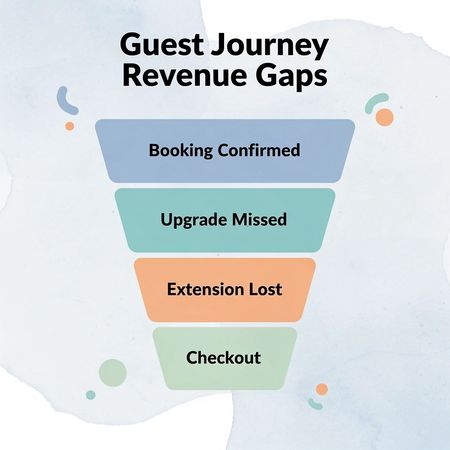
AI for hospitality, like Conduit, automates those touchpoints, learns your property's specific operations, and improves over time. It handles guest communication end-to-end, freeing your staff for interactions requiring genuine human presence. Book a demo to see a fully connected revenue system in action.
Tip: When evaluating AI tools, prioritize platforms that learn your property specifically —not generic chatbots. Conduit's property-specific training separates it from one-size-fits-all solutions.
Best Practice: Don't wait until peak season to close your revenue gaps. Book a demo today and see how many touchpoints your current system leaves unmonetized.
Related Reading
- Best Revenue Management Software For Hotels
- Siteminder Competitors
- Hospitality Chatbot
- Best Hotel Channel Manager Software
- Hotel Distribution Management
- Canary Technologies Competitors
- Digital Concierge Software
- Cloudbeds Alternatives
- Hospitality Conferences
Stay in the loop
Get the latest on AI automation, product updates, and customer stories.

