AI Agents for Hotels: Reduce Guest Service Bottlenecks Faster


AI Agents for Hotels
Reduce guest-service bottlenecks
A guest stands at the front desk at 2 AM, frustrated because they can't get towels delivered while the night staff handles a wave of check-ins. These bottlenecks create stress for teams and disappointment for guests who expect instant service. AI agents eliminate these pressure points by responding to guest requests within seconds, freeing staff to focus on moments that truly need a human touch.
The shift toward intelligent automation doesn't require replacing teams or overhauling entire operations. Conversational agents handle routine guest questions, process service requests, and manage communication across multiple channels simultaneously. When guests text about extra pillows or ask about breakfast hours, these agents respond immediately and route complex issues to the right team member, ensuring nothing falls through the cracks during the busiest hours with AI for hospitality.
Table of Contents
- Why Hotel Operations Break Down During High Guest Demand
- The Most Common Hotel Tasks That Create Operational Bottlenecks
- What AI Agents for Hotels Actually Do
- Why Traditional Hotel Communication Systems Often Fail
- What Hotels Should Evaluate Before Implementing AI Agents
- How Conduit Helps Hotels Automate Guest Communication More Efficiently
- Book a Demo to See Conduit's AI for Hospitality Customer Service in Action
Summary
- Hotels lose control of guest service when the volume of communication exceeds staff capacity to respond consistently. During high-occupancy periods, front desk teams face simultaneous requests across phone, SMS, email, OTA platforms, and mobile apps, creating delays that stretch response times to 4 hours, according to Hotel Dive's 2024 analysis. The breakdown occurs because traditional workflows cannot scale to keep pace with guest demand, turning small requests into service failures that guests compare to the instant responses they receive from every other digital service.
- Communication fragmentation creates operational chaos that hiring alone cannot solve. The American Hotel & Lodging Association reported that 76% of surveyed hotels face staffing shortages in 2024, but even fully staffed properties struggle when requests scatter across disconnected channels. A guest texts about parking while another calls about check-in, while a third messages through the booking app about room preferences, all within the same two-minute window, and no amount of staff can monitor every platform simultaneously without requests falling through the cracks.
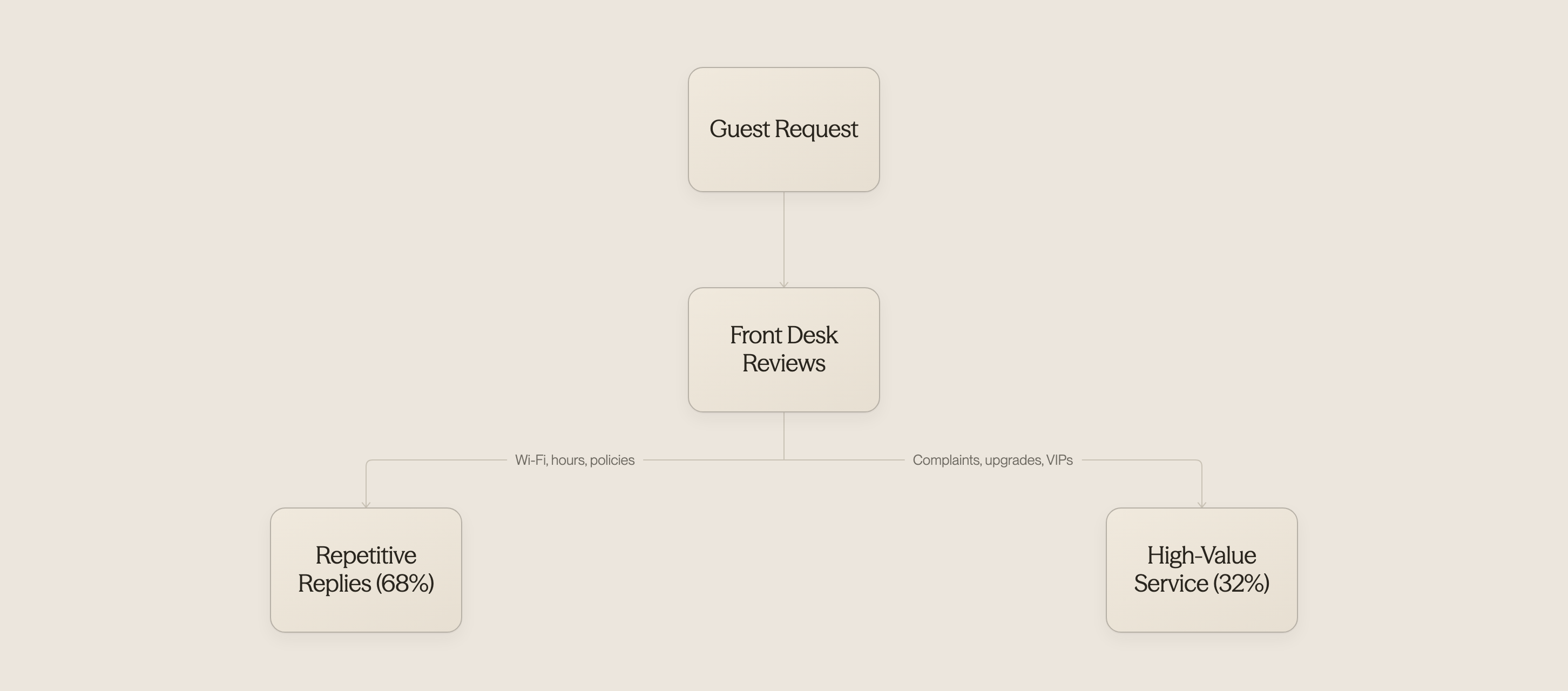
- Repetitive questions consume the majority of hotel communication capacity. Skift Research found that hotels receive an average of 127 repetitive guest inquiries per day during peak seasons, with 68% requiring identical responses about Wi-Fi passwords, breakfast hours, parking instructions, and amenity locations. When employees spend large portions of their shifts typing the same answers across multiple platforms, response times slow across the board, upsell conversations disappear, and proactive service becomes impossible because teams operate in a constant reactive mode.
- AI agents handle up to 80% of routine guest inquiries, according to Taktikon's 2025 analysis, thereby shifting the operational bottleneck by processing requests instantly across all channels simultaneously. These systems execute complete workflows, such as late check-out coordination, reservation modifications, and pre-arrival sequences, automatically rather than requiring staff to manually navigate between disconnected platforms and departments. The value emerges during peak demand, when dozens of simultaneous requests would otherwise overwhelm front-desk teams who must also manage on-site operations.
- Traditional hotel technology stacks create operational friction because systems were never designed to function as unified communication layers. The Future of Hotel Data Report reveals that nearly 50% of hoteliers struggle to access critical data across their systems, resulting in guest preferences becoming disconnected from booking workflows, housekeeping requests sent through one channel never reaching the appropriate department, and staff spending their shifts switching contexts rather than serving guests. Hospitality Upgrade's 2025 global study found that 78% of hotel chains deploy AI systems, yet only 7% operate with a comprehensive strategy, as most implementations add technology without addressing underlying workflow problems.
- Hotels using AI-powered messaging see a 40% reduction in response time, according to Hotel Technology News, but the operational advantage extends beyond speed to consistency during moments when manual systems fail under volume. AI for hospitality centralizes guest communication across fragmented channels into a single operational system that responds instantly to routine requests while routing complex situations to staff with the full conversation context intact, preventing the communication overload that causes service to deteriorate during busy periods.
Why Hotel Operations Break Down During High Guest Demand
Communication systems cannot scale to meet guest demand. When 200 guests request information simultaneously across six different channels, response times become inconsistent regardless of staff effort. The system itself is the bottleneck, not staff capability.
Salesforce research found that 80% of customers say experience is as important as products and services, while 65% expect companies to adapt to their needs. Traditional hotel workflows were not designed to handle this pressure.
What causes communication fragmentation in hotels?
One property now manages phone calls, text messages, online travel agency platforms, emails, website chat, mobile app notifications, and social messaging simultaneously. Each channel operates independently, creating separate streams of guest requests that front desk teams must monitor and answer manually. Our AI solution consolidates these channels into a single interface, reducing manual workload. During peak periods, a guest texts about parking, another calls about checking in, and a third messages through the booking app about room preferences, all within the same two-minute window.
How do staffing shortages worsen communication challenges?
The American Hotel & Lodging Association reported in 2024 that 76% of surveyed hotels face staffing shortages, particularly at the front desk. Even adequately staffed teams struggle when communication workflows become overloaded, as repetitive requests consume the capacity needed to address complex guest needs and revenue opportunities.
Where Staff Time Actually Goes
Most hotel communication involves repetitive questions: Wi-Fi passwords, parking instructions, breakfast hours, late check-out policies, amenity locations, and reservation changes. These drain staff's attention and prevent teams from focusing on guests who need personalized service or have urgent issues requiring human judgment.
When employees spend shifts manually answering the same questions across multiple platforms, response times slow down. Upsell conversations disappear. Proactive service becomes impossible. Internal coordination weakens as teams react to incoming messages rather than anticipate guest needs. Guests notice immediately.
What creates the speed expectation gap in hotel communications?
Today's travelers compare hotel response times to every other service they use, most of which answer immediately. When a guest texts asking for extra towels, they're not considering staffing limits or message routing across channels. According to Hotel Dive, the average hotel response time during busy periods stretches to about four hours. This delay transforms small requests into service failures.
How can hotels solve communication workflow bottlenecks?
The operational breakdown stems not from understaffing but from communication workflows unable to handle the volume, speed, and fragmentation of modern guest interactions. Hotels need systems that efficiently manage repetitive requests, freeing staff to focus on interactions that require human expertise.
Solutions like AI for hospitality handle routine guest questions across multiple channels simultaneously, routing complex issues to the right team member while responding instantly to repetitive requests. This prevents the communication overload that degrades service during busy periods. Our Conduit platform automates these routine interactions, freeing your team to focus on delivering exceptional service where it matters most. But knowing communication is the bottleneck doesn't tell you which specific tasks consume the most capacity or create the longest delays.
Related Reading
- AI Communications For Hotels
- AI For Vacation Rentals
- AI For Airbnb Hosts
- AI Use Cases In Hospitality
- Best Hotel Chatbot
The Most Common Hotel Tasks That Create Operational Bottlenecks
Booking questions consume more staff time than nearly any other guest interaction. Guests inquire about availability, room types, pricing, cancellation policies, parking, breakfast options, and check-in times before making reservations. These repetitive inquiries create constant interruptions, diverting staff from critical on-site operations.
"When 50 guests ask the same five questions across different channels within an hour, front desk teams spend their entire shift typing the same responses over and over instead of managing things happening at the property."
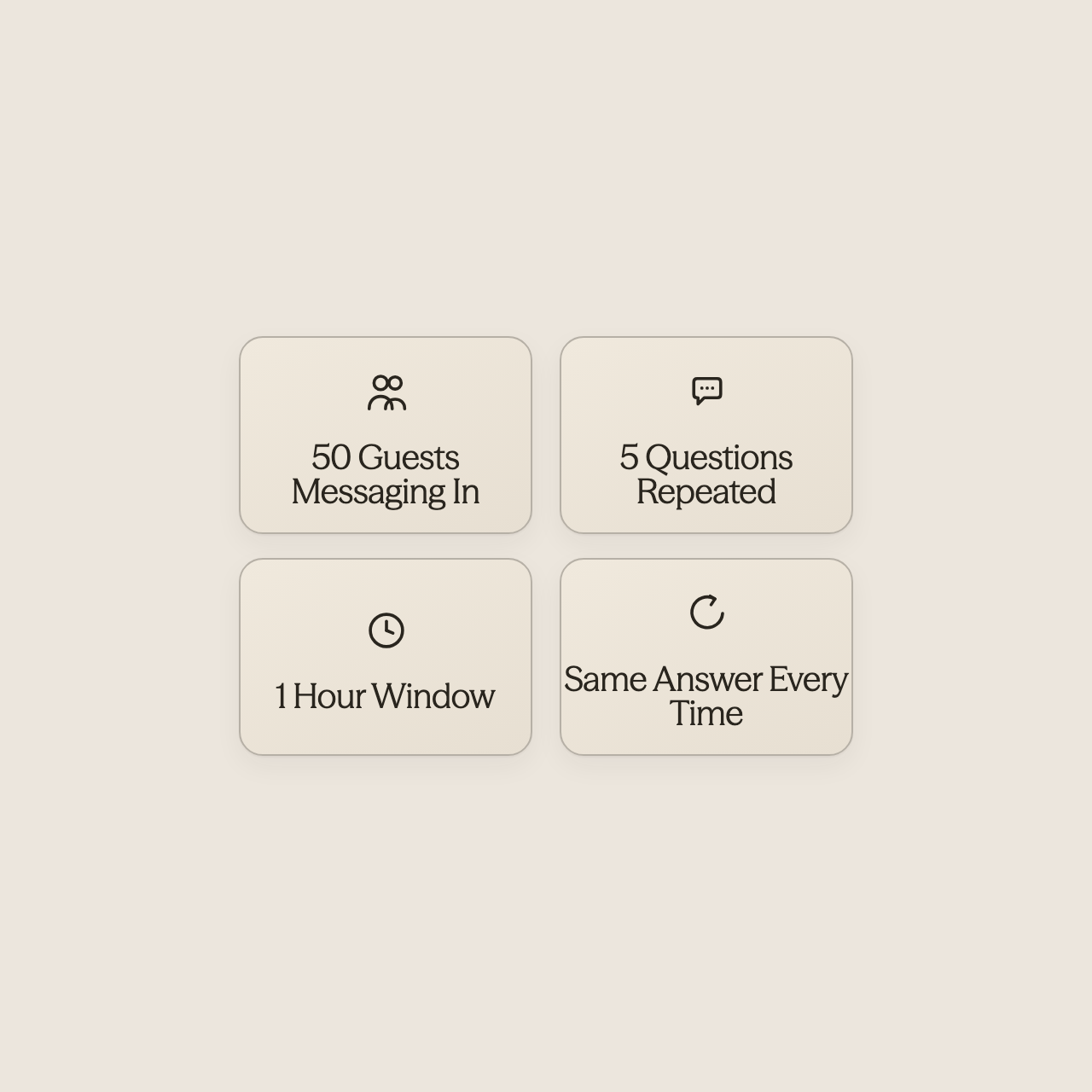
🎯 Key Point: Repetitive booking inquiries consume disproportionate amounts of staff time, creating operational bottlenecks that prevent teams from focusing on high-value guest services and critical property management tasks.
⚠️ Warning: Without automated response systems, your front desk team becomes trapped in a cycle of repetitive communication that dramatically reduces their ability to handle urgent guest needs and property operations effectively.
How do check-in instructions create operational pressure?
Check-in instructions create similar pressure. Guests need guidance on arrival, parking details, Wi-Fi passwords, access codes, and directions to the property. During peak periods, staff spend 30% of their shifts answering repetitive questions, delaying guests who need more complex help.
Late Check-Out Coordination
Late check-out requests require manual coordination across multiple teams: staff verify availability, communicate with housekeeping, update reservation systems, and respond to guests. The inefficiency stems from communication overhead across fragmented tools and teams rather than the decision itself.
What types of guest inquiries create the most operational burden?
Guests repeatedly ask about pool hours, gym access, restaurant schedules, spa availability, laundry services, transportation options, pet policies, and local recommendations. According to a 2024 Skift Research study, hotels receive an average of 127 repetitive guest inquiries per day during peak seasons, with 68% requiring identical responses. These questions interrupt staff managing check-ins, housekeeping coordination, and on-site service requests.
How do room upgrade requests impact hotel operations?
Questions about room upgrades create extra work for hotel staff. While upgrades offer revenue opportunities, disconnected communication systems force front desk workers, reservation teams, and availability systems to coordinate manually, slowing response times and risking lost sales to competing properties.
How do repetitive tasks create communication bottlenecks?
The problem is that repetitive tasks consume staff attention. When employees spend large portions of their day manually managing communication workflows, guest response times slow down as staff juggle multiple channels and repeated inquiries. Complex or urgent requests wait longer because teams are overwhelmed by routine communication volume.
What solutions prevent communication overload during busy periods?
Solutions like AI for hospitality handle repetitive workflows across multiple channels simultaneously, responding immediately to common questions while routing complex issues to the appropriate team member. This prevents communication overload that degrades response times during peak periods, allowing staff to focus on service moments that require human judgment. But understanding which tasks create bottlenecks doesn't explain how automation handles them without creating new problems.
What AI Agents for Hotels Actually Do
Modern AI agents for hotels function as communication tools that streamline operations. They process guest interactions across multiple channels simultaneously, understand requests, execute workflows, and respond contextually using reservation and property data. Unlike traditional chatbots that handle scripted FAQs, AI agents manage dynamic conversations and automate backend processes that previously required manual coordination.
🎯 Key Point: AI agents go far beyond simple chatbots by integrating with your hotel's operational systems and handling complex guest workflows automatically.
"AI agents manage dynamic conversations and automate backend processes that previously required manual coordination." — Hotel Technology Evolution, 2024
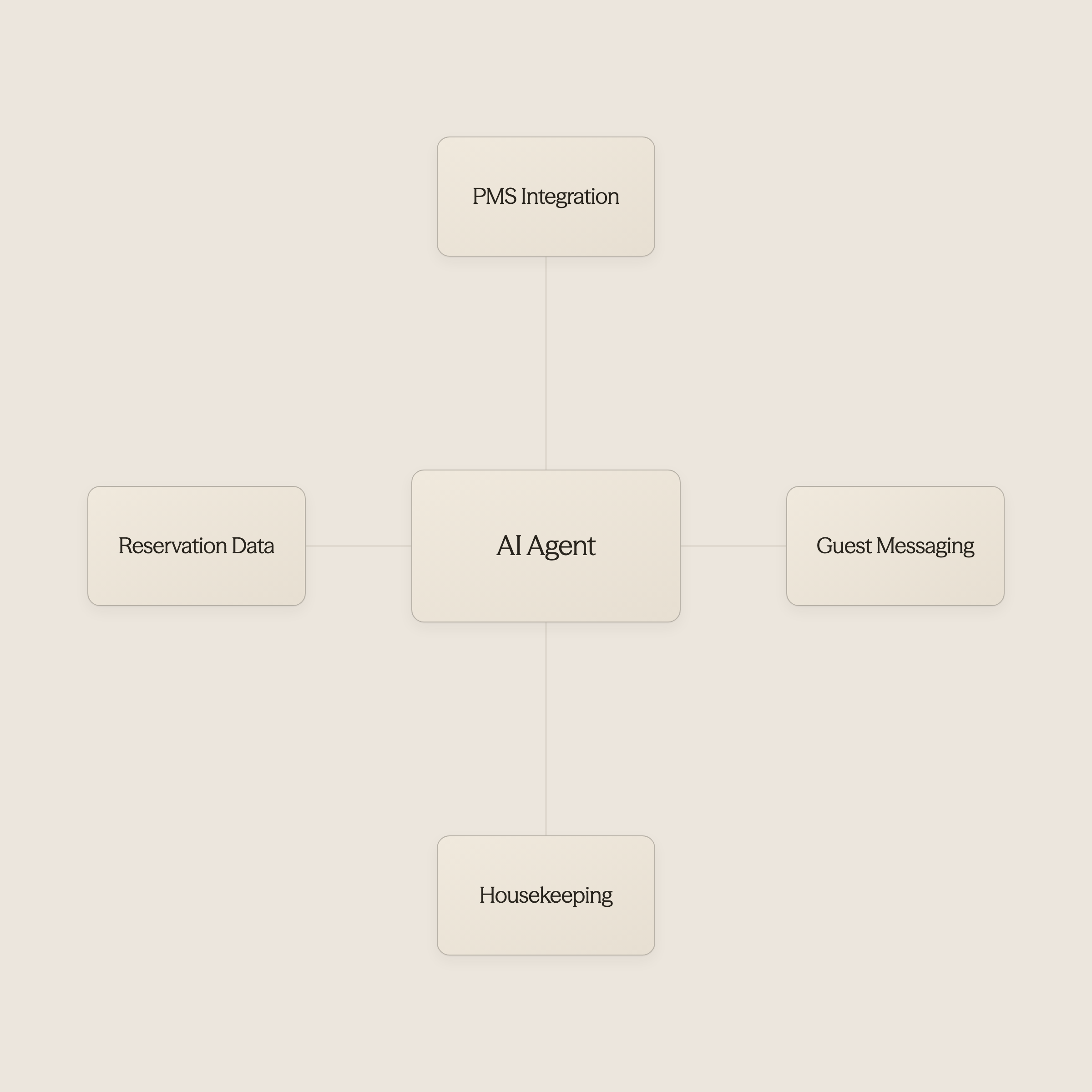
💡 Best Practice: Think of AI agents as digital concierges that can access your property management system, process real-time requests, and coordinate with multiple departments simultaneously.
Speed Across Channels
Guests expect quick responses across text messages, website chat, online travel agency platforms, email, and mobile apps. AI agents respond immediately, eliminating wait times during peak periods. According to Taktikon's 2025 analysis, AI agents can handle up to 80% of routine guest questions, reducing staff intervention for most messages. This proves critical when 200 guests contact the property simultaneously across six different platforms.
Workflow Execution
When a guest requests a late check-out, several steps must occur: checking room availability, updating the system, coordinating with housekeeping, and sending confirmation. AI agents can automate these steps, eliminating the need for front desk staff to manually navigate multiple systems and departments. The same applies to changing reservations, requesting upgrades, communicating with arriving guests, and coordinating services. This frees staff to focus on interactions requiring human judgment and hospitality skills.
Contextual Understanding
Advanced AI agents can access specific reservation details when responding to guests. When a guest asks about check-in, they receive information tailored to their arrival date, room type, loyalty status, and past interactions, rather than generic property instructions. This contextual understanding enables personalized communication without requiring staff to manually review guest profiles before each response.
When should AI agents escalate to human staff?
Complex complaints, emotionally charged situations, VIP guest issues, and unusual requests require human staff. Good AI agents recognise these scenarios and escalate them to the appropriate person rather than providing automated responses that damage guest relationships. Research from the H2C 2025 global study shows that 78% of hotel chains use AI systems, though successful implementations know when to stop automating. This routing intelligence frees employees to focus on high-touch service moments instead of monitoring incoming messages.
How do intelligent escalation systems work in practice?
Systems like Conduit handle guest communication workflows across different channels from start to finish. The platform transfers complex situations to staff when they need to make judgment calls based on context. Hotels can respond more quickly to routine questions while keeping human staff involved for situations that require a personal touch. The value lies in reducing communication overhead, allowing staff to focus on hospitality work.
Why Traditional Hotel Communication Systems Often Fail
Hotels work through many different communication channels that were never designed to work together. Guests book through online travel sites, email questions, request late checkout via text messages, call about parking, and message housekeeping separately. Staff coordinates using radios, handwritten notes, spreadsheets, and disconnected tools. While each channel functions adequately in isolation, together they create operational friction that compounds with every guest interaction.
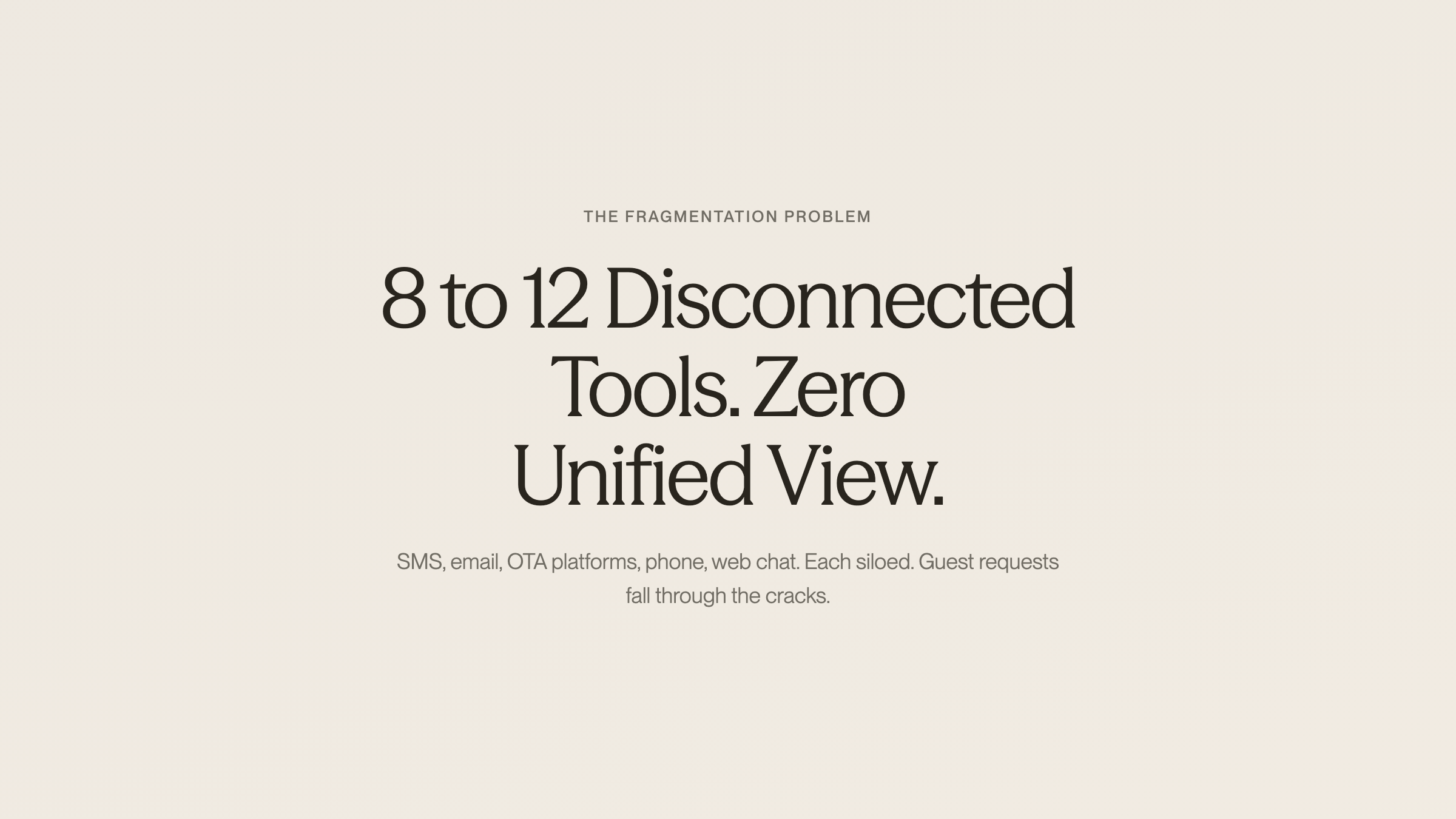
🎯 Key Point: The average hotel uses 8-12 different communication tools that operate in complete isolation, creating information silos that frustrate both guests and staff.
"Disconnected communication systems in hospitality lead to 73% of guest complaints being related to poor coordination between departments." — Hotel Technology Report, 2024
⚠️ Warning: When communication channels don't integrate, critical guest requests can fall through the cracks, leading to negative reviews and lost revenue.
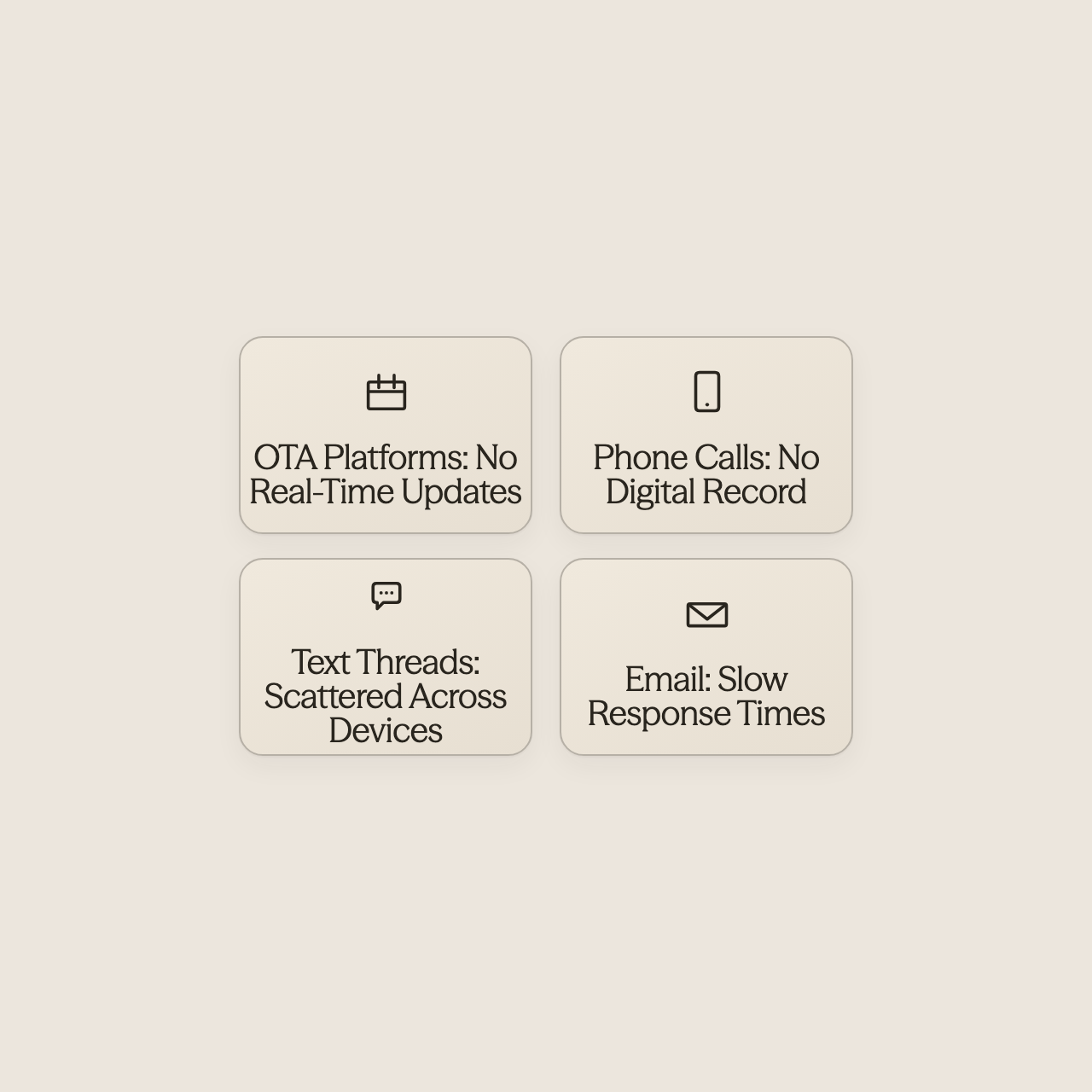
Communication Channel Challenges
- Online booking platforms
- Primary issue: No real-time updates
- Impact on operations: Double bookings, scheduling confusion, and guest dissatisfaction
- Phone calls
- Primary issue: No digital record of conversations
- Impact on operations: Lost requests, inconsistent follow-up, and miscommunication
- Text messages
- Primary issue: Conversations scattered across devices
- Impact on operations: Delayed responses and missed guest messages
- Email
- Primary issue: Slow response times
- Impact on operations: Guest frustration and a poorer overall experience
- Internal radios
- Primary issue: No integration with guest data or operational systems
- Impact on operations: Inefficient coordination and increased error rates
What happens when hotel systems don't communicate?
The Future of Hotel Data Report shows that nearly 50% of hoteliers struggle to access critical data across their systems. Fragmented communication forces staff to switch between tasks rather than serve guests. Housekeeping requests sent through one channel may never reach the intended department. Reservation changes require manual updates across multiple platforms. Guest preferences disconnect from the booking workflow.
How does fragmentation impact peak occupancy periods?
This breakdown becomes most visible when the hotel is full. Stressed staff must check requests across different departments, type information by hand, and monitor multiple channels simultaneously. Response times lengthen, requests fall through gaps between systems, and guests repeat information because no single system tracks conversations across channels.
Why doesn't adding more staff solve communication problems?
Adding more employees to fragmented workflows compounds complexity faster than it resolves communication problems. Staff still switch between incompatible platforms, requests require manual coordination, and structural problems spread across more people without being solved.
How do guest expectations compare to those in other industries?
Today's travelers expect hotels to communicate with them as quickly as banks, stores, ride services, and food delivery apps do. When a hotel's communication is slow or inconsistent, guests notice immediately. Two guests at the same hotel may have completely different experiences based on how they contacted the hotel, which staff member helped them, or how many times their request was transferred.
What solutions address communication fragmentation?
Platforms like AI for hospitality address this by consolidating guest communication across channels into a single operational system. Our AI agents handle routine questions instantly and route complex requests to the appropriate team member, including the full conversation history, reducing fragmentation without replacing your existing technology stack. The real question is not whether hotels need better communication systems, but what those systems must do to meet modern guest expectations without creating operational complexity.
What Hotels Should Evaluate Before Implementing AI Agents
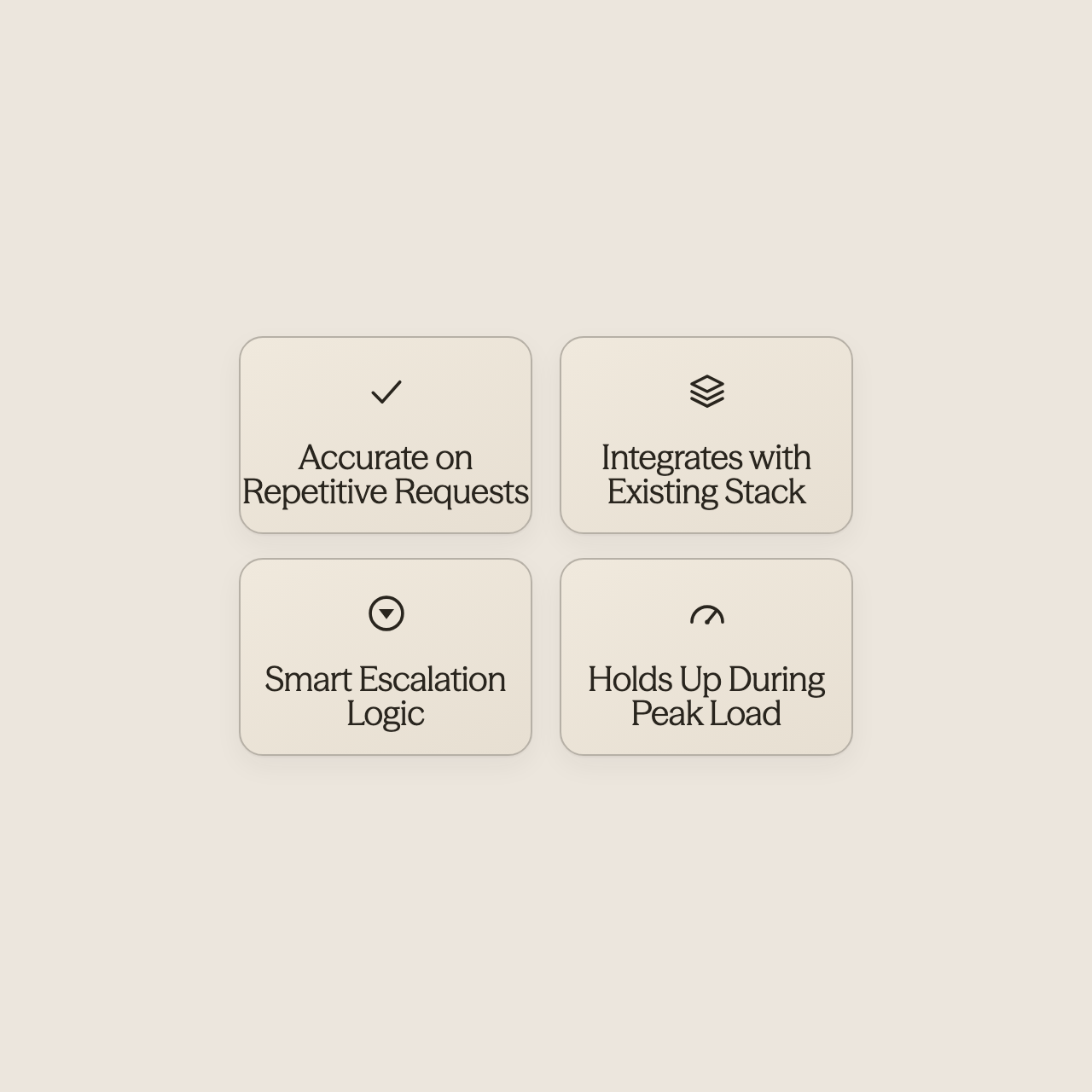
Hotels should consider whether AI agents make their work easier or simply add another tool that doesn't integrate with existing systems. The right system should handle repetitive messages accurately, align with current hotel operations, and know when to escalate to a person. Without these critical abilities, automation creates new problems instead of solving existing ones.
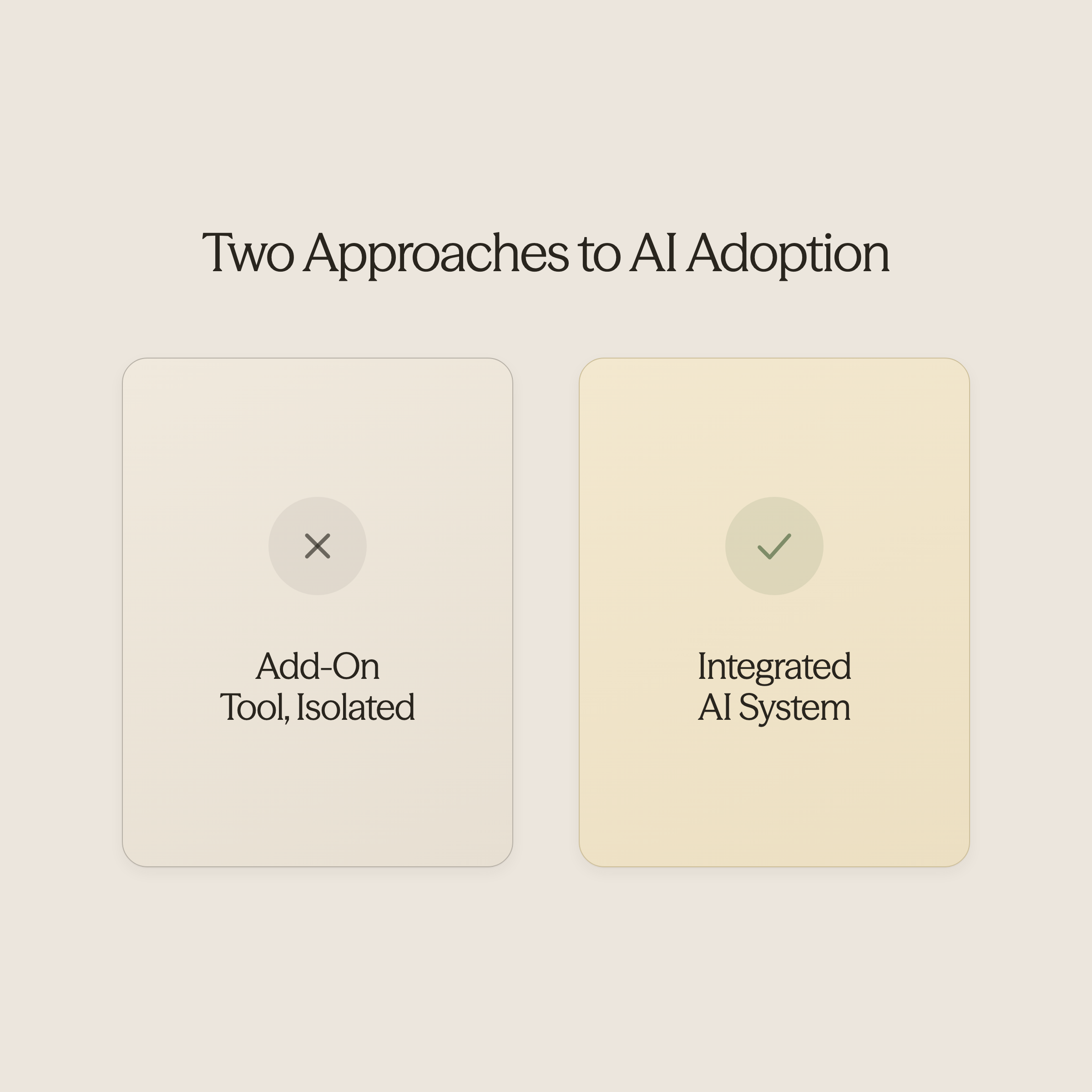
🎯 Key Point: The most successful AI implementations are those that seamlessly integrate with existing hotel operations rather than requiring complete workflow overhauls.
"Effective AI agents must demonstrate the ability to handle routine inquiries while maintaining the intelligence to escalate complex situations to human staff when necessary."
⚠️ Warning: Many hotels rush into AI adoption without properly evaluating whether the technology will actually reduce workload or simply create additional management overhead.
Can the AI Handle Repetitive Guest Requests Accurately?
A large percentage of hotel communication involves the same questions asked in slightly different ways: check-in instructions, Wi-Fi passwords, parking details, amenity hours, and late check-out requests. These recur hundreds of times per week, consuming staff time that could be used to address complex guest needs or to coordinate operations. Accuracy matters more than speed alone. An AI system that provides incorrect room numbers, outdated restaurant hours, or conflicting check-in instructions creates additional workload for staff, who must manually correct mistakes and rebuild guest trust. The goal is reliable communication at scale, not faster responses requiring follow-up corrections.
How do AI agents integrate with existing hotel systems
AI agents become useful for work when they connect directly with property management systems, reservation platforms, and internal workflows rather than functioning as isolated messaging tools. Without integration, staff must manually transfer information between systems, limiting the operational benefits automation should provide.
What workflow coordination capabilities should hotels evaluate?
Hotels should verify that systems integrate across housekeeping schedules, CRM data, guest messaging channels, and operational workflows. According to Hospitality Upgrade's 2025 global study, 78% of hotel chains use AI systems, yet only 7% operate with a complete AI strategy. Most implementations fail because they add technology without addressing the underlying workflow problems that create operational friction.
Can It Escalate Complex Requests Appropriately?
A good AI system recognizes when a request needs human intervention and routes it appropriately. Complaints, billing disputes, VIP guest requests, emotional situations, and unusual operational problems require staff involvement where empathy and judgment are essential. The best AI agents filter out repetitive communication while keeping staff involved in moments that define guest experience. Systems that automate everything or lack clear escalation logic create frustration when automated responses fail to address the situation.
How does AI performance change during high occupancy periods?
One of the biggest operational tests for hotel AI is its performance during high-occupancy periods. Hotels should evaluate whether the system reduces pressure on front desk and guest service teams when dozens of simultaneous requests arrive across multiple channels.
What happens when AI fails to address communication bottlenecks?
If staff spend most of their time manually coordinating repetitive guest communication during busy periods, the AI isn't addressing the actual bottleneck. Systems like Conduit consolidate multi-channel guest messaging in one place and automate routine workflows, allowing hotel teams to handle peak demand without hiring additional staff or sacrificing response quality. The operational question isn't whether AI can handle volume, but whether it can do so while maintaining the hospitality experience guests expect.
Related Reading
- Hotel Automation Tools
- AI Tools For Hotels
- Airbnb Automation Tools
- Guest Communication Tools
- Hotel Chatbot Guide
- Best Hotel Chatbot
- AI Chatbot For Hotels
How Conduit Helps Hotels Automate Guest Communication More Efficiently
Faster response without the friction
Hotel Technology News reports that hotels using AI-powered messaging see a 40% reduction in response time. The advantage becomes clear at scale: when 150 guests message simultaneously about pool hours, parking validation, and late checkout across SMS, email, and OTA platforms, AI agents respond instantly across every channel while your front desk team assists walk-in guests and handles phone calls. Communication workflows no longer depend on staff availability.
Handling the questions that consume your day
Most hotel staff spend hours answering the same questions repeatedly. Hotel Technology News found that automated messaging can handle up to 80% of routine guest questions: Wi-Fi passwords, breakfast times, and checkout procedures. Our Conduit AI agents handle these repetitive requests automatically while routing complex situations (such as billing problems or special requests) to human staff. The system learns your property's specific policies, connects to your PMS for reservation information, and delivers personalized answers that reflect guest details such as loyalty status or room type.
Centralized visibility across fragmented channels
Hotels lose requests because communication spreads across SMS, email, WhatsApp, OTA inboxes, and web chat. Conduit consolidates these channels into one unified system where your team can monitor, override, or intervene when needed. When a guest texts about a maintenance issue while emailing about a reservation change, your team sees both conversations together rather than discovering the conflict hours later across separate inboxes.
Teaching the system, not just deploying it
AI agents improve over time as hotel teams refine responses, streamline workflows, and add automation rules without requiring technical expertise. When guests ask questions the AI cannot answer, staff resolve the issue while teaching the system to handle similar requests in the future. Our Conduit platform treats automation as a learning system that evolves with use, making your communication workflows progressively smarter.
Shifting attention to hospitality that matters
You can see the operational change in how staff spend their time. Before automation, employees switched between systems, repeated answers, and lost focus during busy periods. After implementation, they handle fewer interruptions and focus on meaningful interactions: guest recovery conversations, upselling suite upgrades, and coordinating special requests that require creativity and empathy. Automation removes the repetitive friction that prevents your team from delivering consistent hospitality when guests need it most. But knowing what's possible and seeing it work in your specific operation are two different things.
Related Reading
- Hotel Automation Software
- Best AI for Hotels
- AI Software For Hotels with the Best Reviews
- Airbnb Automated Messages
- Duve Pricing
- Property Management AI Tools
- Enso Connect Pricing
- Hijiffy Pricing
Book a Demo to See Conduit's AI for Hospitality Customer Service in Action
Understanding how AI agents reduce communication overload differs from seeing it in action during your actual guest interactions. A demo shows how Conduit processes the specific requests your team fields daily: simultaneous check-in questions across multiple channels, late check-out requests requiring real-time availability checks. You see the interface your staff will use, response speed, and how escalations flow when human judgment becomes necessary.
🎯 Key Point: Live demos reveal how AI handles your property's unique communication patterns, not theoretical scenarios.

The session focuses on your operation, not a generic pitch. Bring your current bottlenecks: FAQ questions consuming 30% of front desk time, unanswered OTA messages during shift changes, and reservation modifications requiring three systems. Watch how Conduit's AI agents handle them across your guests' preferred channels. You'll see whether the system integrates with your property management platform, how it learns your specific policies, and what percentage of your current workload could shift from manual to automated without sacrificing service quality. Book a demo at Conduit and test whether this approach works for your communication challenges.
"FAQ questions consuming 30% of front desk time represent the biggest opportunity for immediate AI automation impact." — Hospitality Operations Analysis
🔑 Takeaway: Demo sessions using your actual operational challenges provide the clearest picture of potential ROI and workflow improvements.
Stay in the loop
Get the latest on AI automation, product updates, and customer stories.

