How to Manage Airbnb Remotely With Less Stress in 2026


Manage Airbnb Remotely
Manage Airbnb remotely without burnout
The bottleneck killing your remote Airbnb isn't maintenance. It's every guest message that routes through you first. Here's how to build the team and tech stack that handle it without you.
Remote Airbnb management has a reputation problem. Most short-term rental owner-operators think that maintaining quality guest communication when you can't be on-site requires a human being available around the clock, and that automation tools are fine for check-in instructions but can't handle the real, nuanced back-and-forth that guests actually need. Most hosts who struggle with it assume the pain is physical: a cleaner who no-shows, a lockbox that fails, a maintenance crew that won't pick up the phone on a Saturday.
So they invest in smart locks, noise monitors, and scheduling apps. The hardware layer gets tighter. The stress doesn't go away.
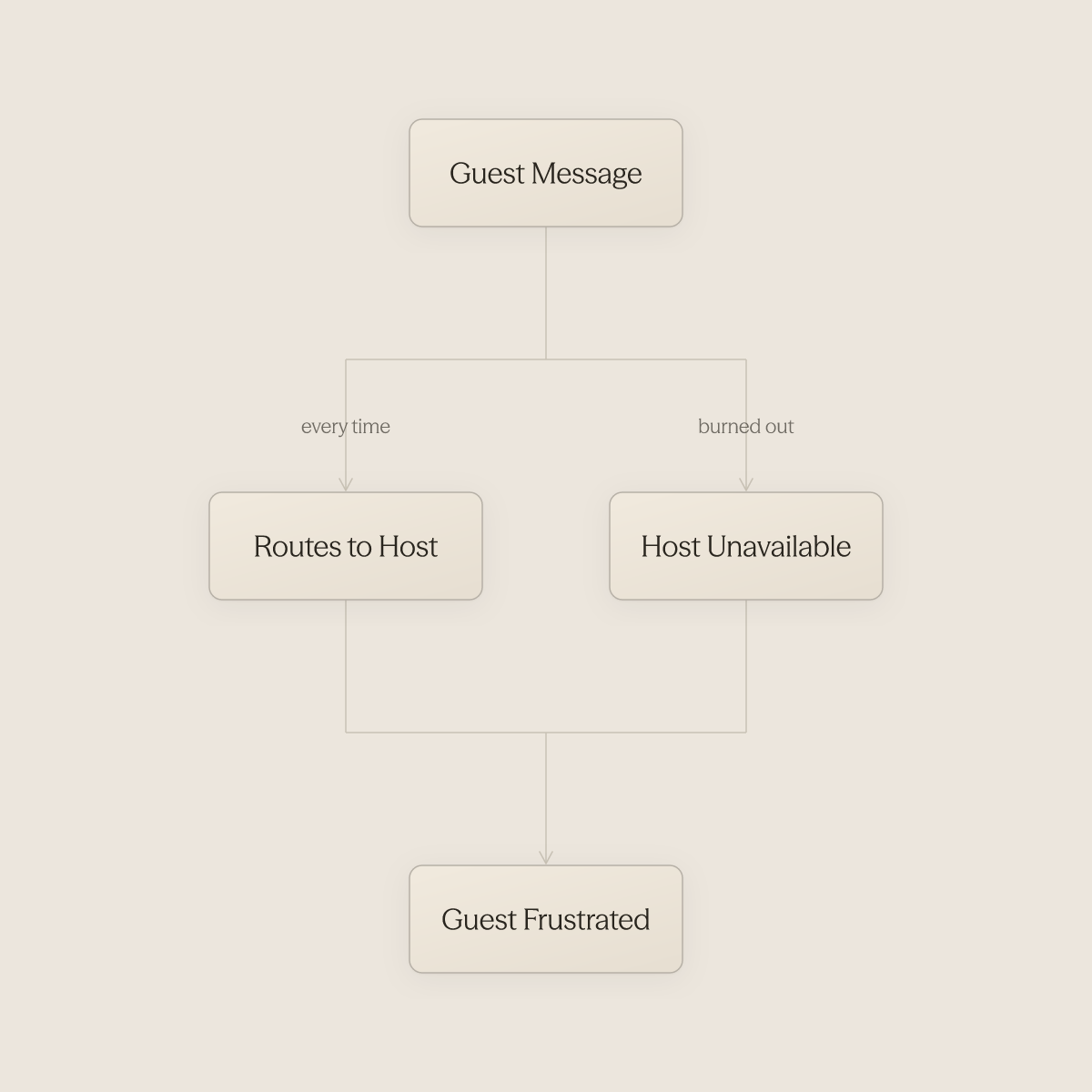
That's because the real friction isn't physical. It's personal. Every guest question, no matter how routine, still routes through the host first.
See our AI for hospitality for how this works in practice.
That routing is the problem, and most hosts don't see it until they're already burned out. The vast majority of inbound guest messages cover a predictable, finite set of topics: check-in timing, Wi-Fi credentials, parking instructions, and checkout procedures. By default, Airbnb's messaging model routes every inbound guest question through the host before the guest receives an answer, a structural constraint built into the platform's design that applies regardless of how routine or repetitive the question is. The host is asleep.
By morning, the guest has found a workaround, left frustrated, and mentally drafted their review. Airbnb tracks response time as a ranking signal, and hosts who miss a pattern of overnight messages risk losing Superhost status, which requires meeting Airbnb's minimum response rate threshold per its official criteria. One missed stretch of overnight coverage doesn't just cost a single booking.
It quietly erodes search visibility over weeks. Scale to ten or fifteen properties and message volume becomes unmanageable without structural help. Hosts who have tried to grow past a certain unit count consistently hit the same wall: communication, not cleaning or maintenance, is the bottleneck that caps how far one person can realistically go.
The stress is architectural, not inevitable, and it can be dismantled layer by layer.
Key takeaways
- Remote Airbnb management breaks down at the communication layer, not the operations layer, smart locks and automated check-in messages don't stop guest questions from routing through a human at 11 PM.
- Erwan Le Roy reached a 96% automation rate across 35 properties by removing himself from the messaging loop entirely, not by refining his cleaning schedule or tightening his handoff process.
- Your local team's real job isn't task execution, it's surfacing property exceptions before guests notice them, which requires treating every ground role as a deliberate information channel.
- Smart home tech earns its place when you treat the full device stack as a passive monitoring layer that flags exceptions, not as a collection of standalone gadgets you check manually.
- Guest screening at scale isn't about perfecting your judgment on every reservation, it's about automating detection of a narrow anomaly profile so high-risk bookings never reach your calendar.
- A conventional remote stack (PMS, digital guidebook, smart locks, reliable cleaner) still leaves a gap: unstructured, unpredictable guest messages that no scheduled automation catches.
- Conduit closes that gap by handling AI-powered guest communication end-to-end, so the questions that fall outside every pre-built template get answered instantly, without a human in the loop.
How to Build a Reliable Local Team for Remote Airbnb Management
Building a reliable local team for remote Airbnb management means treating every role as a deliberate information channel, not just a task executor. The hosts who scale past five or ten properties without burning out have engineered their ground team to surface problems before guests ever notice them, and they've closed the guest communication gap that ground teams alone can never fully cover.
Your Cleaner Is Your Most Valuable Remote Sensor
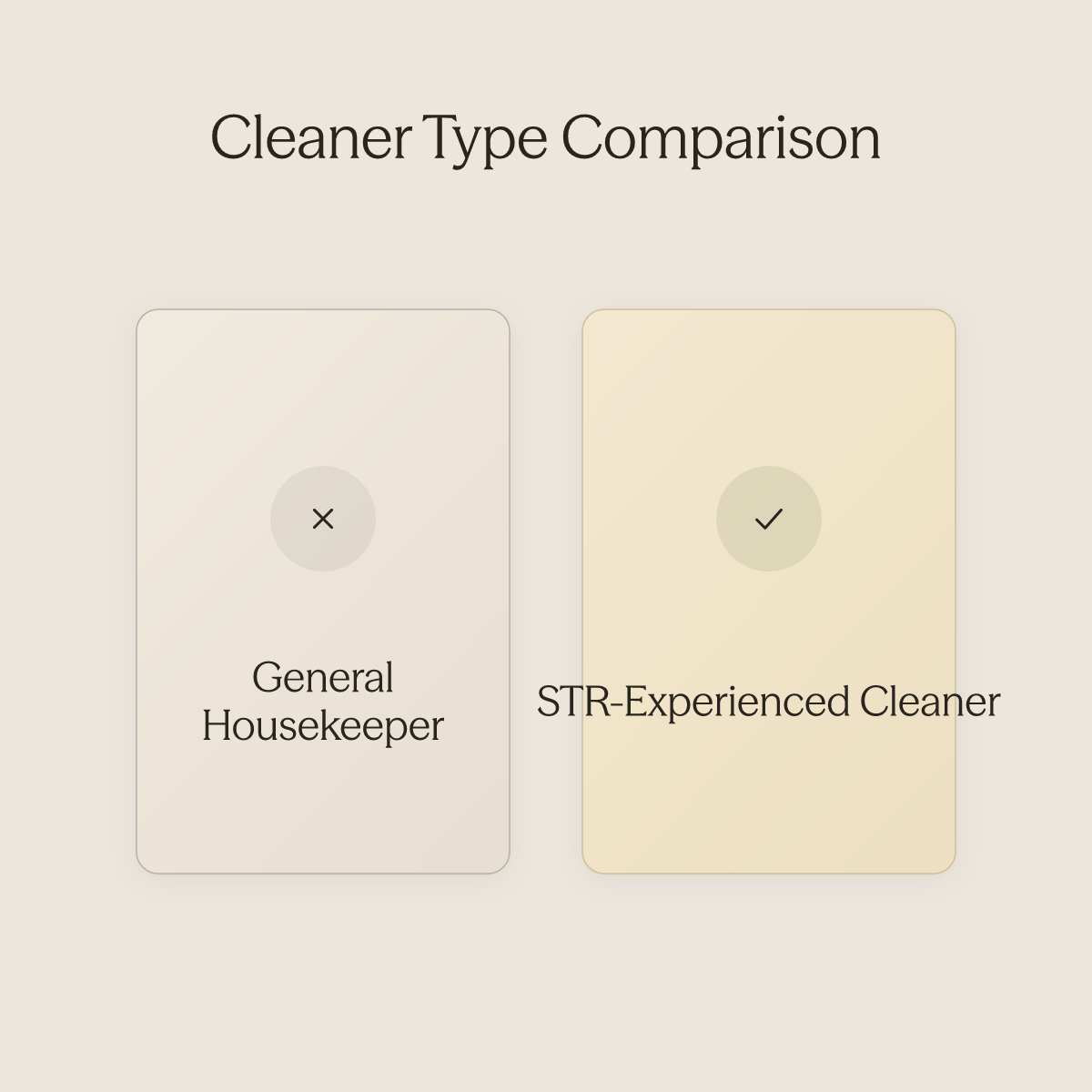
The cleaning team is not merely an operational vendor; it is the remote host's primary intelligence layer. The real risk of cleaner shortages is not dirty units but a loss of the on-site visibility that makes remote management structurally viable, because STR-experienced cleaners are often the only local actors documenting property condition, detecting damage, and flagging unauthorized activity. Hire for STR experience, not just cleaning skill.
A general housekeeper cleans a room; an STR-experienced cleaner documents a property. According to Ready Rental Cleaning, professional vacation rental cleaners are trained to flag damages, detect signs of unauthorized guests, and verify property condition after every turnover, capabilities a standard domestic cleaner is not typically trained or briefed to perform. That documentation is your real-time intelligence feed.
When one in three operators has already lost revenue due to cleaner shortages or contractor issues, a staffing gap doesn't just slow a turnover, it creates a visibility gap that every other remote system depends on to function.
Timestamped Photo Reports After Every Turnover
Require photos after every single clean, not just when something looks wrong. A timestamped photo report confirms the property is guest-ready, creates a condition baseline for damage disputes, and gives you a passive audit trail without a site visit. Turno for automating cleaner schedules builds photo-verified turnover reports directly into the workflow, removing the host from the coordination loop at the turnover layer entirely.
Stock an Owners Closet So Cleaners Can Restock Independently
Keep bulk supplies, toilet paper, towels, coffee pods, dish soap, in a locked cabinet at the property. When a cleaner flags low stock, ship replacements directly via Amazon. Industry data suggests Amazon delivers to the majority of US residential addresses within one to two days, making this a practical same-day or next-day solution for most markets. The goal is a restocking loop that never routes through the host.
Build a Tiered Maintenance Network Before You Need It
A pre-vetted list of a general handyman, a licensed plumber, and an HVAC technician is the difference between a two-hour fix and a guest-facing disaster. Build the list before you need it, set clear authorization limits so contractors can approve minor repairs without prior sign-off, and brief each contractor on your property's access method, your preferred communication channel, and your expectation that they document completed work with a timestamped photo before leaving the site.
Close the Guest Communication Gap Your Ground Team Cannot Fill
Even a well-built local team has a structural blind spot: guest messages. One of the most damaging patterns in remote STR management is a guest contact, whether a local co-host or a property-manager-assigned liaison, who goes completely unresponsive before or during a stay, while messages arrive across Airbnb, Vrbo, and direct booking channels simultaneously.
No human local contact reliably covers all of that without dropping threads, especially across a portfolio of properties. Once trained on your existing SOPs, FAQs, and property manuals, a Conduit AI Agent begins handling guest messages automatically, across all platforms at once, at any hour, without routing every conversation through you or a staff member.
The agent handles the high volume of repetitive pre-arrival, mid-stay, and post-stay questions that would otherwise consume your team's time or go unanswered entirely. Mayra, Global Head of Customer Experience at Wynwood House, put it directly: "The first thing we noticed was the quality of the AI replies. You cannot tell the difference between an AI agent and a human agent. I work with ChatGPT and other AI tools every day, and sometimes you can immediately tell it's AI. With Conduit, we're not seeing that."
The operational model this enables is exactly the goal: a systemized, scalable business that does not depend entirely on owner involvement, where operational overhead and the labor costs of a centralized guest services team are structurally reduced. Your cleaners own the on-site intelligence layer. Your maintenance network owns the physical repair layer.
Conduit's AI Agents, connected to your Airbnb inbox, your Notion SOPs, and your Google Drive documentation, own the guest communication layer 24 hours a day. Conduit's Workflows layer adds a second tier: automated guest touchpoints triggered by booking confirmation, check-in, or specific keywords in a conversation, so recurring guest lifecycle moments are handled without any manual staff action. That is the lean-team architecture that lets a solo operator or a small team run a profitable portfolio without burning out.
What Smart Home Technology Is Essential for Managing an Airbnb Remotely
Smart home management works best when you stop treating each device as a standalone gadget and start treating the whole stack as a passive monitoring layer that removes the need to physically verify your property. The right combination watches continuously, surfaces exceptions only when action is required, and in many cases triggers a response before you ever see an alert.
1. Smart Keypad Locks with Auto-Expiring Guest Codes - Best for Keyless Remote Check-In

Smart locks are the prerequisite hardware layer for any serious remote operation. Devices like the Schlage Encode or August Wi-Fi lock integrate directly with Airbnb to generate unique, time-limited access codes per guest, expiring automatically at checkout. The critical insight most hosts miss: a smart lock does not merely eliminate the key handoff.
It converts your pre-arrival messaging from informational to fully executable, meaning the guest can complete check-in without any human in the loop.
That friction is avoidable. Conduit's AI Agents are trained on your existing SOPs and check-in documentation, they handle those inbound questions automatically, before, during, or after a stay, so your lock instructions never become a support burden. This is especially powerful when you're managing guest communications across multiple properties or platforms simultaneously, where manually fielding the same "how do I get in?" message
across five listings is simply not sustainable. The one real tradeoff is Wi-Fi dependency, a router outage during check-in is among the most frequently cited smart lock failure points for remote operators. Build a backup PIN into your guest instructions and test connectivity monthly.
For a deeper look at how leading locks compare on integration and reliability, AirDNA's guide to the best smart locks for Airbnb hosts is a practical starting reference.
2. Smart Noise Monitors - Best for Preventing Unauthorized Parties Remotely
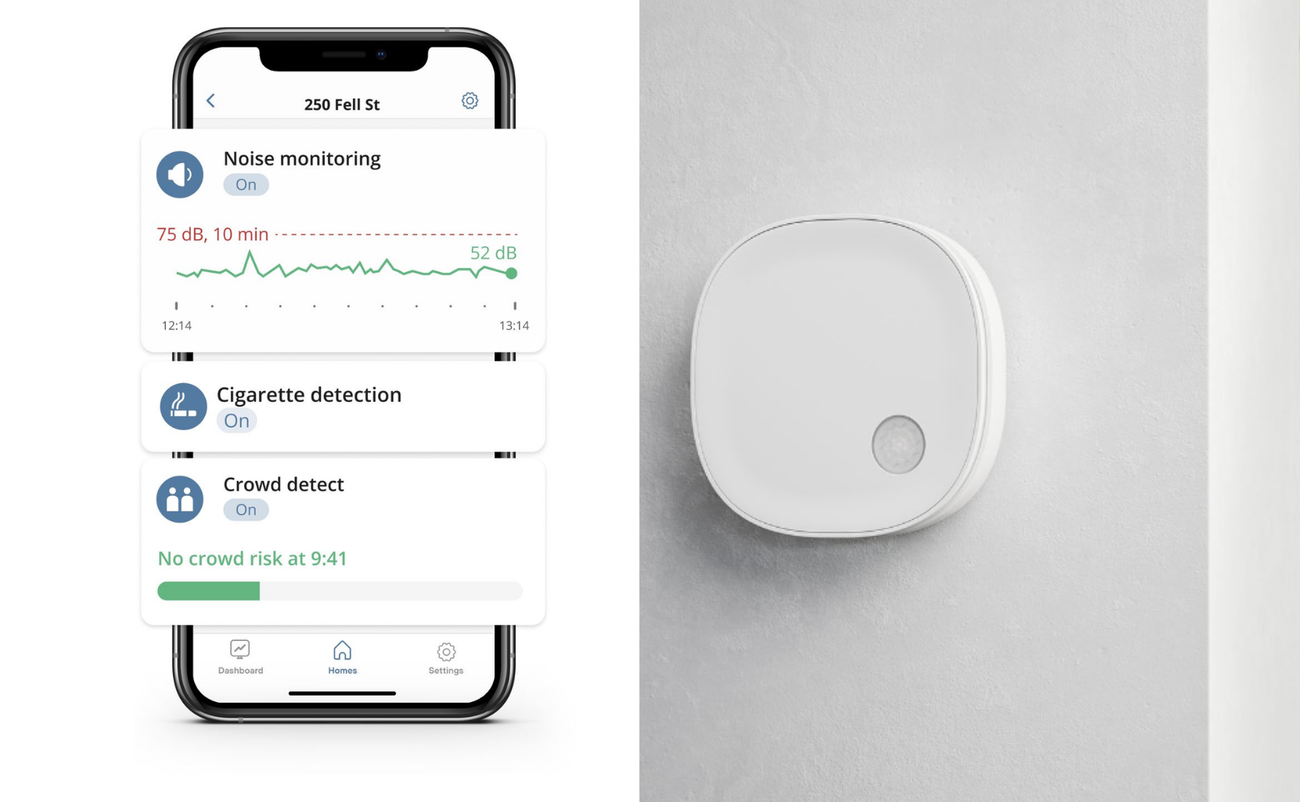
A smart noise monitor lets you send a proactive message before a neighbor complaint is filed, that is the entire value proposition. For context, unauthorized parties cause an average of $1,560 in damages per incident, with some cases reaching $5,000 to $25,000, making the monitoring investment easy to justify on risk reduction alone.
The harder problem is what happens when these devices go offline mid-stay. A noise monitor that drops off your network during a Friday-night booking leaves you blind to exactly the scenario it was purchased to prevent, and you won't know it failed until morning. Redundant connectivity (a cellular backup router or a secondary device on a separate network band) meaningfully reduces that exposure.
Conduit's Inbox consolidates guest communications across platforms so you can send a measured, well-timed message from a single interface rather than scrambling across tabs. The honest tradeoff on noise monitoring: false positives are real. Hosts who respond to every spike with a warning message report frustrated guests and defensive reviews.
Set thresholds conservatively and use the data to inform a message, not fire one automatically.
3. Smart Thermostats with Remote Temperature Control - Best for Energy Cost Management
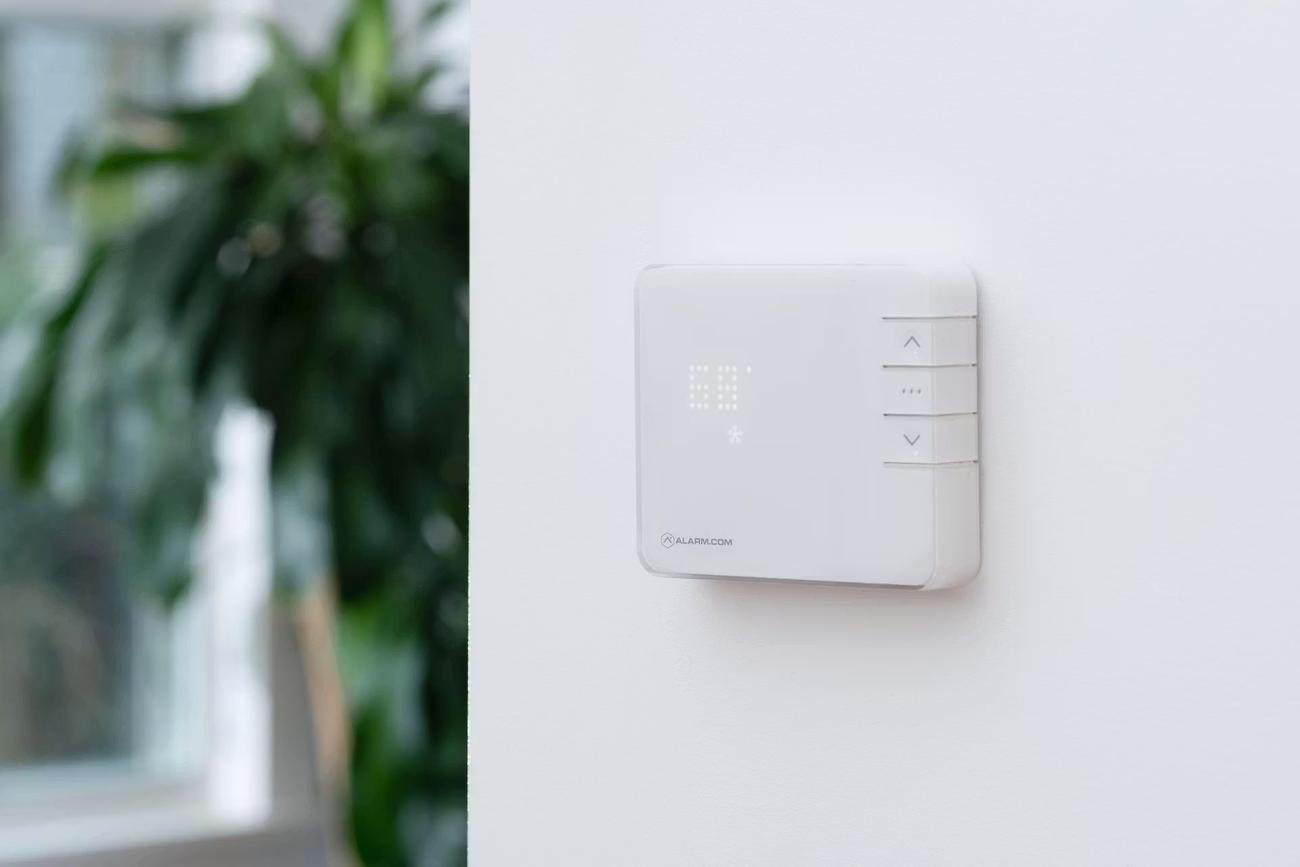
A remotely controlled thermostat solves two problems simultaneously: guests who crank the heat and leave windows open, and properties sitting at full climate load between stays. Remotely controlled thermostats prevent guests from leaving climate systems running at full load between stays, a meaningful source of ongoing energy savings, particularly for vacation rentals with longer vacancy periods.
4. Outdoor Security Cameras at Entry Points - Best for Remote Property Monitoring
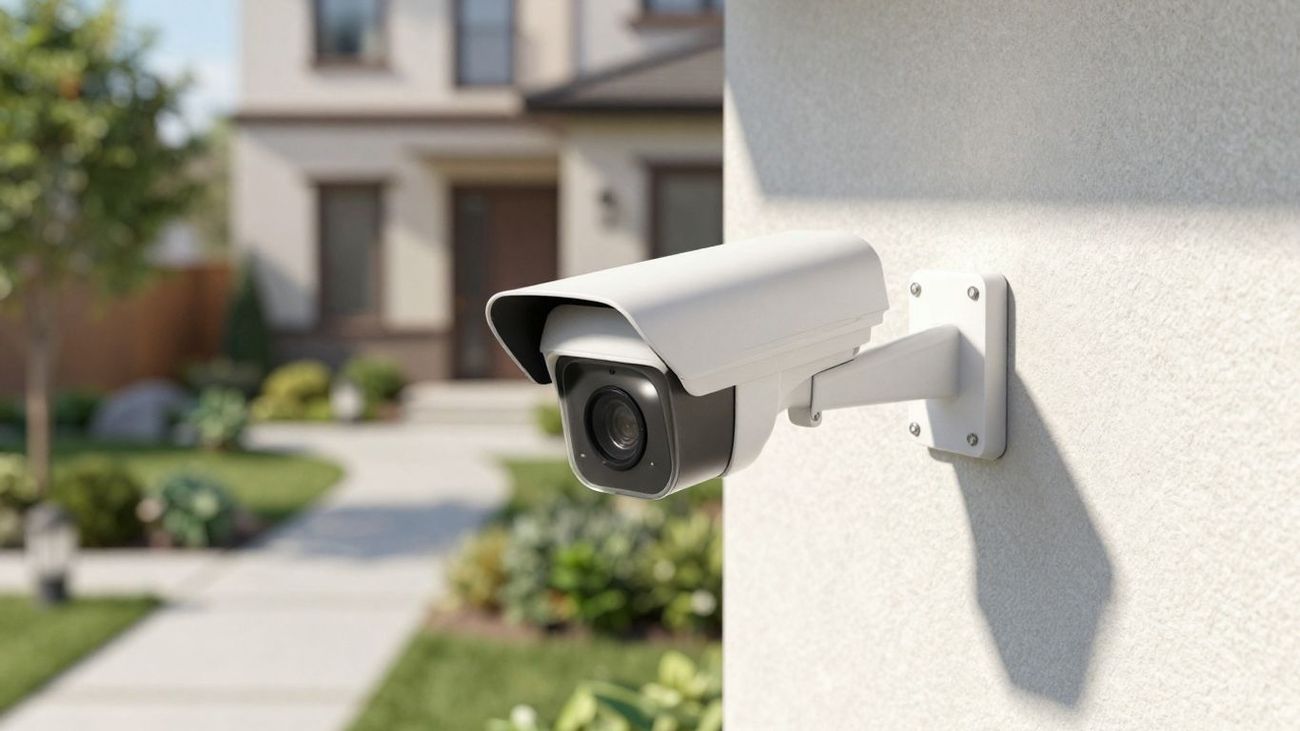
Security cameras at entrance points give you a reliable record of arrival times and guest count without requiring anyone on-site. Airbnb's host guidelines permit exterior cameras at entry points provided they are disclosed in the listing, disclose every device in your listing description and confirm placement covers only common entry areas, not interior spaces, to stay within platform policy and maintain guest trust.
5. Smart Smoke and CO Detectors - Best for Remote Safety Compliance and Liability Protection
Smart smoke and carbon monoxide alarms like the Kidde Smart Smoke + CO Alarm send instant push notifications to remote hosts when triggered, enabling rapid coordination with local emergency contacts even when no one is on-site. Essential for hosts in jurisdictions requiring CO detectors and for those seeking to reduce liability exposure. Integrates with smart home hubs for centralized monitoring. Tradeoff: monthly or annual subscription fees apply for full remote alert functionality on some models.
How to Screen Guests and Maintain Security When Managing Remotely
Screening guests remotely is not about building an airtight judgment process for every reservation. It is about automating the detection of a narrow, identifiable anomaly profile so the small fraction of genuinely high-risk bookings never reaches your calendar in the first place. The core synthesis here is counterintuitive but data-supported: Airbnb's algorithmic pre-screening is already doing the heavy lifting, and most hosts are unknowingly depending on it as their primary risk layer while believing the burden of screening falls on their own manual judgment. The correct response is not to screen harder or more personally, but to automate the detection of the specific anomaly profiles that slip through that system, and to have a communication layer running continuously so nothing falls through the cracks when you are not watching.
Use Airbnb's Built-In Verification Filters as Your First Gate, Not Your Only One
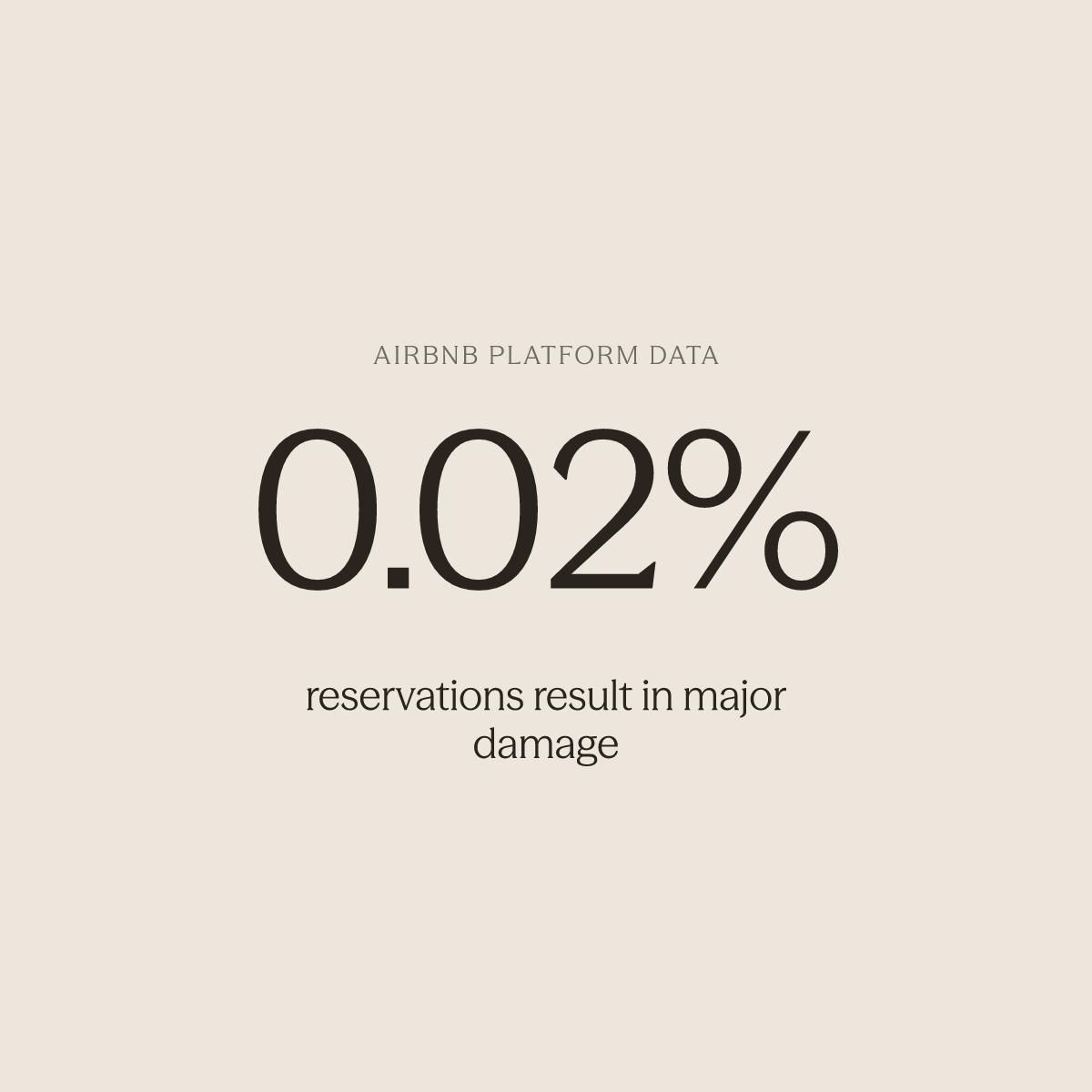
Airbnb's own platform data shows that only 0.02% of reservations globally result in property damage reimbursement of $1,000 or more. That figure is proof that the platform's algorithmic pre-screening already filters out the overwhelming majority of high-risk guests before they reach your listing, meaning most operators are absorbing residual risk with no secondary layer in place.
One friction point that compounds this exposure: Airbnb withholds guest contact information until a booking is confirmed, making it structurally impossible to initiate any meaningful background check before you are already locked into the reservation. That window, between inquiry and confirmation, is where your screening has to happen, and it has to happen fast. Enable Instant Book only for guests with verified government ID and at least three positive reviews.
That single setting handles the bulk of your screening without a single judgment call on your part, and it closes the exposure window before it opens.
The Profile Signals That Predict a High-Risk Booking Before You Accept It
02% of reservations globally result in property damage reimbur
When a reservation request lands outside your Instant Book criteria, the profile tells you almost everything within 60 seconds. No profile photo, a blank bio, zero prior reviews, and a vague trip purpose are the four signals that cluster most consistently around problem stays. Screen for all four in combination rather than treating any one as disqualifying on its own.
Last-minute bookings sharpen this urgency considerably. A same-day request arriving late at night, paired with unresponsive or one-line communication, compresses the vetting window to near zero, which is exactly the condition high-risk guests rely on. The absence of a review history is not a dealbreaker for a first-time guest; the absence of a review history combined with a same-day request and a one-line message is a signal cluster worth a brief, friendly follow-up question before you accept.
Ask about the purpose of the trip and let the quality of the reply, not just its content, inform your decision. For hosts managing multiple properties or listings across more than one platform, maintaining that response discipline on every inquiry, at all hours, is where the process breaks down in practice. AI Agents are designed specifically for this: once trained on your existing SOPs and house rules, the agent handles the first automated guest reply and keeps the conversation moving, so a late-night inquiry from an unverified guest gets an immediate, consistent response that buys you time to review the profile rather than forcing a rushed accept-or-decline.
AI Inbox consolidates those conversations across platforms into a single view, which matters most when you are monitoring communications across multiple properties simultaneously and cannot afford to miss a signal buried in a second inbox. Workflows extend this further, triggered automatically after a booking is confirmed or when a specific keyword appears in a message, so your follow-up screening questions go out without manual action on your part at every step.
How to Automate Guest Communication and Messaging for Remote Airbnb Management
Guest messaging looks like a communication problem, but it is actually a volume and pattern problem, and that distinction changes everything about how you solve it. The recurring questions guests ask across pre-arrival, mid-stay, and post-checkout follow predictable clusters, which means the right fix is not more human availability but a structured approach to identifying those patterns and automating responses to them. Get this right and the message volume requiring genuine judgment shrinks to something any remote host can handle, review scores improve, and your inbox stops being a source of burnout.
Automate Guest Communication for Remote Airbnb Management
The cumulative time cost of guest messaging is not a complexity problem. It is a volume and pattern-repetition problem that operators are misdiagnosing as requiring more human availability. Hosts who manage even a handful of listings manually discover quickly that messaging volume doesn't scale with effort, it outpaces it. Response times slip before you notice, missed handoffs between guests and cleaners compound into bad reviews, and the inbox becomes a source of burnout rather than a business asset.
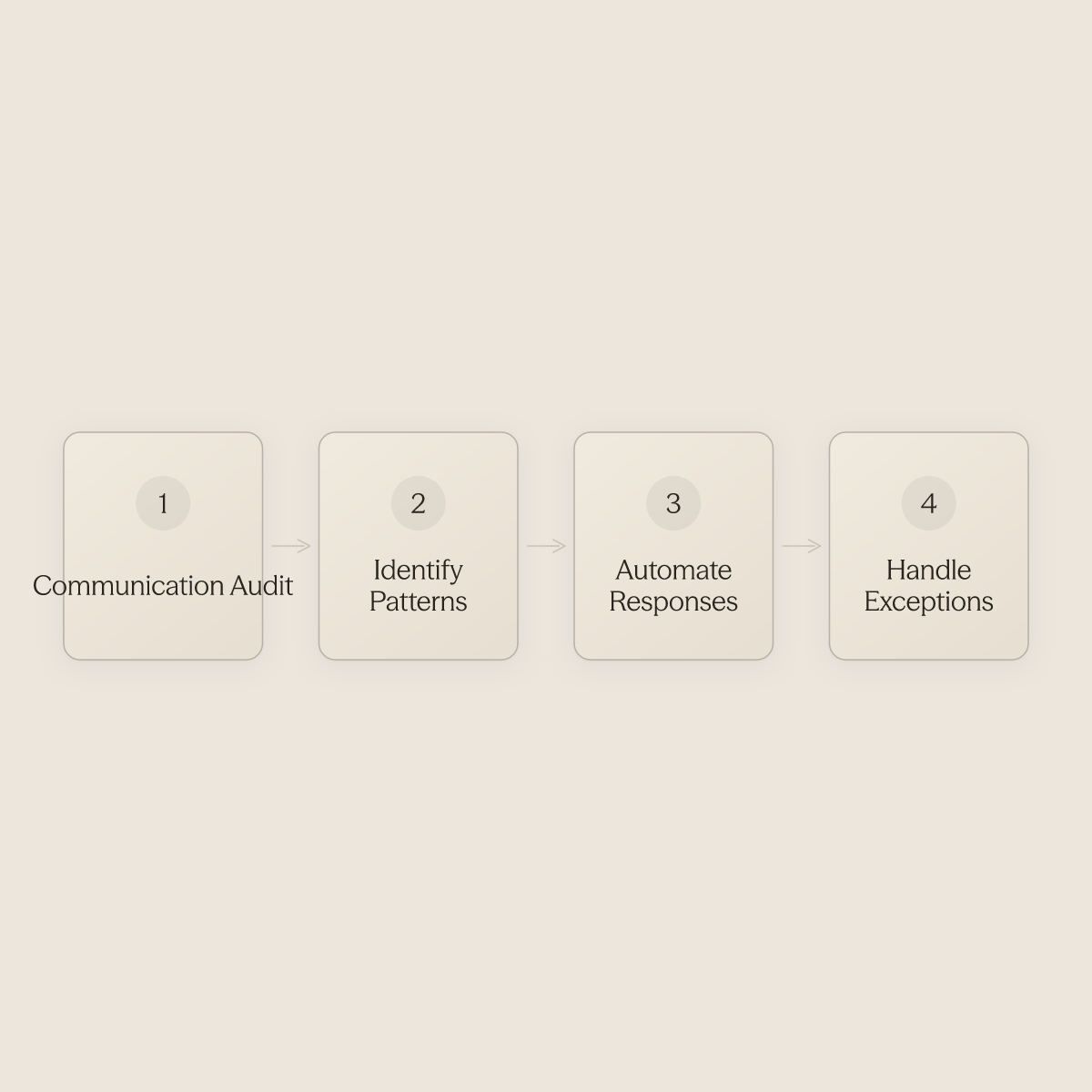
The evidence is clear: message volume across all three stay phases (pre-arrival, mid-stay, post-checkout) is driven by a finite, predictable set of recurring question clusters, which means the correct intervention is not better human coverage but a communication audit that quantifies the repeating patterns. Once those clusters are templated and automated, the residual message volume requiring genuine human judgment collapses to a fraction that any remote host can handle asynchronously. As Darren, Founder of Easy BnB / Bali Luxury Stays, puts it directly: "We all agree that AI first is the best approach." That framing matters, not as a technology preference, but as an operational principle.
When the first response to every guest message is intelligent and immediate, review scores improve, brand voice stays consistent across every property, and the host's time is protected for the decisions that actually require judgment. Conduit approaches this across four distinct layers, AI Agents, Workflows, an Inbox, and Integrations, each handling a distinct layer of the guest journey. Together they eliminate the majority of repetitive, time-triggered tasks that otherwise drain hours from a host's week.
What the stack is also built to handle is the real-time, context-specific conversations that static tools cannot, because the burnout that comes from manual messaging at scale is precisely where AI intervention closes the gap.
AI Agents - Handling High-Volume, Repetitive Messaging Before You Ever See It
"I experience burnout managing my rental properties without automation, manual guest communication is a significant source of stress and fatigue."
Manual guest messaging becomes a bottleneck the moment a second listing goes live. By the time a host manages three or four properties across platforms, response times slip, messages fall through the cracks, and guests feel it in ways that show up in review scores. AI Agents are most beneficial when the business receives a high volume of repetitive guest or customer messages and has existing documentation, SOPs, FAQs, property manuals, to train the agent on.
The agent goes live and delivers its first automated guest reply within days of connecting those materials. From that point forward, it runs continuously, before, during, and after every stay, responding whenever a guest sends a message, without manual intervention. The practical impact is threefold: guest experience improves through timely, consistent replies at every hour; communication quality and brand voice are standardized across a distributed portfolio without requiring a human to maintain that standard on every exchange; and the time hosts previously spent on repetitive, manual messaging tasks is recovered and redirected.
Hosts managing guest communication at scale consistently find that messaging volume, left unautomated, becomes the primary driver of operational burnout, and that the solution is not hiring faster but automating earlier.
Workflows - Covering the Predictable Moments Without Manual Triggers
Every guest stay contains the same sequence of touchpoints: booking confirmation, pre-arrival instructions, check-in details, a mid-stay check-in, and a checkout reminder. These are not unique conversations, they are recurring, predictable events that currently require manual staff action only because no trigger has been set to handle them automatically. Workflows fire after a trigger event occurs in a conversation or guest lifecycle:
- After a booking is confirmed
- After check-in
- When a specific keyword is detected in a message
Set them once and they execute without touching the inbox. Operators running full scheduled-sequence automation consistently report that the large majority of routine guest messages, check-in instructions, Wi-Fi details, checkout reminders, are resolved without any manual reply. That figure holds only when sequences are built around the questions guests actually ask most, not generic templates.
Workflows are most beneficial when the business has recurring, predictable guest touchpoints that currently require manual staff action, which describes every short-term rental operation running more than one listing.
Integrations - Connecting the Tools You Already Use
A guidebook, an SOP document, a Notion wiki, hosts who have already invested in building their property knowledge base shouldn't have to re-enter it into a separate system to make it useful. Integrations are most beneficial when the business already uses tools like Notion, Google Drive, or Airbnb and wants the AI agent to leverage existing content without manual re-entry. The agent pulls from those sources directly, which means the knowledge base that already exists becomes the foundation for automated guest replies, without duplication of effort. The limitation is consistent with any static resource: the agent's answers are only as current and complete as the documentation it is trained on, which makes maintaining those source documents an ongoing operational responsibility.
The Inbox - One View Across Every Platform, With AI Already in the Loop
As listing volume grows, so does platform fragmentation. Messages arrive from Airbnb, Vrbo, and direct booking channels simultaneously, and managing them across separate inboxes is where coordination errors, missed messages, inconsistent replies, dropped handoffs between guests and cleaners, become most costly. A unified Inbox consolidates all of those conversations into a single interface and is most beneficial when managing guest communications across multiple platforms or properties simultaneously.
Critically, it is not simply a message aggregator. It is the interface through which the operations or support team monitors, reviews, and manages all conversations the AI agent is already handling on an ongoing basis. The human is not removed from the loop; they are elevated within it, reviewing and intervening where genuine judgment is required rather than spending time on messages the agent has already resolved. The structural cost of managing that volume without a unified, automated layer is not just inefficiency, it is a measurable source of host burnout and error that compounds with every additional property added to the portfolio.
Related Reading
- How To Automate Airbnb Business
- Vrbo Management
- Airbnb Self Check In
- Vacation Rental Automation
- Best Apps For Short Term Rentals
- Best Pms For Airbnb
- Best Pms For Short Term Rentals
- Best Accounting Software For Short Term Rentals
- How To Manage A Vacation Rental Property
- Vrbo Smart Pricing
The Missing Layer - Why the Real Frontier of Remote Management Is AI Guest Communication
Imagine you have built the full conventional stack: smart locks, a reliable cleaner, a PMS that fires off check-in instructions automatically, and a digital guidebook that answers the most common questions before guests even ask. By every reasonable measure, you are a well-organized remote host. And yet at 11 PM on a Tuesday, a guest messages asking whether the parking spot by the side gate is theirs or shared with the neighbor.
No template covers it. Your phone buzzes. You answer.
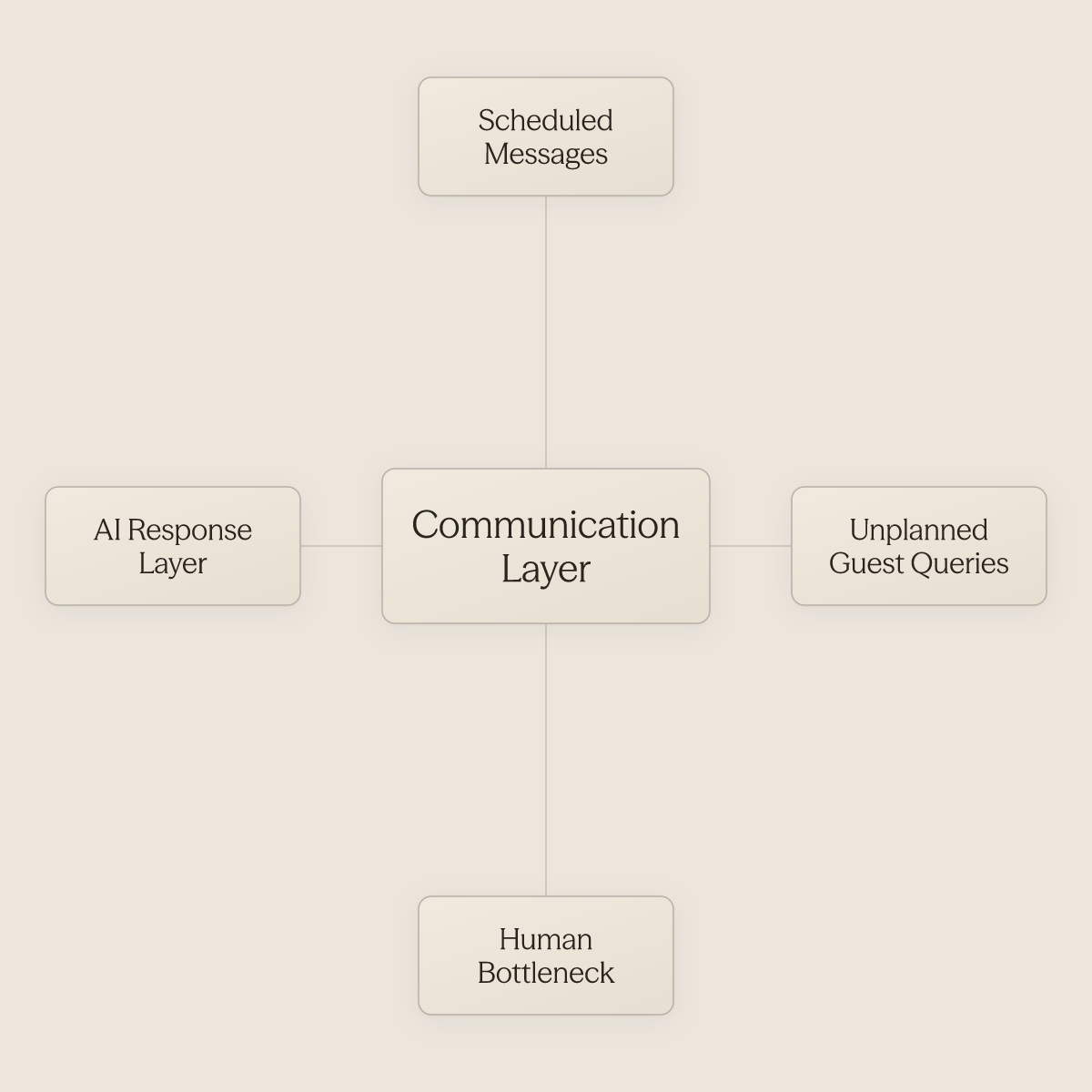
This moment, repeated across every booking and every property, is the invisible ceiling on how far you can actually scale.
The Chokepoint No Checklist Can Fix
Scheduled messages handle the predictable arc of a stay: confirmation, check-in instructions, mid-stay check-in, checkout reminder. What they cannot handle is the guest who messages at 6 AM asking if the coffee maker takes pods or grounds, or the one whose flight moved and wants early checkout. These are not edge cases.
In practice, guests generate messages throughout their stay that arrive outside any scheduled-message window, many touching on questions no pre-written template anticipates. Every one of them routes to a human first. That single structural fact is what caps portfolio size, not the number of properties you manage.
Operators who report the highest automation rates consistently describe the same sequencing: they restructured their communication layer first, before refining other operational systems, a finding that directly inverts the conventional belief that a host must build a perfect on-site infrastructure before trusting automation with guest conversations. Put plainly: deploying an AI coordination layer is not the reward for operational maturity; it is the founding structural decision that makes scaling to that maturity possible without proportional human cost.
What a 96% Automation Rate Actually Looks Like in Practice
Erwan Le Roy, operating under the Cash Flow Street brand across 35 properties, reached a 96% automation rate not by perfecting his cleaning protocols or upgrading his smart home hardware, but by structurally removing himself as the first stop in the guest communication loop, freeing his attention for the small fraction of conversations that genuinely require a human decision. Le Roy has documented that the decision to remove himself from the guest communication loop came before other operational refinements, not after, a sequencing that directly challenges the conventional wisdom that automation is a reward for having everything else figured out first. Le Roy's result is the clearest available proof that deploying an AI communication layer is a founding structural decision, not a reward for having everything else figured out first.
The Proof That Automation Doesn't Degrade Guest Experience
A common objection is that automated replies will feel robotic and quietly cost hosts reviews. Cascadia Getaways ran at 60% automation and maintained a 4.9 communications score, the kind of rating most hosts work years to achieve manually. Mayra, Global Head of Customer Experience at Wynwood House, put it plainly: "You cannot tell the difference between an AI agent and a human agent", a statement made in the context of Wynwood House's operations spanning seven countries, where message resolution time dropped from 15 minutes to 3 minutes using an AI communication layer. That is an operational observation backed by a measurable guest satisfaction outcome, not a marketing assertion.
How the AI Coordination Layer Sits Above Your PMS and Smart Home Hardware
The right mental model is layering, not replacement. Your PMS still manages reservations and triggers scheduled messages. Your smart locks still issue unique access codes. AI for hospitality platforms like Conduit sit above all of that, handling real-time conversational messages that fall outside every rule your PMS was built to cover. Airbnb's own platform design, which routes every message through the host as a hard manual bottleneck, means that hosts who have not yet deployed an AI coordination layer are not managing a communication system so much as absorbing one, personally, message by message, at whatever hour the guest happens to send it.
Next steps
If you still absorb every guest message personally, the path forward starts with recognizing that guest communication is a routing problem, not a staffing problem. The moment you stop being the first stop for every inbound question, the system can scale without you. Start with our AI for hospitality.
Erwan Le Roy's 96% automation rate came from removing himself from the communication loop before refining anything else, which means the AI coordination layer is the founding structural decision, not a reward for getting everything else right first. Cascadia Getaways maintained a 4.9 communications score at 60% automation, which means quality does not degrade when the right layer handles the volume. Together, they point to one concrete action: deploy an AI communication layer now, not after the local team is perfect or the smart home stack is complete.
Start with AI for hospitality from Conduit. Connect your existing SOPs, FAQs, and property documentation, and the agent begins handling guest conversations across every platform, at every hour, within days.
Frequently Asked Questions
What's the real bottleneck when managing multiple Airbnb properties remotely, cleaning or communication?
Communication, not cleaning or maintenance, is the bottleneck that caps how far one person can realistically go. Hosts who scale past a certain unit count consistently hit the same wall: every inbound guest message, no matter how routine, still routes through the host by default, and at volume across ten or fifteen properties, that becomes unmanageable without structural help.
How do I screen guests effectively when I can't meet them in person?
Enable Instant Book only for guests with verified government ID and at least three positive reviews, that single setting handles the bulk of your screening without a single judgment call. For requests that fall outside those criteria, look for the combination of no profile photo, a blank bio, zero prior reviews, and a vague trip purpose, and pay extra attention to same-day requests arriving late at night paired with one-line communication, as that signal cluster is what high-risk guests rely on.
Will a smart lock actually let guests check in without me being available?
Yes, devices like the Schlage Encode or August Wi-Fi lock integrate directly with Airbnb to generate unique, time-limited access codes per guest that expire automatically at checkout, converting check-in into a fully self-contained process with no human in the loop. The one real tradeoff is Wi-Fi dependency, so you should build a backup PIN into your guest instructions and test connectivity monthly.
What are the biggest risks of having a local co-host or contact handle guest communication?
The post identifies a clear structural blind spot: even a well-built local team cannot reliably cover guest messages across all hours and platforms. A local contact who goes unresponsive before or during a stay, especially across Airbnb, Vrbo, and direct booking channels simultaneously, drops threads that damage the guest experience, and no human local contact can cover that gap without support.
How do I handle emergency maintenance issues when I'm not on-site?
Build a pre-vetted tiered maintenance network, a general handyman, a licensed plumber, and an HVAC technician, before you need it. Set clear authorization limits so contractors can approve minor repairs without prior sign-off, brief each contractor on your property's access method and preferred communication channel, and require a timestamped photo documenting completed work before they leave the site.
Stay in the loop
Get the latest on AI automation, product updates, and customer stories.

