Hotel Budgeting and Forecasting: How to Improve Profitability


Hotel Budgeting and Forecasting
Hotel budgeting done right boost profit
Managing a hotel's finances is harder than it looks. Fluctuating occupancy rates, seasonal demand shifts, and rising operational costs can stretch even experienced hoteliers thin, leaving actual revenue consistently drifting from projected budgets.
Understanding the principles behind effective hotel budgeting and forecasting gives operators a real edge, especially as the gap between gut instinct and data-driven decision-making continues to widen.
Rather than manually tracking cost control metrics or guessing at future room demand, smart tools now help hotel managers build accurate financial forecasts, catch budget variances early, and make better pricing decisions using real data.
The result is less time buried in spreadsheets and more time running a stronger operation. Conduit brings this capability directly to hospitality teams through AI for hospitality.
Table of Contents
- Why Hotel Budgeting and Forecasting Have Become More Difficult
- What Is Hotel Budgeting and Forecasting?
- The Data That Drives Accurate Hotel Forecasts
- Common Hotel Budgeting and Forecasting Challenges
- 5 Best Practices for Improving Hotel Budgeting and Forecasting
- How Conduit Helps Hotels Forecast Demand and Operate More Efficiently
- Book a Demo to See Conduit's AI for Hospitality Customer Service in Action
Why Hotel Budgeting and Forecasting Have Become More Difficult
Compressed booking windows have made historical data less reliable as a primary forecasting tool. Travelers now make decisions closer to their arrival dates, creating structural blind spots in models built for a world where guests planned further ahead.
When three of the top five cost drivers (cost of goods, labor, and fluctuating demand) are volatile simultaneously, a budget built in January can feel disconnected from reality by March, a pattern confirmed by a 2026 industry survey in which 71% of hotel owners cited cost of goods as their biggest financial pressure.
Labor forecasting sits at the center of this challenge in ways that compound quickly. According to a 2025 American Hotel and Lodging Association survey, 65% of hotels reported ongoing staffing shortages, with employment in many markets still below pre-pandemic levels. Overestimating labor needs drives up payroll costs, while underestimating them degrades guest service and accelerates staff burnout. There is no comfortable middle ground when the labor pool itself is unreliable.
Hotels that use data-driven forecasting see up to 10% improvement in RevPAR, according to Duetto and Cloudbeds' 2025 Traveller Trends and Hotel Profitability Insights. That improvement reflects a specific advantage: combining structured historical baselines with real-time demand signals to catch what pure pattern-matching misses.
Global hotel occupancy averaged around 66% in 2024, according to EHL Hospitality Insights, but that aggregate figure masks significant variance by market, segment, and season, and that variance is precisely where forecasting accuracy either earns its value or exposes its limits.
The most underused forecasting inputs are the ones closest to the guest. Communication volume, upgrade requests, late-checkout inquiries, and extension patterns are all early indicators of both revenue opportunities and operational pressure. A spike in upgrade requests two weeks before arrival is simultaneously a revenue, staffing, housekeeping, and pricing signal. Traditional models built around PMS exports and monthly revenue summaries rarely capture any of it, which means the opportunity to act has often already narrowed by the time the data surfaces.
Ancillary revenue forecasting is consistently underestimated, and the gap between high and low performance often comes down to timing. According to the Oaky Blog, upselling can increase hotel revenue by 10 to 30% per guest. That wide range reflects how much the outcome depends on when signals are captured. Hotels that treat pre-arrival communication, dining reservations, and amenity requests as forecasting inputs are reading demand before it appears in a financial report, giving them a meaningful window to act.
With hotel occupancy projected to reach 63.5% in 2025, according to Dragonfly Strategists, the margin for forecasting error is tightening across the industry. At that occupancy level, the properties that outperform are not necessarily the ones with the highest rates. They are the ones whose operational visibility is sufficiently current to act on small shifts before they become costly.
The failure point in most forecasting processes is not the data itself but the lag between when information exists and when it reaches the person who needs to act on it. AI for hospitality addresses this lag by continuously monitoring guest communication patterns, service request volume, and booking behavior, feeding those signals into the same systems finance and operations teams already use rather than requiring a separate workflow.
The Shift from Predictable to Volatile
Hotel budgeting and forecasting used to be straightforward: adjust last year's numbers for known variables. That model worked when demand was predictable, costs moved gradually, and guests behaved consistently. None of those conditions reliably exist anymore.
"Those models were built for a world where guests planned further ahead — a world that no longer exists."
— Hospitality Analysts, MyLighthouse
Warning: Hotels relying on legacy budgeting models risk systematic forecasting errors that compound across every revenue and cost decision.
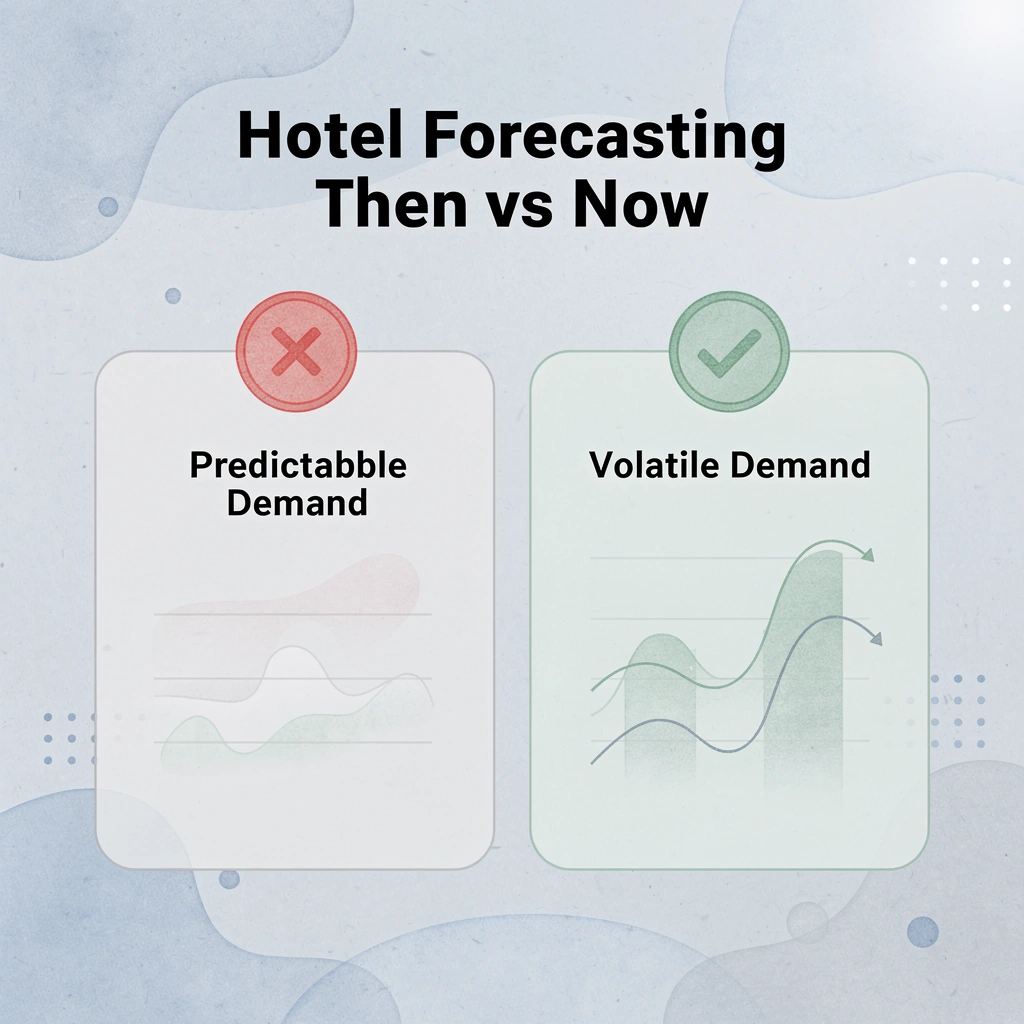
Booking behavior has shifted in ways that make historical data far less useful for forecasting. Travelers now decide closer to arrival dates, compressing the window hotels have to anticipate occupancy and price accordingly. Hospitality analysts at MyLighthouse have noted that compressed booking windows create structural blind spots in traditional forecasting models because those models were built for a world where guests planned further ahead.
Tip: To counter compressed booking windows, hotels should layer in real-time demand signals alongside historical data — not rely on either source alone.
| Traditional Forecasting Assumption | Current Market Reality |
|---|---|
| Guests book weeks or months ahead | Travelers decide closer to arrival |
| Historical data is highly predictive | Compressed windows reduce its reliability |
| Demand moves gradually | Demand shifts are rapid and unpredictable |
| Costs are stable year-over-year | Cost volatility is now the norm |
🎯 Key Point: The core challenge isn't just that forecasting is harder — it's that the foundational assumptions built into traditional models are no longer valid.
What happens when costs move faster than your budget?
Financial pressure intensifies when rising operating costs combine with unpredictable demand. A 2026 industry survey found that 71% of hotel owners cited the cost of goods and supplies as their biggest financial pressure, with labor costs at 65% and fluctuating demand at 59%. When three of your top five cost drivers shift simultaneously, a budget made in January becomes obsolete by March.
Why do traditional budget cycles fail to keep pace?
Most teams update their annual budget once or twice a year, relying on spreadsheets and department-level estimates to identify cost differences. By the time a quarterly review reveals a cost overrun or demand shortfall, corrective action becomes limited. Conduit addresses this gap with agents that continuously surface operational signals—booking pace, guest communication volume, and service request patterns—allowing revenue and expense forecasting to adjust as conditions change rather than waiting for scheduled reviews.
Why labor forecasting is its own problem
Staffing is at the center of this challenge. According to a 2025 survey from the American Hotel and Lodging Association, 65% of hotels reported ongoing staffing shortages, with employment in many markets still below pre-pandemic levels. Overestimating labor needs inflates payroll costs; underestimating them means guest service suffers, reviews drop, and your team burns out.
Why does occupancy alone no longer tell the full financial story?
The bigger problem is that modern guests have changed what hotels need to predict beyond room revenue. Extra money from upgrades, dining, and longer stays, combined with the work those guests create, means occupancy alone no longer tells the complete financial story. Accurate prediction now requires visibility into the entire guest journey, not just the booking.
If what hotels need to predict has fundamentally changed, what does accurate budgeting look like now?
What Is Hotel Budgeting and Forecasting?
Hotel budgeting and forecasting are the financial backbone of any property. A budget sets the annual target from historical data, market analysis, and operational goals. Forecasting is the live adjustment layer, updated regularly as booking pace, costs, and demand signals shift. The two work together: one defines where you're going, the other tells you whether you're still on track.
Example: Think of the budget as your GPS route set at the start of a road trip — and the forecast as the real-time traffic updates that tell you whether you'll actually arrive on time.
| Element | Purpose | Update Frequency |
|---|---|---|
| Budget | Sets the annual financial target | Once — before the year begins |
| Forecast | Adjusts projections based on live conditions | Weekly or monthly |
| Demand Signals | Informs both budget and forecast decisions | Continuously |

Budgets are commitments made before the year begins. Forecasts are honest assessments of what is likely to happen given current conditions. When those two numbers diverge significantly, that gap is information, and teams that act on it quickly protect margin when conditions shift.
"When the budget and forecast diverge significantly, that gap is information, and the teams who act on it quickly are the ones who protect margin when conditions shift."
Warning: Ignoring the gap between your budget and forecast is one of the most costly mistakes a hotel team can make. By the time the variance is obvious, recovery options narrow fast.
Takeaway: The power of hotel budgeting and forecasting lies not in either tool alone, but in the dynamic relationship between them that keeps your property financially agile.
Which metrics connect budgeting and forecasting to real performance?
Most hotels track occupancy rate, average daily rate (ADR), revenue per available room (RevPAR), labor costs, and ancillary revenue. RevPAR captures both pricing effectiveness and demand in a single number, making it one of the most useful benchmarks for comparing performance across periods or against competitors. Without these metrics feeding into budget and forecast, financial planning becomes guesswork.
Where does the forecasting process typically break down?
The failure point is usually the lag between when data is generated and when it informs a decision. Most teams review performance weekly or monthly in static reports, which feels thorough until a demand spike or cost increase outpaces the review cycle. AI for hospitality platforms like Conduit addresses this by monitoring operational signals in real time: guest communication volume, service request patterns, and booking behavior, then feeding those signals into systems finance teams already use.
According to PPN Solutions' hotel budgeting and forecasting guide, budgeting and forecasting warrant attention from operators at every level, not just finance departments. When done well, they shape staffing decisions, pricing strategy, capital allocation, and the quality of the guest experience. Accurate forecasts enable every department to operate with better information.
Most operators underestimate how much forecasting accuracy depends on what you choose to measure.
Related Reading:
- Hotel Operating Costs Breakdown
- How To Maximize Your Hotel Revenue
- Self-Service Hotel
- Hotel Revenue Generating Ideas
- How To Improve Guest Experience in a Hotel
- How To Increase Hotel Occupancy Rate
- Best Hospitality Management Software
The Data That Drives Accurate Hotel Forecasts
What you measure determines what you manage. In hotel forecasting, teams that measure the right metrics outperform those that don't, directly impacting profitability. The difference between high-performing properties and struggling ones comes down to data discipline.
"Teams that measure the right metrics outperform those that don't — directly impacting profitability."
— Conduit AI, 2026
Key Point: Metric selection is a revenue decision. Wrong data leads to wrong forecasts, and wrong forecasts cost money.
Tip: Audit your current tracking stack today. If you can't measure occupancy patterns, ADR trends, and booking pace in one place, your forecast is already at a disadvantage.
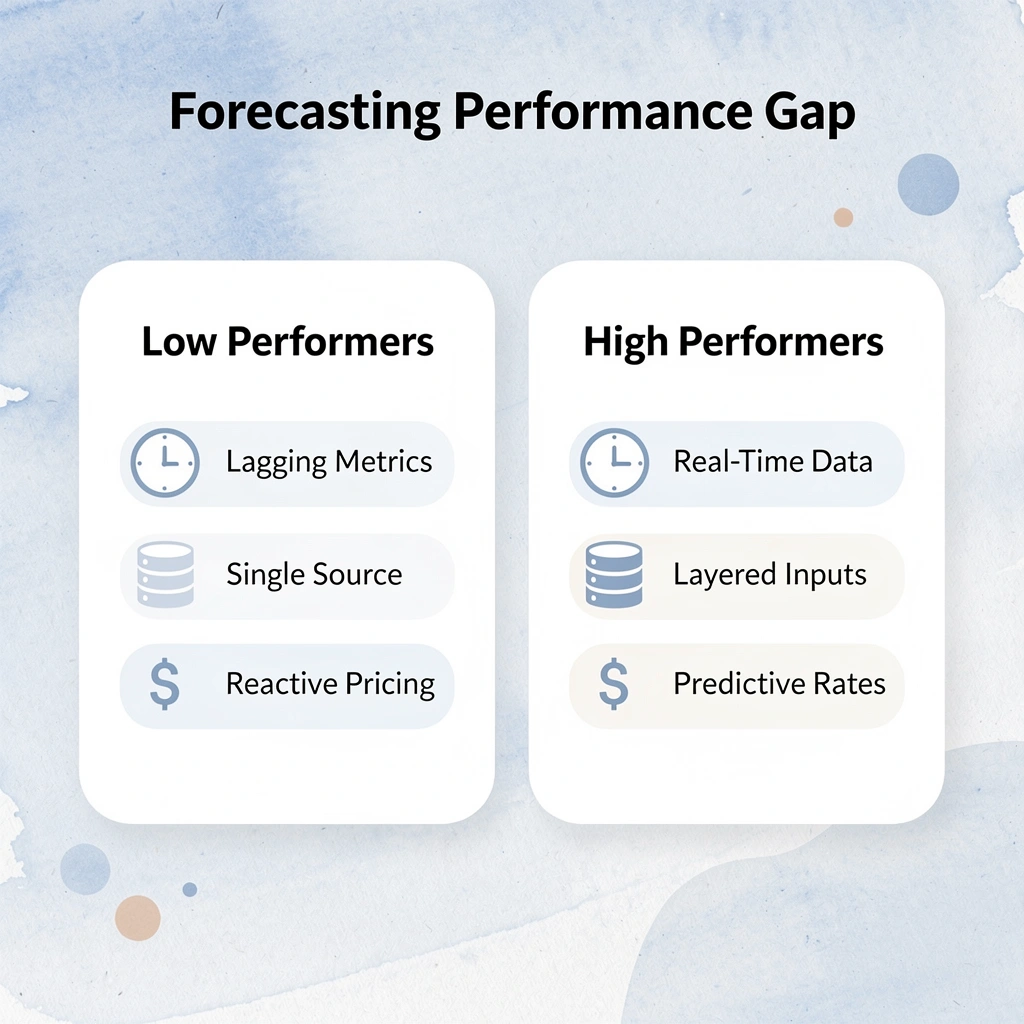
Historical performance data provides the foundation of every accurate forecast: occupancy patterns, ADR trends, booking volumes, cancellation rates, and length-of-stay averages. The most accurate forecasters layer booking pace on top of this data, comparing reservation build rates against the same period last year. This pace signal often surfaces demand shifts weeks before they appear in financial reports — giving revenue managers a critical head start.
| Data Layer | What It Measures | Why It Matters |
|---|---|---|
| Historical Occupancy | Past fill rates by period | Establishes demand baseline |
| ADR Trends | Average daily rate movement | Reveals pricing power over time |
| Booking Volumes | Reservation counts by channel | Identifies top-performing sources |
| Cancellation Rates | Drop-off patterns pre-arrival | Adjusts net demand expectations |
| Length-of-Stay Averages | Guest stay duration | Informs the inventory blocking strategy |
| Booking Pace | Reservation build vs. prior year | Surfaces demand shifts weeks early |
🔑 Takeaway: Booking pace is the single most underutilized signal in hotel forecasting. When reservation build rates lag behind the prior year, that's a warning sign that surfaces weeks before it hits your P&L — giving you time to act, not just react.
⚠️ Warning: Relying on historical data alone without layering in real-time pace signals is one of the most common forecasting mistakes — and one of the most expensive.
What real-time operational data reveals that financial reports miss
Hotels track guest spending but not guest behavior before purchase. Communication frequency, upgrade requests, late-checkout inquiries, and extended-stay patterns signal revenue opportunities and operational strain. When upgrade requests spike two weeks before arrival, they reveal simultaneous needs in staffing, housekeeping, and pricing. Most forecasting models built on PMS exports and monthly revenue summaries miss these signals.
Why does data lag cost hotels their best revenue opportunities?
Most teams pull data from multiple systems separately, then manually reconcile before weekly revenue meetings. The hidden cost is lag: by the time the consolidated view exists, the booking window has tightened, and the opportunity to adjust pricing or staffing has narrowed. AI for hospitality platforms like Conduit monitors guest communication patterns, service requests, and operational activity in real time, surfacing signals that would otherwise remain invisible inside disconnected systems.
How do real-time demand signals outperform historical data alone?
Seasonality and local events add another layer that pure historical data struggles to capture. A new conference, a rerouted airline hub, or a competitor's closure creates demand patterns with no historical precedent. According to Duetto and Cloudbeds' 2025 Traveler Trends and Hotel Profitability Insights, hotels using data-driven forecasting see up to a 10% improvement in RevPAR by combining historical baselines with real-time demand signals.
EHL Hospitality Insights reports global hotel occupancy averaged around 66% in 2024, a figure that appears stable overall but masks significant differences by market, segment, and season.
The most accurate forecasts come from better inputs, not better models. Hotels underinvest in inputs closest to the guest: behavioral signals, communication patterns, and real-time operational data showing what is happening on the property. That's the difference between a forecast that describes the past and one that predicts the future.
But knowing what data matters is only half the equation. What stops most hotels from using it well is something more stubborn than a technology gap.
Common Hotel Budgeting and Forecasting Challenges
The core issue isn't software—it's structural. Most hotels budget and forecast the same way they have for decades: finance teams gather data from siloed systems, build assumptions in spreadsheets, and produce plans that are already outdated by the time operations get them. This gap between forecasted numbers and floor reality is where accuracy dies.
"The gap between forecasted numbers and floor reality is where accuracy dies — and for most hotels, that gap is baked into the process itself."
⚠️ Warning: Relying on siloed systems and static spreadsheets doesn't just slow down your planning cycle — it guarantees your forecasts are stale before they're ever acted on.
💡 Key Insight: The real budgeting problem in hospitality isn't a technology gap — it's a structural one. Until data flows freely across departments, forecast accuracy will remain a moving target.
| Challenge | Root Cause | Impact |
|---|---|---|
| Outdated forecasts | Data gathered from siloed systems | Plans obsolete before reaching operations |
| Spreadsheet dependency | Manual assumption-building | High error rate, low agility |
| Finance-operations gap | Disconnected workflows | Floor reality diverges from forecasted numbers |

Where the disconnect actually lives
The failure point is usually organizational, not technological. Demand forecasting, labor planning, guest service workloads, and ancillary revenue projections are often managed by different departments using different tools with no shared rhythm. A revenue manager might have a sharp read on occupancy trends while the housekeeping supervisor staffs based on last week's pattern, and the food and beverage team guesses.
Collectively, they create a property misaligned with itself. When a large group checks in early, requests pile up faster than staff can absorb, and the financial plan bears the brunt in the form of overtime costs and lower satisfaction scores.
Why does labor forecasting break down first?
Labor is where misalignment hits hardest. It is the highest controllable cost in most hotel operations and the most sensitive to forecast errors in both directions. Overstaff by 15 percent across a slow weekend, and you erase the margin on a dozen rooms. Understaff during a compression event, and you face slower service, burned-out employees, and guest dissatisfaction. Labor forecasts depend on occupancy forecasts, which depend on booking pace and cancellation behavior: moving targets that a static staffing model built on last year's averages cannot track.
Most teams handle this through weekly or biweekly review meetings where managers compare actuals to plan and make manual adjustments. Our AI for hospitality agents continuously monitors guest communication volume, service request patterns, and booking signals, flagging staffing pressure or shifts in ancillary demand before they become operational problems. Adjustments happen in hours rather than at the next scheduled meeting, within systems teams already use.
Why do ancillary revenue forecasts consistently miss?
Ancillary revenue forecasting is harder because it sits at the intersection of guest behavior and operational capacity. Predicting room sales is straightforward; predicting how many guests will request late checkout, upgrade to a suite, or book a spa treatment is not. According to Duetto and Cloudbeds' 2025 Traveler Trends and Hotel Profitability Insights, traveler behavior has shifted in ways that make prior-year benchmarks less reliable. Guest purchasing decisions are increasingly driven by in-stay signals rather than pre-arrival assumptions, so ancillary revenue forecasts built on historical averages will consistently miss.
What operational blind spot runs through all of these challenges?
The main problem running through all these challenges is the same: decision-makers work from information about the property that is hours or days old. Reservation data flows through the PMS. Guest requests live on a messaging platform. Service issues get logged elsewhere. When those streams stay separate, the forecast shows a version of reality that no longer exists.
Closing that gap requires rethinking what forecasting is for: not a document produced once and reviewed occasionally, but a continuous assessment of what the property needs right now, updated as conditions shift.
5 Best Practices for Improving Hotel Budgeting and Forecasting
Forecasting accuracy comes from building a process that keeps up with how the business actually works right now — not how it worked last quarter.
"Forecasting accuracy isn't a one-time achievement — it's the result of a living process that evolves as fast as the business does."
Tip: Revisit your forecasting assumptions regularly. A process built on outdated data will consistently produce inaccurate projections, no matter how sophisticated your tools are.
Takeaway: The real driver of hotel budgeting success is aligning your forecasting process with your business's current reality — not its historical baseline.
| Forecasting Approach | Based On | Risk Level |
|---|---|---|
| Static forecasting | Last quarter's data | High — quickly becomes outdated |
| Dynamic forecasting | Real-time business signals | Low — adapts as conditions change |
| Rolling forecasts | Continuously updated inputs | Lowest — most accurate over time |
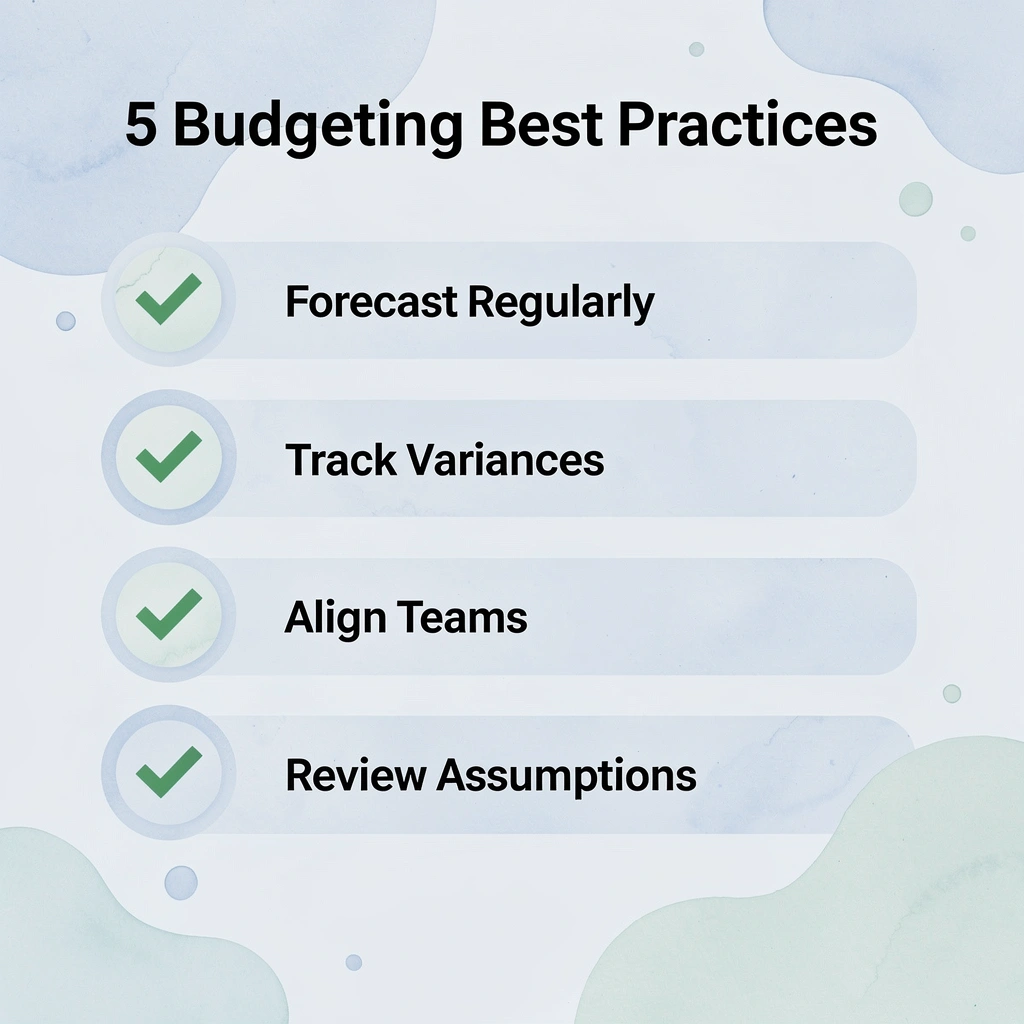
1. Move from static annual planning to continuous forecasting
Annual budgets set direction and establish targets, but treating them as the primary forecasting tool is like navigating a city with a two-year-old map. Continuous forecasting replaces that static document with a living model that updates as booking pace shifts, demand signals change, and operating costs move. Hotels that build this rhythm into their planning cycle catch risks weeks earlier than those waiting for the next quarterly review.
The operational benefit is speed. When a forecast updates in near real time, the gap between what is happening and what management knows about it shrinks to hours rather than weeks. That compression is where the margin gets protected.
2. Use real-time data to adjust budgets throughout the year
Historical performance data provides context, not conclusions. Live signals—current booking pace, cancellation trends, service request volume, and guest communication activity—reveal what traditional financial reports miss. Hotels that consistently outperform forecasts pull in these real-time inputs.
How do early signals help teams anticipate budget surprises? A spike in late-checkout requests signals higher occupancy and uncaptured ancillary revenue opportunities. Teams that read these signals early anticipate surprises rather than react to them.
How does eliminating manual data assembly close the decision lag? Most teams gather data by hand from disconnected systems, causing delays between when information exists and when decision-makers receive it. AI for hospitality platforms like Conduit learns how a property operates across every channel, surfacing operational metrics such as response time, service request volume, and guest communication patterns in a single continuous view, eliminating manual assembly.
3. Why does the distance between teams hurt forecast accuracy?
The failure point is usually not the data, but the distance between the people who hold different pieces of it. Revenue managers track pricing and demand. Guest service teams see what guests are asking for. Operations leaders understand staffing capacity. Finance holds the budget constraints. When these groups plan in separate rhythms, the forecast reflects the loudest voice rather than the most complete picture.
How does shared visibility replace siloed planning? Getting different departments to work together requires everyone to see the same information, not more meetings. When every department uses the same operational data, the forecast becomes a conversation between functions rather than a document passed between them. That shift closes a significant portion of the accuracy gap most hotels struggle with.
4. Track guest demand signals before they become revenue opportunities
According to the Oaky Blog's hotel budgeting and forecasting guide, upselling can increase hotel revenue by 10 to 30 percent per guest. Hotels that capture upgrade inquiries, dining reservations, amenity requests, and pre-arrival communications as forecasting inputs can read demand before it appears in financial reports.
These signals act like a pressure gauge. A surge in extension requests signals occupancy running hotter than projected. A drop in pre-arrival communication volume may indicate weaker engagement and a higher risk of cancellation: patterns that don't appear in traditional revenue reports until they're already affecting the numbers.
5. Why does fragmented data hurt forecasting accuracy?
When information is scattered across multiple systems, forecasting becomes difficult. People must manually gather and reconcile data, slowing predictions. By the time leaders receive the information, it's already outdated.
How does automation improve operational visibility for hotels? Automation clears the path for judgment. When data collection, organization, and pattern recognition happen automatically, finance and operations teams spend less time assembling information and more time acting on it. The forecasting process remains up to date without requiring disproportionate effort as the property grows.
Hotel occupancy rates are projected to reach 63.5% in 2025, according to Dragonfly Strategists. At that level, hotels that win are those with sharp operational visibility: able to act on small shifts before they become costly.
Better forecasting starts with better visibility
The most reliable hotel forecasts combine financial performance, real-time operational activity, guest behavior, and demand signals into a view that stays current as conditions change. Each of the five practices above contributes a different layer to that picture, creating a forecasting process that is both more accurate and more responsive than a static annual budget.
Seeing these practices work in a live hospitality environment provides clarity that theory alone cannot.
Related Reading:
- Automated Hotel Reservation System
- What is RevPar
- Hotel Guest Messaging
- Hospitality Operations Management
- Hotel Upselling
- Hotel Demand Forecasting
- How To Increase RevPAR
- Adr Vs Revpar
- Hotel Revenue Management Strategies
- How To Improve Hotel Operations
- Hospitality Automation
How Conduit Helps Hotels Forecast Demand and Operate More Efficiently
Accurate forecasting requires turning data into operational decisions that improve guest experiences, optimize resources, and drive revenue. Without the right systems, even data-rich hotels struggle to translate raw information into meaningful action.
"Accurate forecasting isn't about predicting demand — it's about converting real-time data into operational decisions that move the business forward."
— Hospitality Operations Insight
Key Point: Forecasting is only as powerful as the operational decisions it enables; data alone is insufficient.
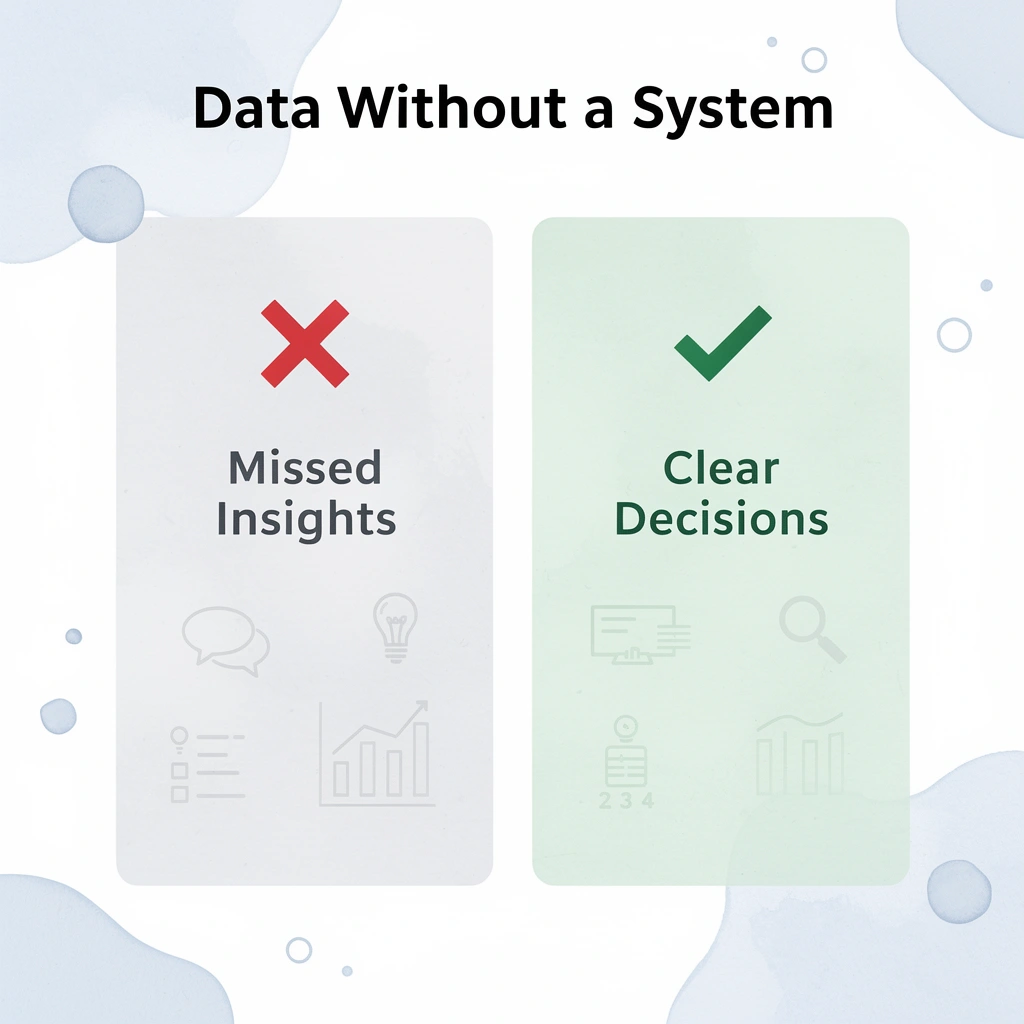
Many hotels struggle because critical guest and operational data are spread across multiple disconnected systems. Reservation information may live in the property management system, while guest conversations span across email, SMS, web chat, and messaging apps — and operational tasks are managed in yet another platform entirely. This fragmentation makes it extremely hard to identify emerging demand patterns and respond efficiently before opportunities are lost.
Warning: When guest data is siloed across 3 or more platforms, hotels risk missed demand signals, slower response times, and preventable revenue loss.
| Data Type | Where It Lives | The Problem |
|---|---|---|
| Reservation Information | Property Management System | Isolated from guest communication |
| Guest Conversations | Email, SMS, Web Chat, Messaging Apps | Fragmented across multiple channels |
| Operational Tasks | Separate Management Tools | Disconnected from demand signals |
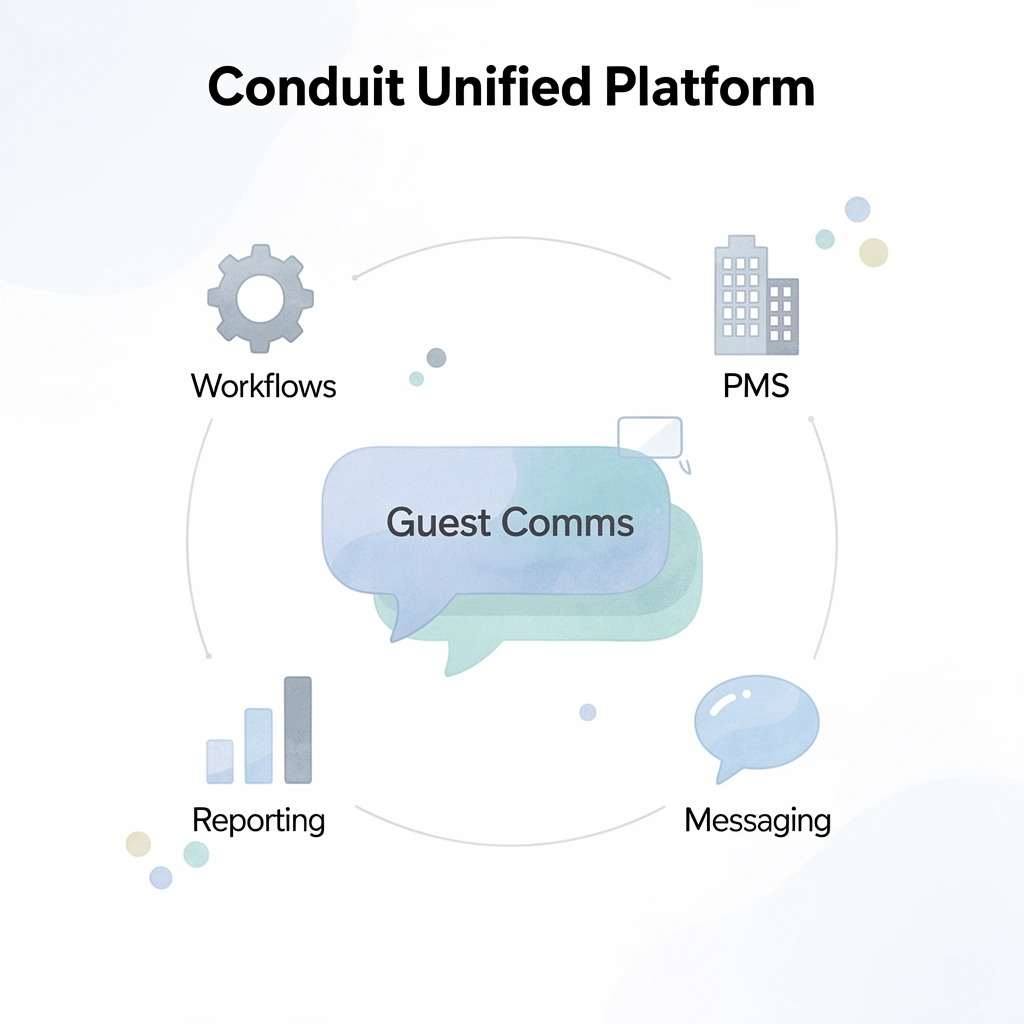
Conduit solves this by connecting guest communication, operational workflows, and hospitality systems into a single unified platform that provides visibility across the entire property. Hotel teams gain a centralized view that enables demand forecasting and operational efficiency at scale, rather than piecing together insights from disconnected tools.
Best Practice: A unified platform integrating communication, operations, and hospitality systems is essential for accurate demand forecasting and efficient hotel management.
How does AI-powered guest communication generate forecasting insights?
Guest interactions provide valuable information about hotel operations and future expectations. Questions about check-in times, upgrade requests, room preferences, late checkouts, extensions, and amenities reveal guest needs and anticipated occupancy levels.
Conduit automates hospitality customer service across every guest communication channel, enabling hotels to respond faster while maintaining consistent experiences. Rather than requiring staff to manually manage conversations across multiple platforms, our AI handles routine requests and ensures timely, accurate responses. This gives hotels greater visibility into guest requests and how demand is evolving.
How does real-time visibility into guest requests improve operational planning?
Traditional forecasting focuses on occupancy and revenue metrics while overlooking operational demand. Guest service workloads, however, significantly impact staffing requirements and operational efficiency.
Conduit provides real-time visibility into guest interactions, helping hotels identify trends such as increasing service requests, growing inquiry volumes, frequent upgrade requests, late checkout demand, and extension requests. These insights enable teams to anticipate staffing needs and allocate resources more effectively before service issues emerge.
How do deep integrations create better operational context?
Important data often gets stuck in separate systems. Conduit integrates with hospitality technology systems, including reservation and property systems, enabling AI-powered interactions to use real reservation details, guest information, and property context. Because responses are based on actual operational data, hotels gain more accurate insights into guest behavior and demand patterns.
How does automated routing and escalation improve operational efficiency?
Conduit bridges guest communication and operational execution by automatically routing requests to the right teams and escalating exceptions requiring human involvement. Whether a request needs housekeeping, maintenance, guest services, or management attention, the platform directs tasks to the appropriate people with the necessary context. This reduces delays, improves accountability, and helps teams manage operational workloads more effectively.
How do proactive guest workflows unlock additional revenue?
Conduit allows hotels to automatically send messages to guests at the right time based on their bookings, check-ins, and purchases. Hotels can automatically offer room upgrades, longer stays, late checkouts, and extra services. Because these messages are triggered by guest behavior and reservation details, they help hotels increase revenue, deliver personalized experiences, and collect demand signals that predict future guest preferences.
How does better team coordination support more accurate forecasting?
Accurate forecasting requires cross-departmental collaboration. Revenue management, guest services, operations, and leadership teams all contribute valuable insights, yet information often remains siloed. Conduit centralizes guest communication and operational activity within a shared workflow, giving everyone visibility into guest needs, service demands, and operational priorities. This alignment supports more informed planning and reduces the disconnect between financial forecasts and operational realities.
How can hotels reduce workload without adding headcount?
Many hotels face pressure to improve service while managing labor costs and staffing shortages. Conduit helps properties handle higher volumes of guest interactions and operational requests without additional headcount. By automating routine communications and workflows, teams focus on higher-value tasks and exceptional guest experiences, improving efficiency, response times, and resource utilization.
How does better visibility lead to better hotel forecasting?
The most accurate forecasts require visibility into the guest journey, service demand, operational workloads, and revenue opportunities in real time—not just historical occupancy and revenue data. By connecting guest communications, reservation data, operational workflows, and revenue-generating interactions, Conduit helps hotels gain a complete understanding of demand across the property. This visibility improves day-to-day operations and supports more informed budgeting, staffing, and forecasting decisions.
Book a Demo to See Conduit's AI for Hospitality Customer Service in Action
Book a demo of AI for hospitality to watch Conduit surface guest service trends, automate routine requests, and flag revenue opportunities from upgrades, extensions, and add-ons from a single operational view that connects to your existing tools.
"From upsell opportunities to guest service automation, Conduit delivers everything your team needs in one connected operational view — without replacing the tools you already rely on."
— Conduit
Key Point: A single demo shows how Conduit turns scattered guest signals into actionable revenue opportunities in real time.
Tip: Bring real operational pain points to your demo—whether missed upsell windows, manual request handling, or disconnected tooling —and watch Conduit address them directly.
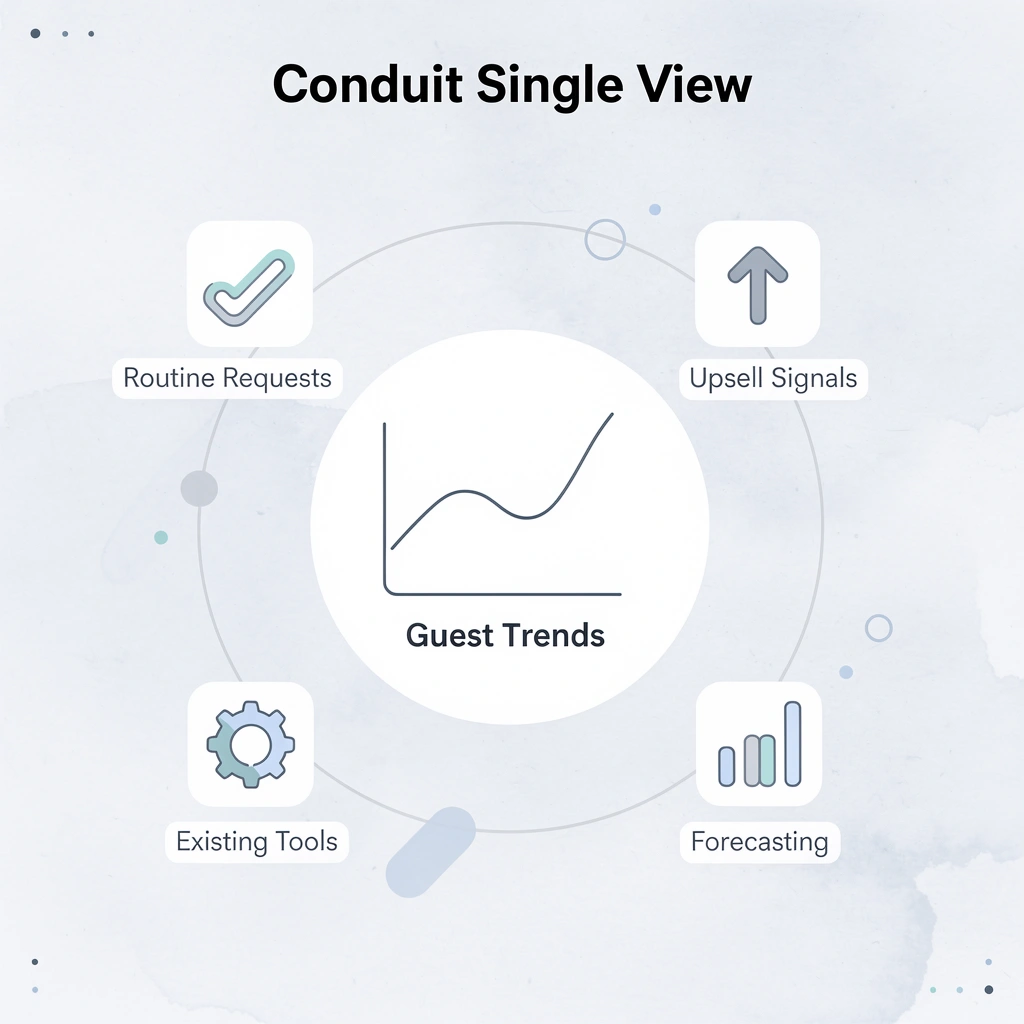
Booking pace shifts, late checkout patterns, and upsell inquiry volume already move through your property every single day. Conduit captures these high-value signals, acts on them automatically, and feeds that activity back into the forecasting picture your revenue and operations teams need to make faster, more confident decisions.
Best Practice: The most successful hospitality teams don't wait for reports — they use real-time signal capture like Conduit to stay ahead of demand shifts and upsell windows before they close.
| Signal Type | What Conduit Does | Team Benefit |
|---|---|---|
| Booking pace shifts | Captures and flags in real time | Faster revenue forecasting |
| Late checkout patterns | Identifies and automates responses | Reduced operational friction |
| Upsell inquiry volume | Tracks and acts on opportunities | Increased ancillary revenue |
Related Reading:
- Best Hotel Channel Manager Software
- Hospitality Chatbot
- Siteminder Competitors
- Canary Technologies Competitors
- Digital Concierge Software
- Hotel Distribution Management
- Best Revenue Management Software For Hotels
- Hospitality Conferences
- Cloudbeds Alternatives
Stay in the loop
Get the latest on AI automation, product updates, and customer stories.


