Hotel Distribution Channels: The Complete Guide to Managing Them


Hotel Distribution Channels
Hotel distribution management done right.
Hotel Distribution Channels: The Complete Guide to Managing Them

Most operators solve the placement half of distribution and ignore the conversion half. That is where the revenue actually leaks.
Most hospitality business owners think that if they get their distribution channels right and maintain competitive rates, the bookings will convert on their own, that the channel is the strategy. Most operators treat hotel distribution channels as a placement problem: get listed on Booking.com, Expedia, and Airbnb, keep rates competitive, and bookings follow. See our AI for Hospitality for how this works in practice.
That logic covers roughly half the problem. The half that gets ignored is where most of the revenue actually leaks. The tools that help you coordinate that second half have changed significantly, which makes this a good moment to look at what distribution management actually requires end to end.
A hotel distribution channel is any pathway through which a guest discovers and books a property, OTAs, your direct booking website, global distribution systems, metasearch engines, and wholesalers. Textbook definitions stop there, treating the channel as the destination. The real work starts the moment a guest sends an inquiry.

Channel mix shapes more than reach. It determines revenue diversification, your exposure to rate parity clauses, and how resilient your occupancy is when one platform's algorithm shifts. Operators who build demand resilience spread that risk deliberately across channel types rather than defaulting to whichever OTA drives the most volume today.
Most channel managers end at discovery. They sync rates and availability across platforms, which is useful, but they do not manage what happens when a guest message lands at 11pm and no one is staffed to answer it. Response time directly affects booking conversion, and the gap between inquiry and reply is widest overnight, precisely when leisure travel demand peaks.
Messages scatter across OTA inboxes, email, and WhatsApp with no unified view, and a guest who doesn't hear back books somewhere else. For operators who already use tools like Airbnb, Notion, Google Drive, or Airtable to manage property information, platforms like Conduit close this gap through native integrations with those sources, so the coordination layer responds automatically the moment an inquiry lands, drawing on existing property knowledge without manual re-entry. The benefit is most direct when that knowledge base is already in place; if it isn't, the integration layer requires building out those sources first.
Key takeaways
-
Getting listed on Booking.com, Expedia, and Airbnb covers roughly half the distribution problem, the half that generates visibility. The half that generates revenue is what happens in the minutes after an inquiry lands.
-
Commission rates on OTAs are the visible cost. The invisible cost is every direct-channel inquiry that went unanswered overnight and converted somewhere else by morning.
-
Direct bookings carry no third-party commission but are not free, they require real investment in SEO, paid search, and loyalty infrastructure to replace the demand OTAs would otherwise supply.
-
A rate-parity strategy and a synced channel manager don't solve a response-time problem. Most tech stacks stop exactly at the moment a guest types a question.
-
Erwan Le Roy's 35-property operation runs at 96% AI automation with sub-1-minute response times, 24/7, proof that distribution management is ultimately a communication and coordination problem, not just a channel strategy problem.
-
Conduit's native integrations with Airbnb, Google Drive, Notion, and Airtable pull your existing knowledge sources into every guest conversation and push contact and booking data back out automatically, closing the gap between channel inquiry and confirmed booking without manual handoffs.
Types of Hotel Distribution Channels - Direct, Indirect, and the Hidden Cost of Each
Every distribution channel carries a cost, but the most damaging ones rarely appear on a commission invoice. Direct bookings lose revenue to slow response times, indirect channels trade margin for reach, and the gap between inquiry and confirmation is where occupancy quietly erodes. Understanding where each channel actually costs you, and what closes that gap, is what this section covers.
Direct Channels - High Margin, But Only If You Convert the Inquiry
Direct bookings carry no third-party commission, but they are not free to generate. Direct channels require active investment in demand generation, SEO, paid search, and loyalty programs to drive the traffic that OTAs would otherwise supply. The sharper hidden cost is response lag. A phone inquiry that goes to voicemail at 11 p.m., or an email that waits until morning, is a booking that converts somewhere else. The 'zero commission' assumption only holds if the inquiry actually closes.
Pros and cons at a glance
This is where operators managing multiple properties feel the pain most acutely. Capturing every guest inquiry across channels, day or night, without leaking revenue is structurally difficult when a centralized reservations team has finite hours and finite bandwidth. Conduit's AI Agents are most beneficial precisely in this scenario, when a business receives a high volume of repetitive guest or customer messages and has existing documentation like SOPs, FAQs, and manuals to train the agent on. Once connected to that documentation, the agent delivers a first automated guest reply and then responds continuously, whenever a guest sends a message, before, during, or after a stay, closing the gap between inquiry and confirmation that voicemail and morning email queues leave wide open.
Indirect Channels - The Reach-vs.-Commission Trade-Off, Quantified
Booking.com and Expedia charge commissions ranging from 15% to 25% of the booking value, according to both Cloudbeds and Preno's analysis. On a $200 room, that is $30 to $50 per booking handed back to the platform before the hotel sees a dollar. GDS channels add a per-transaction fee on top of room-night commission, making them the most expensive channel type on a cost-per-booking basis, though they access corporate and group segments that OTAs rarely reach.
Indirect channels deliver volume and visibility most independent operators cannot replicate, but the margin hit is structural, not negotiable.
For distributed portfolios, the compounding problem is consistency. Guest communication quality and brand voice can fragment across properties and platforms when responses depend on whichever staff member is available. Conduit's Inbox consolidates all conversations the AI agent is handling into a single interface, most beneficial when managing guest communications across multiple platforms or properties simultaneously, giving the operations or support team a single place to monitor, review, and manage every thread. The result is standardized guest communication quality and brand voice across a large, distributed portfolio, without scaling the labor cost of a centralized reservations team in proportion to portfolio size.
Net Revenue according to industry data - The Only Metric That Makes Channel Comparison Honest
The number that matters is net revenue per booking after every acquisition cost is deducted: commission, paid search spend, credit card processing fees, and staff time. A direct booking on a $200 room at a typical credit card processing fee yields a net figure meaningfully higher than any OTA-routed equivalent. The same room through an OTA at 20% commission yields $160.
But if generating that direct booking required meaningful paid search spend and staff time, the real net narrows fast. Most operators never run this calculation by channel, which is why the assumption that direct is always cheaper survives longer than it should. Reducing operational overhead and labor costs associated with a centralized reservations or guest services team is one of the levers that shifts this math back toward direct.
Conduit's Workflows address the recurring, predictable guest touchpoints, booking confirmations, pre-arrival instructions, post-check-in follow-ups, that currently require manual staff action. A workflow triggers after a defined event in the guest lifecycle, such as after a booking is confirmed, after check-in, or when a specific keyword is detected in a conversation, removing the per-message labor cost from the net revenue calculation entirely. Integrations extend this further: if the business already uses tools like Notion, Google Drive, or Airbnb, the AI agent can leverage existing content from those sources without manual re-entry, reducing the setup overhead that otherwise makes automation feel more expensive than it is.
OTAs, Metasearch, and GDS Explained: and How to Stop Letting Them Dictate Your Revenue
Listing your property on Booking.com, Expedia, and Airbnb feels like a distribution win, and most hospitality business owners think that if they get their distribution channels right and maintain competitive rates, the bookings will convert on their own: that the channel is the strategy. But that assumption starts to crack the moment you see what each channel actually costs you. The commission line on your P&L is just the start. OTA contracts, metasearch dynamics, and fragmented guest communications quietly erode margin, visibility, and guest relationships simultaneously.

OTAs - The Visibility-Margin Trade-Off Hotels Rarely Quantify Upfront
"Our hotel is currently dependent on OTAs like Booking.com and Expedia, paying ~17% commission fees that erode margins."
OTAs charge hotels 15 to 30% commission per booking, as is widely documented across the market. On a $200 room, that's $30 to $50 gone before you've covered a single operating cost. In practice, many properties operate at commission rates toward the lower end of that range, enough to meaningfully compress net revenue on every single booking that comes through those platforms.
Most operators accept this as the price of visibility, and for properties without strong brand recognition or direct-booking infrastructure, that trade-off is often rational, but "rational" and "quantified" are not the same thing. Operators who track net revenue per booking by channel consistently find their highest-volume OTA is also their lowest-margin channel, and that the path to maximizing revenue per property runs directly through reducing OTA dependency, not deepening it.
Rate Parity Clauses and Algorithm Dependency - The Two Structural Traps Inside Every OTA Contract
Rate parity clauses prevent you from offering a lower price on direct channels than what appears on the OTA, structurally eliminating the most obvious reason a guest would bypass the platform entirely. Algorithm dependency compounds this. What most teams report is that OTA search rankings weigh review scores, response rates, cancellation rates, and promotional participation.
A drop in any of these factors can reduce your visibility overnight, with no direct recourse. Response rate, notably, is one metric hotels can defend, but only when guest messages are actually being seen and answered promptly across every channel a property operates. That becomes structurally harder as you add platforms.
Metasearch (Google Hotel Ads, Trivago, Kayak): The Bridge Between OTA and Direct That Most Operators Underuse
Metasearch platforms display rates from multiple sources side by side, including your direct booking engine. A guest who clicks through to your direct site is a guest you own the relationship with, at a cost-per-click typically lower than an OTA commission, a gap that becomes plain when you compare net revenue across channels. Most small and mid-size operators underinvest here because the bidding mechanics feel unfamiliar and ROI is harder to attribute. That is a fixable gap, not a structural one.
The Inbox Fragmentation Problem - Why OTA Messaging Kills Follow-Up, Upsell, and Issue Resolution at Scale
Every OTA keeps guest conversations inside its own messaging environment. A property listed on three platforms is managing three separate inboxes, each with its own notification logic, response window, and conversation history, none of which talk to each other. Hotels that receive high volumes of repetitive pre-stay questions (check-in times, parking, pet policies, local recommendations) end up with staff answering the same messages manually, across fragmented threads, at the cost of the follow-up and upsell conversations that actually move revenue.
This is where Conduit's approach is directly relevant. Conduit's AI Agents are most valuable precisely when a business receives a high volume of repetitive guest messages and already has existing documentation, SOPs, FAQs, property manuals, to train the agent on. Once connected to that documentation, the agent begins handling guest replies automatically, continuously, whenever a guest sends a message, whether before, during, or after a stay.
The Inbox then gives operations and support teams a single place to monitor, review, and manage every conversation the AI agent is handling across multiple platforms or properties simultaneously, replacing the fragmented multi-tab reality most hotel teams currently work inside. Workflows extend this further: when a booking is confirmed, after check-in occurs, or when a specific keyword is detected in a conversation, Conduit can trigger automated touchpoints that currently require manual staff action, guest welcome sequences, mid-stay check-ins, post-stay review requests. And because many properties already store their content in tools like Notion or Google Drive, or manage listings through Airbnb, Conduit's Integrations allow the AI agent to draw on that existing content without requiring staff to manually re-enter it anywhere.
The net effect is that the guest communication gap OTAs create, the one that suppresses response rates, delays issue resolution, and forecloses upsell opportunities, becomes manageable at scale, without adding headcount. That is what maximizing revenue per property through improved occupancy and guest satisfaction actually looks like in operational terms: not just better rates, but better relationships, captured before the OTA reclaims them.
Related Reading
Building a Hotel Distribution Strategy That Actually Converts - Not Just Generates Visibility
Most hotel operators build their distribution strategy by asking which channels they should be on, when the more important question is which channels they can actually afford. The difference matters because channel presence without a margin anchor tends to inflate booking volume while quietly compressing net revenue, a pattern that looks like growth until the numbers are examined closely. This section works through how to set that anchor first, then build a channel mix around it in a way that converts demand into profit rather than just visibility.

Start With Your Margin Floor, Not Your Channel List
Before you touch a channel list, anchor on your cost-per-acquisition ceiling by property type and target segment. A 20-unit urban aparthotel serving business travelers carries a different margin structure than a 6-room coastal inn chasing leisure couples. The segment determines where guests search, which shapes which channels are worth their commission and what response speed that audience expects.
Building a hotel distribution channel strategy without this anchor means optimizing for booking volume at the expense of net revenue, the exact trap that makes RevPAR look healthy while profit quietly erodes. One of the most persistent challenges operators face is mistaking visibility for commercial success, believing that presence on more channels translates to better outcomes, when in practice it often just inflates acquisition costs while net revenue stagnates. The discipline of anchoring to your margin floor before selecting channels is what separates a systemized, scalable distribution model from one that depends on constant owner intervention to hold together.
The Three-Layer Channel Mix
A workable channel mix has three layers. First, one or two anchor OTAs that match your guest profile and deliver consistent, high-intent demand. Second, a direct investment layer: a functional booking engine, a Google Business profile, and a Google Hotel Ads presence that intercepts guests already searching your name. Third, supplemental channels that fill specific gaps, a niche platform for your property type or a metasearch CPC campaign during predictable soft periods. Each layer should have a defined cost-of-acquisition budget before it gets activated, not after you see the commission invoice.
Direct vs. Indirect - When to Defend Your Own Channel
The case for direct bookings is real, but it has a structural ceiling most operators underestimate. Rate parity clauses in OTA contracts prevent you from offering a lower price on your own site, neutralizing the most obvious lever. The only durable escape is building a response and value-communication advantage so decisive that the guest stops comparison-shopping before they finish, faster replies, clearer property information, a booking experience that feels more confident than the OTA alternative.
This is where the operational reality gets difficult. Capturing every booking inquiry, including the ones that land overnight or after hours, requires either round-the-clock staffing or a system built to handle it without adding headcount. The former is expensive; the latter is where purpose-built AI earns its keep.
Conduit's AI Agents are most effective precisely when a business receives a high volume of repetitive guest messages and already has documentation, SOPs, FAQs, property manuals, to train the agent on. Once connected to those existing sources, the agent handles inquiries continuously, before, during, and after a stay, without requiring staff to be on call at 11 PM.
Cost-of-Acquisition Discipline - RevPAR by Channel
A channel delivering 40 bookings at 22% commission may produce lower RevPAR than 25 direct bookings at 4% cost-of-acquisition. OTA commissions consistently run between 15% and 25% of booking value, while a well-maintained direct channel costs a fraction of that once the booking engine investment amortizes. Tracking RevPAR by channel, not just occupancy by channel, is what separates channel mix optimization from channel mix theater.
The operators who close this gap most effectively are the ones who build distribution systems that do not depend entirely on owner involvement, where the inquiry-to-conversion workflow runs reliably whether the owner is watching or not.
The Response SLA as a Distribution Asset
According to industry research, the operator who replies first wins the booking in the majority of competitive inquiry situations. Inquiries that go unanswered promptly show materially higher abandonment rates, and many of those guests confirm with a competitor who responded faster. The channel generated the discovery, but the response window is where the booking is actually won or lost.
The critical detail most operators miss is that speed alone is not sufficient if the reply feels automated and impersonal. Guests who receive a canned acknowledgment are not meaningfully better served than guests who receive no reply at all. The quality of the response has to match the speed.
Mayra, Global Head of Customer Experience at Wynwood House, described the difference after deploying Conduit:
"The first thing we noticed was the quality of the AI replies. You cannot tell the difference between an AI agent and a human agent. I work with ChatGPT and other AI tools every day, and sometimes you can immediately tell it's AI. With Conduit, we're not seeing that."
Conduit's AI Agents connect natively to Airbnb, your booking engine, and existing knowledge sources, Notion, Google Drive, SOPs, so the agent draws on accurate, property-specific information rather than generic responses. An 11 PM inquiry receives a reply in under a minute, grounded in your actual property details, without a single additional hire. Operators managing guest communications across multiple platforms or properties simultaneously use Conduit's Inbox to monitor and review all AI-handled conversations in one place, maintaining visibility without being the bottleneck.
For operators who want to go further, Workflows allow you to automate recurring, predictable guest touchpoints, triggered after a booking is confirmed, after check-in, or when a specific keyword is detected, replacing manual staff actions with a system that runs consistently at scale. The first custom rule that changes how the agent responds can be live the same day.
Channel Evaluation Checklist - Before You Activate Any Distribution Channel
Use this checklist before adding or keeping any channel in your mix:
| Criteria | Questions to Answer Before Activating |
|---|---|
| Margin floor | What is my net revenue per booking after commission, card fees, and staff time? |
| Segment fit | Does this channel reach my target guest profile (leisure vs. business, length of stay)? |
| Response SLA | Can I guarantee a reply within 5 minutes for inquiries from this channel, 24/7? |
| Rate parity exposure | Does this channel's contract restrict my ability to price directly below their listed rate? |
| CPA ceiling | Have I set a maximum cost-per-acquisition budget for this channel before activation? |
| Cancellation risk | What is the cancellation rate on this channel, and how does it affect net occupancy? |
| Data ownership | Does this channel give me access to guest contact data for post-stay marketing? |
If you cannot answer all seven rows before activating a channel, you are optimizing for booking volume rather than net revenue.
The Role of Technology in Hotel Distribution Management: and Where Most Tech Stacks Stop Short
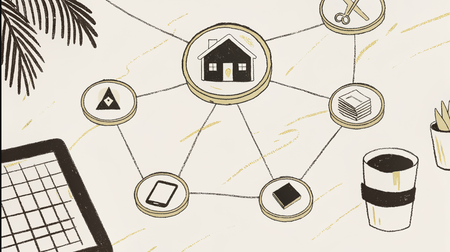
The hospitality tech stack looks complete on paper: a property management system feeds inventory into a hotel channel manager, which syncs rates across every OTA in real time, while a revenue management system adjusts pricing by demand signal. Most operators who've assembled this stack feel like the machine is running. The problem is that the machine stops exactly where the money is made.
The Table-Stakes Layer - What Channel Managers Actually Do (and Don't Do)
Channel managers are distribution infrastructure. They ensure your rates and availability are live and consistent across Booking.com, Expedia, Airbnb, and wherever else you list. That function is genuinely valuable, and channel managers have become a common fixture in independent hotel operations. But a channel manager's job ends at the listing. The moment a guest sends a message through an OTA inbox, it has nothing left to say.
The PMS as Data Backbone - Still Not Enough to Close a Booking
The property management system holds the ground truth: reservations, inventory, pricing, guest history. What it doesn't do is act on an inquiry. A guest who messages at 11pm asking whether late check-in is possible gets nothing from the PMS. The data is there; the response is not. Operators often discover this gap only after a booking goes quiet and a review later mentions "no one got back to me."
Revenue Management Systems - Dynamic Pricing Stops at the Channel Wall
Revenue management systems read demand signals and adjust rates before a booking happens. But the RMS has no visibility into what happens after an inquiry lands. It doesn't know whether that inquiry converted, stalled, or walked to a competitor because the response took 57 minutes. The pricing was right; the coordination wasn't there to capture it.
The Unmanaged Step - What Happens in the Minutes After an Inquiry Lands
This is the structural gap most operators don't see until they're losing bookings to it. Industry data consistently shows average hotel response times to OTA inquiries running well beyond 30 minutes, and research from hospitality operations analysts indicates that inquiry abandonment climbs sharply when responses are delayed. "Messages keep falling through the cracks" isn't a staffing failure, it's a systems failure. The standard stack was never designed to own this step.
The Coordination Layer - How AI Agents Bridge Channel Output to Booking Confirmation
The standard hospitality tech stack is architecturally complete up to the moment an inquiry lands, then goes structurally silent, a structural gap documented by hospitality operations analysts who find average hotel response times to OTA inquiries running well beyond 30 minutes. No layer in the PMS-channel manager-RMS combination owns the guest communication thread, the response SLA, or the follow-up that confirms the booking. AI agents fill that gap: they receive the inquiry, pull from existing property knowledge, and respond accurately within seconds, regardless of which channel the message arrived on. This is where AI for hospitality operates, not as a replacement for the upstream stack, but as the piece the stack was never built to include.
Related Reading
How Operators Are Closing the Distribution-to-Booking Gap - Proof From the Field
Speed stops being a service differentiator the moment every competitor can match it. What actually compounds is the structural advantage underneath the speed, the fact that every fast response, every accurate answer, every correctly priced upsell is being generated from the same connected sources, logged, and made available for the next interaction. That is not a customer-service improvement.
It is an operational architecture that gets more precise as it accumulates data, and more valuable as the property scales. Operators who have closed the distribution-to-booking gap share a measurable structural pattern: they did not add more channels or reduce rates, they inserted an automated response layer that enforces sub-minute SLAs across all channels simultaneously. The financial results documented below are not from better listings but from treating every inbound message as a time-sensitive revenue event rather than a support ticket, and that reframe is the actual competitive variable separating operators who scale from those who staff.

35 Properties, 96% Automation
Automated - How Cash Flow Street Turned Sub-1-Minute Response Into a Revenue Standard
Erwan Le Roy's 35-property operation, Cash Flow Street, now handles 96% of guest communication through AI automation, with responses firing in under one minute, around the clock. Industry data puts the average inquiry response time in vacation rentals well past 30 minutes, and what most teams report consistently is that booking conversion drops sharply after five minutes of silence. Le Roy closed that gap by treating every inbound message as a time-sensitive revenue event rather than a support ticket waiting for a morning shift.
The root problem, however, was not speed alone, it was operational drag. Before automation, Le Roy's virtual assistant team was spending its days fielding mundane, repetitive questions: Wi-Fi codes, parking instructions, check-in details. Higher-value work went untouched while Le Roy found himself micromanaging the team, unable to step back from daily operations despite having SOPs in place.
The guest communication bottleneck had effectively made him the fallback, what he described as being "the mom" of the operation. Consistent, around-the-clock coverage across all time zones was simply beyond what a human team could reliably deliver. The structural fix was pairing Conduit's AI Agents, trained directly on his existing SOPs, FAQs, and property manuals, with a unified Inbox that gives his team visibility across every platform simultaneously.
Because the AI agents pull from connected documentation rather than requiring manual re-entry, the same SOPs that once generated VA training tickets now generate instant, accurate guest replies. The result mirrors the trend we saw earlier.
75 Units, Zero New Hires - The $22K/Month Savings Math Behind Easy BnB's Automation Shift
Darren, founder of Easy BnB, was running 14 virtual assistants to cover 24/7 guest communication. Eighty percent of that volume was routine queries, precisely the repetitive, high-frequency questions that Conduit's AI Agents are designed to resolve before they ever reach a human. Staff reliability during overnight shifts was creating real booking risk.
After a staffing crisis forced his hand, he pushed messaging to AI-powered automation and added 75 units without a single additional hire, saving approximately $22,000 per month. Across the market, a full-time guest communications role runs $3,000 to $4,500 per month in many markets. The honest caveat: labor shifts from reactive messaging to proactive data curation, not to zero effort.
What made the transition viable was that Darren already had the documentation, SOPs, FAQs, property manuals, that Conduit's AI Agents require to begin responding. The first automated guest reply fires within days of connecting those sources. From there, the Inbox allows his operations team to monitor and review every conversation the AI is handling across all platforms simultaneously, without losing oversight as unit count scales.
Wynwood House: 15-Minute to 3-Minute Resolution Time Across 7 Countries
Wynwood House's guest experience team was drafting replies in one tool, translating in another, tracking sentiment in a Google Sheet, and re-reading full conversation histories at every shift handoff. Guest resolution times averaged around 15 minutes. After consolidating into a unified Inbox with AI-powered multilingual responses and automated shift summaries, resolution time dropped to 3 minutes across seven countries in Latin America and Europe.
The compounding factor here is architectural. When every conversation is handled through the same connected system, rather than scattered across drafting tools, translation apps, and spreadsheets, each shift handoff requires no reconstruction of context. Conduit's Inbox is designed for exactly this: ongoing use by operations and support teams to monitor, review, and manage all AI-handled conversations from a single surface.
Integrations with tools like Notion, Google Drive, and Airbnb mean that existing content is leveraged by the AI agent without manual re-entry, so the knowledge base that powers multilingual responses stays current without a dedicated content management effort. Mayra, Global Head of Customer Experience at Wynwood House, noted:
"You cannot tell the difference between an AI agent and a human agent. With Conduit, we're not seeing that. It feels like a full conversation."
What to Look for When You're Ready to Add a Coordination Layer to Your Distribution Stack
That gap between inquiry arrival and confirmed booking is where the evaluation framework begins, and the first decision it forces is one most operators get wrong before they ever compare pricing: whether to use a hospitality-specific AI or a generic helpdesk platform trained on everything except the operational reality of short-term rentals. The license fee difference rarely exceeds a few hundred dollars a month. The performance gap underneath it is harder to see but easier to measure: Industry data documents that fast, contextually accurate responses boost short-term rental booking conversion by up to 116%, and a system that cannot recognize hospitality-specific context, answering a checkout-time question with a refund policy from a generic knowledge base, erodes that lift entirely.
A generic helpdesk can route a ticket. What it can't do is recognize that a guest asking "can I check in early?" on Airbnb at 11pm needs a response that respects OTA reply protocols, reflects your actual availability, and sounds like your property.
What most teams report across the market bears this out: fast responses boost short-term rental booking conversion by up to 116%. That lift disappears when the tool answering is guessing at hospitality context. The license fee is visible; the conversion loss isn't.
Native Integrations vs. Manual Data Entry - Why Integration Depth Decides Everything
The hidden cost surfaces when the tool can't pull from where your knowledge actually lives: a Google Drive SOP doc, a Notion rate sheet, an Airtable owner log. Staff end up manually re-entering updates, defeating the automation entirely. AI for Hospitality platforms like Conduit connect natively to Airbnb, Google Drive, Notion, and Airtable, so the coordination layer responds from current data without a human in the middle.
Unified Inbox Without Losing Channel-Native Reply - The Capability Most Vendors Quietly Compromise On
Most platforms strip channel context: a reply composed in a unified inbox gets sent as a generic message, losing the formatting, tone expectations, and reply threading that OTAs enforce. Enso Connect's 2025 data confirms that reply expectations vary by channel, Airbnb, email, WhatsApp, and SMS each carry different guest standards.
Related Reading
-
Best Revenue Management Software For Hotels
-
Best Hotel Channel Manager Software
-
Siteminder Competitors
-
Cloudbeds Alternatives
-
Canary Technologies Competitors
-
Digital Concierge Software
Next steps
If your channel mix is generating discovery but losing bookings to unanswered overnight inquiries, the path forward starts with treating every inbound message as a time-sensitive revenue event rather than a support ticket. Start with our AI for Hospitality.
The standard hospitality tech stack goes structurally silent the moment an inquiry lands, leaving no layer in the PMS, channel manager, or RMS combination to own the guest communication thread or enforce a response SLA. That architectural gap means the coordination layer is missing from every distribution stack that stops at the listing. At the same time, rate parity clauses structurally eliminate price as a lever for shifting demand toward direct channels, which means the only durable competitive advantage is a response and value-communication layer so fast and accurate that the guest stops comparison-shopping before they finish. Together, these two realities point to a single next step: inserting an automated coordination layer that closes the inquiry-to-confirmation gap before a competitor does.
Start with Conduit to see how it connects to your existing documentation and begins sending accurate, property-specific replies within minutes of an inquiry landing, across every channel, around the clock.
Frequently Asked Questions
How do I actually figure out which distribution channels are worth the commission they charge?
Anchor on net revenue per booking after every acquisition cost is deducted, commission, paid search spend, credit card processing fees, and staff time, before you build or adjust your channel mix. The post recommends a three-layer structure: one or two anchor OTAs matched to your guest profile, a direct investment layer (booking engine, Google Business profile, Google Hotel Ads), and supplemental channels that fill specific gaps, each with a defined cost-of-acquisition budget before it gets activated.
Are global distribution systems (GDS) still worth using for a smaller property?
GDS channels are the most expensive channel type on a cost-per-booking basis, adding a per-transaction fee on top of room-night commission, but they access corporate and group segments that OTAs rarely reach. For smaller properties whose target segment doesn't include corporate or group travelers, that cost-to-reach trade-off may not be rational, the post suggests your target segment should determine which channels are worth their commission before you activate them.
What's the point of metasearch if I'm already listed on the big OTAs?
Metasearch platforms like Google Hotel Ads, Trivago, and Kayak display your direct booking rate alongside OTA rates, so a guest who clicks through to your site becomes a relationship you own, typically at a cost-per-click lower than an OTA commission. The post notes that most small and mid-size operators underinvest in metasearch because the bidding mechanics feel unfamiliar, but frames that as a fixable gap rather than a structural reason to avoid it.
Rate parity clauses seem like they make direct bookings pointless, is there still a reason to invest in direct?
Rate parity clauses do eliminate the most obvious price-based reason for a guest to book direct, but the case for direct bookings rests on net revenue, not just rate. A direct booking on a $200 room yields meaningfully higher net revenue than the same room through an OTA at 20% commission ($160 net), and that gap widens further when you reduce the per-message labor cost of handling inquiries, the post identifies faster inquiry response and automated guest touchpoints as the levers that shift the math back toward direct.
My team is already stretched thin, how do hospitality operators realistically handle guest messages coming in across multiple OTA inboxes at the same time?
Every OTA keeps guest conversations inside its own messaging environment, so a property on three platforms is managing three separate inboxes with no unified view, and a guest who doesn't hear back books somewhere else. Conduit's Inbox consolidates all conversations the AI agent is handling into a single interface, and its AI Agents respond automatically and continuously across platforms whenever a guest sends a message, drawing on existing documentation like SOPs and FAQs without requiring staff to manually re-enter content.

Stay in the loop
Get the latest on AI automation, product updates, and customer stories.


