Hotel Demand Forecasting Guide to Improve Revenue Planning


Hotel Demand Forecasting
Improve Revenue Planning
Walking into a peak weekend without a clear read on demand is not just stressful for hotel managers — it costs real revenue. The best hospitality operations rely on hotel demand forecasting to track booking patterns, anticipate occupancy shifts, and set rates with confidence before the season arrives. Understanding how these tools work and what signals to watch gives revenue teams a meaningful edge over reactive competitors.
Having the right data matters, but only when a system can turn it into timely decisions. Conduit connects room demand trends, booking lead times, and historical occupancy data in one place, helping hotels move from guesswork to confident planning. Teams can set smarter rates, reduce empty rooms, and grow revenue without the manual effort — learn more about AI for hospitality.
Table of Contents
- Why Hotel Demand Forecasting Matters More Than Ever
- What Is Hotel Demand Forecasting?
- How Hotel Demand Forecasting Works
- Common Hotel Demand Forecasting Challenges
- How Better Forecasting Improves Hotel Performance
- How Conduit Helps Hotels Act on Demand Forecasts
- Book a Demo to See Conduit's AI for Hospitality Customer Service in Action
Summary
Hotel demand has never been harder to read in real time. A property can shift from half-empty to 95% occupancy within days, driven by a nearby event, a competitor rate drop, or a compressed booking window. Global hotel occupancy rates are expected to stabilize around 66% in 2025, meaning the margin between a strong year and a missed one often comes down to how accurately a property reads and responds to forward demand signals.
Forecasting and reporting are not the same activity, and confusing them is one of the most common ways revenue teams fall behind. Reporting describes what has already happened, covering occupancy rates, ADR trends, and RevPAR against budget. Forecasting draws on booking pace, lead time patterns, and market demand indicators to estimate what is likely to happen next. Hotels that treat historical data as a substitute for forward-looking analysis end up studying the past while the future passes them by.
The failure point in most forecasting processes is structural rather than analytical. Booking data, guest behavior signals, and operational records typically live in separate systems, and when those systems cannot be read together, the forecast reflects only a partial view of actual demand. A forecasting error of just 10% can cost a hotel up to 6% of its annual room revenue, making the cost of fragmented data tangible. It shows up in labor waste, service gaps, and missed rate opportunities.
Even accurate forecasts lose value when they remain within a single department. A revenue manager may correctly predict a high-demand weekend, but if that insight does not reach housekeeping schedules, front desk staffing, or pre-arrival communication queues, the hotel absorbs the demand without capturing the margin that comes with it. Forecasting, treated as a revenue management exercise rather than a shared operational input, tends to generate reports rather than results.
Speed of execution is where the return on forecasting actually lives. Hotels using AI-driven demand forecasting can improve revenue by up to 10%, and accurate demand forecasting can reduce overbooking by up to 20%. Those gains do not come from the forecast itself but from how quickly it connects to action. A forecast that takes three days to influence a pricing decision is significantly less valuable than one that updates rate strategy within hours of a shift in booking pace.
Ancillary revenue follows the same forecasting logic as room pricing. Properties that anticipate high-occupancy periods can time upgrade offers, spa promotions, and dining packages to reach guests in the 48- to 72-hour window before arrival, when purchase intent is highest. Hotel occupancy in top markets recovered to over 65% in 2024, meaning competition for ancillary spend is intensifying alongside room demand, and properties that align offers with anticipated demand capture a disproportionate share of that revenue.
AI for hospitality helps teams close the gap between demand intelligence and operational execution by connecting booking signals directly to staffing workflows, guest communication sequences, and pricing adjustments without waiting for a manager to interpret a report and relay instructions across departments.
Why Hotel Demand Forecasting Matters More Than Ever
Hotel demand has never been harder to read. A property that looks half-empty on Monday can hit 95% occupancy by Friday, driven by a conference announcement, event cancellation, or weather shift. The window between getting information and taking action is shrinking, and hotels relying on gut instinct or last year's patterns fall behind.
Tip: The gap between when demand signals appear and when you must act is now measured in hours, not days. Hotels that can't read those signals in real time lose revenue.

The financial stakes are real. According to EHL Hospitality Insights, global hotel occupancy rates are expected to stabilize at around 66% in 2025, approaching pre-pandemic levels. Underestimate demand, and you leave revenue uncaptured. Overestimate it, and you carry excess staffing costs, bloated inventory, and underpriced rooms.
"Global hotel occupancy rates are expected to stabilize at around 66% in 2025, approaching pre-pandemic levels — making precise demand forecasting the difference between profit and loss."
— EHL Hospitality Insights
Takeaway: Forecasting errors cut both ways. Whether you over- or underestimate demand, the result is the same: lost profit. Getting this right isn't a nice-to-have — it's a core revenue strategy.
| Forecasting Error | Consequence |
|---|---|
| Underestimate demand | Lost revenue, missed bookings, and underselling rooms |
| Overestimate demand | Excess staffing costs, bloated inventory, and underpriced rooms |
| Accurate forecast | Optimized pricing, right-sized staffing, maximum RevPAR |
Warning: Hotels still relying on last year's data or manual pattern-matching are operating blind in a market that can swing from low occupancy to near-full capacity within a single week.
Why does demand forecasting keep getting harder to manage?
Today's demand patterns stem from seasonal travel cycles, local event calendars, airline route changes, economic sentiment, competitor pricing, and short-term booking windows—each moving at different speeds and interacting in ways that resist manual modeling. Even experienced revenue managers work with incomplete pictures, making occupancy forecasting feel more like educated guessing than structured analysis.
What happens when manual processes can't keep up with demand signals?
Most teams pull reports from their property management system, cross-reference booking pace data in spreadsheets, and adjust rates based on the results. This works when demand is predictable. When booking lead times shorten or demand spikes arrive without warning, the lag between data and decision becomes costly. AI for hospitality connects booking signals, historical occupancy patterns, and real-time demand indicators so forecasting feeds into operational action automatically, rather than waiting for a manager to interpret reports and relay instructions.
What does accurate forecasting actually protect
RevPAR optimization depends on pricing decisions made days or weeks in advance. According to EHL Hospitality Insights, revenue per available room in the hotel sector is forecast to grow by approximately 4 to 5% annually through 2025, but capturing that growth requires rate decisions based on reliable demand data rather than reactive adjustments made after the booking window closes. Housekeeping rosters, front desk coverage, and food service prep all trace back to the same occupancy projections that revenue managers use to set room rates.
Why does data abundance still leave hotels exposed?
Most hotels have more data than they can effectively use. The problem is that data lives in disconnected systems, insights arrive too late, and the people who need to act on them work in different departments with different priorities. Demand forecasting creates value only when it moves from a planning document into the hands of the people and systems that execute on it in real time.
That gap between knowing and doing is where the most interesting question about forecasting begins.
What Is Hotel Demand Forecasting?
Hotel demand forecasting predicts future guest demand using historical data, booking patterns, market conditions, and behavioral signals. Hotels use these estimates to make smarter decisions about pricing, staffing, and operations before demand arrives. The goal is clear: estimate how many rooms will be booked during a specific period and act on that estimate.
Definition: Hotel demand forecasting is the practice of using data-driven signals — from historical occupancy to real-time booking behavior — to predict future guest demand and drive proactive operational decisions.
| Input Signal | What It Informs |
|---|---|
| Historical data | Baseline demand patterns |
| Booking patterns | Pace and lead time trends |
| Market conditions | Competitive and seasonal context |
| Behavioral signals | Real-time demand shifts |

Forecasting has been treated as a planning exercise rather than an operational input. Revenue managers produce a forecast, share it in a weekly meeting, and watch three separate departments interpret it differently. The forecast was accurate. The execution was fragmented.
"The forecast was accurate. The execution was fragmented." — A reality most revenue managers know all too well.
Warning: A highly accurate forecast delivers zero value if departments interpret it in isolation. Forecasting and execution must be treated as a single connected workflow, not two separate steps.
Key Point: The failure in hotel forecasting is rarely the numbers — it's the gap between prediction and coordinated action across pricing, staffing, and operations.
What is the difference between forecasting and reporting?
Reporting shows what happened: last month's occupancy rate, ADR trend, RevPAR against budget. Forecasting shows what is likely to happen next, drawing on booking pace, lead time patterns, local event calendars, and market demand indicators. A hotel that confuses the two ends up studying the past while the future books around it.
Why do manual spreadsheet forecasts break down?
Most revenue teams pull historical data into spreadsheets with manual adjustments for known events. This approach breaks when variables multiply, booking windows compress, and spreadsheet reliability deteriorates. Conduit connects forecast signals directly to operational workflows, so demand shifts trigger automatic responses in staffing, guest communication, and resource allocation rather than waiting for manual updates.
Short-term and long-term forecasts serve different decisions
According to a Journal of Revenue and Pricing Management study on hotel demand forecasting, static models built on last year's patterns lose accuracy faster than most properties recognize. Short-term forecasts (days to weeks) drive daily pricing adjustments, housekeeping schedules, and front desk staffing. Long-term forecasts (months to years) shape annual budgets, marketing spend, and capital decisions. Each serves a distinct purpose.
Key metrics tie these horizons together: occupancy rate and RevPAR signal demand volume, while booking pace reveals whether reservations are accelerating or decelerating compared to earlier periods. Lead time shifts—when guests book closer to arrival—compress the decision window and make real-time responsiveness more valuable than static forecasts.
Related Reading
- How To Improve Guest Experience in a Hotel
- How To Increase Hotel Occupancy Rate
- Self-Service Hotel
- Hotel Operating Costs Breakdown
- Hotel Revenue Generating Ideas
- Best Hospitality Management Software
- How To Maximize Your Hotel Revenue
How Hotel Demand Forecasting Works
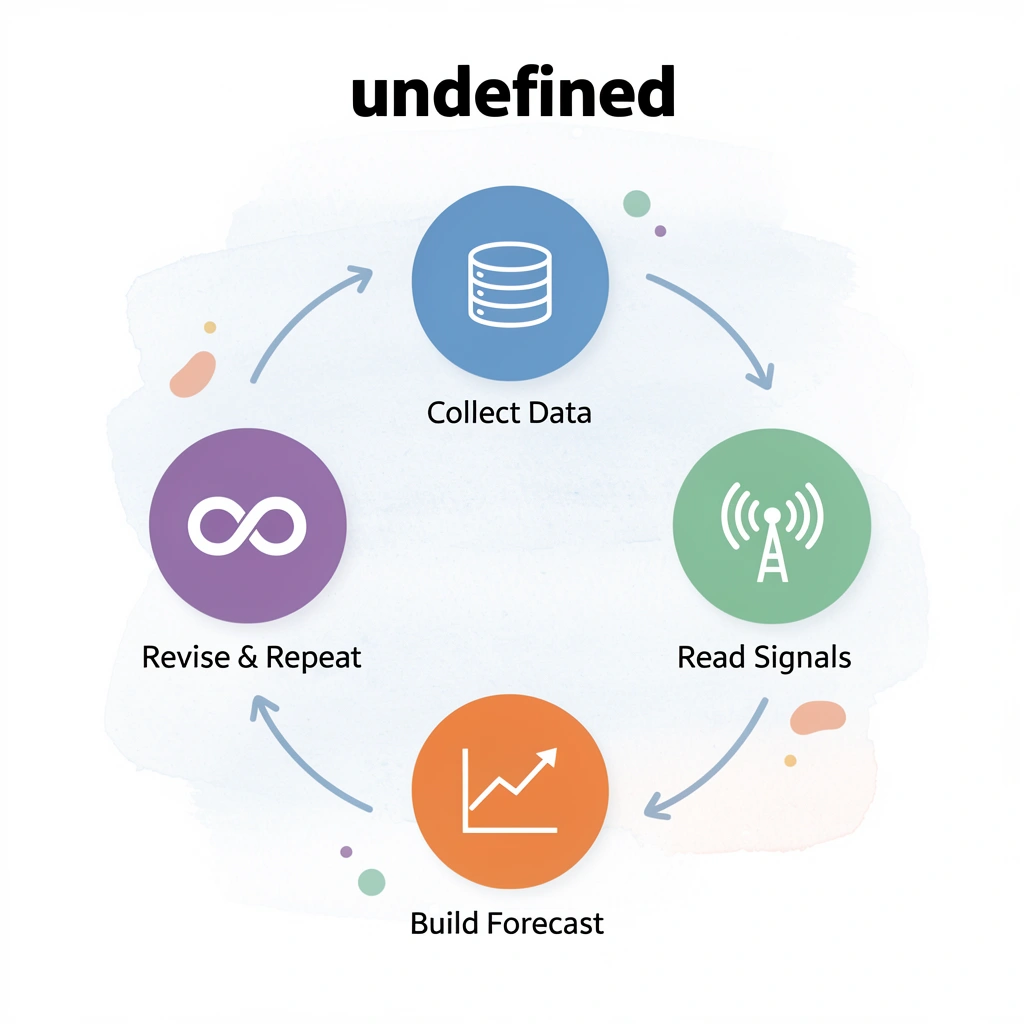
Hotel demand forecasting is an ongoing process through connected steps: collecting historical booking data, reading market signals, identifying demand drivers, generating projections, and continuously revising them as conditions shift. The output is a living estimate that improves as more information becomes available.
"The output of demand forecasting is a living estimate — one that continuously improves as more data, signals, and market conditions come into view."
— Industry Best Practice
Key Point: Hotel demand forecasting is never a one-time task — it's a continuous cycle of data collection, analysis, and revision that gets more accurate over time.
Tip: Focus on all five core steps — historical data, market signals, demand drivers, projections, and ongoing revisions — to build a forecasting process that actually works.
| Forecasting Step | What It Involves |
|---|---|
| Historical Booking Data | Collecting past occupancy, rate, and booking patterns |
| Market Signals | Reading external indicators like events, seasonality, and competitor pricing |
| Demand Drivers | Identifying why guests book — business travel, leisure, local events |
| Generating Projections | Producing forward-looking demand estimates |
| Continuous Revision | Updating forecasts as new information becomes available |
Where the data actually comes from
The process starts with historical performance: occupancy rates, cancellation patterns, average daily rate trends, length-of-stay data, and booking lead times. However, this baseline alone is incomplete. A hotel in a market with over 9,000 short-term rental listings faces a forecasting environment in which traditional hotel occupancy data misses a significant portion of destination demand captured by alternative accommodation. The full picture requires monitoring market-wide signals, not just your own numbers.
Why do external factors shift demand beyond historical patterns?
Outside factors matter significantly: a regional conference, a canceled airline route, a new hotel opening nearby, or a change in corporate travel policy from a major local employer. Each can push real demand much higher or lower than past patterns suggest. Hotels that track these variables alongside their own booking pace create more accurate occupancy forecasts because they read the full demand signal, not just their own piece of it.
When does a spreadsheet-based forecast become a liability?
Most teams pull data from their property management system, add manual market research, and create a weekly or monthly forecast in a spreadsheet. This works until variables multiply and changes outpace manual updates. When booking windows compress and market conditions shift mid-week, a forecast built on last week's data becomes problematic. AI for hospitality platforms like Conduit connects demand signals to operational workflows in real time, triggering automatic action—staffing adjustments and guest communication sequences—before the demand wave arrives.
How does forecast data translate into operational decisions?
According to RoomPriceGenie's Complete Guide to Hotel Demand Forecasting, accurate demand forecasting can reduce overbooking by up to 20%. Beyond this metric, forecasts drive department-wide decisions: revenue teams adjust rate strategy, operations schedule workers, housekeeping allocates resources, and marketing launches campaigns to fill booking gaps. The forecast is the input; every department-level decision is the output.
Why does the speed of execution determine the return on forecasting?
Cloudbeds' Hotel Demand Forecasting Guide reports that hotels using AI-driven demand forecasting can improve revenue by up to 10%. The benefit lies not in the forecast itself, but in how quickly it drives action. A forecast that takes three days to update pricing is less useful than one that updates rate strategy within hours of a shift in booking pace. Speed of execution determines the real return on forecasting.
Even when the process runs well, the gap between forecasting theory and execution is where most operations lose ground.
Related Reading
- Automated Hotel Reservation System
- Hotel Revenue Management Strategies
- Hospitality Automation
- What is RevPar
- How To Increase RevPAR
- Hotel Guest Messaging
- How To Improve Hotel Operations
- Hotel Budgeting And Forecasting
- Adr Vs Revpar
- Hotel Upselling
- Hospitality Operations Management
Common Hotel Demand Forecasting Challenges
The gap between a well-built forecast and a well-run operation is where most hotels lose revenue. Forecasting challenges come from fragmented systems, behavioral blind spots, and processes designed for a slower, more predictable world — not data scarcity.
"The gap between a well-built forecast and a well-run operation is where most hotels lose revenue — driven by fragmented systems and behavioral blind spots, not a lack of data."
Tip: Before investing in more data sources, audit your existing forecasting processes — the real problem is almost always system fragmentation or operational blind spots, not missing information.
Warning: Hotels that treat forecasting as a data problem will keep solving the wrong issue. The core challenge is bridging the gap between predictive insight and day-to-day execution.
| Forecasting Challenge | Root Cause |
|---|---|
| Revenue leakage | Gap between forecast and operations |
| Inaccurate predictions | Fragmented systems |
| Missed demand signals | Behavioral blind spots |
| Slow response to change | Processes built for a predictable world |

Why does fragmented data make hotel demand forecasts unreliable?
The failure point is usually structural rather than analytical. Most hotels collect data across a property management system, a central reservation system, a revenue management platform, and a CRM—each operating as an island unto itself. When booking information, guest behavior signals, and operational data cannot be read together, the forecast reflects only a partial picture of actual demand. Missing records, duplicate entries, and delayed reporting create false confidence in numbers that appear clean but are not.
How does a slow reconciliation cycle leave forecasts stale before anyone acts?
Most revenue teams reconcile data manually in spreadsheets before weekly meetings. That process made sense when booking windows were longer and demand shifted gradually. But when pace changes overnight due to competitor rate drops or regional events selling out, the weekly reconciliation cycle leaves the forecast stale before anyone acts on it. AI for hospitality platforms like Conduit connects to internal systems and automatically triggers operational responses, reducing the lag between a demand signal and an operational decision from days to minutes.
Why do historical booking patterns stop working?
Traveler behavior has changed in ways that make historical booking curves less reliable. Guests are booking closer to arrival, comparing more options before committing, and changing reservations more frequently than five years ago. A forecasting model trained on pre-2020 booking windows will underestimate late-arriving demand, leading to early discounting that damages rate integrity when occupancy is about to recover.
How do sudden demand shifts compound forecasting errors?
Sudden changes in demand compound this problem. A canceled flight route, an unexpected event cancellation, or a shift in corporate travel policy can invalidate a forecast within 48 hours. According to MMCG Invest's US Hospitality Market Outlook 2025, Average Daily Rate growth is forecast at roughly 2 to 4 percent for 2025 due to inflationary pressures, meaning forecasting errors on rate timing carry real revenue consequences. Continuous forecast revision, not periodic updates, is essential to keep pace with this volatility.
What happens when a forecast never reaches the right people?
The most underestimated forecasting challenge is not making the number, but ensuring it changes behavior. A revenue manager may accurately predict a high-demand weekend three weeks out, yet if that insight doesn't reach the housekeeping schedule, front desk staffing plan, or upsell communication queue, the hotel absorbs demand without capturing the associated margin. Forecasting, treated as a revenue management function rather than a shared operational input, produces reports rather than results.
How do misaligned teams turn accurate forecasts into missed results?
The same pattern shows up in independent hotels and larger groups alike: teams that disagree on forecast assumptions make conflicting decisions. Operations prepares for an average week while revenue prepares for a peak. Guest services sends standard pre-arrival messages as the property heads into a sold-out period, when proactive communication could significantly reduce front desk pressure. The forecast existed but never traveled far enough to matter.
Once you understand how much performance a hotel loses when forecasts remain siloed within a single department, the question of what to do becomes urgent.
How Better Forecasting Improves Hotel Performance
Accurate forecasting changes what your entire operation is capable of doing. When demand signals flow into pricing, staffing, housekeeping, and guest communication at the same time, the hotel stops reacting and starts executing ahead of the curve.
"When demand signals are synchronized across every department simultaneously, hotels shift from reactive management to proactive, precision-driven execution."
— Operational Forecasting Principle
Key Point: Accurate forecasting isn't just a revenue tool — it's an operational multiplier that impacts every department at once, from housekeeping schedules to guest communication.
Tip: The real competitive advantage comes when demand signals are connected to all operational layers — not siloed in a single department. Hotels that integrate forecasting across pricing, staffing, and guest experience consistently execute ahead of the curve.
| Operational Area | Without Forecasting | With Accurate Forecasting |
|---|---|---|
| Pricing | Reactive rate changes | Proactive revenue optimization |
| Staffing | Over- or under-resourced | Right-sized teams on demand |
| Housekeeping | Scrambled scheduling | Planned, efficient room turnover |
| Guest Communication | Generic, delayed outreach | Timely, personalized messaging |
What does better forecasting actually unlock for revenue?
The revenue impact is measurable and direct. According to EHL Hospitality Insights, RevPAR grew by approximately 5% year-over-year across major hospitality markets in 2024, and properties with tighter demand visibility captured that growth through proactive rate adjustments rather than last-minute discounting. Research across more than 2,500 hotels shows that those with stronger pricing positions outperformed reactive rate-cutters, with the difference attributable to confidence in demand forecasting. Forecasting accuracy is a revenue strategy.
How does forecasting accuracy affect hotel operations?
The operational benefits run equally deep. When occupancy forecasts reach housekeeping, schedules shift before surges arrive. When they reach food and beverage, prep quantities match actual covers rather than yesterday's guess. Industry estimates suggest that a 10% forecasting error can cost a hotel up to 6% of its annual room revenue. That cost manifests in labor waste, service gaps, and missed ancillary sales across upgrades, early check-ins, and add-on packages that teams weren't prepared to offer.
Where does manual forecasting create lag, and how can AI close it?
Most teams rely on department heads to review weekly forecast reports and adjust plans accordingly. This works when demand is stable and lead times are long. But when a group cancels 48 hours out, or a local event drives sudden pickup, the manual relay from revenue management to operations creates lag. AI for hospitality platforms like Conduit closes this gap by connecting demand signals directly to automated workflows, enabling staffing adjustments, guest communication sequences, and operational triggers without manual interpretation.
How does forecasting improve guest experience and satisfaction scores?
Guest experience is where forecasting either works well or fails quietly. Unexpected occupancy spikes stretch check-in lines, slow housekeeping turnovers, and push response times past guest tolerance. When teams know what's coming three, five, or ten days out, they can position resources in advance, brief staff on volume expectations, and send proactive pre-arrival communication that reduces front-desk pressure. That preparation protects both satisfaction scores and the online reputation that drives future bookings.
How does forecasting unlock ancillary revenue at the right moment?
Extra revenue follows the same logic. A hotel forecasting high occupancy can time upgrade offers, spa promotions, and dining packages to reach guests in the 48-to-72-hour window before arrival, when they're most receptive. According to EHL Hospitality Insights, hotel occupancy rates in top markets recovered to over 65% in 2024, approaching pre-pandemic levels. Properties that align offers with anticipated demand capture a disproportionate share of extra revenue; those that don't leave money on the table during guests' most receptive moments.
The forecasts that matter most aren't the ones that end up in a report. They're the ones that trigger something.
How Conduit Helps Hotels Act on Demand Forecasts
Accurate forecasting alone doesn't increase revenue or improve guest experiences. The real value comes from what happens next. Hotels invest significant effort in predicting demand and identifying peak periods, but many struggle to turn those insights into timely actions. Guest communications remain manual, operational teams become overwhelmed during busy periods, and revenue opportunities are missed because the right message doesn't reach the right guest at the right time.
"Hotels often invest significant effort predicting demand and identifying peak periods, but many struggle to turn those insights into timely actions: that gap is where revenue is lost."
Warning: A demand forecast sitting in a spreadsheet is not a strategy. Without automated action, even the most accurate predictions fail to move the needle on revenue or guest satisfaction.
Tip: The most successful hotels don't just forecast demand; they build automated workflows that translate those forecasts into guest communications and operational responses.
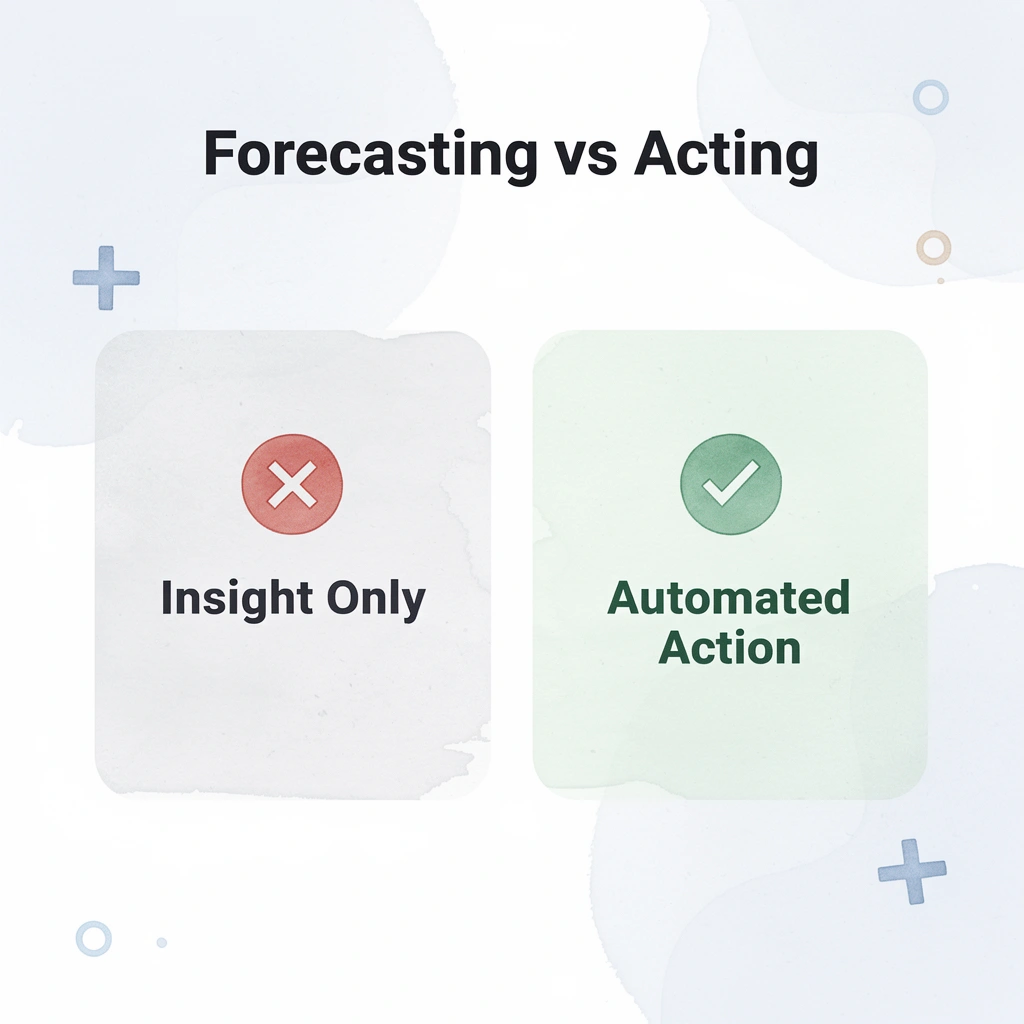
Conduit bridges that gap by turning demand insights into automated guest and operational workflows. Rather than relying on manual processes that break down under pressure, Conduit connects your forecasting data directly to the actions that drive revenue and guest experience outcomes.
| Challenge Without Conduit | Outcome With Conduit |
|---|---|
| Manual guest communications | Automated, timely outreach |
| Overwhelmed operational teams | Streamlined workflows at scale |
| Missed revenue windows | Right message, right guest, right time |
| Forecasts sitting idle | Insights converted to immediate action |
Key Point: Conduit transforms passive demand data into active, automated workflows — closing the gap between forecasting and real revenue impact.
Takeaway: The bridge between insight and action is where hotels truly win. Conduit ensures that no demand signal goes unactioned, turning forecasting investments into measurable guest and revenue outcomes.
How does Conduit automate guest communication at scale?
When demand forecasts indicate increased occupancy, hotels must communicate with guests at scale without overwhelming staff. Conduit automates guest communication across every channel, helping properties respond faster and maintain consistent service levels during high-demand periods. Because Conduit connects deeply with a hotel's hospitality technology stack, it can access real reservation and property information. This enables personalized communication based on the guest's actual context rather than generic messages, delivering more relevant interactions while reducing staff time spent on routine requests.
How does Conduit turn high-demand periods into revenue opportunities?
Conduit powers proactive workflows triggered by events such as bookings, check-ins, and purchases. When demand is strong and occupancy forecasts are high, hotels can proactively reach out to guests with upgrade opportunities, stay extensions, add-on services, special offers, and pre-arrival information. These touchpoints generate additional revenue while enhancing the guest experience.
How does Conduit improve operational coordination during busy periods?
At the operational level, forecasting shows when teams will experience increased workloads. Conduit helps by routing guest requests and operational tasks to appropriate teams with full context attached. Instead of employees tracking down information or manually forwarding requests, teams receive the details needed to act quickly. This coordination proves particularly valuable during high-demand periods, when communication gaps among guest services, housekeeping, maintenance, and operations can create delays. By automating routine processes and communications, Conduit supports alignment between guest-facing teams and operational staff while keeping human teams in control of critical decisions.
How does Conduit help hotels scale without increasing headcount?
Many hotels experience seasonal fluctuations in business. During peak periods, guest inquiries increase significantly, straining staff and creating pressure to hire additional employees. Conduit enables hotels to handle higher volumes of guest interactions while maintaining service quality without proportional increases in staffing. This allows properties to scale their communication efforts efficiently as demand shifts. Most importantly, Conduit ensures consistent guest experiences regardless of occupancy. Whether managing a normal week or preparing for peak periods, guests receive quick responses, helpful information, and personalized communication throughout their stay.
Book a Demo to See Conduit's AI for Hospitality Customer Service in Action
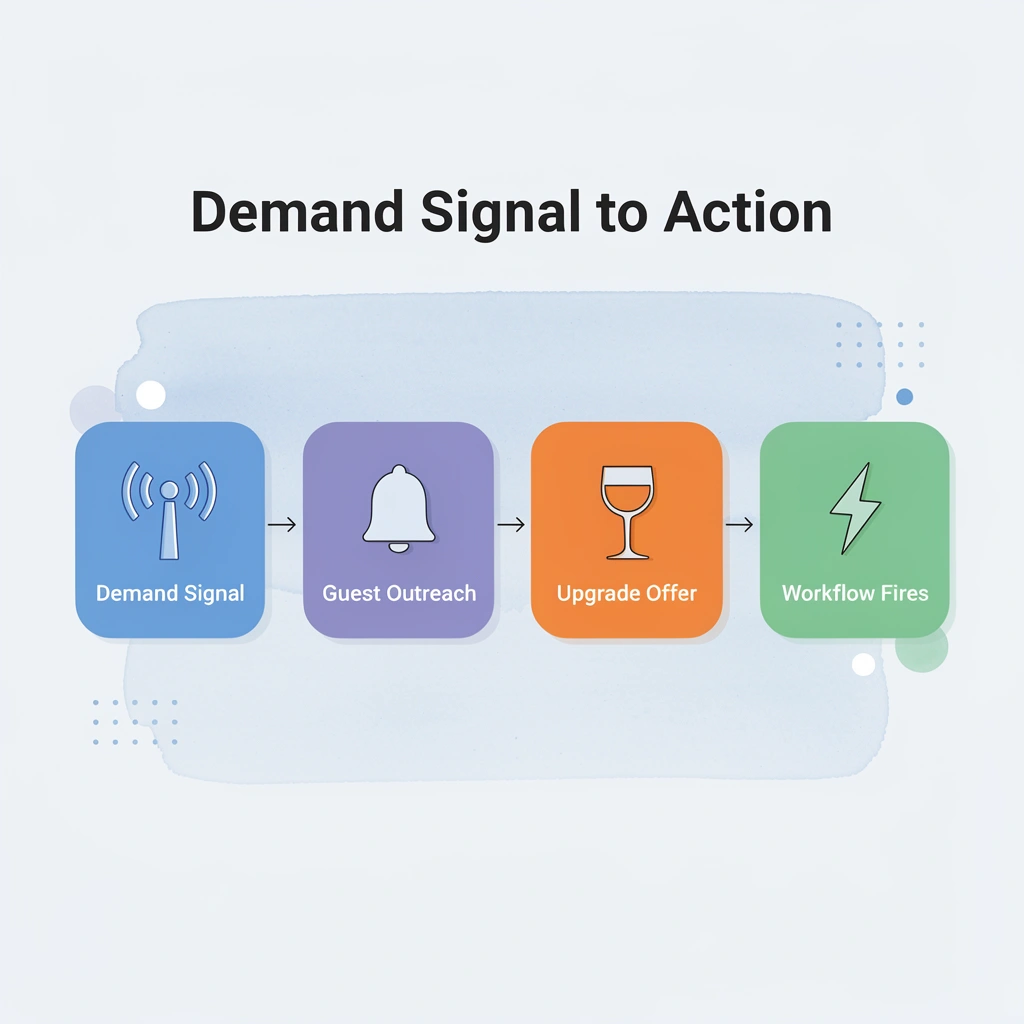
AI for hospitality like Conduit connects directly to your reservation data, triggering guest outreach, upgrade offers, and operational workflows the moment demand signals appear. Our platform closes the gap between insight and execution — the exact place where revenue disappears — so your team responds to what's coming, not what already passed.
"The gap between insight and execution is where revenue disappears — Conduit closes that gap by connecting demand signals directly to automated action."
Key Point: Conduit doesn't just surface data — it acts on it, triggering guest outreach, upsell offers, and staffing workflows automatically the moment a demand signal is detected.
| Capability | Without Conduit | With Conduit |
|---|---|---|
| Guest Outreach | Manual, delayed | Automated, instant |
| Upgrade Offers | Reactive | Proactive, demand-triggered |
| Operational Workflows | Siloed, slow | Connected to live booking data |
| Revenue Timing | After opportunities close | Before opportunities close |
Book a Conduit demo to see automated guest communication, proactive upsell sequences, and staffing workflows powered by real booking data, turning demand intelligence into action before opportunities close.
Tip: The demo uses live reservation data, so you'll see how automated workflows perform in your own hospitality environment.
Best Practice: Conduit's proactive sequences capture upsell revenue and operational efficiency when demand signals emerge, not after peak demand passes.
Related Reading
- Canary Technologies Competitors
- Best Hotel Channel Manager Software
- Hospitality Chatbot
- Hotel Distribution Management
- Hospitality Conferences
- Siteminder Competitors
- Cloudbeds Alternatives
- Best Revenue Management Software For Hotels
- Digital Concierge Software
Stay in the loop
Get the latest on AI automation, product updates, and customer stories.

