Enso Connect Pricing: What Hosts Should Know Before Buying


Enso Connect Pricing
Costs, fees, and alternatives
Guest communication platforms have transformed how hotels interact with visitors, but understanding their true costs requires looking beyond monthly subscription fees. Property size, booking volume, and integration needs all influence the final investment, making it essential to evaluate whether a platform's pricing structure aligns with operational requirements.
Smart property managers compare multiple solutions to find the best value for their specific situation. Features, scalability, and transparent pricing models become key factors in making informed decisions about guest communication technology, which is why exploring comprehensive solutions like AI for hospitality can provide clarity in a complex marketplace.
Table of Contents
- Why Hosts and Property Managers Start Researching Enso Connect Pricing
- The Belief That the Lowest Software Price Creates the Best Value
- What Impacts Enso Connect Pricing?
- What Hosts Should Evaluate Beyond Price
- Enso Connect vs Hospitality AI Platforms
- Why Hospitality Teams Choose Conduit When They Need More Than Guest Experience Software
- Book a Demo to See Conduit's AI for Hospitality Customer Service in Action
- Summary
Summary
Property managers typically begin researching guest communication platforms when manual workflows break down, often around 15 to 20 properties. Beyond that threshold, teams can't keep up with guest messages across multiple channels (Airbnb, Vrbo, email, SMS, WhatsApp), and hustle alone no longer compensates for missing systems. The search for pricing solutions usually starts after a communication failure damages reviews or causes staff burnout, rather than through proactive planning.
According to Metronome's research on software value, 80% of software buyers prioritize price over value when making purchasing decisions, but Info-Tech Research Group's 2025 study found that only 18% of IT leaders believe the lowest software price creates the best value. The real cost lives in what doesn't happen: upsell opportunities that never get presented, guest questions that take 45 minutes instead of 45 seconds to answer, and staff spending shifts managing communication instead of improving properties. A platform that costs twice as much but reduces communication workload by 70% delivers better financial outcomes than a cheaper tool that only reduces it by 20%.
Enso Connect pricing has historically started at approximately $9 to $16 per listing per month, according to Lodgify, with final costs varying based on portfolio size, feature requirements, integration complexity, and support needs. Properties that track guest reviews see 23% higher booking rates, according to Beyond Pricing's 2025 Vacation Rental Revenue Management Report, which means the quality of communication directly influences whether guests feel cared for or processed. The challenge is that focusing on monthly subscription fees often obscures the more important question: what does this platform actually do once it's running?
Oracle Hospitality's 2025 consumer research study found that 73% of travelers said they are more likely to stay at hotels offering self-service technology, while 67% expressed interest in hotels that use AI-powered services. However, the American Hotel & Lodging Association's 2025 staffing report revealed that 65% of hotels reported staffing shortages, highlighting the growing need for technologies that reduce operational workload rather than simply digitize interactions. Guest experience platforms help you respond faster, but they don't execute the work that follows, like logging maintenance issues, assigning tasks, tracking completion, and verifying repairs.
Conduit's research on independent hotels shows properties can reach 95% automation in routine guest communications while simultaneously identifying upsell opportunities that manual processes miss. The platform treats guest communication and operational execution as parts of the same workflow, so a maintenance request automatically becomes a work order, housekeeping notifications adjust based on actual guest activity, and stay extensions trigger inventory updates without staff intervention.
AI for hospitality addresses this by automating routine interactions that consume staff time (WiFi troubleshooting, check-in coordination, local recommendations) while identifying revenue opportunities in real time and connecting directly to property management systems to deliver responses grounded in actual availability and operational constraints.
Why Hosts and Property Managers Start Researching Enso Connect Pricing
The search for Enso Connect pricing rarely starts with pricing. It starts when a property manager realizes their team is drowning in guest messages, check-in requests pile up faster than staff can respond, and the gap between guest expectations and what the operation can deliver keeps widening.
🎯 Key Point: Most hosts don't start by comparing pricing models - they start by recognizing that their current operational pain points are unsustainable and need immediate solutions.
"Property managers typically reach their breaking point when guest communication becomes the bottleneck that limits their ability to scale operations effectively."
⚠️ Warning: Waiting until your team is completely overwhelmed before researching automation solutions like Enso Connect means you're already losing revenue and guest satisfaction every day you delay.
What triggers property managers to seek automation solutions?
Most operators start looking for a solution because something broke in their current workflow. A guest left a negative review because no one answered their 11 PM question about parking. A team member quit because they spent their entire weekend answering the same check-in instructions repeatedly. Revenue opportunities slipped away because upsell messages never got sent, arrived too late, or felt too generic to convert.
The Operational Reality Behind the Search
Property managers handle questions across Airbnb, Vrbo, direct bookings, email, SMS, and WhatsApp. Each channel demands attention, and guests expect personalized, immediate responses. Each property has unique instructions, access codes, and local recommendations that must be shared at precisely the right time.
Manual handling breaks down around the property at fifteen or twenty. Before that, hard work compensates for the lack of systems. After it, hard work causes burnout. Operators turn to platforms like Enso Connect when they realize that working harder won't solve a problem requiring a different approach.
Why does pricing become the primary decision factor?
Once property managers understand they need technology, pricing becomes the easiest way to narrow down options. Monthly software costs accumulate across property management systems, channel managers, dynamic pricing tools, and guest experience platforms.
According to BnB Calc's review of Enso Connect, operators should note the 60-day cancellation notice requirement, which affects how teams evaluate commitment and switching costs when comparing platforms.
What costs matter more than subscription fees?
The challenge is that focusing on monthly subscription fees hides the more important question: what does this platform do once it's running? A lower price point matters less if the system still requires your team to manually trigger messages, customize responses for each property type, or handle routine questions that should be automated.
The real cost is the hours your team continues spending on work the platform was supposed to eliminate.
How do AI solutions change the value calculation?
Solutions like Conduit's AI for hospitality transform how you approach guest communication. Instead of asking teams to set up message templates and automation rules across multiple tools, our AI agents handle guest communication from start to finish, learning from each interaction to become more customized to your specific properties.
Value is measured by how much communication work your team eliminates while guest satisfaction improves. Most operators begin by comparing pricing page line items to identify which tier includes the features they need. The lowest price rarely delivers the best result.
Related Reading
- AI Communications For Hotels
- AI For Vacation Rentals
- AI For Airbnb Hosts
- AI Use Cases In Hospitality
- Best Hotel Chatbot
The Belief That the Lowest Software Price Creates the Best Value
The instinct to choose the cheapest hospitality platform stems from a need to protect profits in an industry where every dollar matters. According to Metronome's research on software value, 80% of software buyers prioritize price over value when making purchasing decisions. When platforms offer similar guest messaging capabilities, the least expensive option appears to be smart financial management.
🎯 Key Point: Most software buyers fall into the price-first trap, potentially sacrificing long-term value for short-term savings.
"80% of software buyers prioritize price over value when making purchasing decisions." — Metronome Research
⚠️ Warning: Choosing based on price alone assumes all platforms deliver equal results—a dangerous assumption in hospitality technology.
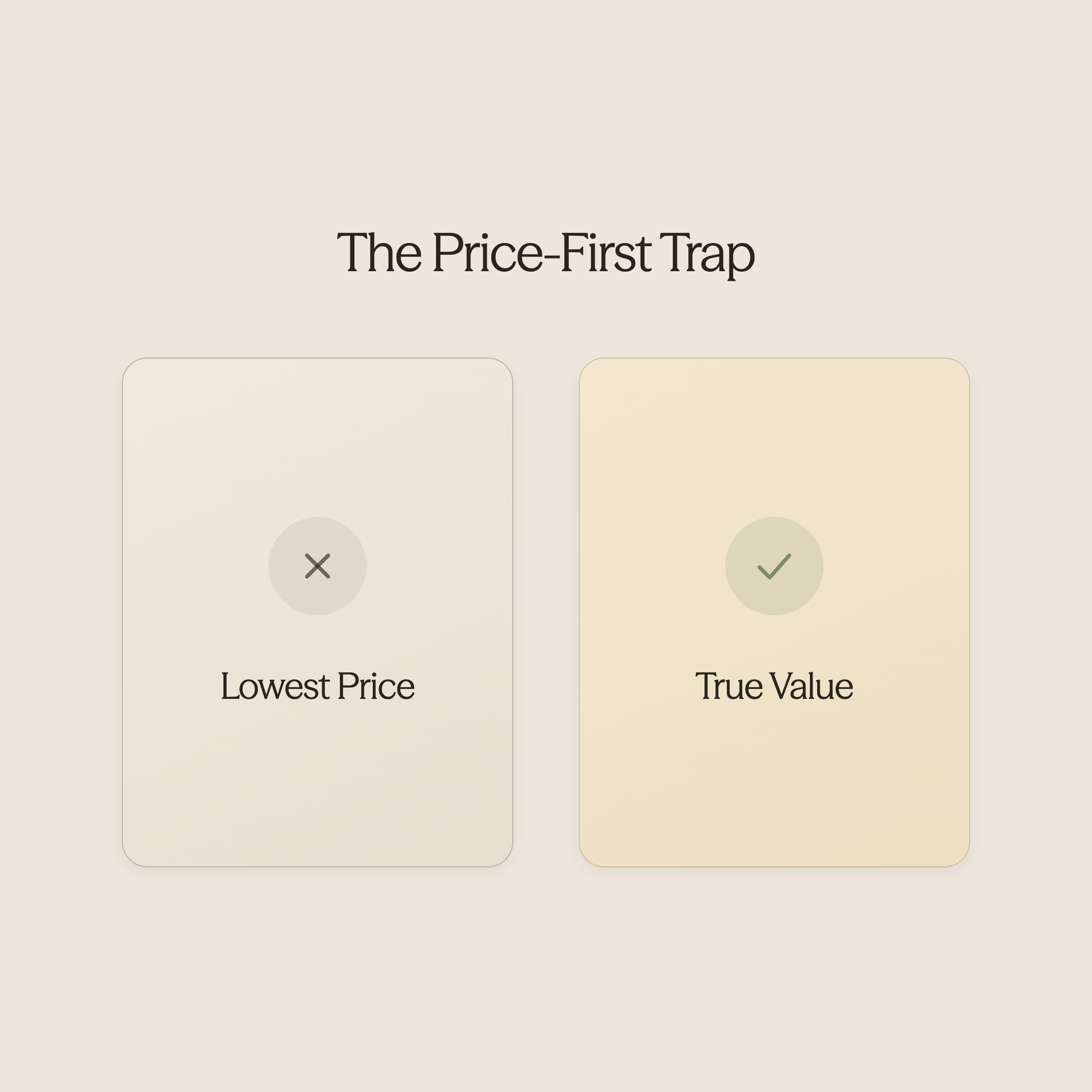
But that logic assumes the platforms deliver comparable outcomes. They rarely do.
🔑 Takeaway: Platform performance varies dramatically, making price-only comparisons misleading and potentially costly.
What the price tag doesn't tell you
A $99/month guest communication tool might handle basic messaging, but if your team still spends hours manually coordinating check-ins, answering repetitive questions about WiFi passwords, and following up on maintenance requests, you've added a software cost without reducing operational expenses.
The real cost is in what doesn't happen: chances to sell more services never presented because the system can't understand what guests want, guest questions taking 45 minutes instead of 45 seconds, and staff managing communication instead of improving the property. These hidden costs accumulate daily but don't appear on the pricing page.
What revenue opportunities do hotels miss without automation?
Guest interactions create dozens of small opportunities to generate revenue throughout each stay: early check-in requests, late check-out inquiries, room upgrade requests, and experience recommendations. Without intelligent automation, this revenue disappears. You might save $200 per month on subscription costs while losing $2,000 in unrealized upsells—but only one of those numbers shows up in your budget.
Why do most IT leaders prioritize value over price?
Info-Tech Research Group's 2025 software value study found that only 18% of IT leaders believe the lowest price creates the best value. The remaining 82% prioritize total business impact over subscription cost.
Platforms like AI for hospitality automate routine interactions—WiFi troubleshooting, check-in coordination, local recommendations—while identifying revenue opportunities in real time, making automation rates and revenue capture more important than subscription cost.
What question should experienced operators ask instead of focusing on cost?
Experienced operators stop asking "What does this cost?" and start asking "How much manual work will this eliminate?" A platform that costs twice as much but reduces communication workload by 70% delivers better financial outcomes than a cheaper tool reducing it by 20%. Most buyers skip this labor-cost calculation during initial research.
Why do efficiency gains feel harder to evaluate than subscription fees?
Efficiency gains are harder to measure upfront than subscription fees. You can't know exactly how much time a platform will save until it's implemented and measured. That uncertainty makes price feel like the safer focus, even when it's wrong.
Once you realize the lowest price rarely delivers the best outcome, the question becomes: what determines value if not price?
What Impacts Enso Connect Pricing?
Enso Connect pricing varies based on your business needs: how many properties you manage, which features you enable, what other tools you integrate, and how much support you require for setup. Two operators managing comparable property groups may receive different pricing.
🎯 Key Point: Unlike standard SaaS pricing tiers, Enso Connect's custom pricing model means your quote depends on your specific operational requirements and property portfolio size.
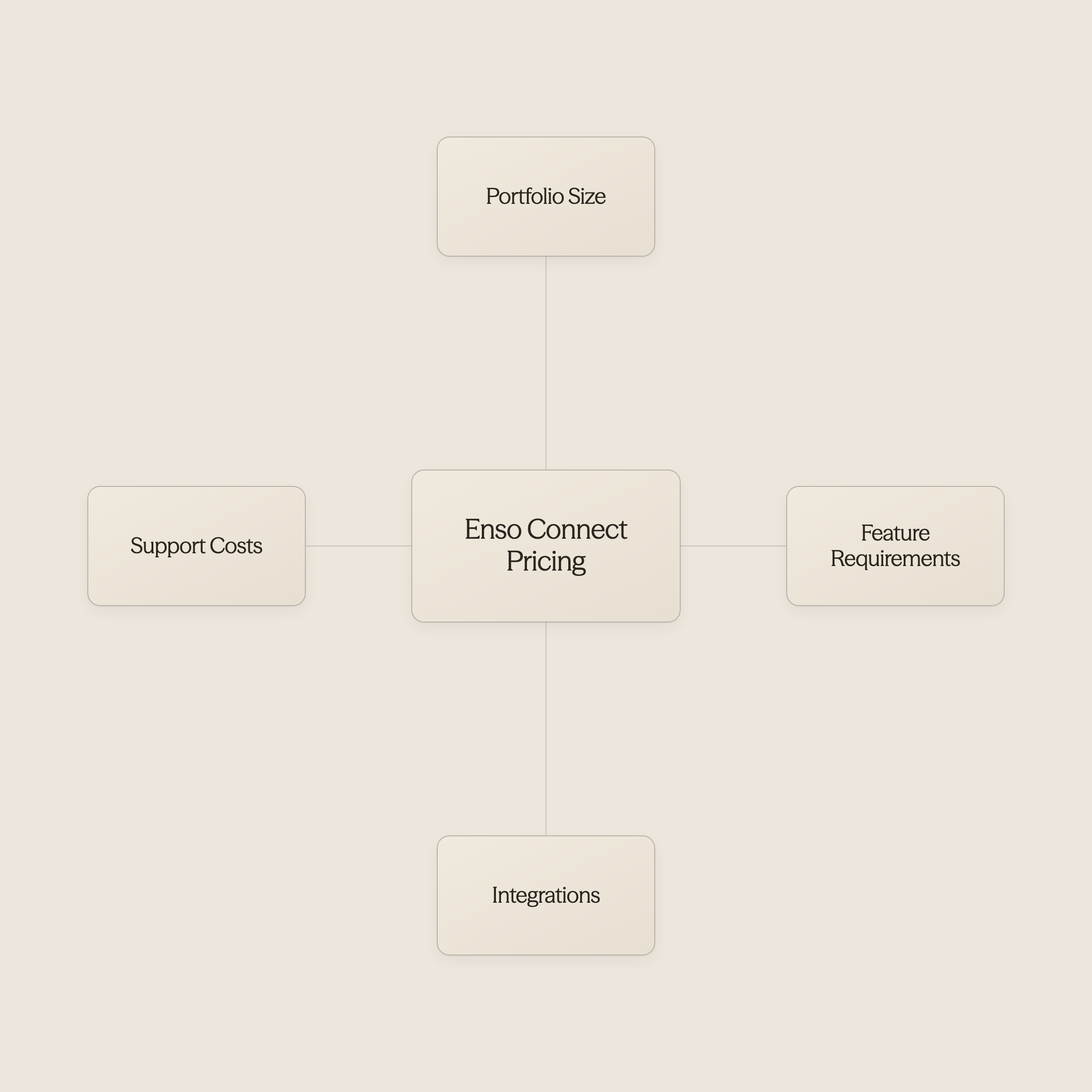
This flexibility makes it harder to compare prices upfront. You can't examine three pricing levels and immediately know which fits you; instead, you have a conversation where details matter more than the starting price.
"Custom pricing in property management software can vary by 300-500% between similar-sized operators based on feature requirements and integrations." — Property Management Software Report, 2024
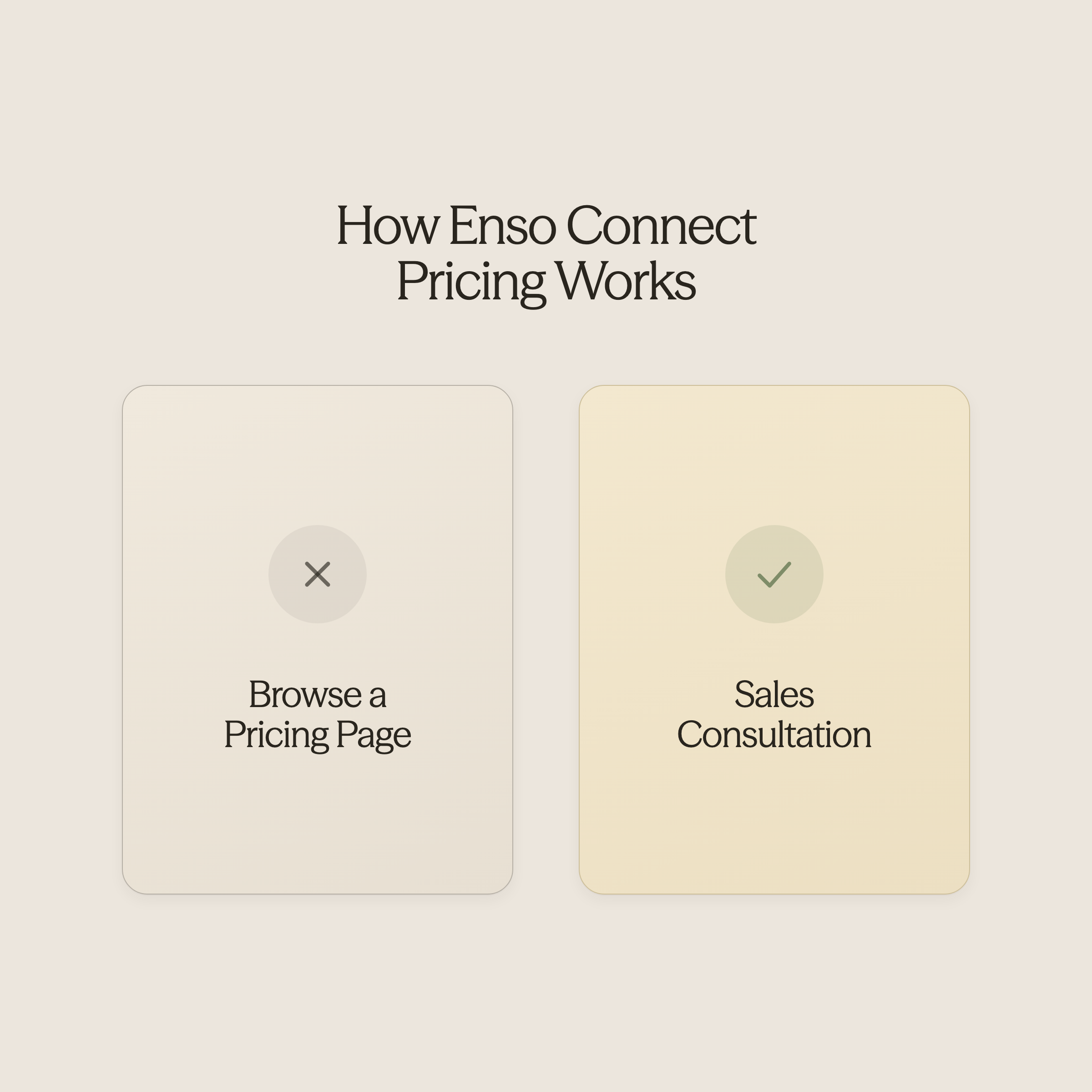
⚠️ Warning: Don't expect transparent pricing on their website—Enso Connect requires a sales consultation to get your actual costs, which can make budget planning more challenging.
Portfolio Size
The number of units or listings you manage forms the foundation of most hospitality software pricing models. A host managing eight vacation rentals has different usage patterns than an operator overseeing 300 units across multiple cities. As portfolio complexity increases, the platform handles higher message volumes, more automations, and greater data processing.
According to Lodgify's partnership announcement, Enso Connect pricing has historically ranged from approximately $9 to $16 per listing per month, depending on the number of listings and the features enabled. This per-unit model scales with your operation, so growth directly impacts your software budget.
Feature Requirements
Not every property manager needs every capability Enso Connect offers. Some operators focus on guest communication automation and digital guidebooks, while others want the full suite: the Boarding Pass guest portal, contactless check-in workflows, smart lock connectivity, upselling tools, CRM functionality, and AI-powered messaging.
Properties that use more capabilities typically pay different prices than those that use only core features. Add-on services like guest screening and certain AI capabilities may also affect costs. The challenge is determining which features you need versus which ones sound compelling in a demo but won't meaningfully change how you run your business.
Integrations
Hospitality software rarely works in isolation. You're likely already using a property management system, smart locks, revenue management tools, and guest communication platforms. Enso Connect integrates with major hospitality systems, but the number and complexity of those connections affect setup requirements and costs. Connecting five different systems with custom workflows and unique data structures requires more setup and testing than a simple PMS connection.
What factors determine support and service costs?
The total cost of ownership extends beyond software access. Larger operators and multi-property portfolios require more implementation and support resources than smaller deployments. Onboarding assistance, team training, workflow configuration, and ongoing account management all factor into your actual costs.
A solo host might be comfortable with self-service setup and email support. A 200-unit operation needs dedicated onboarding, custom automation setup, and a responsive account manager. These service layers cost money, and they're where the real value—or lack of it—becomes visible.
How do AI platforms change pricing models?
Platforms like AI for hospitality shift pricing from listing features to actual results. Instead of paying for enabled tools, our AI agents handle guest messages and day-to-day operations across every channel. They learn from each conversation to improve performance for your property.
The cost structure shifts from per-listing fees to the amount of operational capacity the system creates. But knowing what affects pricing doesn't tell you if the investment is worth it. That requires examining real results, not the monthly bill.
Related Reading
- Hotel Automation Tools
- Ai Agents For Hotels
- Ai Chatbot For Hotels
- Best Hotel Chatbot
- Ai Tools For Hotels
- Guest Communication Tools
- Hotel Chatbot Guide
What Hosts Should Evaluate Beyond Price
Understanding pricing structures tells you what you'll pay, but not whether the investment improves your operation. Two platforms with similar monthly costs can produce dramatically different outcomes depending on how they affect guest satisfaction, operational workload, and revenue generation. Experienced operators measure business impact rather than subscription fees.
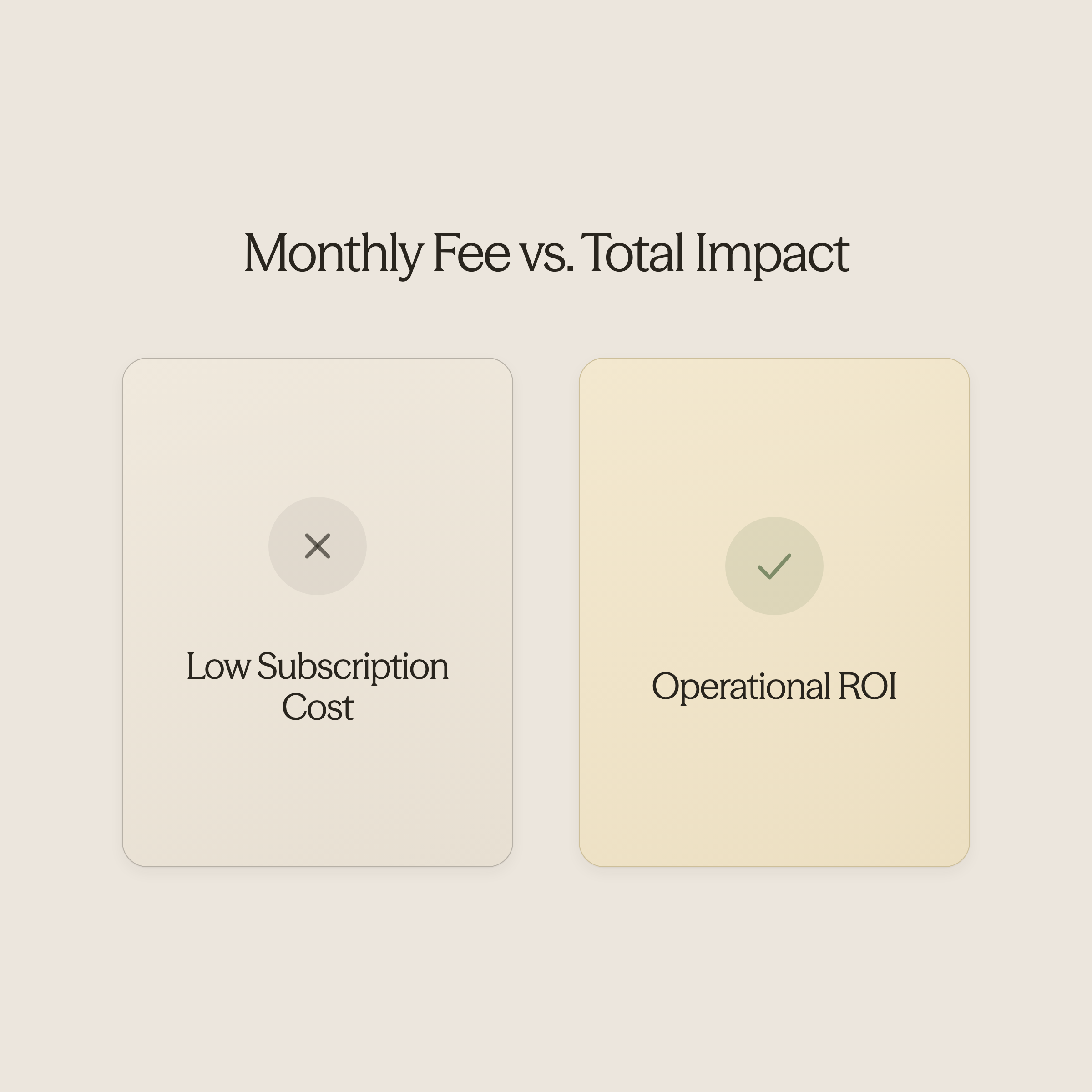
🎯 Key Point: The cheapest platform isn't always the most cost-effective when you factor in time savings, improved guest experience, and revenue optimization.
"Smart hosts evaluate the total cost of ownership, including setup time, learning curve, and ongoing maintenance — not just the monthly subscription fee." — Hospitality Tech Research, 2024
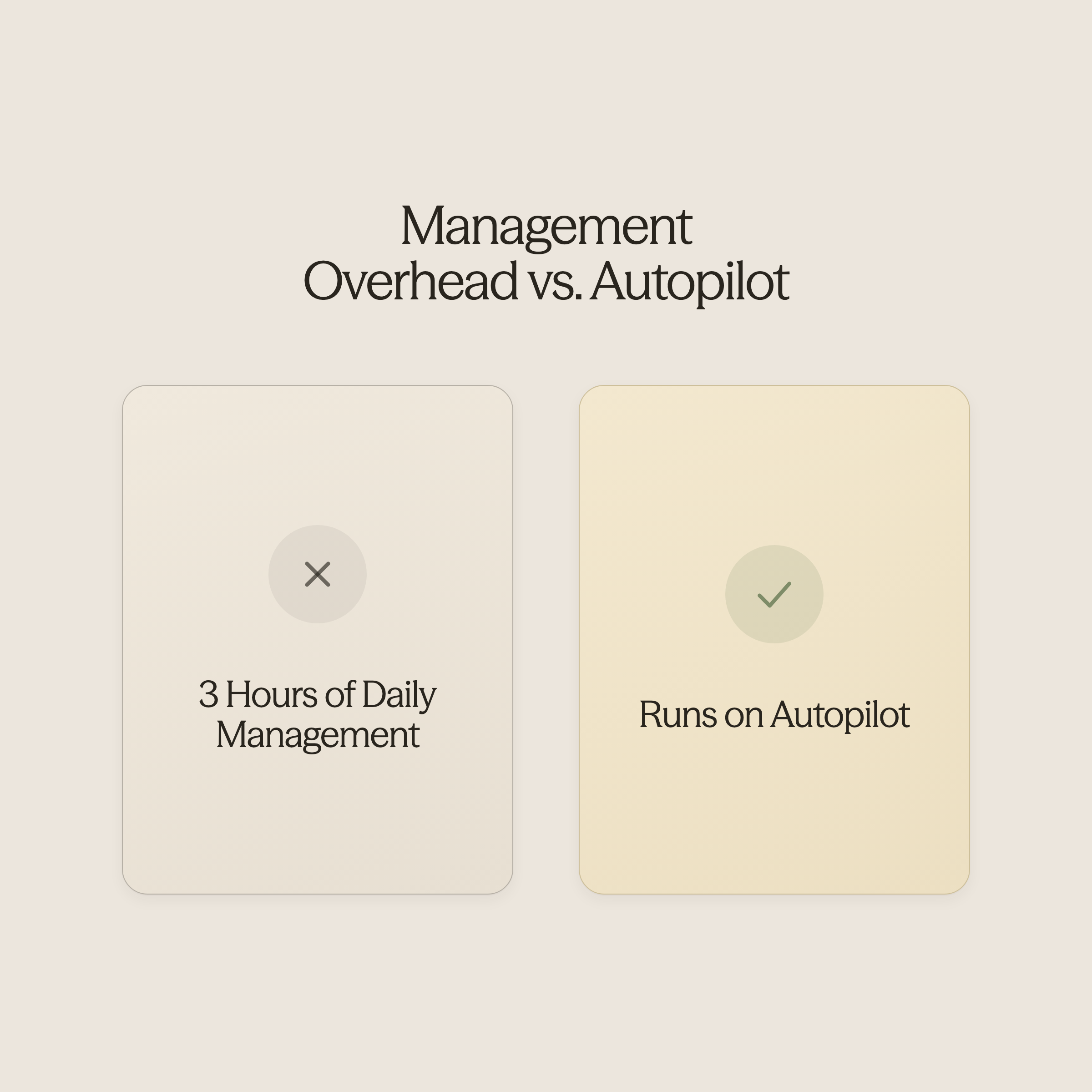
⚠️ Warning: A low-cost solution that requires 3+ hours of daily management can actually cost more than a premium platform that runs on autopilot.
Why does communication quality matter for guest satisfaction?
How you communicate with guests affects nearly every aspect of their experience, from arrival through post-stay reviews. Travelers expect quick, accurate answers across multiple channels—SMS, email, WhatsApp, and booking platform messages—around the clock.
The difference between a five-star review and a three-star complaint often comes down to whether someone answered a simple question within 20 minutes or left it unanswered until morning.
What should hotels look for in communication platforms?
When evaluating platforms, look beyond "automated messaging" as a checkbox feature. Does the system understand context and personalize responses based on reservation details, guest history, and property-specific information?
A platform that sends "Your check-in code is 1234" to every guest creates efficiency. A platform that knows the guest has booked a ground-floor unit due to mobility concerns and proactively confirms the availability of accessible parking creates hospitality.
Properties that track guest reviews see 23% higher booking rates, according to the Beyond Pricing 2025 Vacation Rental Revenue Management Report. Communication quality directly influences whether guests feel cared for or processed.
Why does operational impact matter more than guest-facing features?
Most hospitality software is evaluated based on guest-facing features, while its operational impact is often overlooked. Whether a platform reduces your team's workload often matters more than whether it impresses guests.
A system that automates guest messages but still requires staff to manually coordinate housekeeping, maintenance requests, and check-in logistics hasn't solved the core problem; it has merely shifted the work around.
How do platforms that connect communication to execution generate real ROI?
The platforms that create real return on investment connect communication to execution. When a guest requests early check-in, does the system automatically check housekeeping status, verify availability, calculate the upsell price, and process payment?
Or does it notify someone who then manually checks three other systems before responding? Most operators discover this gap only after purchase, when their "automation platform" still requires constant human intervention for routine requests.
What operational data creates value beyond core features?
Only 37% of hosts track occupancy rates regularly, according to Beyond Pricing's research.
A platform that shows operational data (response times, task completion rates, bottleneck identification) creates value beyond its core features by revealing where problems actually exist.
How do guest communication platforms generate revenue through upselling?
Guest communication platforms serve as revenue-generating tools. Each guest interaction presents an opportunity to increase spending through early check-ins, late checkouts, parking upgrades, local experience packages, or premium amenities. Personalizing offers based on guest behavior, booking patterns, and room availability can generate thousands in additional monthly revenue.
Most operators handle upselling manually and inconsistently. Conduit automates this by analyzing guest data, identifying opportunities, and presenting offers at optimal moments in the guest journey, converting conversations into revenue events without staff intervention.
What makes intelligent upselling more effective than manual approaches?
The real value lies in consistency and intelligence. A system that recognizes a family with young children arriving and proactively offers a pack-and-play rental, or identifies an early flight and suggests late checkout at the right price, generates revenue that humans cannot capture across dozens of simultaneous conversations.
But platforms with sophisticated features fall short if they can't adapt to your specific operation, which is where evaluation begins.
Enso Connect vs Hospitality AI Platforms
Enso Connect improves the guest experience through digital tools and communication. Hospitality AI platforms like AI for hospitality streamline operations, workflows, and revenue management. Our platform helps hospitality businesses streamline these processes while improving guest interactions. The choice depends on whether you need to enhance how guests interact with your hotel or automate tasks across your operation.
🎯 Key Point: Enso Connect focuses on guest-facing digital experiences, while AI platforms target operational efficiency and revenue optimization.
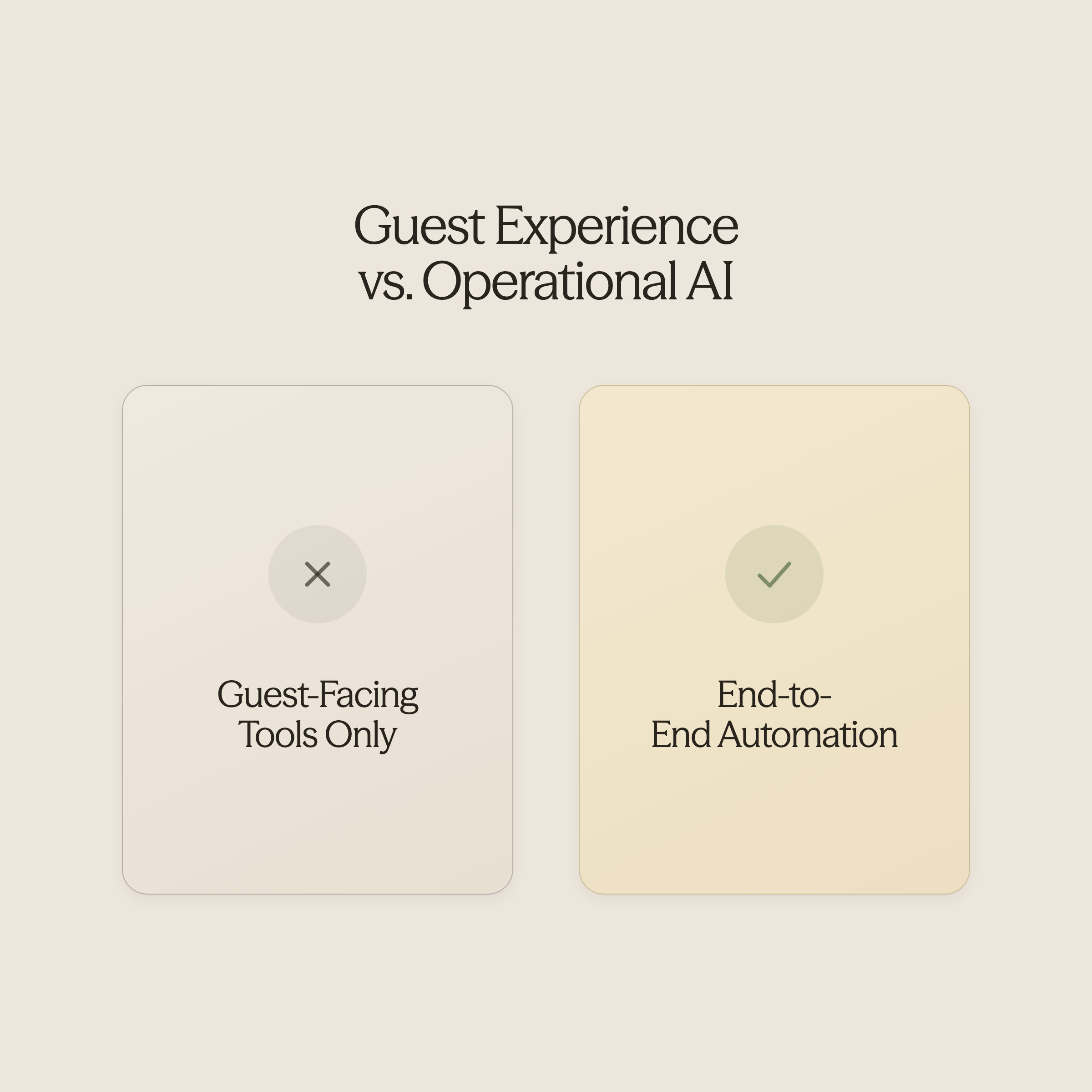
"The choice depends on whether you need to improve how guests interact with your hotel or automate tasks across your whole operation." — Platform Comparison Analysis
| Platform Type | Primary Focus | Best For |
|---|---|---|
| Enso Connect | Guest experience & communication | Hotels prioritizing guest satisfaction |
| Hospitality AI Platforms | Operations & revenue management | Properties needing workflow automation |
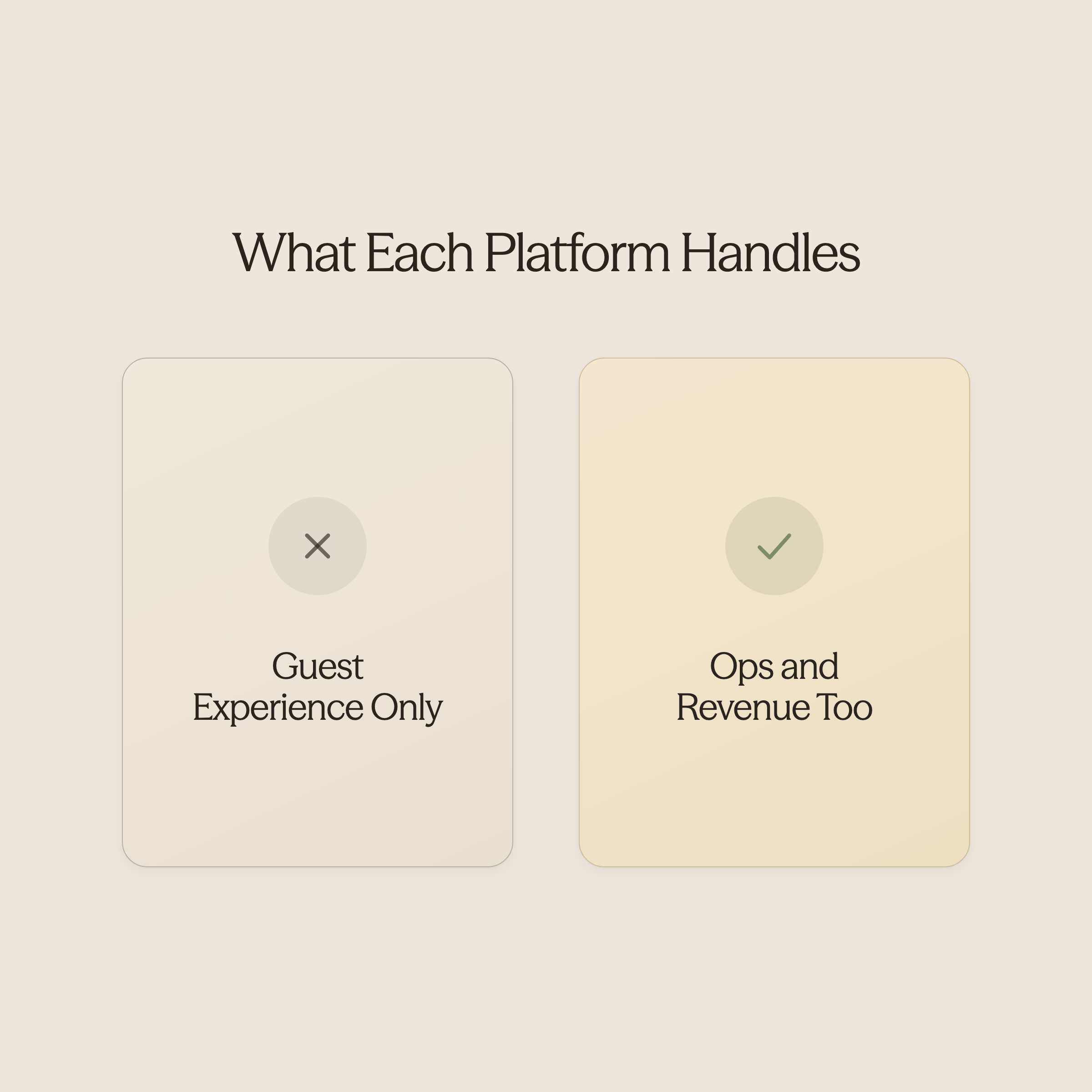
🔑 Takeaway: Consider Enso Connect for guest-centric improvements and AI platforms for operational streamlining - many hotels benefit from both approaches working together.
How does Enso Connect improve guest experiences?
Enso Connect improves guest experiences by centralizing communication, enabling digital check-in, and connecting to smart property technologies. For vacation rental operators managing 20 to 50 properties, these features address key challenges in guest convenience and staff efficiency.
The platform's digital guest journey infrastructure—automated messaging, self-service portals, and smart lock integrations—creates a modern experience beyond email and phone calls. According to Oracle Hospitality's 2025 consumer research study, 73% of travelers prefer hotels that offer self-service technology, while 67% are interested in AI-powered services.
What value do engagement tools provide operators?
Engagement tools maintain communication before, during, and after guest stays—setting expectations, answering questions, and encouraging reviews. For operators seeking to improve guest satisfaction scores and reduce repetitive communication tasks, this delivers clear value.
How are staffing constraints changing guest communication priorities?
As staffing constraints continue, operators are shifting focus from "How do I communicate better with guests?" to "How do I reduce the operational work that guest communication creates?" A guest message about a broken coffee maker requires logging the issue, assigning it to maintenance, tracking completion, updating the guest, and verifying the repair before the next check-in.
Most guest experience platforms stop at communication. They help you respond faster, but don't execute the work that follows. According to the American Hotel & Lodging Association's 2025 staffing report, 65% of hotels reported staffing shortages. With labor availability declining, systems must reduce operational workload rather than simply digitize interactions.
How do hospitality AI platforms execute workflows beyond communication?
Hospitality AI platforms treat guest communication as the starting point of a workflow, not the endpoint. A late checkout request checks room availability, evaluates revenue impact, adjusts housekeeping schedules, and either approves automatically or surfaces the decision to staff when human judgment is required. The system executes, not informs.
How do communication tools differ from operational AI systems?
Most hospitality operations require coordination across departments. A guest question about accessibility features might require room-specification confirmation, equipment availability verification, housekeeping coordination, and front-desk updates. Communication tools transmit these messages, while AI platforms organize the entire sequence without manual handoffs.
What makes AI platforms handle complete guest interactions
Platforms like AI for hospitality treat each guest interaction as an opportunity for automation across communication, operations, and revenue optimization. When a guest requests early check-in, the system checks room readiness, calculates pricing for early access, coordinates with housekeeping if needed, and either confirms availability or offers alternatives based on real-time operational data. Guests receive complete answers, and staff receive actionable tasks only when human expertise is required.
Why do operators choose AI platforms over faster responses
Every guest message creates follow-up tasks that consume staff time regardless of response speed. Operators who choose AI platforms seek systems that reduce the total amount of manual work required to deliver those responses.
Why Hospitality Teams Choose Conduit When They Need More Than Guest Experience Software
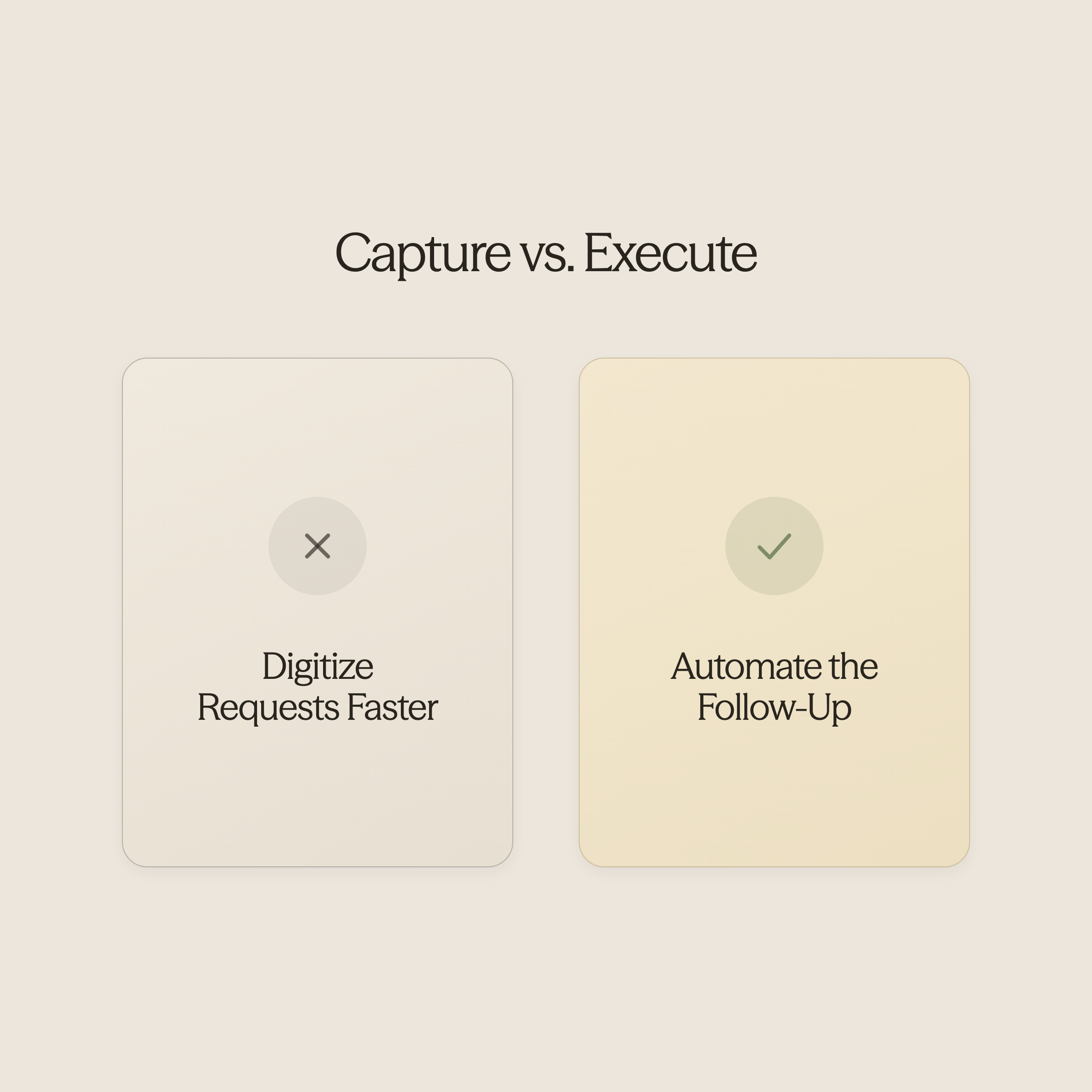
Better communication alone doesn't solve operational problems. A faster maintenance response still requires someone to coordinate the repair, update housekeeping schedules, and follow up with the guest. Guest experience platforms digitize interactions but rarely reduce the downstream workload they create. That's the gap driving hospitality teams toward platforms that automate execution, not just engagement.
🎯 Key Point: The real challenge isn't improving guest communication—it's reducing the operational burden that follows every guest interaction.

"Guest experience platforms digitize interactions but rarely reduce the downstream workload they create." — Industry Analysis, 2024
💡 Tip: Look for platforms that don't just capture guest requests faster but actually automate the coordination and follow-up tasks that traditionally require manual intervention.
AI That Understands Hospitality Context
Regular chatbots fail in hospitality because they don't understand hotel operations. When a guest asks about early check-in at 2 PM on Saturday during peak season, the answer differs from the same request on a Tuesday in February, when occupancy is 40%.
Conduit connects directly to property management systems, housekeeping schedules, and reservation data, delivering responses based on actual availability and hotel capacity. This transforms AI from a tool delivering scripted answers into one that makes informed decisions based on operational realities, reducing the need for staff intervention.
Workflow Automation That Reduces Manual Coordination
Guest requests start chains of tasks inside the hotel. A late checkout request affects housekeeping timing, room turnover schedules, and the next guest's arrival. Historically, front desk staff coordinated manually through phone calls, texts, and messaging.
Conduit automates this by routing requests to the right teams with full context, automatically updating systems, and confirming completion with the guest. The automation eliminates coordination overhead, delivering significant time savings.
Revenue Intelligence Embedded in Guest Interactions
According to Conduit's research on independent hotels, properties can reach 95% automation in routine guest communications while identifying upsell opportunities that manual processes miss. A guest checking in early might pay for early room access if the offer arrives at the right moment with minimal friction. Our AI understands guest behavior patterns and property revenue strategies to proactively surface these opportunities, converting reactive service into strategic revenue generation.
How does integrated guest communication eliminate operational inefficiencies?
The separation between guest-facing technology and operational systems creates inefficiency. When a guest reports a maintenance issue via a messaging platform that is disconnected from work order management, staff must manually transfer the information, assign the task, and track its completion.
Conduit treats guest communication and operational execution as parts of the same workflow. Maintenance requests become work orders automatically. Housekeeping notifications adjust based on actual guest activity. Stay extensions trigger inventory updates and billing adjustments without staff intervention. This integration grows more critical as labor costs rise and staffing constraints tighten across the industry.
What proves hospitality technology effectiveness?
The true test of any hospitality technology is how well it works in action.
Related Reading
- Property Management AI Tools
- Airbnb Automation Tools
- AI Software For Hotels with the Best Reviews
- Airbnb Automated Messages
- Best AI for Hotels
- Hotel Automation Software
- Duve Pricing
- Hijiffy Pricing
Book a Demo to See Conduit's AI for Hospitality Customer Service in Action
If you're researching Enso Connect pricing, the question isn't what the software costs—it's how much staff time you're spending on guest communication after purchase. Count the hours spent answering repeated questions, coordinating requests across teams, and following up on tasks that should close automatically. That's the hidden cost no pricing page reveals.
Book a demo with Conduit to see how our AI handles guest service from first message to final resolution, working inside the tools your team uses. You'll watch reservation-aware responses that adjust based on occupancy, requests that route to the right department without manual handoffs, and upsells that surface when guests are most receptive. Our system learns your property's patterns and improves with each interaction, so automation rates climb while escalations drop.

🎯 Key Point: Your first step costs nothing. Identify the five guest requests that consume the most staff time each week and estimate how many could be resolved automatically with access to reservation details, room status, and service history. That gap between current reality and what's possible is where Conduit operates, turning repetitive communication into automated workflows that free your team for interactions requiring human judgment.
"The gap between current reality and what's possible is where Conduit operates, turning repetitive communication into automated workflows that free your team for interactions requiring human judgment." — Conduit AI Platform
🔑 Takeaway: The true value of AI-powered guest service isn't measured in software costs—it's calculated in hours saved, staff efficiency gained, and guest satisfaction improved through instant, accurate responses that work 24/7 without human intervention.
Stay in the loop
Get the latest on AI automation, product updates, and customer stories.

