Best AI for Hotels: 7 Platforms That Improve Guest Experience


Best AI for Hotels
7 platforms that improve guest service
The hotel industry faces a simple truth: guests expect instant responses, personalized service, and seamless experiences around the clock. Most properties struggle to deliver this level of attention without overwhelming their staff or breaking their budget. AI Communications For Hotels has emerged as a practical solution, transforming how properties interact with guests from the first booking inquiry to post-checkout feedback. The right platforms enhance guest satisfaction while streamlining operations.
Modern AI tools handle guest messaging, automate routine requests, and provide intelligent recommendations, freeing teams to focus on moments that require a human touch. These solutions integrate with existing systems without requiring complete overhauls. Properties can maintain high service standards while reducing operational strain. Discover how AI for hospitality creates better experiences for both guests and staff.
Table of Contents
- Why Hotels Are Investing in AI Faster Than Ever
- The Belief That a Better Chatbot Solves Hotel Operations
- What to Look for in the Best AI for Hotels
- 7 Best AI Platforms for Hotels
- Which Type of Hotel AI Platform Is Right for Your Property?
- Why Hotels Choose Conduit Instead of Point Solutions
- Book a Demo to See Conduit's AI for Hospitality Customer Service in Action
- Summary
Summary
Hotels that don't address communication bottlenecks, operational coordination gaps, and missed revenue opportunities face predictable consequences: slower response times, inconsistent service quality across channels, and staff burnout from handling the same requests repeatedly. These operational realities directly affect revenue, guest satisfaction scores, and team retention rather than representing minor inconveniences.
Research shows that 70% of hotel chatbots fail to resolve basic guest requests because most hospitality interactions depend on context, such as availability, reservation details, occupancy forecasts, and property policies. Without access to these systems and workflows, even sophisticated chatbots become little more than question-and-answer tools that miss the operational and revenue coordination required to actually fulfill requests.
AI-powered revenue management systems increase hotel revenue by 15-20% on average, demonstrating that the right platform delivers measurable financial impact beyond operational savings. The most valuable applications extend beyond customer support into revenue generation throughout the guest lifecycle, from booking through post-stay engagement, turning routine interactions into opportunities without adding sales pressure.
Gartner projects that by 2026, 80% of customer interactions in hospitality will be managed by AI, which means workflow automation will shift from optional to essential for competitive operations. Hotels need systems that coordinate action across departments, automatically route tasks, track completion, and escalate when timelines slip, rather than simply providing faster responses.
Hotels using AI chatbots report a 30% reduction in response time, and AI systems can handle up to 80% of routine guest inquiries without human intervention. These metrics matter because they free teams to focus on complex requests that require human judgment, such as resolving billing disputes or coordinating special-event logistics, rather than answering repetitive questions about pool hours or parking availability.
Research on Fortune 500 employee behavior shows workers switch between apps 1,200 times each day, and hotels face similar fragmentation when AI systems can't access reservation data, guest preferences, or real-time availability. Disconnected tools create more work than they eliminate when guest conversations, operational workflows, and revenue opportunities are spread across separate systems that require manual coordination. AI for hospitality addresses this by connecting guest communication, property systems, and operational workflows into unified experiences rather than functioning as standalone tools that require constant context switching.
Why Hotels Are Investing in AI Faster Than Ever
Guests expect responses within minutes, not hours. Staff shortages stretch teams thin across email, SMS, web chat, WhatsApp, and voice calls—often simultaneously. Hotels relying on manual processes struggle under this pressure.
🎯 Key Point: The 5-minute response rule has become the new standard for guest expectations, forcing hotels to rethink their communication strategies.
"Hotels using manual processes are struggling to meet guest expectations while 65% of surveyed hotels report significant staffing shortages." — American Hotel & Lodging Association, 2024
⚠️ Warning: Hotels that fail to implement AI-powered solutions risk losing direct bookings and damaging their reputation in an increasingly competitive market.
Why has AI become essential for hotels rather than experimental?
The hospitality industry has moved past the "should we try AI?" conversation. According to Aven Hospitality, hotels that use AI and offer mobile-first experiences will thrive in 2025, driving revenue growth and customer satisfaction. Most hotel managers need technology that handles repetitive tasks, freeing their teams to focus on moments requiring human judgment.
How have guest expectations changed with digital technology?
Guest expectations have fundamentally changed. Modern travelers expect instant responses across every channel. A four-hour response to a question about pool hours feels out of step with their digital life.
Research shows that 73% of travelers prefer hotels offering self-service technology, while 40% favor mobile app check-in over the front desk. This reflects mainstream guest behavior, not early adoption.
What creates the operational breaking point for hotels?
The strain shows up in the volume of communication. Questions arrive before booking, during the stay, and after checkout through multiple channels—often about the same topics: reservation changes, room preferences, local recommendations, service requests. Handling each one manually creates bottlenecks that slow response times and increase the chance that something gets missed.
When your front desk manages walk-ins while responding to texts, emails, and chat messages, quality suffers across the board. Guests expect hotels to remember their preferences, anticipate needs, and provide relevant suggestions. Delivering that consistently across thousands of interactions becomes nearly impossible when guest data lives in separate, disconnected systems.
What happens when hotels don't address communication challenges?
Hotels that don't address these challenges face predictable consequences: slower response times, missed upsell opportunities, inconsistent service quality across channels, and staff burnout. These directly affect revenue, guest satisfaction scores, and team retention.
Solutions like AI for hospitality handle multi-channel guest communication and automate routine requests while learning from each interaction, enabling teams to maintain service quality without a proportional increase in headcount. Our platform helps hospitality teams respond faster and capture revenue opportunities that would otherwise slip away.
The acceleration in AI adoption responds to operational reality, not innovation for its own sake. Yet most hotels evaluate AI solutions using criteria that miss what matters.
The Belief That a Better Chatbot Solves Hotel Operations
Most hotels considering AI assume a better chatbot will solve their guest communication problems. Chatbots are visible, easy to demonstrate, and vendors market them as delivering faster responses. However, this overlooks what truly creates operational value in hospitality.
🎯 Key Point: While chatbots seem like the obvious solution, they only address the surface level of guest communication challenges without tackling the deeper operational inefficiencies that plague hotel management.
The reasoning seems sound: guests want faster responses, hotels struggle with the number of inquiries they receive, and chatbots answer immediately. Yet guest communication is only one part of the operational challenge, and answering questions is only the beginning of most interactions.
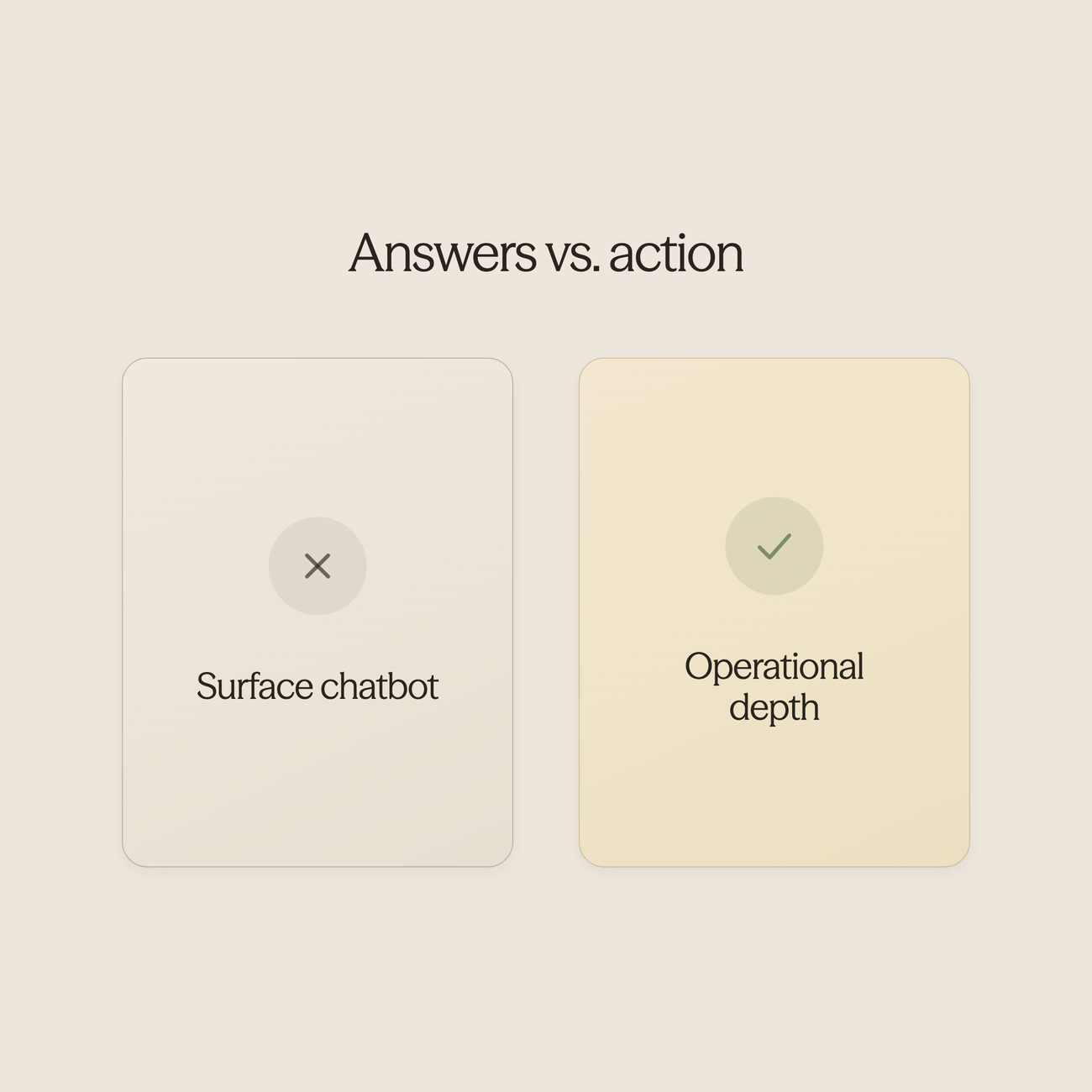
"Guest communication is only one part of the operational challenge, and answering questions is only the start of most interactions." — Hotel Operations Analysis, 2024
⚠️ Warning: Focusing solely on chatbot technology without addressing backend operations, staff workflows, and system integration will leave hotels with a polished front-end but the same operational bottlenecks behind the scenes.
When answers aren't enough
A guest asks whether they can extend their stay. Another wants a late checkout. A third requests extra towels. A VIP guest wants transportation arranged in advance of arrival. Each request requires access to reservation data, property-specific information, operational workflows, and coordination between departments.
Why do most hotel chatbots fail to resolve guest requests?
This is where the chatbot-only approach breaks down. According to AI in Hospitality: The 2025 Reality and the 2026 Horizon, 70% of hotel chatbots fail to resolve basic guest requests. Extending a stay requires consideration of availability, reservation details, occupancy forecasts, and property policies.
Whether a room upgrade can be offered depends on inventory and guest status. Without access to these systems and workflows, even sophisticated chatbots function as little more than question-and-answer tools.
What revenue opportunities do basic chatbots miss?
Many valuable guest interactions occur outside traditional support conversations: upgrade offers, stay extensions, spa bookings, dining reservations, late-checkout opportunities, and pre-arrival communications. These moments directly affect revenue and guest satisfaction, yet they remain disconnected from basic chatbot implementations.
A faster response that misses an upsell opportunity still leaves revenue on the table.
How do effective hotel AI systems coordinate across departments?
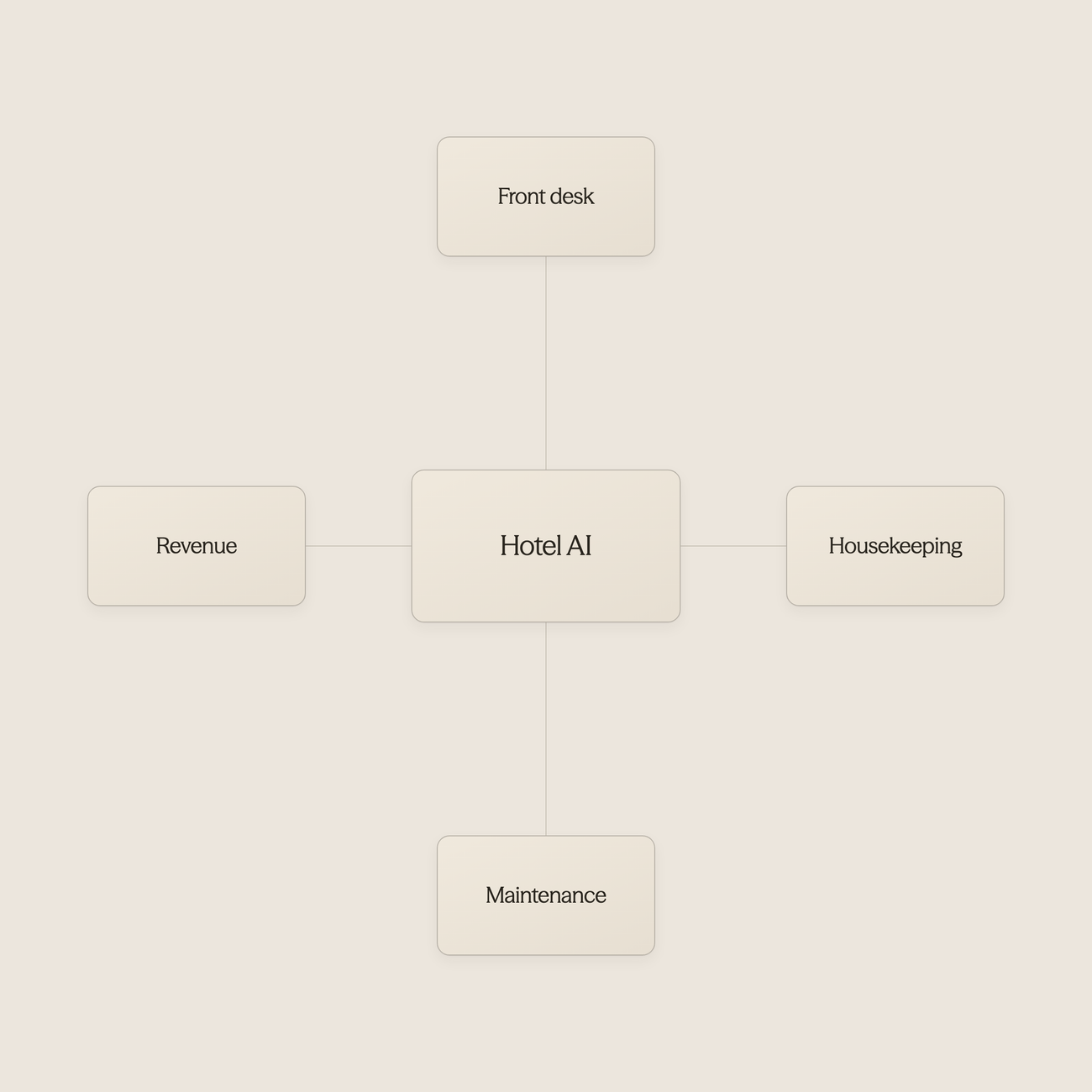
Hotels operate through multiple departments: front desk, housekeeping, maintenance, guest services, revenue management, and marketing. These must work together to deliver great guest experiences. Solving guest requests typically requires cross-departmental action, not automated messages alone.
A guest request that receives an immediate reply but is never completed still creates a bad experience. Solutions like AI for hospitality connect guest interactions, property systems, team workflows, and revenue opportunities into unified experiences rather than functioning as standalone communication tools. Our approach at Conduit integrates these elements seamlessly, ensuring guest requests move from initial contact through resolution across your entire operation.
But if chatbots aren't the complete answer, what separates effective hotel AI from systems that merely respond faster?
Related Reading
- AI for Vacation Rentals
- Artificial Intelligence in the Hotel Industry
- AI Use Cases In Hospitality
- AI For Airbnb Hosts
What to Look for in the Best AI for Hotels
The best AI for hotels enhances guest experiences, reduces staff workload, and drives revenue growth across the entire guest journey. When comparing solutions, evaluate these five key areas.
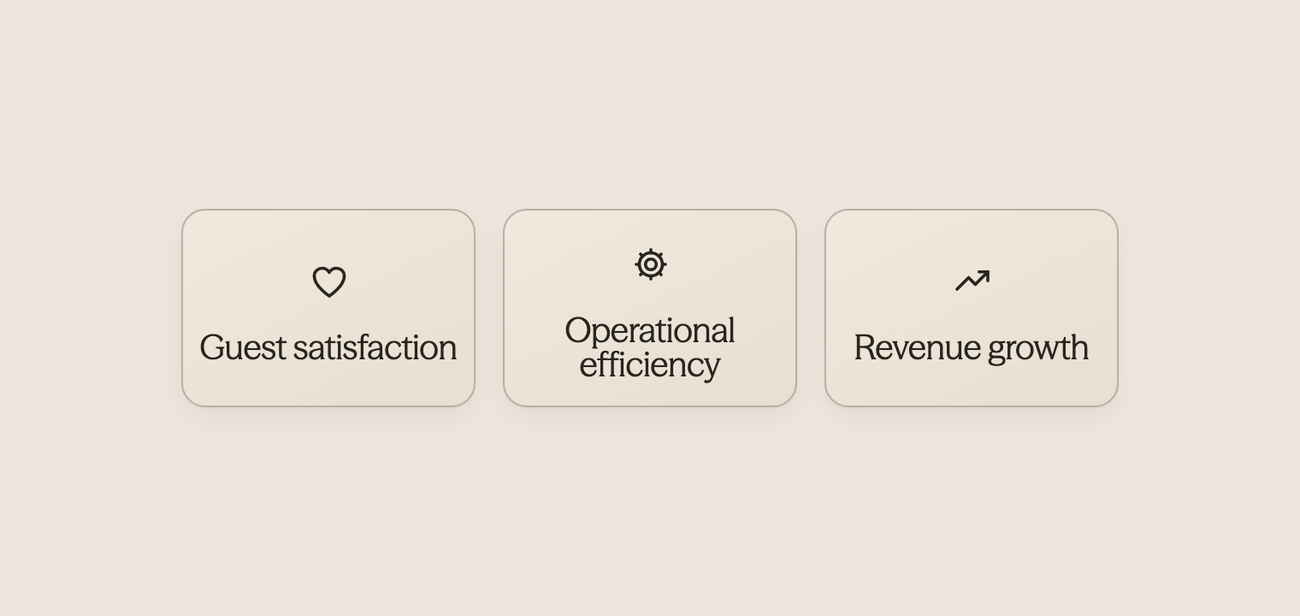
🎯 Key Point: The right AI solution should deliver measurable improvements across guest satisfaction, operational efficiency, and revenue generation - not just one area.
"Hotels that implement comprehensive AI solutions see improvements across multiple touchpoints in the guest journey, from booking to post-stay engagement."
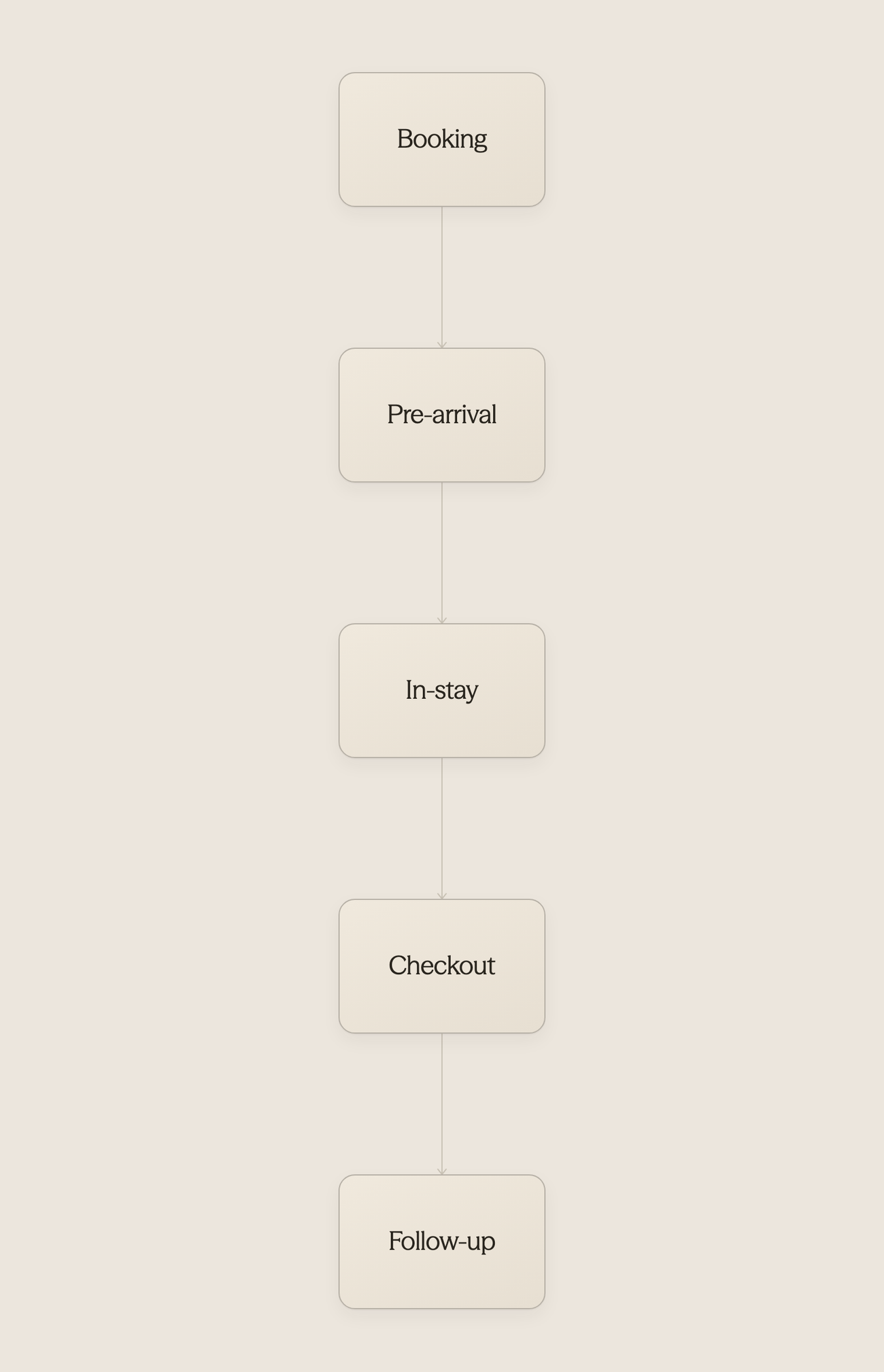
⚠️ Warning: Don't fall for AI solutions that only address one pain point. The best hotel AI platforms provide integrated capabilities that work together to transform your entire operation.
Guest Communication Automation
Guest communication is where AI shows its first visible impact. Hotels receive inquiries before, during, and after stays across multiple channels. An effective AI platform should create a consistent experience regardless of where guests choose to engage.
Look for support across email, SMS, website chat, messaging apps, and other channels. The goal is to ensure guests receive accurate, timely help wherever they reach out. Fragmented communication frustrates both guests and hotel teams.
Deep Hospitality Integrations
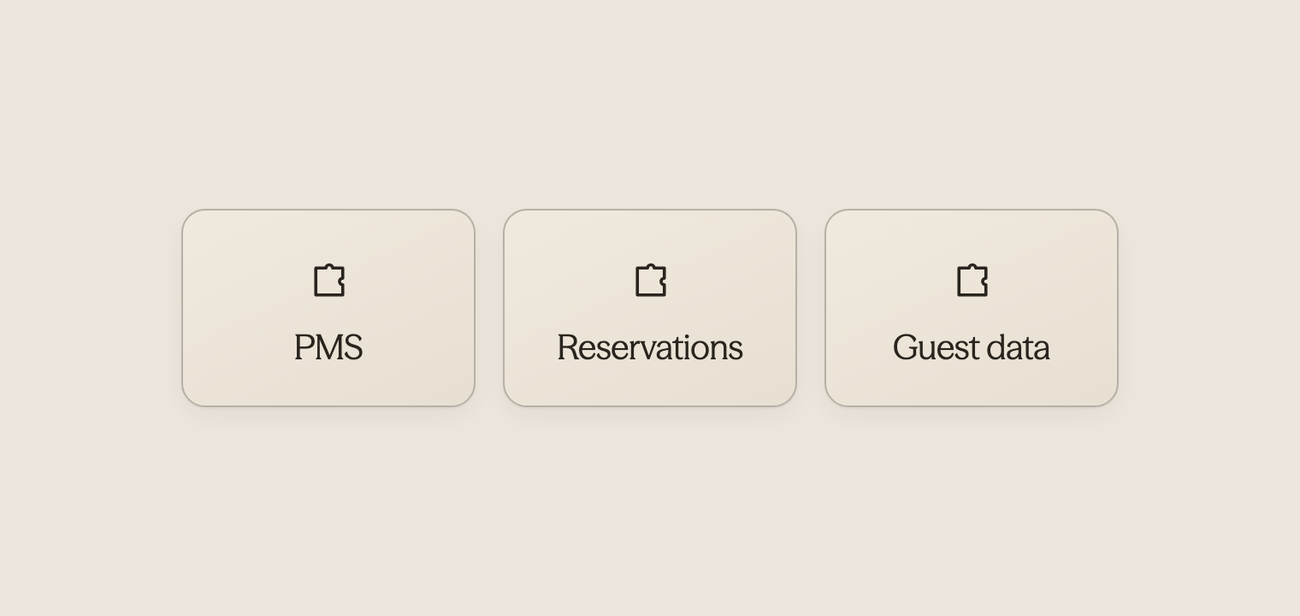
Talking alone is not enough. Hotels use complex technology systems including property management systems, reservation systems, guest databases, and operational tools. AI becomes more useful when it can access and act on information from those systems. Our Conduit platform integrates with these systems to unlock AI's full potential in hospitality.
Key abilities include connecting to the PMS, accessing reservation data, retrieving guest profile information, and understanding property-specific details. AI can answer reservation questions more effectively when it has access to booking details. Upgrade suggestions become more helpful when AI understands guest preferences and stay information.
Without these connections, AI delivers generic responses rather than personalized assistance. Conduit's integrations enable this level of personalization at scale.
Operational Workflow Automation
Guest interactions often require action beyond providing information. Maintenance requests must reach maintenance teams, housekeeping requests must go to the right department, and reservation issues may need front desk assistance. The best hospitality AI platforms automate these workflows.
Look for capabilities such as request routing, exception escalation, department coordination, and human oversight for critical decisions. AI ensures the right teams receive the right information at the right time, eliminating manual triage.
Gartner projects that by 2026, 80% of customer interactions in hospitality will be managed by AI, making workflow automation essential for competitive operations.
Revenue Generation Capabilities
While hotels often explore AI for customer service, there are valuable applications for revenue generation. Guest communication creates opportunities throughout the customer journey, from booking through post-stay engagement.
Strong hospitality AI platforms automate upsells, room upgrades, stay extensions, ancillary purchases, and personalized outreach. Rather than waiting for guest interactions, AI proactively identifies revenue opportunities while enhancing experience.
Research from the Hospitality AI Benchmark Study shows AI-powered revenue management systems increase hotel revenue by 15 to 20%, demonstrating measurable financial impact beyond operational savings.
Reporting and Visibility
AI should not operate like a black box. Hotel teams need visibility into how the platform works and what business results it creates. Look for reporting tools that measure response performance, resolution rates, revenue impact, operational efficiency, and guest engagement outcomes.
The ability to connect AI activity to measurable business results is critical for evaluating long-term success and identifying areas for improvement. The best AI platforms integrate communication, operations, and revenue generation rather than focusing on a single function.
7 Best AI Platforms for Hotels
The best AI platform for your hotel depends on your specific needs. Some focus on talking with guests, others on digital journeys, marketing automation, or reservations. Leading platforms now automate significant portions of the guest experience and operational workflow.
🎯 Key Point: The right AI platform aligns with your hotel's specific operational needs and guest service priorities.
"Leading AI platforms now automate larger portions of the guest experience and operational workflow, transforming how hotels deliver service."
⚠️ Warning: Don't choose an AI platform based on features alone - focus on how it integrates with your existing systems and actual guest needs.
Here are seven leading AI platforms hotels should consider.
1. Conduit
Best for: End-to-end hospitality AI automation.
Conduit brings together guest communication, operational workflow automation, and revenue generation into a single system designed for hotels seeking complete AI integration.
Core strengths: Multi-channel guest support automation. Deep hospitality system integrations. Reservation-aware and property-aware responses. Automated request routing and escalation. Proactive revenue opportunities (upgrades, extensions, add-ons). Internal team coordination and operational orchestration.
Ideal hotel profile: Hotels and management groups are automating guest communication, streamlining operations, and generating additional revenue from a single platform.
2. Canary Technologies
Best for: Guest messaging and digital guest journeys
Canary Technologies modernizes the guest journey through digital experiences that reduce front-desk workload and enhance convenience.
Core strengths: Digital check-in and check-out, guest messaging, mobile-first interactions, and contactless hospitality workflows.
Potential limitations: More focused on guest-journey digitization than on broad operational orchestration. Revenue automation may not match the capabilities of platforms designed specifically for lifecycle engagement.
Ideal hotel profile: Hotels seeking to reduce front desk friction and modernize guest interactions throughout the stay.
3. HiJiffy
Best for: AI-powered guest communication
HiJiffy automates guest conversations across multiple channels. According to mylighthouse.com, hotels using AI chatbots report a 30% reduction in response time.
Core strengths: AI-powered guest messaging, multi-channel communication support, FAQ automation, and booking assistance.
Potential limitations: Primary focus on guest communication; operational workflow automation may require additional systems.
Ideal hotel profile: Hotels are seeking faster response times and automation of high-volume guest inquiries.
4. Asksuite
Best for: Hotel chatbot automation
Asksuite specializes in conversational AI for hospitality, building its reputation around chatbot-driven guest engagement.
Core strengths: Hotel-focused chatbot capabilities, reservation assistance, lead capture, and multi-language communication.
Potential limitations: Strong emphasis on conversational automation rather than broader operational management. Hotels may need complementary systems to coordinate workflows.
Ideal hotel profile: Properties focused on automating guest inquiries and reservation conversations.
5. Duve
Best for: Guest experience management
Duve improves the guest experience from booking through the stay and after.
Core strengths: Guest journey management, personalized experiences, digital guest services, and upselling opportunities during stays.
Possible limitations: Less focused on cross-departmental operations. Some hotels may require additional communication tools.
Ideal hotel profile: Hotels seeking to improve guest experience and deliver personalized service.
6. GuestChat
Best for: Reservation-focused AI interactions
GuestChat focuses on booking help and reservation-related guest interactions.
Core strengths: Reservation support, booking assistance, guest inquiry management, and communication centered on securing bookings.
Potential limitations: More narrowly focused on reservations than full guest lifecycle automation, and operational workflow functionality may be limited compared to broader platforms.
Ideal hotel profile: Hotels seeking to improve booking conversion rates and the efficiency of reservation support.
7. Revinate
Best for: Guest marketing and CRM-driven communication
Revinate helps hotels use guest data to improve marketing performance and customer engagement. Research from mylighthouse.com shows that AI-powered revenue management systems can increase RevPAR by 10–15%.
Core strengths: CRM and guest data management, marketing automation, email and lifecycle campaigns, guest segmentation and personalization.
Potential limitations: More focused on marketing than operations, customer service automation may require additional tools.
Ideal hotel profile: Hotels focused on guest retention, repeat bookings, and marketing-driven revenue growth.
Comparison Summary
Each platform focuses on different goals: HiJiffy and Asksuite excel at guest messaging and chatbot automation, while Canary Technologies and Duve focus on digital guest journeys. GuestChat strengthens reservation interactions, and Revinate emphasizes CRM and guest marketing.
For hotels seeking a complete solution combining guest communication, operational workflow automation, property context, and proactive revenue generation, Conduit offers one of the most comprehensive hospitality AI solutions available.
What creates lasting value in hotel AI platforms?
Most hotels use AI to address quick problems, such as response times and booking rates. The best platforms learn from every guest interaction and adapt to your hotel's specific operations. They grow smarter about running your business rather than repeating the same processes.
How do you choose the right AI solution for your hotel?
The right choice depends on whether your main goal is to automate communication, improve guest experience, grow revenue, make operations more efficient, or pursue a combination of all four. Choosing the platform, however, is only half the decision.
Related Reading
- Guest Communication Tools
- AI Chatbot For Hotels
- AI Agents For Hotels
- Hotel Chatbot Guide
- Best Hotel Chatbot
- Hotel Automation Tools
- AI Tools For Hotels
Which Type of Hotel AI Platform Is Right for Your Property?
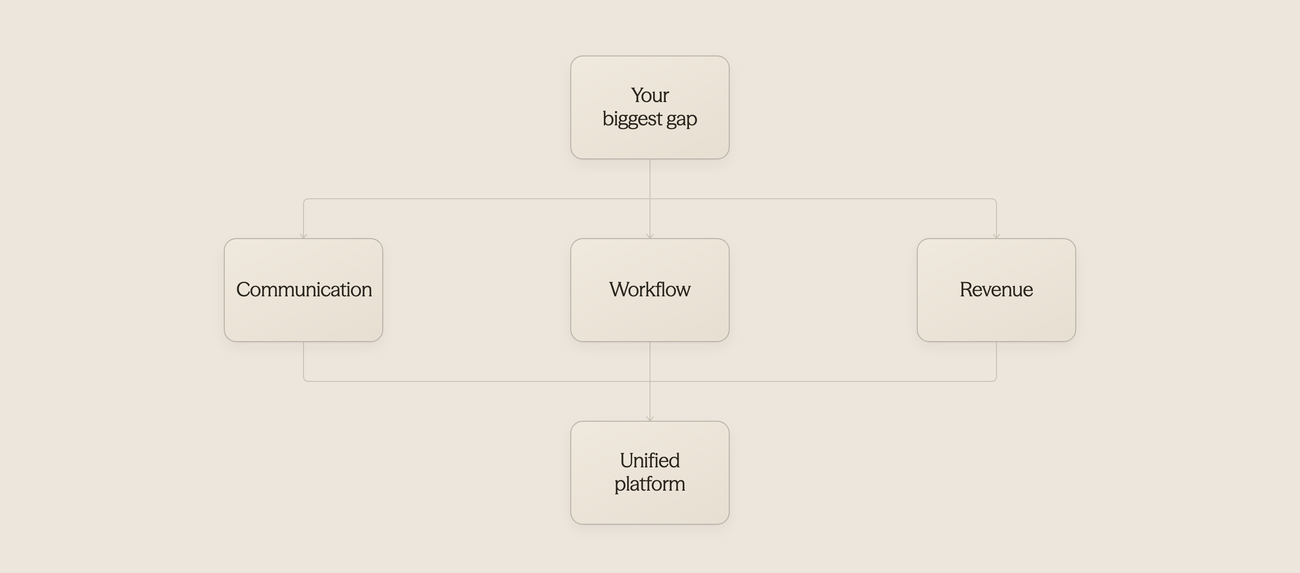
The right AI platform depends on your biggest operational pain point. If guest inquiries pile up unanswered, you need communication automation. If requests get lost between departments, you need workflow orchestration. If you're leaving revenue on the table, you need intelligent upselling. Most hotels eventually need all three, but starting with your greatest pain point clarifies which capabilities matter most initially.

🎯 Key Point: Start with your most pressing operational challenge rather than trying to implement all AI capabilities at once. This focused approach ensures faster ROI and clearer success metrics.
"Hotels that prioritize their biggest operational pain point when selecting AI platforms see 30% faster implementation and higher staff adoption rates compared to those attempting comprehensive rollouts." — Hotel Technology Report, 2024
| Pain Point | Recommended AI Solution | Primary Benefit |
|---|---|---|
| Unanswered guest inquiries | Communication automation | 24/7 response capability |
| Lost interdepartmental requests | Workflow orchestration | Seamless task tracking |
| Missed revenue opportunities | Intelligent upselling | Automated revenue optimization |
💡 Tip: Evaluate your current operational bottlenecks by tracking where guest complaints originate most frequently. This data-driven approach will guide you toward the AI platform features that deliver the most immediate impact for your property.
If Your Biggest Problem Is Response Time
When guest messages arrive faster than your team can answer them, the problem is clear. Questions come through email, SMS, website chat, WhatsApp, Instagram, and phone calls. During busy periods, response times stretch from minutes to hours. Guests notice and book elsewhere or arrive frustrated.
How does communication automation solve response delays?
Communication automation solves this problem. According to Hotel Tech Report, AI chatbots can handle up to 80% of routine guest questions without human intervention. This frees your team to focus on complex requests, such as resolving billing issues or planning special events.
Look for platforms that maintain a consistent tone across channels and route difficult questions to the appropriate staff member when automation cannot resolve them.
What happens when hotels struggle with operational coordination?
Some hotels respond to guests quickly but struggle with follow-through. A guest requests extra towels, but housekeeping never gets notified. A maintenance issue reported through chat never generates a work order.
Requests fall through the cracks not because staff don't care, but because coordination across departments relies on memory and manual handoffs.
How does workflow automation prevent guest experience failures?
Workflow automation solves this problem by automatically routing tasks to the right people, assigning responsibility, tracking completion, and alerting staff when deadlines are missed. If a guest reports a broken air conditioner at 2 PM and no one responds by 4 PM, the system alerts a manager. This operational intelligence prevents small issues from becoming guest experience failures.
If Your Biggest Problem Is Revenue Growth
Most hotels lose money by failing to consistently sell additional services to guests during their stay. A family checking in for three nights might extend their visit if offered a lower rate. A business traveler might upgrade to a suite if given the option before arrival.
These opportunities exist but are rarely pursued systematically. Our Conduit platform helps hospitality teams automate personalized outreach, ensuring no revenue opportunity is missed.
How do AI platforms identify the right upsell moments?
AI platforms focused on monetization analyze guest behavior, booking patterns, and room availability to display targeted offers at optimal times. The best systems deliver personalized suggestions based on guest preferences, booking history, and current availability, rather than generic deals. A late checkout offer suits a guest with a history of extended stays; a spa package appeals to someone who booked a romantic trip. Timing and relevance determine whether an offer feels helpful or intrusive.
If You Need All Three
Most hotels eventually realize that communication, operations, and revenue are more interconnected than they initially thought. A guest inquiry about room service creates an upsell opportunity. A maintenance request requires coordination across three departments. A pre-arrival message can drive ancillary purchases if delivered with the right offer at the right time.
Point solutions that address only one problem can feel limiting once you see how these capabilities reinforce one another.
How do unified platforms solve multiple challenges?
Platforms like Conduit combine guest communication automation, operational workflow management, and revenue generation into a single system that learns from every interaction. Rather than managing separate tools for chat, task routing, and upselling, our platform connects guest touchpoints to internal operations and identifies revenue opportunities throughout the guest journey.
Our system adapts to your property's specific workflows instead of executing generic scripts.
What should you consider when choosing a platform?
But knowing what you need and choosing the right platform are two different decisions.
Why Hotels Choose Conduit Instead of Point Solutions
Hotels choose Conduit because disconnected tools create more work than they eliminate. When guest conversations, operational workflows, and revenue opportunities exist in separate systems, teams spend their days copying information, switching between platforms, and manually connecting what should already be connected.
🎯 Key Point: The average hotel team uses 8-12 different software platforms daily, creating unnecessary friction that reduces efficiency and impacts guest satisfaction.
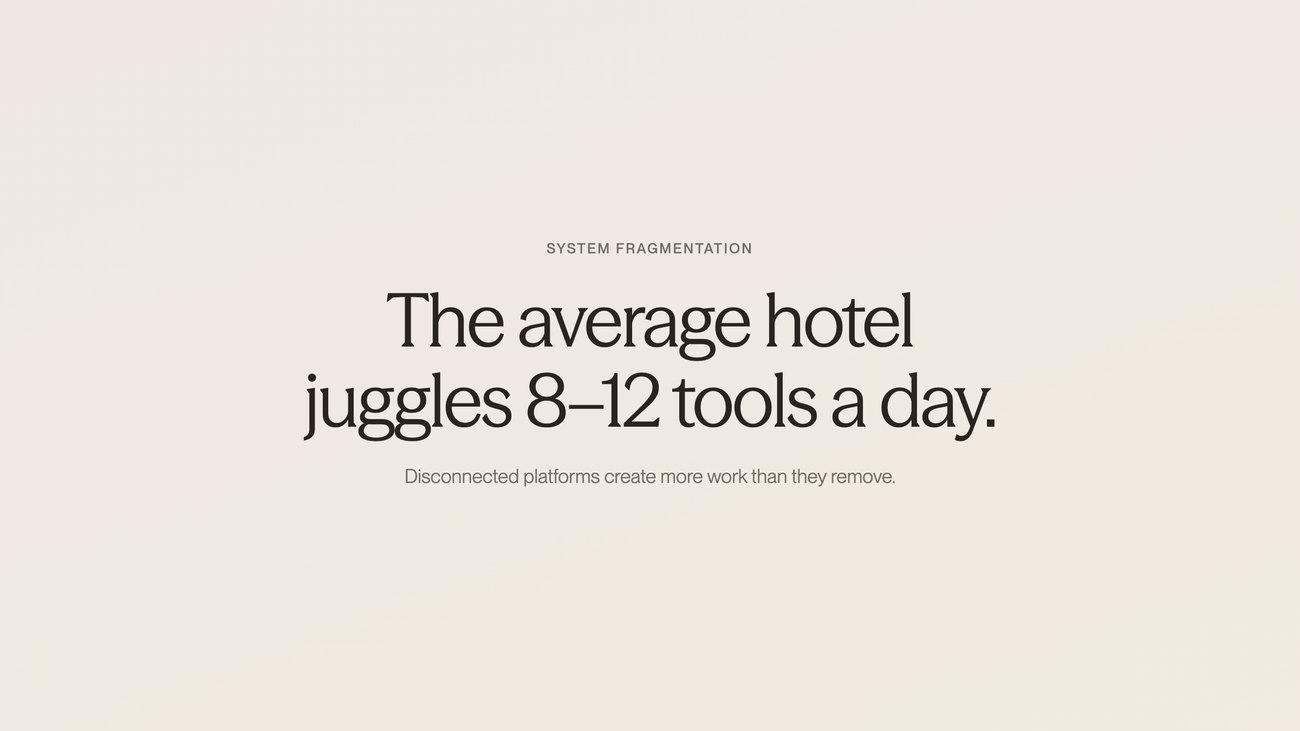
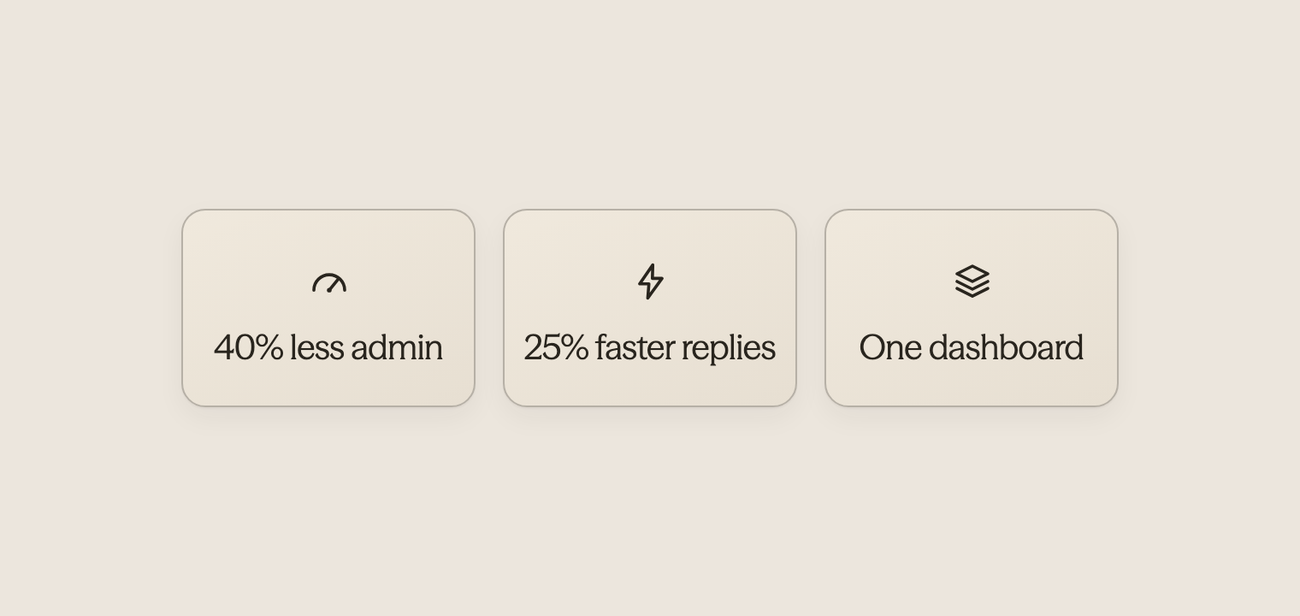
Operators consolidating guest communication onto one AI platform consistently report less time on administrative work and faster responses, though the size of the gain depends on how much of their volume was manual to begin with.
💡 Best Practice: Unified platforms eliminate the need for constant platform switching, allowing staff to focus on guest experience rather than system management.
| Point Solutions | Conduit Platform |
|---|---|
| Multiple logins required | Single dashboard access |
| Manual data transfer between systems | Automatic synchronization |
| Fragmented guest view | 360-degree guest profile |
| Higher training costs | Streamlined onboarding |
Communication That Follows Guests Everywhere
Guests don't think in channels. They send a question through Instagram, follow up over SMS, and call the front desk when they need an answer quickly. Most hotel AI tools force properties to choose which channels matter most because managing separate workflows for each platform becomes unwieldy.
Conduit handles communication across every channel guests use: email, SMS, website chat, WhatsApp, and voice calls. Our platform delivers consistent responses regardless of where the conversation starts, and context travels with guests when they switch from text to phone mid-conversation.
Integration That Knows Your Property
Generic responses frustrate guests by ignoring reservation details and property context. According to research on Fortune 500 employee behavior, workers switch between apps 1,200 times each day. Hotels face similar fragmentation when AI systems cannot access reservation data, guest preferences, or real-time availability.
Conduit integrates deeply into hospitality technology stacks, pulling information from property management systems, reservation platforms, and guest databases. When guests ask about room upgrades or extending their stays, our responses reflect actual availability and their history rather than directing them to call the front desk.
Workflows That Execute, Not Just Respond
Answering questions is the basic requirement. Real operational value comes from systems that turn guest requests into completed actions. A towel request must be submitted to housekeeping with the room numbers and timing. A maintenance issue requires routing to the appropriate team and prioritization. A VIP arrival triggers coordination across multiple departments.
Conduit automates the workflows that follow, routing requests to appropriate teams and escalating exceptions when human judgment is needed. Our platform helps hotels reduce coordination burden across departments while ensuring nothing falls through the cracks between systems.
Revenue Opportunities Built Into Every Interaction
Most hospitality AI platforms treat revenue generation as an afterthought. Conduit identifies upselling moments throughout the guest journey, from pre-arrival room upgrades to mid-stay service additions and post-checkout return offers, recognizing when guests are most receptive and presenting options that feel helpful rather than pushy.
This approach captures revenue that would otherwise be lost when hotels wait for guests to request upgrades or add-ons, transforming routine interactions into opportunities without adding sales pressure that would damage the guest experience.
Related Reading
- Airbnb Automation Tools
- Hijiffy Pricing
- AI Software For Hotels with the Best Reviews
- Duve Pricing
- Property Management AI Tools
- Enso Connect Pricing
- Airbnb Automated Messages
- Hotel Automation Software
Book a Demo to See Conduit's AI for Hospitality Customer Service in Action
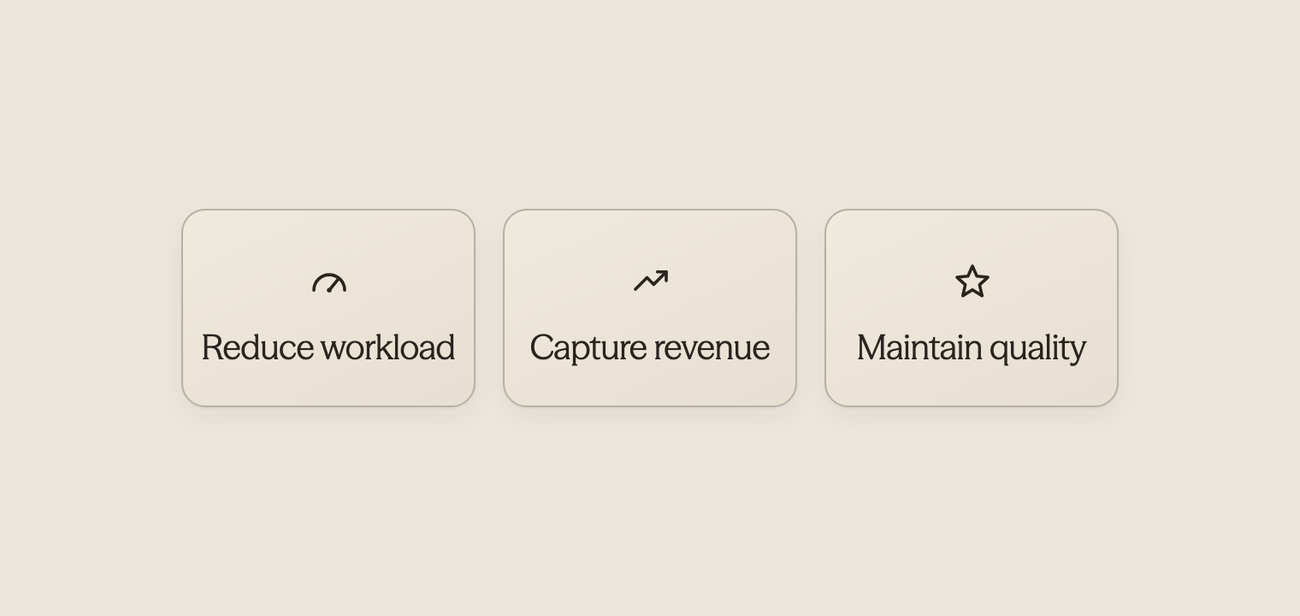
Focus on results, not features. The best AI for hotels solves real operational problems: reducing staff workload, capturing missed revenue, and maintaining service quality across every guest touchpoint. Start by identifying guest requests that consume the most staff time and evaluate how many could be resolved automatically with access to reservation and property data.
💡 Tip: Come prepared with your highest-volume guest requests to see immediate AI impact during your demo session.
Book a demo with Conduit to see how our AI supports guest service, operational efficiency, and revenue generation from a single platform. Bring specific examples of high-volume requests your team handles daily, and we'll show you how the system would respond with your property's actual data and procedures.
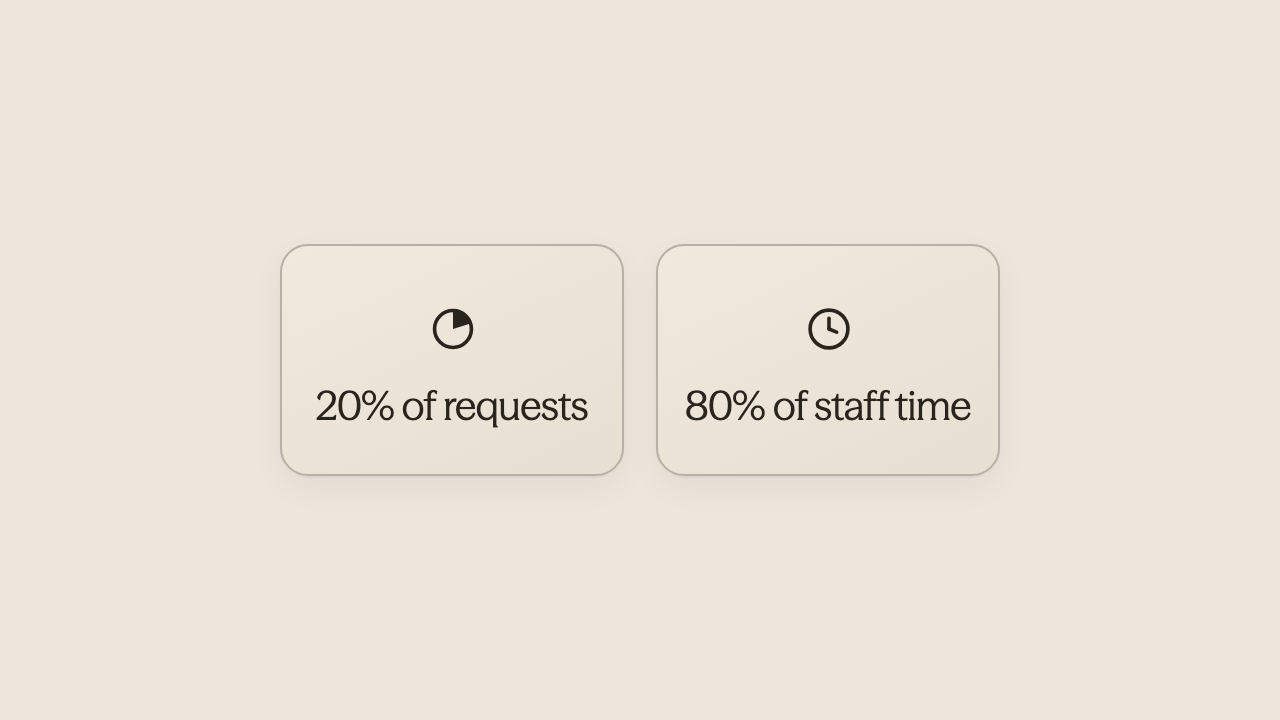
"The most effective hotel AI implementations focus on automating the 20% of requests that consume 80% of staff time." — Hospitality Technology Research, 2024
🎯 Key Point: Your demo will use real scenarios from your property to demonstrate measurable time savings and revenue opportunities.
Stay in the loop
Get the latest on AI automation, product updates, and customer stories.

